
First Man (2018): Cast, Ratings, Box Office & Where to Watch
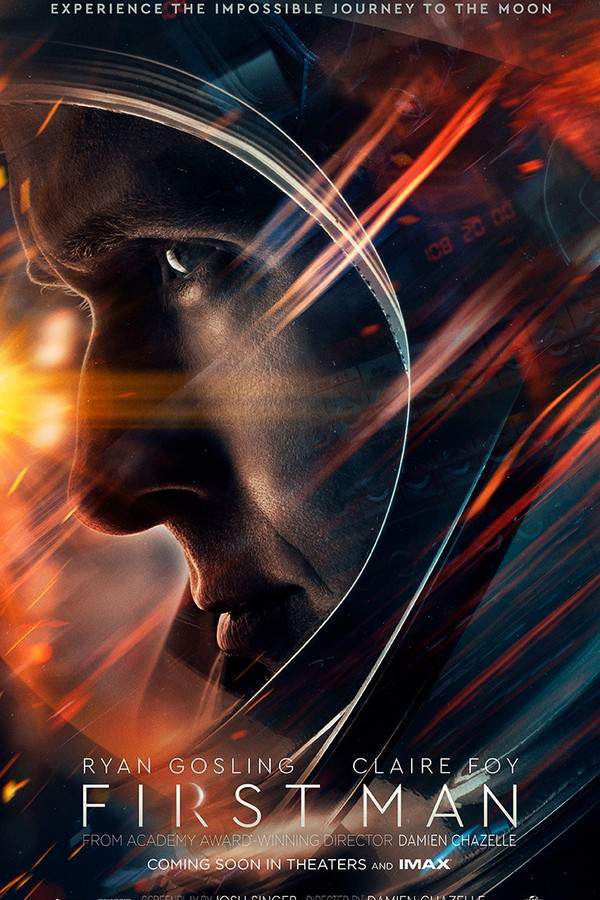
First Man is a 2018 biographical drama directed by Damien Chazelle, starring Ryan Gosling as Neil Armstrong, Claire Foy and Corey Stoll. It runs 2 hours 21 minutes and earned $105.7 million worldwide on a $59 million budget. It won 1 Oscar, including Visual Effects, and 4 awards in all. Critics gave it 87% on Rotten Tomatoes and 84 on Metacritic, and IMDb users rate it 7.3/10. Rent or buy it on Amazon Video and Apple TV Store.
- Released
- Runtime
- 2h 21m (141 min)
- Director
- Damien Chazelle
- Original language
-
 English
 - Studio
- Universal Pictures
- Budget
- $59M
- After the credits
- No No extra scene
What Is First Man About?
The premise of First Man without spoilers. The whole story and the ending explained are in the plot summary further down.
In the lead-up to the 1969 moon landing, skilled test pilot Neil Armstrong dedicates himself to NASA's ambitious program. He endures rigorous training and perilous test flights, pushing the boundaries of human achievement. The film chronicles his journey and the sacrifices made as he prepares for the historic Apollo 11 mission alongside Buzz Aldrin and Michael Collins. On July 20, 1969, the world watches as Armstrong takes humanity's first steps on the lunar surface.
First Man Themes & Keywords
· 50 tags- moon landing
- astronaut
- 1960s
- rocket
- grief
- apollo program
- loss of child
- apollo 11
- moon
- based on true story
- lunar mission
- u.s. space program
+38 more Show fewer
- archive footage
- space race
- space exploration
- neil armstrong character
- outer space
- male camaraderie
- lunar landing
- mission control
- based on real person
- buzz aldrin character
- rocket launching
- project gemini
- rocket science
- docking in outer space
- death of child
- death of daughter
- year 1965
- year 1969
- husband wife relationship
- marriage
- loss of daughter
- flight simulator
- human in outer space
- spaceflight
- space mission
- space travel
- spacecraft
- spacesuit
- political protest
- travel to the moon
- moon walk
- training facility
- press conference
- footprint
- death of a friend
- loss of friend
- apollo 1
- death of friend
Where to Watch First Man
Rent or buy it from Amazon Video and Apple TV Store. US availability and prices from JustWatch.





Streaming availability in the US, powered by 
First Man Cast & Characters
Ryan Gosling leads the cast as Neil Armstrong, with Claire Foy as Janet Armstrong and Corey Stoll as Buzz Aldrin. Directed by Damien Chazelle; 19 actors are credited in all.
-
 Director Damien Chazelle
-
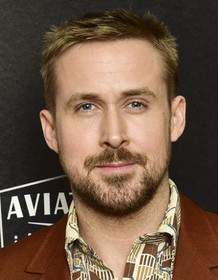 Ryan Gosling as Neil Armstrong
 -
 Claire Foy as Janet Armstrong
 -
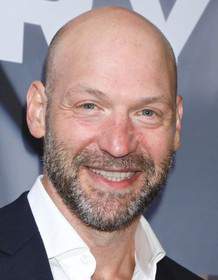 Corey Stoll as Buzz Aldrin
 -
 Lukas Haas as Mike Collins
Also Starring in First Man
· 15 more- Brian d'Arcy James Joe Walker
- Ciarán Hinds Bob Gilruth
- Patrick Fugit Elliot See
- Jason Clarke Ed White
- Christopher Abbott Dave Scott
- Shea Whigham Gus Grissom
- Cory Michael Smith Roger Chaffee
- Ethan Embry Pete Conrad
- Kyle Chandler Deke Slayton
- Pablo Schreiber James Lovell
- Jon Bernthal
- Philip Boyd
- Olivia Hamilton Pat White
- Perla Middleton
- Aurelien Gaya
First Man Reviews & Ratings
Critics gave First Man 87% on Rotten Tomatoes and 84 on Metacritic, and IMDb users rate it 7.3/10. Our Echo Score gives it 80/100, strongest in art & craft (90) and weakest in rewatch factor (65).
First Man Echo Score Breakdown
First Man demonstrates notable strengths in visual design and immersive spectacle, anchored by thoughtful direction and production craft. The character portrayals are subtle yet engaging, driven by Gosling’s restraint and Foy’s emotional warmth. The narrative balances personal tragedy with methodical mission sequences, resulting in measured pacing. Sensory elements stand out, though the deliberate rhythm tempers rewatch appeal. Net, the film offers a compelling viewing experience.
Our own 0–100 rating, built from five aspects: art, character, story, the sensory experience and how well a film rewatches.
- Art & Craft 90
The film excels in its visual craftsmanship, particularly its cinematography and production design. In terms of direction, Chazelle utilizes varied formats—16mm, 35mm and IMAX 70mm—to heighten immersion, supported by crisp editing and grounded lighting. The space sequences are staged with precise framing and visual cohesion. Overall, the artistic elements deliver a compelling visual experience.
- Character & Emotion 80
When it comes to character depth, the performances are consistently nuanced and emotionally resonant. Gosling’s reserved portrayal of Neil Armstrong is balanced by Foy’s empathetic turn, which anchors the interpersonal drama. Supporting roles contribute additional texture, even as some moments emphasize stoicism over accessibility. Net, the acting elevates the film’s human dimension.
- Story & Flow 70
In terms of plot coherence, First Man adopts a straightforward structure that emphasizes personal trials over political context. The narrative interweaves the protagonist’s family tragedy with mission milestones, creating emotional stakes. Pacing is measured, though a midsection focused on briefings can feel deliberate. Ultimately, the story engages through its intimate approach more than through high drama.
- Sensory Experience 90
Regarding sensory experience, the score and sound design combine to heighten tension, especially during cockpit scenes. The soundtrack’s theremin motifs and pounding sound effects underscore the film’s outward thrust, while visual style remains consistent from quiet interiors to lunar vistas. Viewing in IMAX further amplifies the immersive quality. Overall, the sensory elements are a standout.
- Rewatch Factor 65
For rewatch value, the film offers striking visual moments and emotional undercurrents that encourage a second viewing. The meticulous production detail and sequences of low-gravity simulation retain their impact on subsequent viewings. However, its deliberate pacing and inward focus may limit its appeal for frequent revisits. Net, the replay potential is modest but notable.
-
 IMDb
IMDb 7.3 /10
See on IMDb -
 Rotten Tomatoes
 87% Tomatometer
Popcornmeter 68%
See on Rotten Tomatoes -
 Metacritic
 84 Metascore
User score 7.4
See on Metacritic -
 TMDB
TMDB 70% User score
See on TMDB -
 Letterboxd
 3.7 /5
741 ratings
See on Letterboxd -
 Movie Insider
 3.4 /5
See on Movie Insider
First Man Plot Summary & Ending Explained
What happens in First Man from start to finish, spoilers included, with a timeline of 14 key events and the ending explained. The opening is below; the full summary is a 4-minute read.
Spoilers ahead
In 1961, NASA test pilot Neil Armstrong takes to the skies in the X-15 rocket plane. He skillfully pushes the aircraft to the edge of space, reaching an impressive altitude of 140,000 feet, highlighting the challenges of winged flight in the realm beyond our atmosphere. However, during his return, he inadvertently encounters turbulence at 115,000 feet. Displaying remarkable composure under pressure, he utilizes the Thrusters to flip the plane upside down, leveraging the momentum from the maneuver to safely re-enter the atmosphere. Although he manages to land firmly in the Mojave Desert, concerns arise among his peers about his recent string of mishaps—three incidents in the span of just a month—which they believe stem from personal distractions, leading to his temporary grounding.
Full summary
The whole story of First Man, scene by scene, with the ending explained
First Man Box Office & Budget
First Man grossed $105.7 million worldwide on a $59 million budget, 1.8 times what it cost. $44.9 million came from the US and Canada and $60.8 million (57%) from the rest of the world.
Worldwide gross
$105.7M
1.8× its budget
- US & Canada
- $44.9M
- International
- $60.8M
- Budget
- $59M
First Man Awards & Nominations
First Man won 1 Oscar, including Visual Effects, and 4 awards in all. Its biggest night was the Critics' Choice 2019, with 2 wins from 10 nominations.
4 wins23 nominations4 ceremonies
-
 Critics' Choice 2019 2 wins · 10 nominations
- Won Best Editing
- Won Best Score
- Nominated Best Actor – Ryan Gosling
- Nominated Best Adapted Screenplay
- Nominated Best Cinematography
-
 Oscars 2019 1 win · 4 nominations
- Won Visual Effects
- Nominated Production Design
- Nominated Sound Editing
- Nominated Sound Mixing
-
 Golden Globes 2019 1 win · 2 nominations
- Won Best Original Score
- Nominated Best Supporting Actress in a Motion Picture – Claire Foy
-
 BAFTA 2019 7 nominations
- Nominated Best Actress in a Supporting Role – Claire Foy
- Nominated Best Adapted Screenplay
- Nominated Best Cinematography
- Nominated Best Editing
- Nominated Best Production Design
First Man Trailers & Videos
13 videos: 3 trailers, 2 teasers, 3 clips and 5 behind-the-scenes videos.
- Trailer Official Trailer #2
- Trailer Official Trailer #3
- Teaser TV Spot 1
- Teaser TV Spot 2
How Well Do You Know First Man?
10 questions about the story, each with a hint if you get stuck. Pick an answer to see whether you were right.
Question 1 of 10
- Question 1: not answered
- Question 2: not answered
- Question 3: not answered
- Question 4: not answered
- Question 5: not answered
- Question 6: not answered
- Question 7: not answered
- Question 8: not answered
- Question 9: not answered
- Question 10: not answered
What year does Neil Armstrong pilot the X-15 craft?
Cars in First Man
15 cars on screen, including the 1962 Chevrolet Impala and the 1954 Chevrolet Bel Air.
-
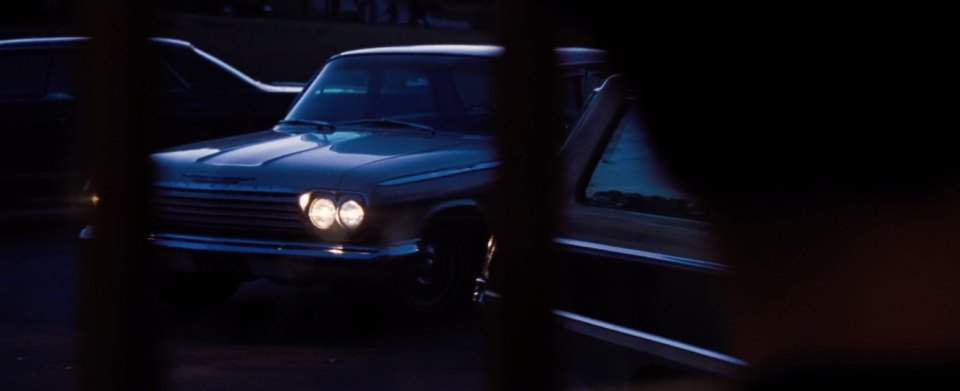 1962 Chevrolet Impala Important role
 -
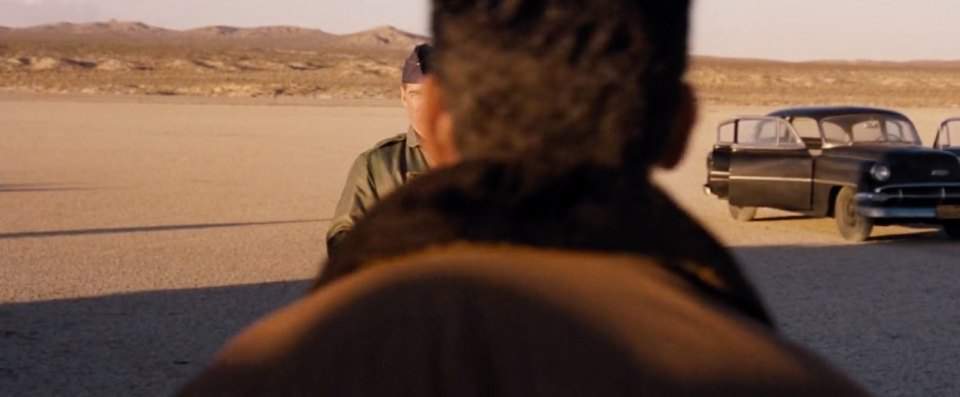 1954 Chevrolet Bel Air Minor role
 -
 1955 Dodge C-3 Minor role
 -
 1963 Ford Galaxie 500 Minor role
First Man Also Known As
40 alternative titles, including “第一人” and “El Primer Hombre”.
- Also known as
-
- 第一人
- El Primer Hombre
- มนุษย์คนแรกบนดวงจันทร์
- اولین مرد
- ファースト・マン
- Pierwszy człowiek
- Առաջին Մարդը
- 퍼스트 맨
- First Man - Il primo uomo
- First Man - Le Premier Homme sur la Lune
- Aufbruch zum Mond
- Първият човек
+28 more Show fewer
- Человек на Луне
- First Man (El primer hombre)
- Ay'da İlk İnsan
- 퍼스트맨
- Перша людина
- Ο Πρώτος Άνθρωπος
- 登月第一人
- Az Első ember
- O Primeiro Homem
- První člověk
- האדם הראשון
- O Primeiro Homem na Lua
- Ensimmäisenä kuussa
- Први човек на месецу
- Prvý človek
- 登月先鋒
- Primul om pe Lună
- El primer hombre en la Luna
- Le premier homme
- Pirmasis žmogus
- Prvi čovjek
- Bước Chân Đầu Tiên
- Pirmais cilvēks uz Mēness
- Birinchi Odam
- Prvi človek
- نخستین انسان
- El primer home, პირველი ადამიანი მთვარეზე
- Esimene inimene
Seen First Man?
Movies Like First Man
Films with a similar story, tone or audience, including Apollo 11: First Steps on the Moon, Moonshot and Apollo 11.
-
 Apollo 11: First Steps on the Moon 1996
 -
 Moonshot 2009
 -
 Apollo 11 2019
 -
 From the Earth to the Moon 1998
 -
 Armstrong 2019
 -
 First Men in the Moon 1964
 -
 Moon Pilot 1962
 -
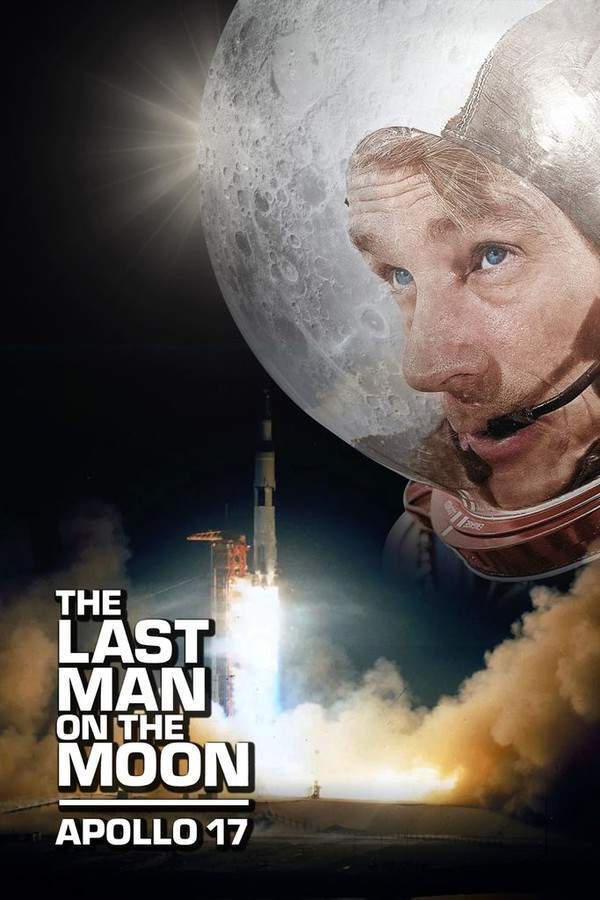 The Last Man on the Moon 2016
 -
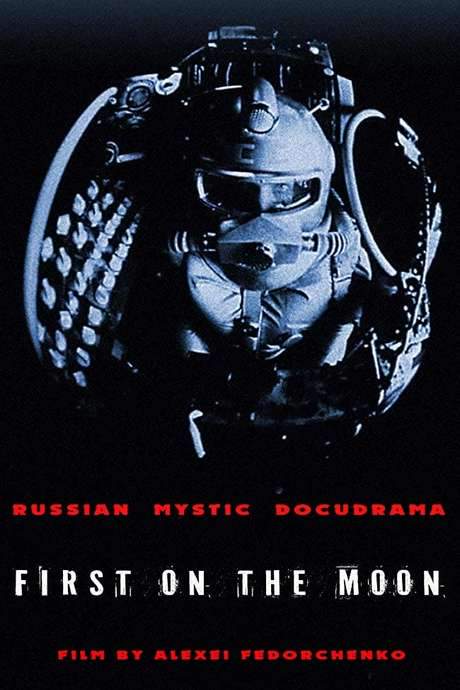 First on the Moon 2005
 -
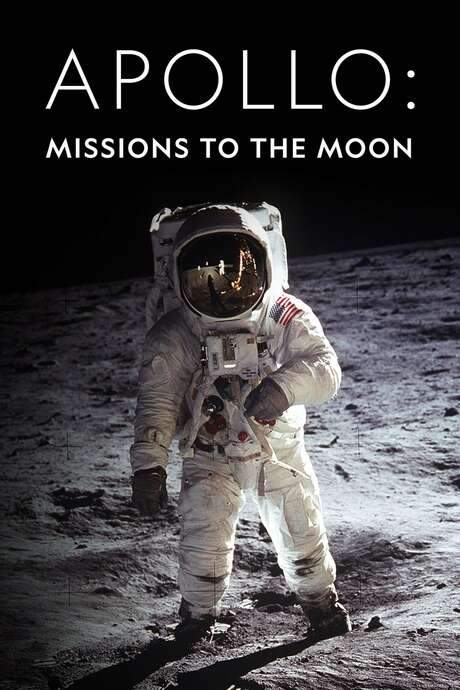 Apollo: Missions to the Moon 2019
 -
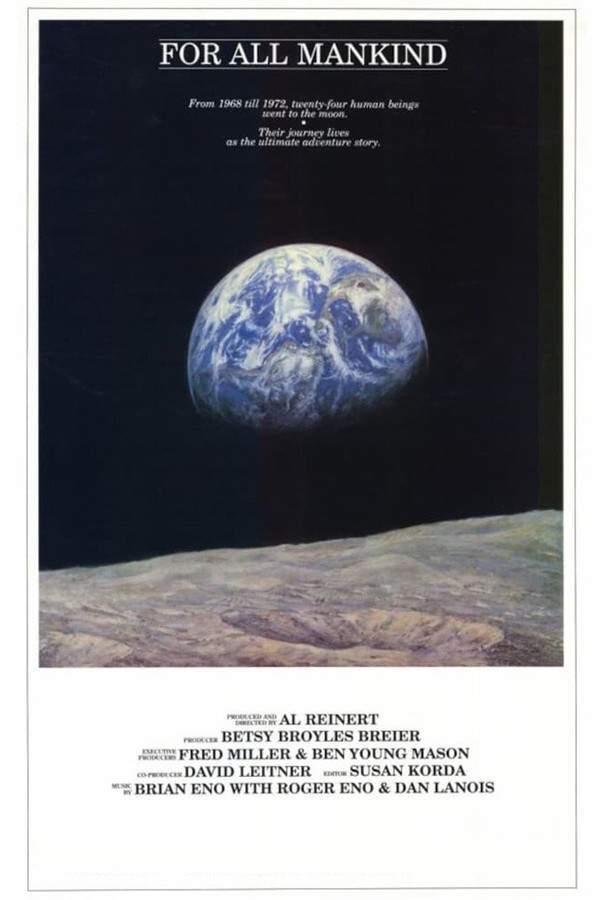 For All Mankind 1989
 -
 The Eagle Has Landed: The Flight of Apollo 11 1969
First Man FAQ: Where to Watch, Cast & Box Office
Runtime, release date, director, cast, where to watch, box office, ratings and awards of First Man, each answered in a sentence.
How long is First Man?
First Man runs 2 hours 21 minutes (141 minutes).
When was First Man released?
First Man was released on October 12, 2018.
Who directed First Man?
First Man was directed by Damien Chazelle.
More films by Damien Chazelle Who is in the cast of First Man?
First Man stars Ryan Gosling as Neil Armstrong, Claire Foy as Janet Armstrong and Corey Stoll as Buzz Aldrin, among 19 credited actors.
Where can I watch First Man?
In the US, First Man is available to rent or buy on Amazon Video, Apple TV Store and Fandango At Home (availability from JustWatch).
How much did First Man make at the box office?
First Man grossed $105.7 million worldwide ($44.9 million domestic, $60.8 million international) on a budget of $59 million.
How is First Man rated?
First Man has 7.3/10 on IMDb, 87% on Rotten Tomatoes, 84 on Metacritic and 70% on TMDB.
What awards did First Man win?
First Man won 4 awards from 23 nominations, including Best Editing at the Critics' Choice 2019.
Coming soon to your phone
The Plot Explained Movie Summary App
From blockbusters to hidden gems: plot summaries, endings explained and timelines on your phone. Save your favorites and never miss a twist again.
Be the first to know when it launches. Your email stays private, always. Learn more about the app
