Ebbie 1995

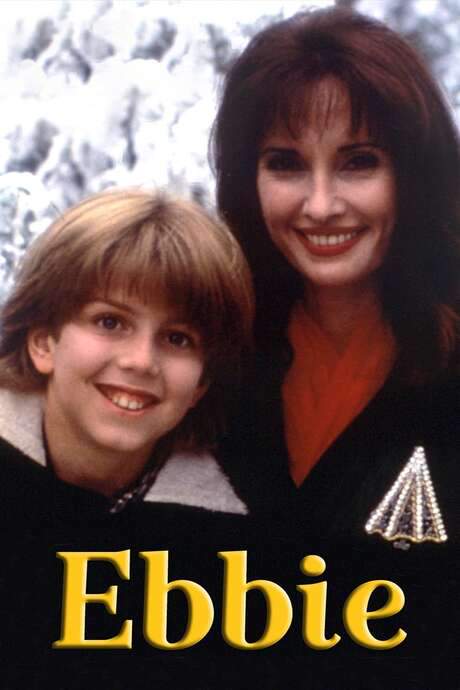
In this modern take on Dickens’s classic, hard‑hearted retailer Elizabeth “Ebbie” Scrooge runs a booming department store but cares little for the holidays. On Christmas Eve she is visited by the three Spirits of Christmas—Past, Present and Future—who show her the consequences of her greed, prompting a heartfelt transformation and a renewed belief in the true spirit of Christmas.


Does Ebbie have end credit scenes?
No!
Ebbie does not have end credit scenes. You can leave when the credits roll.
Meet the Full Cast and Actors of Ebbie
Explore the complete cast of Ebbie, including both lead and supporting actors. Learn who plays each character, discover their past roles and achievements, and find out what makes this ensemble cast stand out in the world of film and television.

Molly Parker
Francine/Frannie

Wendy Crewson
Roberta "Robbie" Cratchet

Jeffrey DeMunn
Jake Marley

Susan Lucci
Elizabeth "Ebbie" Scrooge
Laura Harris
Martha Cratchet
Ron Lea
Paul
Nicole Parker
Ghost of Christmas Past #2
Bill Croft
Luther / Spirit of Christmas Yet to Come
Jennifer Clement
Ghost of Christmas Past #1
Lorena Gale
Rita/Ghost of Christmas Present
Taran Noah Smith
Tiny Tim
External Links and Streaming Options
Discover where to watch Ebbie online, including streaming platforms, rental options, and official sources. Compare reviews, ratings, and in-depth movie information across sites like IMDb, TMDb, Wikipedia or Rotten Tomatoes.







Take the Ultimate Ebbie Movie Quiz
Challenge your knowledge of Ebbie with this fun and interactive movie quiz. Test yourself on key plot points, iconic characters, hidden details, and memorable moments to see how well you really know the film.
Ebbie (1995) Quiz: Test your knowledge of the 1995 film *Ebbie*, a modern retelling of the classic Christmas tale.
What is the name of the high‑powered businesswoman who runs Dobson's department store?
Full Plot Summary and Ending Explained for Ebbie
Read the complete plot summary of Ebbie, including all major events, twists, and the full ending explained in detail. Explore key characters, themes, hidden meanings, and everything you need to understand the story from beginning to end.
[Indexing the character and actor pages with the cast in mind, the following summary preserves a neutral tone while expanding on the events and emotional beats from the original.]
Elizabeth “Ebbie” Scrooge is a high-powered businesswoman who has never truly understood the spirit of Christmas. The founder and owner of Dobson’s department store, she rules her world with a sharp tongue and a cold sense of profit, showing little mercy to those around her. She is rude to customers, dismissive of gifts, and unyielding with her employees, often treating Christmas as just another day of targets and numbers. Her priorities are clear: the store, the bottom line, and the discipline she imposes on her staff. In her eyes, generosity is a weakness, and the holiday is a distraction from business.
On Christmas Eve, the atmosphere at Dobson’s is tense and distant, a quiet threat hanging over the shop floors. Ebbie’s demeanor remains biting as she dismisses two perfume-promotion employees who are only trying to spark some holiday sales. Her own sense of fairness dissolves quickly when she assigns a meager “bonus” to a gift-wrapping employee who works two jobs to support her family. The employee’s sacrifice goes unnoticed, and Ebbie’s heart seems further tightened by the moment. Even the security guard Luther is fired for a misstep, the decision chillingly framed as a cost of doing business rather than a human mistake. These acts reveal a pattern: Christmas is a stage for her to display power, not the time to show mercy or gratitude.
That very night, a visitation begins that will challenge everything she believes about herself. Jake Marley, the ghostly former partner of the Dobson’s store, appears as a haunting reminder of a life spent valuing wealth over humanity. He is a traveler between worlds, compelled to answer calls from a higher power via a Motorola cellphone as he wanders the earth in penance for his greed. Marley’s spectral appearance is not merely a fright—it’s a summons, urging Ebbie to consider the consequences of a life lived in pursuit of profit at the expense of compassion. His presence unsettles her sense of control and hints at a reckoning to come.
At the stroke of 12:01 a.m., the first appointment arrives: the Ghosts of Christmas Past materialize as two former colleagues who once walked the Dobson’s aisles with her. They force Ebbie to confront the memories of Christmases she has long buried, particularly the heartbreak surrounding her sister, Francine/Frannie. The tragedy of Francine’s death during a moment that might have changed everything haunts the narrative, as does the memory of Ebbie’s early romance with Paul. The visions trace a through-line of choices—moments when Ebbie chose professional ambition over personal connections, when the store’s succession of power moves eclipsed the warmth of family and friendship, and when Marley’s shadow grew ever larger as the years passed. The past reveals not only what Ebbie did, but what she could have become if she had allowed love and generosity to guide her decisions.
Next comes the Ghost of Christmas Present, appearing in a form that carries the weight of intimate human consequence. The present is embodied by Rita, a widow and the assistant who keeps Roberta Cratchett’s life from being entirely consumed by hardship. Rita’s appearance highlights the real, lived struggles of those who orbit Ebbie’s world: Roberta Cratchett, Martha Cratchett, and their son Tim—the disabled child whose vulnerability underscores the human cost of indifference. Through Rita’s presence, we glimpse a household in which care and support are scarce, and where a simple act of kindness could alter the course of several lives. The Ghosts of Present show Ebbie the festive promises she has refused to accept, and the consequences of a life lived with an insistence on wealth as the sole measure of worth. The visions are stark: Ignorance and Poverty stand as tangible embodiments of hardship, challenging Ebbie to see beyond her own glass ceiling.
The final appointment arrives with the Ghost of Christmas Future, silent and unwavering, taking on the guise of Luther Luther as a still, looming fable of consequences. This future is a bleak prophecy: Tim has died; Dobson’s has fallen into ruin, its doors shuttered and its memory fading into ash. Ebbie herself is depicted in a grim tableau where she is struck by a car, and because she has pushed away every chance for human connection, she is never visited in the hospital. Stripped of possessions and social bonds, she dies unremembered, a life measured by profit but lacking the warmth that sustains a person in the end. The sight of such a future forces Ebbie to confront the reality that her relentless self-interest could lead to a lonely, forgotten ending.
Overwhelmed by the dread of a future without mercy, Ebbie pleads for a chance to return to the present and make amends. The plea is granted, and she awakens back in her own apartment, realizing with a breath of relief that the terrifying journey was, at least for the moment, a dream. The revelation ignites a transformation that surprises those around her: she greets the doorman with a simple smile, orders a large turkey for the Cratchetts, and sets in motion tangible acts of generosity. The change is practical and heartfelt: she donates money to help impoverished children, buys a coat for a homeless woman and offers her a job, and gives Rita a well-deserved raise so that Rita can reduce her hours at the second job. She also advances Roberta Cratchett with a well-earned promotion, recognizing the value of the people who keep the store and its community alive. The shift extends to a return of trust with the family of the Cratchetts: Ebbie attends their gathering with genuine warmth, and she reconciles with those she had once pushed away.
As the old, harsh habits loosen, the atmosphere around Dobson’s changes as well. Luther, brought back in a human form by the transformed heart of the store’s owner, is re-hired; his presence becomes a symbol of a second chance, and the holiday spirit finally begins to ripple through the workplace. The party that once seemed too painful to attend becomes a moment of shared joy, and the whole community experiences a softening of the edges that Christmas had worn for so long. Ebbie’s renewed generosity—her renewed belief in giving rather than taking—reframes her relationships, not as power dynamics but as a collaborative, caring network.
By the time the night concludes, the tale returns to a clear, hopeful truth: the dream—or possible reality it represented—has stirred something real inside Ebbie. She commits herself to continuing this path of change, ensuring that the lessons of her experiences are not forgotten. Her attitude toward those around her shifts from suspicion and control to openness and support. She makes practical, compassionate choices that touch the lives of Roberta, Martha, Tiny Tim, Rita, and others connected to the store and its broader community. The newly softened leader does not simply praise kindness in words; she demonstrates it through actions that bring real relief and opportunity to those who had stood on the margins of her world. In the final scenes, she engages with her family in new ways, celebrates with the Cratchetts, and embraces a future where Christmas belongs to everyone—not as a command, but as a shared gift.
In this retelling, the core message remains clear and steady: generosity matters, even to someone who once believed that efficiency and profit could replace empathy. Through a journey that begins with arrogance and ends in renewal, Elizabeth “Ebbie” Scrooge learns that true wealth lies in the capacity to care, to share, and to lift others up, especially when the season asks for it most.

Coming soon on iOS and Android
The Plot Explained Mobile App
From blockbusters to hidden gems — dive into movie stories anytime, anywhere. Save your favorites, discover plots faster, and never miss a twist again.
Sign up to be the first to know when we launch. Your email stays private — always.
Explore the mobile appDiscover Film Music Concerts Near You – Live Orchestras Performing Iconic Movie Soundtracks
Immerse yourself in the magic of cinema with live orchestral performances of your favorite film scores. From sweeping Hollywood blockbusters and animated classics to epic fantasy soundtracks, our curated listings connect you to upcoming film music events worldwide.
Explore concert film screenings paired with full orchestra concerts, read detailed event information, and secure your tickets for unforgettable evenings celebrating legendary composers like John Williams, Hans Zimmer, and more.


Cars Featured in Ebbie
Explore all cars featured in Ebbie, including their makes, models, scenes they appear in, and their significance to the plot. A must-read for car enthusiasts and movie buffs alike.
Ebbie Themes and Keywords
Discover the central themes, ideas, and keywords that define the movie’s story, tone, and message. Analyze the film’s deeper meanings, genre influences, and recurring concepts.
Ebbie Other Names and Titles
Explore the various alternative titles, translations, and other names used for Ebbie across different regions and languages. Understand how the film is marketed and recognized worldwide.
Similar Movies To Ebbie You Should Know About
Browse a curated list of movies similar in genre, tone, characters, or story structure. Discover new titles like the one you're watching, perfect for fans of related plots, vibes, or cinematic styles.



Quick Links: Summary, Cast, Ratings, More

What's After the Movie?
Not sure whether to stay after the credits? Find out!
Check out our other apps:

SAT Sphere
Build confidence for the Digital SAT.

Mori Atlas
Discover wild places worth protecting.

Luntero
Search smarter for a home in Amsterdam.

Plot Explained
Unravel movie endings and hidden clues.

Pokechamp
Dive into Pokémon data and battle logic.

Driving Theory
Get ready for your European theory test.

Movie Dust
Plan your next cinema trip with ease.

Musemap
Find art and culture as you travel.

Selkobase
Compare credentials before committing.

Local Manual
Turn an unfamiliar country into practical next steps.

Lernavi
Compare school systems before your next move.

GymRoam
Find a workout stop wherever your plans take you.
Explore Our Movie Platform
New Movie Releases (2026)
Famous Movie Actors
Top Film Production Studios
Movie Plot Summaries & Endings
Major Movie Awards & Winners
Best Concert Films & Music Documentaries
Movie Collections and Curated Lists
© 2026 What's After the Movie. All rights reserved.
Privacy Policy