Chess of the Wind (1976) 2021

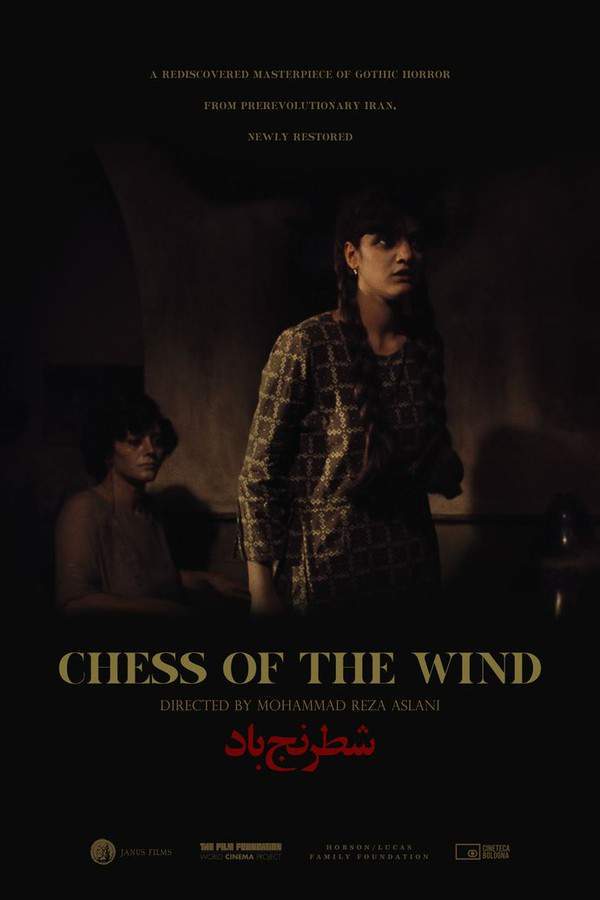
Following the departure of the manor's mysterious mistress, a complex and dangerous struggle for control of her substantial estate begins. Power-hungry relatives and questionable allies engage in a deadly game of chess, maneuvering for advantage and revealing long-held secrets. Allegiances shift as the inheritance sparks bitter rivalries and exposes a tangled web of intrigue.


Does Chess of the Wind (1976) have end credit scenes?
No!
Chess of the Wind (1976) does not have end credit scenes. You can leave when the credits roll.
Meet the Full Cast and Actors of Chess of the Wind (1976)
Explore the complete cast of Chess of the Wind (1976), including both lead and supporting actors. Learn who plays each character, discover their past roles and achievements, and find out what makes this ensemble cast stand out in the world of film and television.





External Links and Streaming Options
Discover where to watch Chess of the Wind (1976) online, including streaming platforms, rental options, and official sources. Compare reviews, ratings, and in-depth movie information across sites like Wikipedia, Rotten Tomatoes, Metacritic or Box Office Mojo.






Ratings and Reviews for Chess of the Wind (1976)
See how Chess of the Wind (1976) is rated across major platforms like IMDb, Metacritic, and TMDb. Compare audience scores and critic reviews to understand where Chess of the Wind (1976) stands among top-rated movies in its genre.

The Movie Echo Score
Chess of the Wind emerges as a strikingly crafted Iranian drama whose artistic ambition and visual flair outweigh its occasional narrative sluggishness. Critics uniformly commend the film’s distinctive direction, elegant camera work, and resonant social critique, while users highlight its compelling performances and richly detailed mise‑en‑scene. Although pacing can feel measured, the film’s thematic depth and atmospheric texture sustain engagement. Consequently, the work stands as a notable entry in 1970s Iranian cinema with solid rewatch appeal.
The Movie Echo Score Breakdown for Chess of the Wind (1976)

Art & Craft
In terms of art and craft, the film is praised for its elegant moving camera and disciplined visual composition. Critics note the stylish cinematography, meticulous framing, and distinctive production design that convey an ornate Tehran mansion. User comments echo this, emphasizing striking lens language, nuanced lighting, and meticulous attention to detail, positioning the visual execution as a primary strength.

Character & Emotion
When assessing character and emotion, reviewers consistently highlight strong performances and layered personalities. Critics remark on the compelling portrayals of family and class dynamics, noting nuanced acting that underscores the film’s social critique. Users similarly commend the expressive work of Shohreh Aghdashloo and the dynamic princess, describing the acting as exceptional and emotionally resonant, establishing character depth as a notable asset.

Story & Flow
The narrative is described as a complex, measured tale of intrigue, greed, and oppression. Critics appreciate the elegant threading of story elements and the film’s originality within familiar genre conventions, though some note a methodical pace that may feel slow. User feedback mirrors this balance, praising thematic depth and thoughtful dialogue while acknowledging occasional sluggishness, resulting in a generally positive but mixed perception of story execution.

Sensory Experience
Sensory experience receives high marks for its distinctive visual style and meticulous sound design. Critics commend the film’s textured cinematography, atmospheric lighting, and evocative score that together create an immersive atmosphere. Users echo the impact of the film’s striking scenery, precise lens language, and symbolic imagery, emphasizing how auditory and visual elements reinforce the narrative tone, making the sensory dimension a standout feature.

Rewatch Factor
Rewatch factor is viewed positively, with critics noting the film’s disciplined pacing and rewarding complexity that invite multiple viewings. Users describe it as a good watch that offers thoughtful dialogue and surprising narrative turns, while acknowledging that its measured rhythm may not suit all tastes. Overall, the film’s lasting appeal and layered details support a solid propensity for repeat enjoyment.

94
Metascore
tbd
User Score


100%
TOMATOMETER

83%
User Score

3.5
From 3 fan ratings

4.00/5
From 6 fan ratings
Full Plot Summary and Ending Explained for Chess of the Wind (1976)
Read the complete plot summary of Chess of the Wind (1976), including all major events, twists, and the full ending explained in detail. Explore key characters, themes, hidden meanings, and everything you need to understand the story from beginning to end.
In a stately aristocratic house, the death of Khanom Bozorg leaves her wheelchair-bound daughter, Aghdas, to mourn within the vast halls of the Moshir ad-Dowleh Mansion. She shares the space with her mother’s widower, Hadji Amoo, and his two nephews, Ramezan and Shaban. The arrangement is uneasy from the start: Ramezan is betrothed to Aghdas, but the marriage promises more wealth than affection, and Aghdas quickly becomes wary of her fiancé’s true intentions. The household is completed by a devoted maid, Kanizak, who looks after Aghdas and quietly forms a bond with Shaban. Intercut scenes of washerwomen gossiping weave a social undercurrent, filling in the history of Aghdas and Hadji Amoo with rumors, memories, and whispered judgments.
As the days unfold, both Aghdas and Hadji Amoo grow certain they are entitled to inherit Khanom Bozorg’s house. A shared sense of grievance fuses into a reckless plan: one evening, Aghdas and Kanizak slip into Hadji Amoo’s private room and burn the house deeds, removing his name from the documents. The act sets off a sequence of confrontations between stepfather and stepdaughter, each clash underscoring a deeper hunger for control and survival. Aghdas, emboldened or desperate, hatches a more drastic scheme: she privately signals to Ramezan her intention to kill Hadji Amoo, masking it as something else and letting him believe he remains in the family’s good graces.
The air grows heavier as Hadji Amoo prays in his chamber, and Aghdas is wheeled in by Kanizak. With a silver flail, she strikes Hadji Amoo, and the household descends into a grim sequence of actions—Kanizak and Ramezan drag the fallen man to the cellar and stash his body in a bottomless jar, a macabre plan to dissolve it later with nitric acid at Aghdas’s command. The home shivers with the potential of discovery, yet the immediate threat seems contained, at least for a moment.
Weeks later, two creditors arrive with a police commissar to press Hadji Amoo for a debt. Aghdas insists she has seen nothing of him for days, but the commissar’s sharper memory tells a different tale: he saw Hadji Amoo on the street only recently. Panic flares as Kanizak and Ramezan escort the men down to the cellar. They search the jars for a body and come up empty-handed, and the pair leave as quietly as they came. The tension intensifies: is Hadji Amoo truly dead, or has he found a way to loom over the house from some shadowed corner?
Aghdas’s paranoia deepens. The rumor mill returns in the form of a traveling musical troupe, who claim to have seen Hadji Amoo in public, and her fear snowballs into illness. Kanizak persuades Aghdas to travel briefly away from the mansion to visit a nearby holy site, hoping distance will ease the danger. Yet the quiet outside cannot silence the murmur inside: at night, laughter echoes from the cellar, and Aghdas, driven by a mixture of resolve and dread, fetches an antique pistol and descends to the basement. There, she discovers Hadji Amoo and Kanizak relaxing together in the bath. In a decisive act, she shoots Hadji Amoo, but the shock proves too much for her, and she collapses from a heart attack.
With Hadji Amoo dead and the plan seemingly undone, Kanizak and Shaban plot to live off the inheritance together. It appears they had staged Hadji Amoo’s death to reap the rewards in concert, their partnership a fragile cooperation built on shared ambition. However, the alliance fractures when Kanizak learns that Shaban does not intend to marry her, and the two argue upstairs. Returning to the cellar, Ramezan discovers the tangled bodies and the betrayal of his cousin. Enraged by Shaban’s treachery, he climbs the stairs and shoots him dead, fracturing the would-be family further.
In the closing moments, Kanizak leaves the mansion behind, carrying only a young boy and Aghdas’s elderly nanny. The camera lingers on the city beyond the walls, a quiet, lingering reminder of lives consumed by greed, fear, and the fragile threads that hold a family together. The film ends on a note of haunting consequence, suggesting that the inheritance, rather than securing a future, has already rewritten the fates of everyone involved.

Coming soon on iOS and Android
The Plot Explained Mobile App
From blockbusters to hidden gems — dive into movie stories anytime, anywhere. Save your favorites, discover plots faster, and never miss a twist again.
Sign up to be the first to know when we launch. Your email stays private — always.
Explore the mobile appDiscover Film Music Concerts Near You – Live Orchestras Performing Iconic Movie Soundtracks
Immerse yourself in the magic of cinema with live orchestral performances of your favorite film scores. From sweeping Hollywood blockbusters and animated classics to epic fantasy soundtracks, our curated listings connect you to upcoming film music events worldwide.
Explore concert film screenings paired with full orchestra concerts, read detailed event information, and secure your tickets for unforgettable evenings celebrating legendary composers like John Williams, Hans Zimmer, and more.


Chess of the Wind (1976) Other Names and Titles
Explore the various alternative titles, translations, and other names used for Chess of the Wind (1976) across different regions and languages. Understand how the film is marketed and recognized worldwide.
Quick Links: Summary, Cast, Ratings, More

What's After the Movie?
Not sure whether to stay after the credits? Find out!
Check out our other apps:

SAT Sphere
Build confidence for the Digital SAT.

Mori Atlas
Discover wild places worth protecting.

Luntero
Search smarter for a home in Amsterdam.

Plot Explained
Unravel movie endings and hidden clues.

Pokechamp
Dive into Pokémon data and battle logic.

Driving Theory
Get ready for your European theory test.

Movie Dust
Plan your next cinema trip with ease.

Musemap
Find art and culture as you travel.

Selkobase
Compare credentials before committing.

Local Manual
Turn an unfamiliar country into practical next steps.

Lernavi
Compare school systems before your next move.

GymRoam
Find a workout stop wherever your plans take you.
Explore Our Movie Platform
New Movie Releases (2026)
Famous Movie Actors
Top Film Production Studios
Movie Plot Summaries & Endings
Major Movie Awards & Winners
Best Concert Films & Music Documentaries
Movie Collections and Curated Lists
© 2026 What's After the Movie. All rights reserved.
Privacy Policy