Chalo 2018

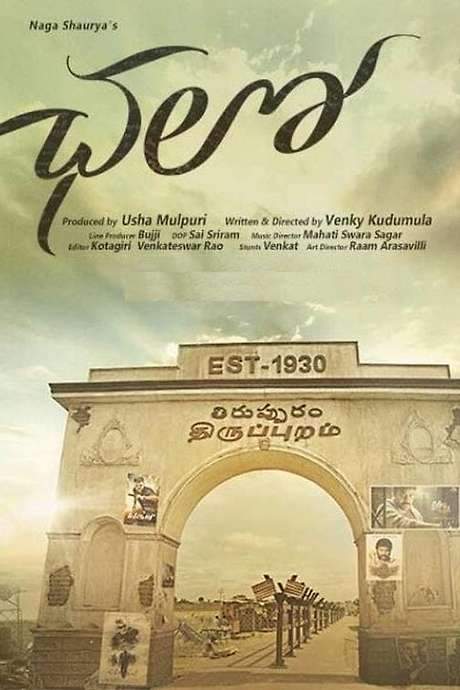
Hari is a young man with a penchant for fighting, much to the frustration of his father. His life takes an unexpected turn when he finds himself in a difficult situation, one that even challenges his usual aggressive nature. He must confront unforeseen circumstances and navigate a complex predicament that tests his limits.


Does Chalo have end credit scenes?
No!
Chalo does not have end credit scenes. You can leave when the credits roll.
Where to Watch Chalo
See current US streaming, rental, and purchase options for Chalo (2018) via JustWatch.

Streaming availability powered by 
Meet the Full Cast and Actors of Chalo
Explore the complete cast of Chalo, including both lead and supporting actors. Learn who plays each character, discover their past roles and achievements, and find out what makes this ensemble cast stand out in the world of film and television.




External Links and Streaming Options
Discover where to watch Chalo online, including streaming platforms, rental options, and official sources. Compare reviews, ratings, and in-depth movie information across sites like IMDb, TMDb, Wikipedia or JustWatch.






Ratings and Reviews for Chalo
See how Chalo is rated across major platforms like IMDb, Metacritic, and TMDb. Compare audience scores and critic reviews to understand where Chalo stands among top-rated movies in its genre.

The Movie Echo Score
Chalo delivers a lively romantic comedy that lands unevenly across its components. The film showcases bright cinematography and colorful visuals, while the chemistry between the leads adds energy to the narrative. The plot leans on familiar tropes, prompting both engagement and criticism of its originality. Soundtrack and musical moments draw mixed reactions, yet the overall entertainment factor encourages repeat viewings. Consequently, the movie registers a moderate‑positive overall impression.
The Movie Echo Score Breakdown for Chalo

Art & Craft
In terms of art and craft, the film benefits from striking cinematography and vivid visual design that many viewers found appealing. Direction, however, is described as inconsistent, and some critics note a reliance on conventional editing patterns. The occasional praise for action choreography adds to its visual strengths. Overall, the artistic execution rates above average despite directional shortcomings.

Character & Emotion
When it comes to character and emotion, the lead pair displays lively performances and noticeable chemistry that lifts the comedy. Some reviewers highlight expressive screen presence, while others point out limited range and over‑stylized acting. Supporting roles receive limited commentary. The overall character work is competent, offering enough engagement to sustain audience interest without reaching excellence.

Story & Flow
The story and flow present a familiar romantic‑comedy framework that some viewers find enjoyable and others deem bland. Plot coherence is generally maintained, yet originality suffers due to predictable tropes and occasional pacing dips. Certain critics appreciate the lighthearted tone, whereas others criticize the lack of substantive narrative depth. Consequently, the storytelling lands in a mixed‑midrange zone.

Sensory Experience
Sensory experience is anchored by vibrant music and a colorful visual palette that many praise as energetic. Some audience members, however, find the soundtrack overly inserted or average in impact. The film’s sound design supports comedic beats but does not consistently elevate the viewing experience. Overall, the sensory elements are pleasing, contributing positively to the film’s atmosphere.

Rewatch Factor
Rewatch factor is a notable strength, with several viewers expressing intent to see the film multiple times. The humor and light entertainment value encourage repeat viewings, and audience enthusiasm is reflected in high repeat‑watch claims. No substantial detractors diminish this perception. As a result, the movie scores very high on lasting appeal and replayability.
Full Plot Summary and Ending Explained for Chalo
Read the complete plot summary of Chalo, including all major events, twists, and the full ending explained in detail. Explore key characters, themes, hidden meanings, and everything you need to understand the story from beginning to end.
The story opens with Hari stepping into a jail cell, where an inmate recounts his own history and reveals that he is Hari’s father. This father figure describes a childhood ruled by violence: whenever the young boy cried, the father let him vent his anger on someone else, a habit that superficially made the kid feel powerful. As Hari grows, fighting becomes more than a impulse—it becomes a way of life. The authorities warn that if he fights and harms someone, he will face punishment, but the protests of his father and the village’s tensions pull Hari toward constant conflict.
At the insistence of a friend of Hari’s father, Hari is sent to Tiruppuram, a village perched on the border between Andhra Pradesh and Tamil Nadu, where daily clashes between Telugu and Tamil factions have long shaped life there. The authorities lie to him, telling him it’s a routine transfer, and Hari arrives with a fire in his eyes. Once there, he is quickly drawn into the Tamil faction, but manages a narrow, unscathed escape to the Telugu side. He befriends an auto driver named Bose, who explains the delicate balance of loyalties, fears, and rivalries that govern the town.
Hari enrolls in a college that is supposed to be a neutral ground, run by the stern administrator Paramatma, who tries to keep the campus free of the feud. Behind the college, in a shed near the cafeteria where street battles between the Telugu and Tamil groups are staged, Hari first encounters the dramatic power of local rivalry. It’s here that he spots Karthika, a Tamil girl who captivates him, setting off a spark that will test his loyalties. He also befriends Sathya, another Tamil student, and begins a flirtation that she initially rebuffs. Hari’s persistence gradually earns her interest, but their budding romance is entangled with the village’s factions.
As Sathya’s father’s approval becomes a gatekeeper for their relationship, Hari learns that the gatekeeper is Keshava, the high-powered leader of the Telugu faction and a sworn rival of Veeramuthu—the Tamil faction’s robust and respected head. A mix-up of names further complicates matters, steering Hari toward seeking the approval of Keshava instead of Veeramuthu, and the village’s uneasy truce begins to tilt toward renewed conflict. The local zamindar, who acts as a mediator, watches these games with growing concern.
In a maneuver meant to win favor with Veeramuthu, Hari engineers a humiliating public display of Keshava, arranging posters that feature Hari and Karthika together in a way that challenges the Tamil leader’s standing. Paramatma learns about the illicit fights happening behind the college and contemplates resigning, but the reform-minded students ask for forgiveness and a chance to prove themselves.
Hari’s parents arrive to help navigate the escalating crisis, and Paramatma and the reforming students join in the effort to map out the feud’s past. To uncover the truth about Tiruppuram’s bitter history, Hari, Sathya, and Paramatma stage a bold kidnapping of the village elders to uncover how the conflict began. They discover that the village was once a cohesive community led by Veeramuthu Sr. and Rao Bahadur Keshava, who were friends, and that in 1953, central officials attempted to redraw the borders to create Andhra Pradesh. The two leaders refused; a night of violence followed, their injuries becoming the spark that would ignite the border’s creation the next day, tearing the village apart.
The investigation then reveals a deeper, more painful truth: Veeramuthu Sr. and Rao Bahadur had both had an affair with Diana, a British woman, and she died after being pushed during a confrontation between the two men. Their deaths ignited a bitter feud that the zamindar—Diana’s son—hid for years. Hari’s discovery threatens to unravel the leaders’ legacies and the fragile peace of the village.
Confronted with these revelations, Veeramuthu and Keshava arrive at the scene, confronted by Hari’s demand that they settle their old feud once and for all. Hari insists that if the leaders refuse to end their enmity, he will reveal the truth about their fathers and the cost to the community. Faced with a choice between continuing a dying feud and embracing a dangerous past, Veeramuthu and Keshava decide to set aside their rivalry and forge a new friendship. The film closes with Hari securing Karthika’s hand in marriage, signaling a hopeful end to years of division and a new balance in Tiruppuram’s divided world.

Coming soon on iOS and Android
The Plot Explained Mobile App
From blockbusters to hidden gems — dive into movie stories anytime, anywhere. Save your favorites, discover plots faster, and never miss a twist again.
Sign up to be the first to know when we launch. Your email stays private — always.
Explore the mobile appWatch Trailers, Clips & Behind-the-Scenes for Chalo
Watch official trailers, exclusive clips, cast interviews, and behind-the-scenes footage from Chalo. Dive deeper into the making of the film, its standout moments, and key production insights.
Chalo Other Names and Titles
Explore the various alternative titles, translations, and other names used for Chalo across different regions and languages. Understand how the film is marketed and recognized worldwide.
Quick Links: Summary, Cast, Ratings, More

What's After the Movie?
Not sure whether to stay after the credits? Find out!
Check out our other apps:

SAT Sphere
Build confidence for the Digital SAT.

Mori Atlas
Discover wild places worth protecting.

Luntero
Search smarter for a home in Amsterdam.

Plot Explained
Unravel movie endings and hidden clues.

Pokechamp
Dive into Pokémon data and battle logic.

Driving Theory
Get ready for your European theory test.

Movie Dust
Plan your next cinema trip with ease.

Musemap
Find art and culture as you travel.

Selkobase
Compare credentials before committing.

Local Manual
Turn an unfamiliar country into practical next steps.

Lernavi
Compare school systems before your next move.

GymRoam
Find a workout stop wherever your plans take you.
Explore Our Movie Platform
New Movie Releases (2026)
Famous Movie Actors
Top Film Production Studios
Movie Plot Summaries & Endings
Major Movie Awards & Winners
Best Concert Films & Music Documentaries
Movie Collections and Curated Lists
© 2026 What's After the Movie. All rights reserved.
Privacy Policy