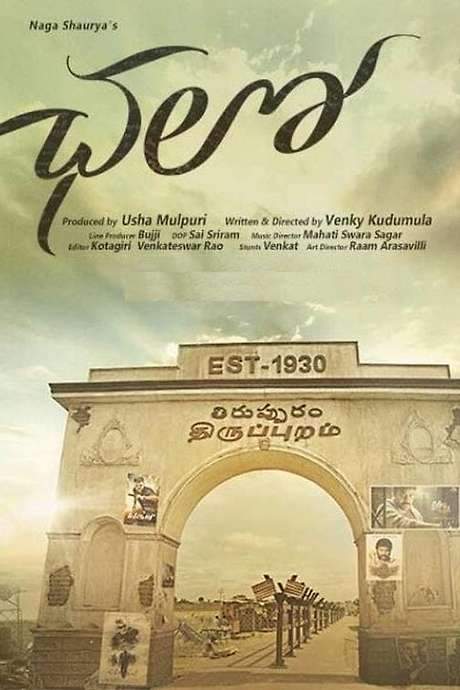
Chalo 2018

Directed by

Venky Kudumula
Made by

Ira Creations
Where to Watch Chalo
See current US streaming, rental, and purchase options for Chalo (2018) via JustWatch.

Streaming availability powered by 
Chalo Plot Summary
Read the complete plot summary and ending explained for Chalo (2018). From turning points to emotional moments, uncover what really happened and why it matters.
The story opens with Hari stepping into a jail cell, where an inmate recounts his own history and reveals that he is Hari’s father. This father figure describes a childhood ruled by violence: whenever the young boy cried, the father let him vent his anger on someone else, a habit that superficially made the kid feel powerful. As Hari grows, fighting becomes more than a impulse—it becomes a way of life. The authorities warn that if he fights and harms someone, he will face punishment, but the protests of his father and the village’s tensions pull Hari toward constant conflict.
At the insistence of a friend of Hari’s father, Hari is sent to Tiruppuram, a village perched on the border between Andhra Pradesh and Tamil Nadu, where daily clashes between Telugu and Tamil factions have long shaped life there. The authorities lie to him, telling him it’s a routine transfer, and Hari arrives with a fire in his eyes. Once there, he is quickly drawn into the Tamil faction, but manages a narrow, unscathed escape to the Telugu side. He befriends an auto driver named Bose, who explains the delicate balance of loyalties, fears, and rivalries that govern the town.
Hari enrolls in a college that is supposed to be a neutral ground, run by the stern administrator Paramatma, who tries to keep the campus free of the feud. Behind the college, in a shed near the cafeteria where street battles between the Telugu and Tamil groups are staged, Hari first encounters the dramatic power of local rivalry. It’s here that he spots Karthika, a Tamil girl who captivates him, setting off a spark that will test his loyalties. He also befriends Sathya, another Tamil student, and begins a flirtation that she initially rebuffs. Hari’s persistence gradually earns her interest, but their budding romance is entangled with the village’s factions.
As Sathya’s father’s approval becomes a gatekeeper for their relationship, Hari learns that the gatekeeper is Keshava, the high-powered leader of the Telugu faction and a sworn rival of Veeramuthu—the Tamil faction’s robust and respected head. A mix-up of names further complicates matters, steering Hari toward seeking the approval of Keshava instead of Veeramuthu, and the village’s uneasy truce begins to tilt toward renewed conflict. The local zamindar, who acts as a mediator, watches these games with growing concern.
In a maneuver meant to win favor with Veeramuthu, Hari engineers a humiliating public display of Keshava, arranging posters that feature Hari and Karthika together in a way that challenges the Tamil leader’s standing. Paramatma learns about the illicit fights happening behind the college and contemplates resigning, but the reform-minded students ask for forgiveness and a chance to prove themselves.
Hari’s parents arrive to help navigate the escalating crisis, and Paramatma and the reforming students join in the effort to map out the feud’s past. To uncover the truth about Tiruppuram’s bitter history, Hari, Sathya, and Paramatma stage a bold kidnapping of the village elders to uncover how the conflict began. They discover that the village was once a cohesive community led by Veeramuthu Sr. and Rao Bahadur Keshava, who were friends, and that in 1953, central officials attempted to redraw the borders to create Andhra Pradesh. The two leaders refused; a night of violence followed, their injuries becoming the spark that would ignite the border’s creation the next day, tearing the village apart.
The investigation then reveals a deeper, more painful truth: Veeramuthu Sr. and Rao Bahadur had both had an affair with Diana, a British woman, and she died after being pushed during a confrontation between the two men. Their deaths ignited a bitter feud that the zamindar—Diana’s son—hid for years. Hari’s discovery threatens to unravel the leaders’ legacies and the fragile peace of the village.
Confronted with these revelations, Veeramuthu and Keshava arrive at the scene, confronted by Hari’s demand that they settle their old feud once and for all. Hari insists that if the leaders refuse to end their enmity, he will reveal the truth about their fathers and the cost to the community. Faced with a choice between continuing a dying feud and embracing a dangerous past, Veeramuthu and Keshava decide to set aside their rivalry and forge a new friendship. The film closes with Hari securing Karthika’s hand in marriage, signaling a hopeful end to years of division and a new balance in Tiruppuram’s divided world.
Chalo Timeline
Follow the complete movie timeline of Chalo (2018) with every major event in chronological order. Great for understanding complex plots and story progression.
Inmate begins telling Hari's history
A man in a jail cell is visited by another inmate who starts recounting the life story that led to Hari. The tale centers on Hari's father and how his violence shaped his son's love of fighting. The narrator sets a feud-driven tone that threads through the village and college.
The father's brutal parenting
Hari's father would delight in letting his crying son beat someone to feel happy. This cruel dynamic trains Hari to see fighting as a path to approval and power. As Hari grows, his fists become the primary language of respect in their world.
Police warn and transfer decision
The police warn Hari's father that any violence will be punished, signaling consequences for fighting. Fed up, they decide to send Hari to Tiruppuram upon the insistence of Hari's father's friend. The move places the boy in a border-town environment where two communities clash.
Arrival in Tiruppuram and faction switch
Upon arriving in Tiruppuram, Hari is drawn into the Tamil faction and quickly escapes back to the Telugu side, avoiding major conflict. He befriends an auto driver named Bose who explains the village's tense dynamics. This marks his first step into the town's communal feud.
Hari starts college under Paramatma
Hari enters his college governed by the authoritarian principal Paramatma who aims to shield the campus from the feud. He attends classes but witnesses fights behind the college shed, hosted by the canteen owner. His encounter with Karthika, a Tamil girl, sparks a first attraction.
Friendships and a growing romance
Hari befriends Sathya, a Tamil student, while he pursues Karthika. Sathya remains unimpressed at first, but Hari's persistence and actions begin to soften her stance. The budding dynamic becomes a focal point amid the ongoing feud.
Love faced with parental approval and a name mix-up
Karthika's love for Hari depends on her father Veeramuthu's approval, the Tamil faction leader. A mix-up of names leads Hari to seek approval from Keshava, the Telugu faction leader, complicating loyalties. The tension between two fathers intensifies the village divide.
Hari humiliates Keshava to gain Veeramuthu's favor
To get into Veeramuthu's good books, Hari humiliates Keshava by forcing him to set up posters of Hari and Karthika together. This public humiliation deepens the feud and widens the rift between leaders. The act cements Hari's entanglement in the political games of the village.
Paramatma learns of illegal fights and contemplates resignation
Paramatma uncovers illegal fights taking place behind the college and contemplates resigning from his post. The students, reformed by Hari's influence, ask for forgiveness and convince him to stay. This moment tests the stability Paramatma has tried to maintain.
Parents arrive and uncover the feud's history
Hari's parents arrive to help and understand the feud's origins by joining Hari, Sathya, and Paramatma in uncovering the history. They learn that the village once lived in harmony before the two leaders escalated tensions. The discovery shifts the focus from personal battles to historical grievances.
1953 failed division attempt
In 1953, central government officials arrive to finalize Tiruppuram's division for the creation of Andhra Pradesh, but Veeramuthu Sr. and Rao Bahadur refuse it. After confrontations, their injuries and alleged betrayals spark clashes, and the border is created the next day as villagers sign the new orders.
Karthika's marriage night revelations
On the night of Karthika's marriage, Hari learns that half of Veeramuthu Sr. and Rao Bahadur's assets were transferred to the zamindar. He also uncovers that both leaders had an affair with Diana, a British woman, and that her death followed a scuffle between them. The zamindar's son witnessed the deaths and kept the truth hidden for years.
Truth forces a settlement
Veeramuthu and Keshava arrive, learn the truth from Hari, and are compelled to settle their feud to prevent further chaos. Hari uses the revelation to demand Karthika marry him, threatening to expose their fathers' rivalry. The village edges toward reconciliation as old grievances surface.
Final settlement and reconciliation
Constrained by the revelations, Veeramuthu and Keshava end the feud and become friends, restoring a precarious peace to the village. Hari finally marries Karthika, linking the new alliance to the personal reconciliation. The community shifts from vendetta to unity.
Peace and a new beginning
With the feud resolved and marriages secured, the village returns to a semblance of unity and Hari's role as peacemaker is cemented by his union with Karthika. The story closes on a note of reconciliation and the triumph of understanding over bloodlines.
Chalo Characters
Explore all characters from Chalo (2018). Get detailed profiles with their roles, arcs, and key relationships explained.
Hari — Naga Shaurya
A young man with a penchant for fighting, Hari is lured into Tiruppuram's cross-border conflict and romance. He uses bold, impulsive actions to challenge the feud, but his experiences push him toward empathy and leadership. His transformation hinges on winning Karthika’s love and forcing both sides to confront their fathers' history.
Karthika — Rashmika Mandanna
A Tamil girl who becomes Hari's love interest. Initially unimpressed by Hari, she is swayed by his persistence and his willingness to rethink loyalties. Her acceptance hinges on her father Veeramuthu's support, highlighting the tension between personal love and factional expectations.
Veeramuthu — Mime Gopi
The Tamil faction leader and elder who stands at the crux of the village's feud. He commands respect and enforces codes of honor, but his past actions and grudges become a focal point of the eventual reconciliation. His rivalry with the Telugu faction drives much of the early conflict.
Keshava — Achyuth Kumar
Leader of the Telugu faction and a sworn rival of Veeramuthu. He embodies the stubborn, honor-bound code that sustains the feud. His interactions with Hari and Veeramuthu reveal how misunderstandings and pride perpetuate violence.
Paramatma — Raghu Babu
The authoritarian college principal who tries to keep the peace within the college and the village. He supports reform and is respected by students who urge forgiveness, illustrating a constructive counterpoint to the violence outside. He ultimately plays a key role in the plot's turning point.
Sathya — Satya
A Tamil student and friend to Hari who evolves from cautious observer to an ally who helps shift Karthika's perspective. She represents a bridge between the rival factions and the possibility of change from within the younger generation.
Bose — Vennela Kishore
An auto driver who becomes a confidant and practical guide for Hari in Tiruppuram. He offers street-level insight into the town’s dynamics and supports Hari’s attempts to mend the rift.
Zamindar — Naresh
The son of Diana who inherits the village’s hidden truth and becomes a reluctant witness to the feud’s origins. His presence helps unravel the past and pushes the leaders toward reconciliation.
Chalo Settings
Learn where and when Chalo (2018) takes place. Explore the film’s settings, era, and how they shape the narrative.
Time period
Present-day
The main events unfold in contemporary India, with a key historical flashback to 1953 that explains the origin of the border divide. The present-day plot follows how younger generations confront inherited grievances. The narrative oscillates between current clashes and the past, showing how memory shapes identity and conflict.
Location
Tiruppuram
Tiruppuram is a border village on the Andhra Pradesh–Tamil Nadu line where rival Telugu and Tamil communities clash around the college and local vendors. The town's split loyalties and street-level fights frame Hari's entry into the story, while its college grounds and markets become stages for clashes and uneasy truces. The setting anchors the cross-cultural tensions that drive the plot and Hari's quest for love and peace.
Chalo Themes
Discover the main themes in Chalo (2018). Analyze the deeper meanings, emotional layers, and social commentary behind the film.
🕊️
Feud & Reconciliation
A generations-old feud between Tamil and Telugu factions drives violence and tension in Tiruppuram. Hari's actions oscillate between provocation and peacemaking, catalyzed by his love for Karthika. As truths about the fathers' past come to light, leaders on both sides must choose accountability over revenge. The story culminates in a negotiated settlement that allows former enemies to become allies and leads to Hari's marriage to Karthika.
🧭
Cross-cultural Identity
The village reality centers on Tamil and Telugu identities coexisting in a single town. Language, tradition, and factional loyalties shape choices and alliances, while Hari's bridge-building shows that culture can be navigated rather than weaponized. Karthika's acceptance hinges on dismantling long-held prejudices rather than preserving them. The plot uses cross-cultural tension to argue for coexistence through empathy and dialogue.
🔄
Transformation & Growth
Hari begins as a fighter whose violence brings him happiness, but his Tiruppuram journey drives him toward reform. The college, led by Paramatma, becomes a symbol of non-violent change and reform through dialogue. The revelation of the paternal feud forces leaders to confront legacy and accountability. By the end, Hari's choices embody growth, and his resolution with Karthika marks a new chapter for the community.

Coming soon on iOS and Android
The Plot Explained Mobile App
From blockbusters to hidden gems — dive into movie stories anytime, anywhere. Save your favorites, discover plots faster, and never miss a twist again.
Sign up to be the first to know when we launch. Your email stays private — always.
Explore the mobile appChalo Spoiler-Free Summary
Discover the spoiler-free summary of Chalo (2018). Get a concise overview without any spoilers.
In the rugged borderlands where Andhra Pradesh meets Tamil Nadu, a village clings to a fragile equilibrium between two long‑standing communities. The streets echo with whispered rivalries, and every ordinary moment carries the weight of an unseen divide. Against this backdrop, daily life is a delicate dance of loyalty, pride, and the ever‑present possibility of conflict, giving the town a tense, almost cinematic atmosphere that feels both rooted and restless.
Hari arrives with a reputation forged by years of fist‑fights and a father who encouraged his aggression as a release for pain. Raised in a home where violence was normalized, he now finds himself thrust into a world where his usual outlet is both a survival skill and a source of inner turmoil. The promise of a fresh start—an assignment that seems routine—pulls him toward a new landscape that will challenge the very instincts that have defined him.
At the heart of the village lies a college that strives to be a neutral sanctuary, overseen by a stern yet hopeful administrator, Paramatma. Within its walls, Bose, a chatty auto driver, offers a street‑level perspective on the simmering tensions, while Karthika, a spirited Tamil student, captures Hari’s attention with a blend of curiosity and resilience. Friendships begin to blossom amid the rivalry, hinting at possibilities that extend beyond inherited grudges, and a subtle romance teeters on the edge of the community’s fault lines.
The film unfolds with a gritty realism tempered by moments of unexpected tenderness, inviting the audience to wonder whether a single individual can navigate, and perhaps reshape, a legacy of discord. Its tone balances raw energy with a lingering hope, suggesting that even in a place divided by history, the promise of change may be found in the choices of those willing to confront their own limits.
Featured on this page

What's After the Movie?
Not sure whether to stay after the credits? Find out!
Check out our other apps:

SAT Sphere
Build confidence for the Digital SAT.

Mori Atlas
Discover wild places worth protecting.

Luntero
Search smarter for a home in Amsterdam.

Plot Explained
Unravel movie endings and hidden clues.

Pokechamp
Dive into Pokémon data and battle logic.

Driving Theory
Get ready for your European theory test.

Movie Dust
Plan your next cinema trip with ease.

Musemap
Find art and culture as you travel.

Selkobase
Compare credentials before committing.

Local Manual
Turn an unfamiliar country into practical next steps.

Lernavi
Compare school systems before your next move.

GymRoam
Find a workout stop wherever your plans take you.
Explore Our Movie Platform
New Movie Releases (2026)
Famous Movie Actors
Top Film Production Studios
Movie Plot Summaries & Endings
Major Movie Awards & Winners
Best Concert Films & Music Documentaries
Movie Collections and Curated Lists
© 2026 What's After the Movie. All rights reserved.
Privacy Policy