Beyond Glory 1948


Haunted by guilt over the presumed death of his commanding officer in Tunisia, Rocky visits the officer’s widow. A mutual attraction blossoms, and she persuades him to enroll at West Point. There, his harsh treatment of a plebe leads to a serious disciplinary hearing that could result in a court‑martial.


Does Beyond Glory have end credit scenes?
No!
Beyond Glory does not have end credit scenes. You can leave when the credits roll.
Meet the Full Cast and Actors of Beyond Glory
Explore the complete cast of Beyond Glory, including both lead and supporting actors. Learn who plays each character, discover their past roles and achievements, and find out what makes this ensemble cast stand out in the world of film and television.

Donna Reed
Ann Daniels

Luis Van Rooten
Dr. Joseph White (as Louis Van Rooten)
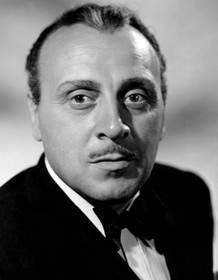
George Coulouris
Lew Proctor
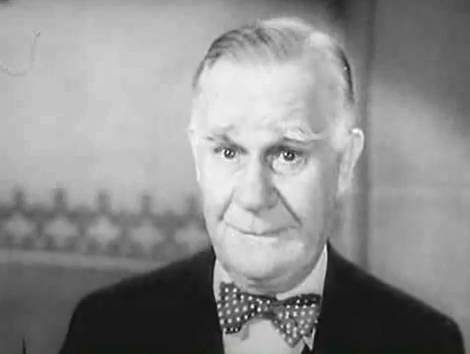
Henry Travers
Pop Dewing
Russell Wade
Cadet Jensen
Dorothy Abbott
Party Girl (uncredited)
Dwight D. Eisenhower
Himself (archive footage) (uncredited)
Kenneth Tobey
Bit Role (uncredited)
Dick Hogan
Cadet Sgt. Eddie Loughlin
Alan Ladd
Capt. Rockwell 'Rocky' Gilman
George Macready
Maj. Gen. Bond
Paul Picerni
Second Detective (uncredited)
Sean McClory
Barney
Tom Neal
Capt. Henry Jason Daniels
Conrad Janis
Raymond Denmore, Jr.
James Burke
Jim, the Bartender (uncredited)
Noel Neill
Party Girl (uncredited)
Charles Evans
Mr. Julian
Julia Faye
Motherly Churchgoer (uncredited)
Steve Pendleton
Gen. Prescott
Geraldine Wall
Mrs. Daniels
Audie Murphy
Cadet Thomas
Paul Lees
Cadet Miller
Harold Vermilyea
Raymond Denmore, Sr.
Harland Tucker
Col. Stoddard (as Harlan Tucker)
Margaret Field
Cora
Robert Winkler
West Point Candidate (uncredited)
Vincent Donahue
John Craig
External Links and Streaming Options
Discover where to watch Beyond Glory online, including streaming platforms, rental options, and official sources. Compare reviews, ratings, and in-depth movie information across sites like IMDb, TMDb, Wikipedia or Letterboxd.




Take the Ultimate Beyond Glory Movie Quiz
Challenge your knowledge of Beyond Glory with this fun and interactive movie quiz. Test yourself on key plot points, iconic characters, hidden details, and memorable moments to see how well you really know the film.
Beyond Glory (1948) Quiz: Test your knowledge of the 1948 drama *Beyond Glory*, its characters, plot points, and historical context.
Which actor portrayed West Point cadet Rockwell "Rocky" Gilman?
Full Plot Summary and Ending Explained for Beyond Glory
Read the complete plot summary of Beyond Glory, including all major events, twists, and the full ending explained in detail. Explore key characters, themes, hidden meanings, and everything you need to understand the story from beginning to end.
West Point cadet Rockwell ‘Rocky’ Gilman, Alan Ladd, is summoned before a hearing after the influential cadet Raymond Denmore, Jr., Conrad Janis is forced to leave the academy. Denmore’s attorney, Lew Proctor, George Coulouris, attacks the Honor Code and casts Gilman as unfit and possibly criminally liable. Gilman is confined to quarters by the academy superintendent and warned not to discuss the case with anyone, a pressure that strains his personal life and loyalties. In a quiet yet painful consequence, he breaks a date with his girlfriend Ann Daniels, Donna Reed, and the weight of the situation begins to press on him from every side.
As the hearing resumes, Gilman’s classmate, Eddie Loughlin, Dick Hogan, testifies about the brutal reality of academy life—how Gilman endured the plebe year and the grueling training with quiet resolve, even as he carried the scars of war. Gilman ultimately takes the stand to recount his war experiences, laying bare a past that continues to haunt him. The narrative then unfolds a longer memory: unwillingly drafted in December 1941, he learns a hard truth about combat—obedience to superiors is not optional, and sacrifice often comes at a personal cost. He seeks to rise beyond ordinary service, completing officer candidate school, joining a unit bound for North Africa, and forming strong bonds with Loughlin and a West Point graduate, Captain Henry Jason Daniels, Tom Neal. Daniels is killed in action in Tunisia, and Gilman is wounded, a sequence that leaves him with a deep sense of responsibility and a stubborn reluctance to speak about what happened.
Returning home to Brooklyn after his discharge, Gilman tries to readjust to civilian life but finds himself adrift, moving through jobs without finding meaning. The postwar years culminate on V-E Day, when the festive mood in the city feels almost hollow to him, and he seeks out Daniels’ widow, Ann Daniels, Donna Reed. He confesses a burden that has never left him, and Ann begins to see the man behind the uniform for the first time. Her empathy and the memory of Daniels’ own wishes—told through a whisper of a letter that hinted at a safer future for his beloved—draw her closer to Gilman, complicating the lines between loyalty, love, and duty.
A nurse at the hospital where Gilman is treated, John Craig, testifies that Gilman endures nightmares and retreats from his own feelings. He is given a therapeutic drug to unlock his memories, and through this process, Gilman admits that Daniels ordered a counterattack at a precise hour, yet he delayed the assault by three minutes, and Daniels was killed as a result. Gilman insists that he cannot explain the delay, and the revelation unsettles him deeply; he struggles with the idea that he might be a coward, even as the truth points to the chaos of war and the fog of memory. Proctor presses for a court-martial, but the academy superintendent holds off, granting Gilman time to reflect. That night, a note from Ann—declining to lose him to the pressure of his past—sparks a pivotal turn: Gilman decides to resign and go to New York with her, a choice Ann resists, urging him to stand his ground and face the charges.
To support his son, Pop Dewing, Gilman’s adoptive father, brings forward three witnesses, anchored by the steadfast presence of Henry Travers as Pop. The first is Ann herself, who recalls their chance meeting on V-E Day and how Gilman, burdened by guilt, opened up about Daniels’ death. She reveals that Daniels had once hinted at wanting Ann to have a normal life if he should fall, and she admits that she has developed real feelings for Gilman. The second witness, an Army physician, confirms a crucial gap in Gilman’s memory and explains how the drug treatment interacted with his past trauma. The third witness is a platoon soldier who testifies that their counterattack was interrupted by a hidden German tank, leaving Gilman unconscious and unaware that the scheduled strike had passed. This sequence challenges the narrative Gilman has clung to and gradually dissolves the certainty of the charges.
As the testimony unfolds, the accuser acknowledges that some of his charges were lies, and the hearing closes with a renewed sense of ambiguity that only time and reflection can settle. The story returns to a broader frame as General Dwight D. Eisenhower, in archive footage, speaks at the West Point graduation, with Gilman standing among the new wave of graduates—a moment that frames the whole ordeal as part of a larger arc of discipline, service, and striving toward a higher duty. In the end, the film keeps faith with the characters who lived through the trial and the memory of those who did not, presenting a portrait of a young man trying to reconcile courage with culpability, memory with truth, and honor with the heavy weight of history.

Coming soon on iOS and Android
The Plot Explained Mobile App
From blockbusters to hidden gems — dive into movie stories anytime, anywhere. Save your favorites, discover plots faster, and never miss a twist again.
Sign up to be the first to know when we launch. Your email stays private — always.
Explore the mobile appDiscover Film Music Concerts Near You – Live Orchestras Performing Iconic Movie Soundtracks
Immerse yourself in the magic of cinema with live orchestral performances of your favorite film scores. From sweeping Hollywood blockbusters and animated classics to epic fantasy soundtracks, our curated listings connect you to upcoming film music events worldwide.
Explore concert film screenings paired with full orchestra concerts, read detailed event information, and secure your tickets for unforgettable evenings celebrating legendary composers like John Williams, Hans Zimmer, and more.


Beyond Glory Themes and Keywords
Discover the central themes, ideas, and keywords that define the movie’s story, tone, and message. Analyze the film’s deeper meanings, genre influences, and recurring concepts.
Beyond Glory Other Names and Titles
Explore the various alternative titles, translations, and other names used for Beyond Glory across different regions and languages. Understand how the film is marketed and recognized worldwide.
Similar Movies To Beyond Glory You Should Know About
Browse a curated list of movies similar in genre, tone, characters, or story structure. Discover new titles like the one you're watching, perfect for fans of related plots, vibes, or cinematic styles.


Quick Links: Summary, Cast, Ratings, More

What's After the Movie?
Not sure whether to stay after the credits? Find out!
Check out our other apps:

SAT Sphere
Build confidence for the Digital SAT.

Mori Atlas
Discover wild places worth protecting.

Luntero
Search smarter for a home in Amsterdam.

Plot Explained
Unravel movie endings and hidden clues.

Pokechamp
Dive into Pokémon data and battle logic.

Driving Theory
Get ready for your European theory test.

Movie Dust
Plan your next cinema trip with ease.

Musemap
Find art and culture as you travel.

Selkobase
Compare credentials before committing.

Local Manual
Turn an unfamiliar country into practical next steps.

Lernavi
Compare school systems before your next move.

GymRoam
Find a workout stop wherever your plans take you.
Explore Our Movie Platform
New Movie Releases (2026)
Famous Movie Actors
Top Film Production Studios
Movie Plot Summaries & Endings
Major Movie Awards & Winners
Best Concert Films & Music Documentaries
Movie Collections and Curated Lists
© 2026 What's After the Movie. All rights reserved.
Privacy Policy