

What Is Beyond Glory About?
The premise of Beyond Glory in 292 words, with nothing given away. The full story follows below.
In the quiet aftermath of World War II, the United States hums with a mix of celebration and unsaid sorrow. The bustling streets of Brooklyn and the austere, tree‑lined avenues of West Point stand as contrasting backdrops for a generation of men trying to stitch together their fractured identities. The film moves between the gritty, everyday world of a veteran’s return and the rigid, tradition‑steeped atmosphere of America’s premier military academy, setting a tone that is simultaneously reflective and charged with restrained tension.
_Rocky Gilman, a former infantryman still carrying the weight of a battlefield he cannot fully recall, arrives in New York haunted by the presumed death of his commanding officer. Drawn to the officer’s widow, Ann Daniels, a gentle yet resolute woman, the two forge an unexpected bond that offers both solace and new complications. Their connection prompts Ann to urge Rocky toward a fresh start at West Point, believing that the structured environment might restore a sense of purpose that war has stripped away.
At the academy, the relentless rhythm of drills, lectures, and the ever‑present Honor Code creates an atmosphere of disciplined awe. Rocky, now a cadet, struggles to reconcile his hardened wartime instincts with the expected deference toward younger classmates. A sharp encounter with a plebe escalates, putting him under the scrutinizing gaze of the institution’s leadership and setting the stage for a serious disciplinary hearing that could jeopardize his future.
The film glides through these intersecting worlds with a sober, contemplative style, underscoring the clash between personal redemption and the unforgiving demands of duty. Romance, memory, and the quest for honor sway together, inviting the audience to wonder whether a man haunted by the past can ever truly find peace within the rigid walls of tradition.
What Happens in Beyond Glory?
The complete story of Beyond Glory, from the first scene to the last, in 810 words (about 4 minutes). Spoilers throughout. Names in the text link to 7 cast member pages.
Spoilers ahead
West Point cadet Rockwell ‘Rocky’ Gilman, Alan Ladd, is summoned before a hearing after the influential cadet Raymond Denmore, Jr., Conrad Janis is forced to leave the academy. Denmore’s attorney, Lew Proctor, George Coulouris, attacks the Honor Code and casts Gilman as unfit and possibly criminally liable. Gilman is confined to quarters by the academy superintendent and warned not to discuss the case with anyone, a pressure that strains his personal life and loyalties. In a quiet yet painful consequence, he breaks a date with his girlfriend Ann Daniels, Donna Reed, and the weight of the situation begins to press on him from every side.
As the hearing resumes, Gilman’s classmate, Eddie Loughlin, Dick Hogan, testifies about the brutal reality of academy life—how Gilman endured the plebe year and the grueling training with quiet resolve, even as he carried the scars of war. Gilman ultimately takes the stand to recount his war experiences, laying bare a past that continues to haunt him. The narrative then unfolds a longer memory: unwillingly drafted in December 1941, he learns a hard truth about combat—obedience to superiors is not optional, and sacrifice often comes at a personal cost. He seeks to rise beyond ordinary service, completing officer candidate school, joining a unit bound for North Africa, and forming strong bonds with Loughlin and a West Point graduate, Captain Henry Jason Daniels, Tom Neal. Daniels is killed in action in Tunisia, and Gilman is wounded, a sequence that leaves him with a deep sense of responsibility and a stubborn reluctance to speak about what happened.
Returning home to Brooklyn after his discharge, Gilman tries to readjust to civilian life but finds himself adrift, moving through jobs without finding meaning. The postwar years culminate on V-E Day, when the festive mood in the city feels almost hollow to him, and he seeks out Daniels’ widow, Ann Daniels, Donna Reed. He confesses a burden that has never left him, and Ann begins to see the man behind the uniform for the first time. Her empathy and the memory of Daniels’ own wishes—told through a whisper of a letter that hinted at a safer future for his beloved—draw her closer to Gilman, complicating the lines between loyalty, love, and duty.
A nurse at the hospital where Gilman is treated, John Craig, testifies that Gilman endures nightmares and retreats from his own feelings. He is given a therapeutic drug to unlock his memories, and through this process, Gilman admits that Daniels ordered a counterattack at a precise hour, yet he delayed the assault by three minutes, and Daniels was killed as a result. Gilman insists that he cannot explain the delay, and the revelation unsettles him deeply; he struggles with the idea that he might be a coward, even as the truth points to the chaos of war and the fog of memory. Proctor presses for a court-martial, but the academy superintendent holds off, granting Gilman time to reflect. That night, a note from Ann—declining to lose him to the pressure of his past—sparks a pivotal turn: Gilman decides to resign and go to New York with her, a choice Ann resists, urging him to stand his ground and face the charges.
To support his son, Pop Dewing, Gilman’s adoptive father, brings forward three witnesses, anchored by the steadfast presence of Henry Travers as Pop. The first is Ann herself, who recalls their chance meeting on V-E Day and how Gilman, burdened by guilt, opened up about Daniels’ death. She reveals that Daniels had once hinted at wanting Ann to have a normal life if he should fall, and she admits that she has developed real feelings for Gilman. The second witness, an Army physician, confirms a crucial gap in Gilman’s memory and explains how the drug treatment interacted with his past trauma. The third witness is a platoon soldier who testifies that their counterattack was interrupted by a hidden German tank, leaving Gilman unconscious and unaware that the scheduled strike had passed. This sequence challenges the narrative Gilman has clung to and gradually dissolves the certainty of the charges.
As the testimony unfolds, the accuser acknowledges that some of his charges were lies, and the hearing closes with a renewed sense of ambiguity that only time and reflection can settle. The story returns to a broader frame as General Dwight D. Eisenhower, in archive footage, speaks at the West Point graduation, with Gilman standing among the new wave of graduates—a moment that frames the whole ordeal as part of a larger arc of discipline, service, and striving toward a higher duty. In the end, the film keeps faith with the characters who lived through the trial and the memory of those who did not, presenting a portrait of a young man trying to reconcile courage with culpability, memory with truth, and honor with the heavy weight of history.
Beyond Glory Timeline: Every Key Event in Order
15 key events in the order they happen, from “Hearing convened at West Point” to “Ike speaks at West Point graduation”. 15 events name a place, across 9 locations.
- 1
Hearing convened at West Point
A hearing is called at West Point after the incident involving Denmore and Gilman. Denmore is forced to leave the academy, and Gilman is accused of bullying and hazing in retaliation for reporting Denmore's lies. The hearing opens with questions about the Honor Code and the fairness of the proceedings.
When:Day of the hearing Where:West Point, Hearing Room
- 2
Gilman confined to quarters
The academy superintendent confines Gilman to his quarters and warns him not to discuss the case with anyone. He breaks a date with his girlfriend Ann Daniels, signaling the strain the investigation places on his personal life. The atmosphere is tense as the hearing progresses.
When:Same day as hearing start Where:West Point Quarters
- 3
Eddie Loughlin testifies about plebe training
Gilman's classmate Eddie Loughlin testifies that Gilman withstood the rigors of academy discipline without complaint, especially during his difficult plebe year. The testimony frames Gilman as disciplined and resilient. It strengthens the defense against the hazing accusation.
When:During hearing Where:West Point, Hearing Room
- 4
Gilman recounts his war service
Gilman takes the stand and recounts his reluctant drafting in 1941, his path through OCS, and his unit deployed to North Africa. He describes friendships with Loughlin and Daniels, the battle in Tunisia, and his injuries. He explains that he was awarded the Distinguished Service Cross but chose to decline the medal.
When:During hearing Where:West Point, Hearing Room
- 5
From draft to North Africa
The narrative flashes back to his wartime experience. He is drafted in December 1941, goes through officer candidate school, and joins a unit bound for combat in North Africa. He endures heavy fighting with Daniels by his side, and Daniels is killed while Gilman is wounded.
When:1941-1943 Where:North Africa (Tunisia); Army hospital
- 6
Civilian life after the war
After his discharge, Gilman returns to Brooklyn and discovers that his former sweetheart has married someone else. He tries numerous jobs but cannot adjust to civilian life, his identity and purpose haunted by war memories. The search for stability becomes a recurring struggle.
When:Postwar years Where:Brooklyn, New York
- 7
V-E Day visit to Daniels' family and Ann
On V-E Day, as the city celebrates, Gilman goes to see Daniels' widow Ann and his former comrade's family. The visit underscores Gilman's guilt and the personal toll of his wartime actions. The encounter also plants the seeds of his later decisions.
When:V-E Day Where:New York City (Daniels' family) and Ann
- 8
Nurse Craig tests Gilman's nightmares
John Craig, a nurse, administers a therapeutic drug to help reveal Gilman’s hidden memories and feelings. Gilman acknowledges nightmares and a reluctance to discuss the events that haunt him. The treatment exposes a suppressed, troubling memory gap from the battle.
When:Postwar recovery period Where:Army hospital
- 9
The delayed counterattack and a soldier's death
Back on the stand, Gilman concedes that Daniels ordered a counterattack at a specific hour, but he delayed by three minutes. He learns that Daniels was killed during that interval, and the memory of the delay remains painful. The battle’s chaos has left him with a fragmentary memory.
When:During the Tunisia campaign Where:Battlefield, Tunisia
- 10
Hearing pauses and concerns about consequences
Proctor presses for immediate court-martial, while the superintendent urges Gilman to take time to reflect on his testimony. Tension rises as the stakes of the case touch on duty, memory, and honor. The decision about how to proceed lingers in the air.
When:During hearing Where:West Point Hearing Room
Show the other 5 events of Beyond Glory Hide the last 5 events
- 11
Ann testifies about their past
Ann testifies that she first met Gilman on V-E Day and reveals his admission that he caused Daniels' death. She explains how their relationship developed and how she encouraged him to join West Point. Her testimony adds a personal angle to the case and to his sense of duty and affection.
When:During hearing Where:West Point Hearing Room
- 12
The physician confirms memory gaps
An Army physician reviews Gilman’s medical records and confirms there is a gap in his memory of the battle. The medical context helps explain why he cannot fully reconstruct the sequence of events. The memory issue becomes a central consideration in the hearing.
When:During hearing Where:West Point Hearing Room
- 13
A platoon soldier testifies about the ambush
A soldier from Gilman’s platoon testifies that their unit was ambushed by a concealed German tank. Gilman was knocked unconscious by an explosion and later awoke unaware that the attack had been timed. The testimony ties his memory gaps to the fatal outcome for Daniels.
When:During Tunisia campaign Where:Battlefield, Tunisia
- 14
Accuser admits lying; hearing closes
The accuser ultimately admits he lied about Gilman’s conduct during training, and the hearing is closed. The truth that emerges challenges the charges and vindicates Gilman’s character in the eyes of the audience. The process moves toward closure rather than punishment.
When:Closing phase Where:West Point Hearing Room
- 15
Ike speaks at West Point graduation
General Dwight D. Eisenhower delivers the graduation address at West Point, and Gilman is among the graduates. The moment provides a sense of redemption and continuity for those who served. The film ends on a note of respect and national service.
When:Graduation day Where:West Point Graduation Grounds
Who Are the Main Characters in Beyond Glory?
5 characters, among them Rockwell 'Rocky' Gilman (Alan Ladd), Ann Daniels (Donna Reed) and Lew Proctor (George Coulouris): who each one is and the part they play in the story. Every profile links to the actor’s page.
- R'
Rockwell 'Rocky' Gilman (Alan Ladd)
Played by Alan Ladd
A West Point cadet whose stoic exterior hides deep war-induced turmoil. He endures the academy’s rigors while wrestling with guilt over Daniels’ death and a troubling memory gap. His arc moves from silent suffering toward confronting his past and choosing a path of integrity, even at personal cost.
- 🎖️ Veteran
- 🧠 Trauma
- ⚖️ Duty-bound
-

Ann Daniels (Donna Reed)
Played by Donna Reed
Gilman’s love interest and Daniels’ widow, who embodies resilience and moral clarity. She navigates complicated emotions, offering support while challenging Gilman to face the truth. Her presence anchors the personal stakes of the hearing and the possibility of a future together.
- 💞 Love
- 🕊️ Resilience
- 🎗️ Support
-
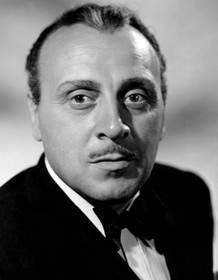
Lew Proctor (George Coulouris)
Played by George Coulouris
Denmore’s attorney who challenges the academy and its Honor Code with aggressive rhetoric. He represents external pressure and legal maneuvering designed to dismantle Gilman’s reputation. Proctor’s tactics highlight the contentious battle over memory, duty, and accountability.
- ⚖️ Legal manipulation
- 🗣️ Charisma
- 💼 Ambition
- CH
Captain Henry Jason Daniels (Tom Neal)
Played by Tom Neal
Ann Daniels’ husband and the platoon leader whose death becomes a focal point of Gilman's guilt. His memory drives the emotional core of the story, illustrating the costs of war and the fragile line between heroism and blame. His legacy shapes the characters’ perspectives on duty and remembrance.
- 🛡️ Heroic
- 💔 Sacrifice
- 🗡️ Leadership
- MG
Maj. Gen. Bond (George Macready)
Played by George Macready
A high-ranking, authoritative figure who oversees the hearing and enforces the Army’s discipline. He embodies institutional power and the pressure to uphold the Honor Code. His presence underscores the tension between individual truth and collective standards.
- 🏛️ Military leadership
- 🧭 Authority
- 🎖️ Honor
Where and When Is Beyond Glory Set?
Beyond Glory is set in West Point, New York, Brooklyn, New York, Tunisia, North Africa (1940s, World War II era). Here is why the time and place matter to the story.
When
1940s, World War II era
The narrative is anchored in World War II and its immediate aftermath. It follows Dec 1941 drafts, combat in North Africa, hospital recovery, and the postwar tension of reintegration on VE Day and beyond. The time frame centers on the clash between wartime duty and civilian adjustment, culminating in a West Point graduation.
Where
West Point, New York, Brooklyn, New York, Tunisia, North Africa
The story largely unfolds around West Point, the famed military academy in New York. It also depicts civilian life in Brooklyn as Gilman tries to reassemble his life after the war, with flashbacks to the North Africa campaign in Tunisia. The settings emphasize military discipline, ceremonial moments, and the lasting impact of wartime experiences on everyday life.
- 🏛️ Military academy
- 🗽 New York setting
- 🏜️ North Africa campaign
What Are the Themes of Beyond Glory?
3 ideas the story keeps returning to, among them Guilt, Duty and Memory.
-
01
Guilt
Rocky Gilman carries the weight of Daniels' death, feeling responsible for a delay under fire. The film frames memory as a fragile thing, with gaps that complicate his sense of self and courage. It questions whether true heroism is free of fault or built on facing one's mistakes. Redemption arrives not through denial but through acknowledging the past.
-
02
Duty
Duty and honor loom large at West Point, where cadets are expected to shoulder immense responsibility. The narrative contrasts battlefield obedience with personal moral responsibility, especially when misremembered actions threaten the honor code. Gilman’s struggle tests the line between loyalty to orders and accountability for consequences. The hearing becomes a crucible for defining what it means to be a leader.
-
03
Memory
Trauma reshapes perception, with nightmares and selective memory shaping how Gilman recalls the battle. An Army physician uses therapeutic techniques to uncover buried memories, illustrating how memory can both reveal and complicate truth. The film suggests that memory is not a reliable compass, yet confronting it is essential for reconciliation. The climactic revelations redefine what actually happened and why it matters.
What Kind of Film Is Beyond Glory?
Hopeful in tone, with steady pacing and a moderate story, going by the plot summary.
- Tone
- Hopeful
- Pacing
- Steady
- Story
- Moderate
- Intensity
- Medium
- Ending
- Happy
A steady-paced, heavy drama about a soldier grappling with survivor's guilt, which creates a tense and introspective atmosphere that ultimately moves toward a hopeful resolution centered on personal redemption.
- burdened
- introspective
- hopeful
- tense
- melancholic
- redemptive
- war trauma
- guilt and redemption
- military discipline
- honor code
Content notes: war violence, combat death, psychological trauma, survivor's guilt.
Quiz
How well do you remember Beyond Glory? Test yourself on the story.
Where to Watch Beyond Glory
. US availability and prices from JustWatch.
Streaming availability in the US, powered by 


