
Before the Winter Chill 2013


Paul, a respected surgeon, and Lucie, his accomplished homemaker wife, appear to be the ideal couple. However, as autumn arrives, Paul finds himself drawn into a perplexing and potentially hazardous connection with a young woman. Strange occurrences, such as roses delivered to his office and seemingly accidental encounters, spark his suspicion. He begins to question the nature of this new relationship and wonder if a darker secret lies hidden beneath the surface.


Does Before the Winter Chill have end credit scenes?
No!
Before the Winter Chill does not have end credit scenes. You can leave when the credits roll.
Meet the Full Cast and Actors of Before the Winter Chill
Explore the complete cast of Before the Winter Chill, including both lead and supporting actors. Learn who plays each character, discover their past roles and achievements, and find out what makes this ensemble cast stand out in the world of film and television.

Kristin Scott Thomas
Lucie

Daniel Auteuil
Paul
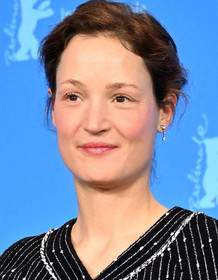
Vicky Krieps
Caroline

Leïla Bekhti
Lou

Richard Berry
Gérard
Jérôme Varanfrain
Victor
Joël Delsaut
Capitaine Thierry Weiler
Lucie Debay
Amie de Lou
Laurent Claret
Denis, le directeur de la clinique
Jean-François Wolff
Commandant Xavier Garin
Laure Killing
Mathilde
Anne Metzler
Zoé Gassard
Annette Schlechter
Mme Malek
Jacqueline Ghaye
Juliette
Pascale Noe Adam
Anouk
External Links and Streaming Options
Discover where to watch Before the Winter Chill online, including streaming platforms, rental options, and official sources. Compare reviews, ratings, and in-depth movie information across sites like IMDb, TMDb, Wikipedia or Rotten Tomatoes.






Take the Ultimate Before the Winter Chill Movie Quiz
Challenge your knowledge of Before the Winter Chill with this fun and interactive movie quiz. Test yourself on key plot points, iconic characters, hidden details, and memorable moments to see how well you really know the film.
Before the Winter Chill: A psychological drama about a respected brain surgeon whose life is shaken by an unexpected encounter with a mysterious woman named Lou.
What is Paul's professional specialty?
Full Plot Summary and Ending Explained for Before the Winter Chill
Read the complete plot summary of Before the Winter Chill, including all major events, twists, and the full ending explained in detail. Explore key characters, themes, hidden meanings, and everything you need to understand the story from beginning to end.
In a quietly focused drama from Philippe Claudel, Paul [Daniel Auteuil] is a brain surgeon whose life appears neatly arranged and deeply secure. He is married to the luminous Lucie [Kristin Scott Thomas], a woman who gave up her own ambitions to support his brilliant career, and together they’ve built a warm home that includes a son and the steady rhythm of daily life. On the surface, everything is good, but a subtle disquiet threads through Paul’s days, a sense that something critical might be missing or mislaid in the routine of success.
That sense is jolted when a bar worker recognizes him, insisting he once performed procedures beyond his current specialty. Paul resists at first—he’s a neurosurgeon, not a generalist—but the woman’s memory is stubborn, and her insistence nudges him toward a murkier curiosity about a past life he believed he had left behind. The tension remains discreet, almost invisible, until a series of symbolic gestures—bunches of red roses delivered at his workplace, then at home—begins to unsettle the couple. When the roses appear again on his car in a culminating, almost punitive way, Paul’s attempt to dismiss the matter as a harmless misunderstanding dissolves in the face of a creeping obsession: the sense that someone is watching, calculating, waiting for the moment to strike.
The flower deliveries spark a conversation with Lucie about trust, but Paul’s response is hedged and defensive, insisting that the gifts feel more like threats than tenderness. A moment of volatile misreading in a florist’s doorway—when a young woman says she was merely buying the flowers for the bar worker—leaves him rattled and furious, and he walks away with a fragile, unsettled calm. Yet the encounter plants a different idea in him: the possibility of crossing into a realm he has always avoided, a space of risk and mystery that promises something tantalizingly forbidden.
That lure becomes personal when Paul encounters the enigmatic Lou Leïla Bekhti. He follows his impulse to apologize for past collisions, but the apology grows heavier with an unspoken need for connection. He learns Lou’s name and, despite the warning glow of his responsibilities, finds himself drawn into a bond that seems both dangerous and undeniable. What begins as a cautious, almost clinical curiosity slowly devolves into something more intimate, and Paul becomes entangled in a relationship whose emotional charge unsettles the calm life he has built with Lucie.
Meanwhile, the domestic front trembles. Lucie worries about her penniless sister who struggles with mental health issues and about her daughter-in-law, who has begun to drift into sadness. Paul’s responses often reveal a widening gulf between him and his family: he speaks of “our son” as if in a distant orbit, a reminder that his internal life may not align with the lives he shares with those closest to him. As work pressures mount, Paul’s manager suggests a holiday to recharge, a practical nudge toward rest that instead points him toward a deeper immersion in his liaison with Lou.
Their meetings unfold in public spaces that feel intimate and charged: in a park where Paul brings his granddaughter, and where Lou’s presence there stirs a fragile sense of possibility, or in moments of quiet confession that reveal a more vulnerable side of Lou—one that hints at a past shaped by loneliness, longing, and a search for self-worth through art and beauty. Lou’s warmth and vulnerability, intensified by her own frailties, pull Paul toward her with an intensity that he can neither fully name nor resist, even as the memory of his secure life presses back with a familiar, numbing rationality.
The narrative threads weave through episodes that underscore Paul’s distance from the life he has lived—a distance that becomes sharper as Lucie’s sister’s crisis deepens and as the family’s internal dynamics reveal latent fractures. In a troubling moment, Paul’s initial scuffles with Lou’s visible proximity give way to a more troubling realization: his involvement with Lou could threaten everything beloved and stable, including the family he has helped to build. It’s a delicate, ambiguous tension—one that the film treats with restraint, never rushing toward easy judgment or melodrama.
Lou’s past emerges with a chilling, almost clinical clarity. She is revealed to be an orphan who collaborated with another woman to manipulate and, in some cases, end the lives of wealthy men. The police become involved, and their testimony makes it clear that Paul’s proximity to Lou places him “this close” to danger and scandal, even as they acknowledge that he only glanced at the edge of complicity. The investigation culminates in a tense confrontation in Lou’s flat, where Lou is found dead in her bath, a tragedy that casts a shadow over Paul’s narrative and forces him to confront the consequences of his choices.
Back in the world of Paul’s routine, life continues in its measured tempo: tennis matches with Victor, Gérard’s son, and family dinners in the garden with Gérard and his partner. The weight of what has happened lingers as Paul returns to work—a return punctuated by small, almost mundane acts that feel suddenly loaded with meaning. A quiet, almost ceremonial moment occurs when Paul discovers a cassette in his coat pocket—a fragment of Lou’s world that the police allow him to keep, a tangible relic of a life he briefly touched. His wife’s presence in the doorway of the house becomes a silent witness to a choice he must make: remain within the familiar security of his marriage or step further into a realm defined by longing, ambiguity, and risk.
The film closes with a powerful, somber resonance. A quiet night on the terrace morphs into a revelation as Paul sits with the cassette and the family’s voices fade into the background. A voice from the tape speaks and sings a slow, sad song, a private chorus that seems to answer the unspoken questions about desire, fault, and consequence. Lucie observes, and the scene lingers on the line between memory and consequence, between the life they had and the life that may have been altered forever. The closing image folds the personal into the universal: a man who was a healer, a wife who sacrificed for him, a lover who offered passion and peril, and a family that must reckon with the echoes of a choice that could not be fully undone.
Critically, the film was received as a thoughtful, nuanced drama, noted for its restrained storytelling and the performances that carry emotional weight without melodrama. It holds a 71% fresh rating on Rotten Tomatoes based on 17 reviews, with an average score that reflects a respectful engagement with its themes of fidelity, mid-life crisis, and the peril of entangling one’s life with a past that refuses to stay buried.
This intimate, morally complex portrait emphasizes how quiet decisions can ripple outward, shaping a family and a future in ways that reveal as much about love and memory as about danger and desire. The film’s tone remains cool and observant, allowing moments of tenderness and pain to breathe without sensationalism, and inviting viewers to weigh responsibility against longing in a story where every gesture matters.

Discover Film Music Concerts Near You – Live Orchestras Performing Iconic Movie Soundtracks
Immerse yourself in the magic of cinema with live orchestral performances of your favorite film scores. From sweeping Hollywood blockbusters and animated classics to epic fantasy soundtracks, our curated listings connect you to upcoming film music events worldwide.
Explore concert film screenings paired with full orchestra concerts, read detailed event information, and secure your tickets for unforgettable evenings celebrating legendary composers like John Williams, Hans Zimmer, and more.


Before the Winter Chill Other Names and Titles
Explore the various alternative titles, translations, and other names used for Before the Winter Chill across different regions and languages. Understand how the film is marketed and recognized worldwide.
Quick Links: Summary, Cast, Ratings, More

What's After the Movie?
Not sure whether to stay after the credits? Find out!




Explore Our Movie Platform
New Movie Releases (2026)
Famous Movie Actors
Top Film Production Studios
Movie Plot Summaries & Endings
Major Movie Awards & Winners
Best Concert Films & Music Documentaries
Movie Collections and Curated Lists
© 2026 What's After the Movie. All rights reserved.