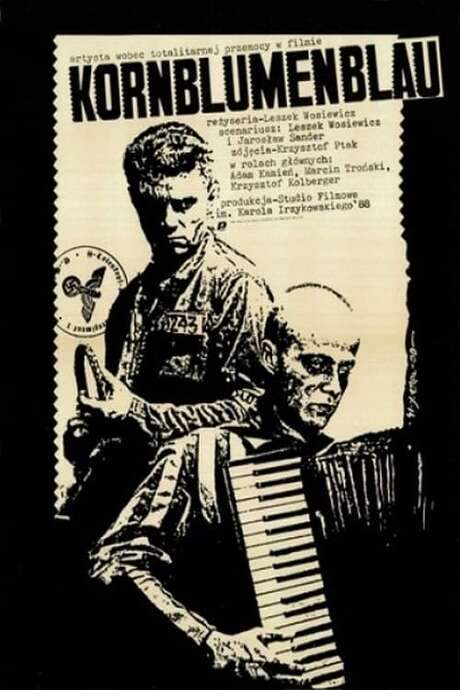
And the Violins Stopped Playing 1988


This is the true story about a group of Romani’s (gypsy) in occupied Poland during World War II as they confront the atrocities and tragedies of a forgotten holocaust.


Does And the Violins Stopped Playing have end credit scenes?
No!
And the Violins Stopped Playing does not have end credit scenes. You can leave when the credits roll.
Meet the Full Cast and Actors of And the Violins Stopped Playing
Explore the complete cast of And the Violins Stopped Playing, including both lead and supporting actors. Learn who plays each character, discover their past roles and achievements, and find out what makes this ensemble cast stand out in the world of film and television.
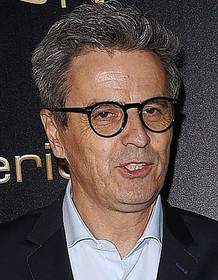
Piotr Polk
Roman Mirga

Jan Hencz
(uncredited)
Wiktor Zborowski
Tomasz
Horst Buchholz
Dymitr Mirga
Aleksander Bardini
Szura Greczko
Jerzy Nowak
professor Epstein
Marek Barbasiewicz
count Paszkowski
Wojciech Skibiński
policeman (uncredited)
Marek Probosz
(uncredited)
Sylwester Zawadzki
(uncredited)
Aldona Grochal
Wala's sister
Cezary Morawski
captain Brond
Emilian Kamiński
Marcin Troński
Josef Mengele
Robert Majewski
gypsy singer
Ernestyna Winnicka
Zoya's mother
Hanna Polk
Zofia
Jan Machulski
colonel Kruger
Jerzy Zelnik
Danko Muler (uncredited)
Wojciech Wysocki
Jerzy Turek
polish peasant
Bogdan Michalak
(uncredited)
Ewa Telega
Ira
Marne Maitland
Sandu
Zitto Kazann
Mikita
Krzysztof Świętochowski
Franko
Bogumił Antczak
(uncredited)
Bogusław Sobczuk
Rudolf Höss
Wiesław Wójcik
Bora Natkin
Barbara Rachwalska
Ms. Stefa
Leszek Kubanek
(uncredited)
Didi Ramati
Wala Mirga
Jacek Sas-Uhrynowski
Paweł
Maya Ramati
Zoya Natkin
Wojciech Pastuszko
Koro
Bettine Milne
Rosa
Katarzyna Siwak
Mara
Władysław Komar
Dombrowski
Michelle Marlowe
Alicja
Aleksander Ford
Zenon
Włodzimierz Jasiński
Edward Dobrzański
Kola
Margita Dukiet
Zofia's mother
Juliusz Berger
slovak Gypsy
Celina Ciecierska
gypsy singer
Aleksiej Awdiejew
(uncredited)
Elżbieta Bielska
(uncredited)
Jerzy Frydrych
(uncredited)
Irena Byszewska
(uncredited)
Ryszard Jasiński
(uncredited)
Tomasz Mędrzak
(uncredited)
Jarosław Pilarski
(uncredited)
External Links and Streaming Options
Discover where to watch And the Violins Stopped Playing online, including streaming platforms, rental options, and official sources. Compare reviews, ratings, and in-depth movie information across sites like IMDb, TMDb, Wikipedia or Letterboxd.





Take the Ultimate And the Violins Stopped Playing Movie Quiz
Challenge your knowledge of And the Violins Stopped Playing with this fun and interactive movie quiz. Test yourself on key plot points, iconic characters, hidden details, and memorable moments to see how well you really know the film.
And the Violins Stopped Playing (1988) Quiz: Test your knowledge of the plot, characters, and historic context of the 1988 film 'And the Violins Stopped Playing.'
In which city does Dymitr Mirga first perform for German troops?
Full Plot Summary and Ending Explained for And the Violins Stopped Playing
Read the complete plot summary of And the Violins Stopped Playing, including all major events, twists, and the full ending explained in detail. Explore key characters, themes, hidden meanings, and everything you need to understand the story from beginning to end.
Dymitr Mirga, Horst Buchholz, a renowned Romani violinist, performs for German troops in a restaurant in 1941 Warsaw. The officers applaud the music and assure him that the ongoing removal of the region’s Jews has nothing to do with the Romani because they are “Aryan” like the Germans. When a warning from an escapee reaches his family, Dymitr decides to flee by train to Brest-Litovsk, taking his kin with him as they join a band of Romani on the outskirts of the city.
The local German commander visits the camp and informs the Romani that he is giving them the houses where the Jews who have been “re-located” lived. Dymitr instantly sees the grim truth behind this euphemism and urges the head of the Romani community to lead an evacuation into Hungary, then still an independent country. The leader resigns, and the council ultimately transfers the leadership to Dymitr Mirga, entrusting him with the perilous task ahead.
The journey binds together a complex web of loyalties and heartache. The betrothal of the former leader’s son to Zoya Natkin, a charismatic Romani woman, is ultimately rewritten when Zoya chooses to marry Dymitr’s son, Roman, [Piotr Polk]. On the road to safety, some Romani depart from the main group, attempting to blend in by posing as merchants, while others fall behind or are killed by the Nazi forces. In a grim but resourceful move, the group sells their jewels to buy horses from another Romani community, speeding their advance even as lives are lost. The kindness of strangers shines through as communities give the departed a burial and neighbors pause to mourn the fallen.
With dwindling numbers, Dymitr reaches Hungary after a harrowing march, bringing with him his wife Wala Mirga, [Didi Ramati], his son Roman, and Roman’s wife Zoya, along with Zoya’s family and the son of the former leader who had been killed by the Nazis. Yet all of Dymitr’s arduous planning seems in vain when the Nazis topple the Hungarian government in 1944, fracturing whatever hope remained for safe passage.
The war’s brutality intensifies at Auschwitz, where the infamous Dr Mengele, [Marcin Troński], conducts cruel medical experiments on prisoners. Before their arrival, Dymitr’s daughter escapes through a cattle-truck window, and at the camp, Dymitr is forced to perform for the guards while his son Roman enjoys limited privileges as a translator. The turning point comes when Roman’s wife Zoya dies, prompting Roman to contemplate escape. He seeks out a friend and former rival, and together they plan to break free. The plan succeeds, and the two make contact with Roman’s younger sister, Mikita, portrayed by [Zitto Kazann].
As the war ends, three Romani carriages set off toward the horizon, carrying what remains of the family and their allies. The narrator closes with a stark observation about the broader fate of the Romani people: the Gypsy nation has yet to receive any compensation. Throughout this heartbreaking odyssey, the resilience of love, family, and communal solidarity threads through the grim realities of betrayal, violence, and survival.

Coming soon on iOS and Android
The Plot Explained Mobile App
From blockbusters to hidden gems — dive into movie stories anytime, anywhere. Save your favorites, discover plots faster, and never miss a twist again.
Sign up to be the first to know when we launch. Your email stays private — always.
Explore the mobile appDiscover Film Music Concerts Near You – Live Orchestras Performing Iconic Movie Soundtracks
Immerse yourself in the magic of cinema with live orchestral performances of your favorite film scores. From sweeping Hollywood blockbusters and animated classics to epic fantasy soundtracks, our curated listings connect you to upcoming film music events worldwide.
Explore concert film screenings paired with full orchestra concerts, read detailed event information, and secure your tickets for unforgettable evenings celebrating legendary composers like John Williams, Hans Zimmer, and more.


Cars Featured in And the Violins Stopped Playing
Explore all cars featured in And the Violins Stopped Playing, including their makes, models, scenes they appear in, and their significance to the plot. A must-read for car enthusiasts and movie buffs alike.
And the Violins Stopped Playing Themes and Keywords
Discover the central themes, ideas, and keywords that define the movie’s story, tone, and message. Analyze the film’s deeper meanings, genre influences, and recurring concepts.
And the Violins Stopped Playing Other Names and Titles
Explore the various alternative titles, translations, and other names used for And the Violins Stopped Playing across different regions and languages. Understand how the film is marketed and recognized worldwide.
Similar Movies To And the Violins Stopped Playing You Should Know About
Browse a curated list of movies similar in genre, tone, characters, or story structure. Discover new titles like the one you're watching, perfect for fans of related plots, vibes, or cinematic styles.





Quick Links: Summary, Cast, Ratings, More

What's After the Movie?
Not sure whether to stay after the credits? Find out!
Check out our other apps:

SAT Sphere
Build confidence for the Digital SAT.

Mori Atlas
Discover wild places worth protecting.

Luntero
Search smarter for a home in Amsterdam.

Plot Explained
Unravel movie endings and hidden clues.

Pokechamp
Dive into Pokémon data and battle logic.

Driving Theory
Get ready for your European theory test.

Movie Dust
Plan your next cinema trip with ease.

Musemap
Find art and culture as you travel.

Selkobase
Compare credentials before committing.

Local Manual
Turn an unfamiliar country into practical next steps.

Lernavi
Compare school systems before your next move.

GymRoam
Find a workout stop wherever your plans take you.
Explore Our Movie Platform
New Movie Releases (2026)
Famous Movie Actors
Top Film Production Studios
Movie Plot Summaries & Endings
Major Movie Awards & Winners
Best Concert Films & Music Documentaries
Movie Collections and Curated Lists
© 2026 What's After the Movie. All rights reserved.
Privacy Policy