1776 1972

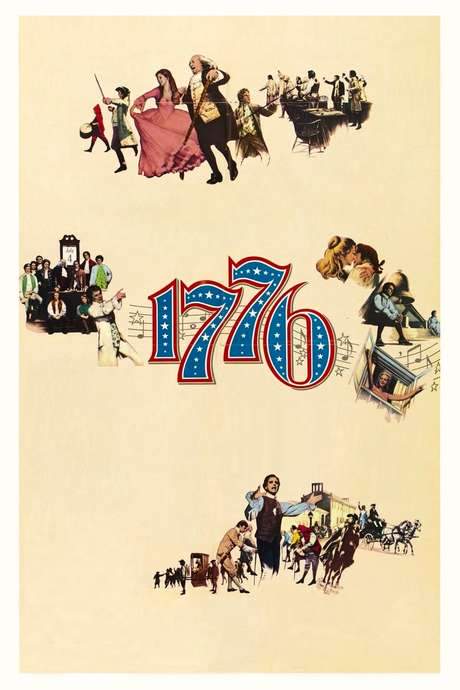
This adaptation brings the award‑winning stage musical to the screen, dramatizing the 1776 Continental Congress in Philadelphia, where delegates work to create a governing framework for the new United States. Benjamin Franklin and John Adams task Thomas Jefferson with drafting a declaration announcing independence from British rule.


Does 1776 have end credit scenes?
No!
1776 does not have end credit scenes. You can leave when the credits roll.
Where to Watch 1776
See current US streaming, rental, and purchase options for 1776 (1972) via JustWatch.









Meet the Full Cast and Actors of 1776
Explore the complete cast of 1776, including both lead and supporting actors. Learn who plays each character, discover their past roles and achievements, and find out what makes this ensemble cast stand out in the world of film and television.

Blythe Danner
Martha Jefferson

Howard Da Silva
Dr. Benjamin Franklin

William Daniels
John Adams
William Duell
Andrew McNair
Rex Robbins
Roger Sherman (CT)
John Cullum
Edward Rutledge (SC)
William Hansen
Caesar Rodney (DE)
David Ford
Congressional President John Hancock (MA)
John Myhers
Robert Livingston
Howard Caine
Lewis Morris (NY)
Ken Howard
Thomas Jefferson
James Noble
Rev. John Witherspoon (NJ)
Patrick Hines
Samuel Chase (MD)
Daniel Keyes
Dr. Josiah Bartlett (NH)
Ray Middleton
Col. Thomas McKean (DE)
Peter Forster
Oliver Wolcott (CT)
Roy Poole
Stephen Hopkins (RI)
Virginia Vestoff
Abigail Adams
Stephen Nathan
Courier
Donald Madden
John Dickinson (PA)
Emory Bass
James Wilson (PA)
Ron Holgate
Richard Henry Lee (VA)
Ralston Hill
Charles Thomson
Leo Leydon
George Read (DE)
Charles Rule
Joseph Hewes (NC)
External Links and Streaming Options
Discover where to watch 1776 online, including streaming platforms, rental options, and official sources. Compare reviews, ratings, and in-depth movie information across sites like IMDb, TMDb, Wikipedia or JustWatch.





Take the Ultimate 1776 Movie Quiz
Challenge your knowledge of 1776 with this fun and interactive movie quiz. Test yourself on key plot points, iconic characters, hidden details, and memorable moments to see how well you really know the film.
1776 (1972) Quiz: Test your knowledge of the 1972 musical film "1776", which dramatizes the debates and events surrounding the drafting and adoption of the United States Declaration of Independence.
Which actor portrays John Adams in the film?
Full Plot Summary and Ending Explained for 1776
Read the complete plot summary of 1776, including all major events, twists, and the full ending explained in detail. Explore key characters, themes, hidden meanings, and everything you need to understand the story from beginning to end.
William Daniels as John Adams, representing Massachusetts in the Second Continental Congress in Philadelphia, laments the body’s reluctance to debate independence and instead to grind through routine matters. He leans on the steady voice of his wife, Virginia Vestoff as Abigail Adams, for both solace and strategic counsel, knowing that a personal touch could help sway wavering delegates.
Howard Da Silva as Benjamin Franklin, one of the few who shares Adams’ dream of a new, independent nation, becomes a crucial ally. He suggests that someone else should introduce the idea of independence, so they enlist Richard Henry Lee of Virginia to return home, obtain permission from the state legislature, and present the motion to break from Britain. The plan hinges on gathering enough support from the reluctant delegates, and the atmosphere in Congress grows tense as tempers flare and factions emerge.
Lee returns, proposes the resolution, and faces stiff resistance from John Dickinson of Pennsylvania, a leading conservative who seeks reconciliation with Britain. The vote to debate the question proceeds, setting off a heated contest among the delegates. A pivotal moment arrives when Caesar Rodney of Delaware, battling cancer, collapses and must retreat from the chamber, depriving Adams of a crucial Delaware vote just as momentum shifts in favor of independence. A fresh delegation from New Jersey arrives, bringing news that Franklin’s son William, the Royal Governor of New Jersey, has been arrested, adding personal stakes to the political drama.
To derail the push for independence, Dickinson moves to demand a unanimous vote—arguing that no colony should break away without its own consent. Adams counters with a plan to postpone the vote in order to draft a formal declaration of grievances. John Hancock, the President of Congress, ultimately breaks the tie in favor of moving forward and appoints a committee to draft the declaration: Rex Robbins as Roger Sherman, John Myhers as Robert Livingston, Ken Howard as Thomas Jefferson, and David Ford as John Hancock.
Jefferson, initially reluctant to take on such a monumental task, agrees to serve as the primary writer after Adams urges him to accept the duty. A full week passes without a completed draft, and Adams summons his wife to Philadelphia to lend the necessary spark, while the delegation at large begins to recognize the weight of the decision before them. The narrative unfolds with the sense that history is being shaped, not merely debated.
To secure Maryland’s support for independence, Adams and Franklin accompany Samuel Chase to the army encampment at New Brunswick, New Jersey, taking Chase with them and bringing a sense of urgency to the cause. The next day, a military courier arrives with the grim news that his two best friends were killed at Lexington, underscoring the real cost of rebellion for many who serve in the Continental Army and Congress.
After their return, the Declaration is read aloud, and Congress begins to entertain numerous amendments. Jefferson is asked to reconsider some wording, and while he agrees to many changes, he objects to striking the reference to the King as a tyrant and to the issue of slavery. Edward Rutledge of South Carolina leads the Southern members in leaving the room in protest as Chase returns with Maryland’s vote in support of independence. Adams is urged to compromise further, but Franklin reminds him that achieving independence requires embracing a broad coalition, including those with opposing views, as part of the nation they are about to create. This exchange leaves Adams visibly unsettled, yet resolute.
A key turn comes on the day of the vote: July 2, 1776. The plan to drop the slavery language is settled for the moment, and Rutledge’s bloc along with others moves toward unity. Delaware’s three representatives deliver a mixed result, and Rodney is recalled to Cast a decisive vote in favor of independence, rather than seeing his state divided. When Dickinson appears ready to vote against the measure, Franklin proposes polling the Pennsylvania delegation. William Daniels would again oversee this moment, and the result hinges on James Wilson, who finally votes for independence to avoid a lasting mark on his reputation. Dickinson resigns from Congress, vowing to join the army, while Wilson’s decisive choice helps tilt the balance toward a new nation.
Meanwhile, Morris, whose estates have been dismantled and whose family has moved to safety, signs the parchment in protest despite not being authorized, an act that adds personal drama to the formal proceedings. As the final ceremonial bell tolls, Andrew McNair, the Congressional custodian, tolls out a grim cadence. With Delaware reconciled and the remaining states poised to declare, one by one the states sign the document, marking the birth of the United States of America.
no colony be torn away from its mother country without its own consent.
In the end, the room fills with a quiet, determined energy as the delegates affirm their commitment to a new union, and the signing ceremony seals a bold, controversial, and transformative moment in history. The film deftly balances political strategy, personal sacrifice, and the quiet, stubborn courage that underpins the birth of a nation, offering a thoughtful, human-centered portrait of figures who chose to risk everything for a future they believed in.

Coming soon on iOS and Android
The Plot Explained Mobile App
From blockbusters to hidden gems — dive into movie stories anytime, anywhere. Save your favorites, discover plots faster, and never miss a twist again.
Sign up to be the first to know when we launch. Your email stays private — always.
Explore the mobile appWatch Trailers, Clips & Behind-the-Scenes for 1776
Watch official trailers, exclusive clips, cast interviews, and behind-the-scenes footage from 1776. Dive deeper into the making of the film, its standout moments, and key production insights.
1776 Themes and Keywords
Discover the central themes, ideas, and keywords that define the movie’s story, tone, and message. Analyze the film’s deeper meanings, genre influences, and recurring concepts.

Unlock the World of Movies with Our Comprehensive Wiki
Dive into our Movie Wiki for in-depth film encyclopedia entries, including cast biographies, production trivia, plot synopses, behind-the-scenes facts, and thematic analyses. Whether you’re researching iconic directors, exploring genre histories, or discovering hidden easter eggs, our expertly curated movie database has everything you need to fuel your cinematic passion.

Similar Movies To 1776 You Should Know About
Browse a curated list of movies similar in genre, tone, characters, or story structure. Discover new titles like the one you're watching, perfect for fans of related plots, vibes, or cinematic styles.







Quick Links: Summary, Cast, Ratings, More

What's After the Movie?
Not sure whether to stay after the credits? Find out!
Check out our other apps:

SAT Sphere
Build confidence for the Digital SAT.

Mori Atlas
Discover wild places worth protecting.

Luntero
Search smarter for a home in Amsterdam.

Plot Explained
Unravel movie endings and hidden clues.

Pokechamp
Dive into Pokémon data and battle logic.

Driving Theory
Get ready for your European theory test.

Movie Dust
Plan your next cinema trip with ease.

Musemap
Find art and culture as you travel.

Selkobase
Compare credentials before committing.

Local Manual
Turn an unfamiliar country into practical next steps.

Lernavi
Compare school systems before your next move.

GymRoam
Find a workout stop wherever your plans take you.
Explore Our Movie Platform
New Movie Releases (2026)
Famous Movie Actors
Top Film Production Studios
Movie Plot Summaries & Endings
Major Movie Awards & Winners
Best Concert Films & Music Documentaries
Movie Collections and Curated Lists
© 2026 What's After the Movie. All rights reserved.
Privacy Policy