
 #1 of 5
 #1 English-language movie of Week 50, 1989
1989 · Drama, Comedy
$145.8M worldwide · 74% of the chart's total
$106.6M US & Canada · 73% $39.2M elsewhere · 27%

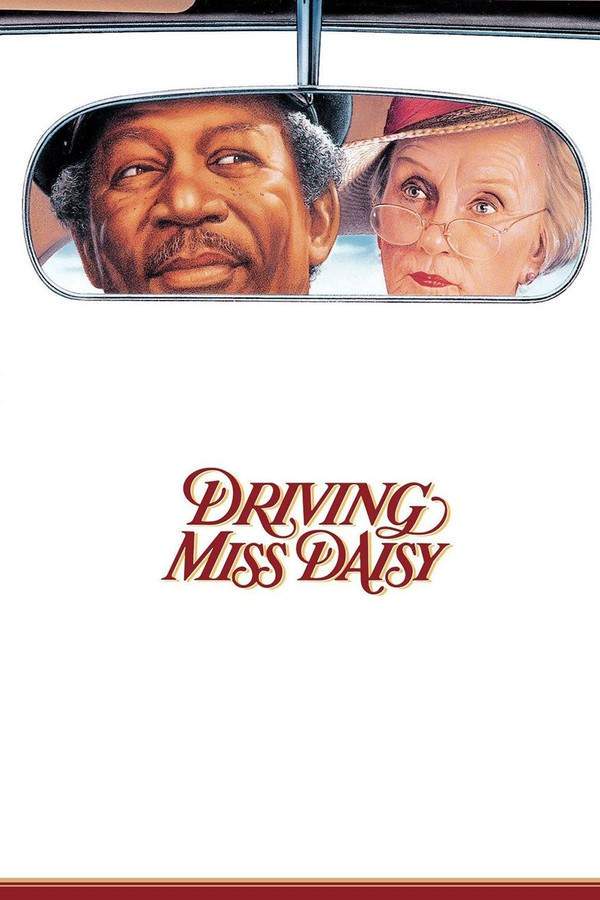
Driving Miss Daisy (1989) is the highest-grossing English-language movie released in week 50 of 1989 (Dec 10–16), with $145.8M worldwide, ahead of Blaze (1989) at $19.1M and The Wizard (1989) at $14.3M. 5 English-language films released that week report a worldwide gross, $197.5M in all, 80% of it from the US & Canada. One film crossed $100 million; none reached $1 billion. By genre, Drama leads with $187M across 4 English releases.
#1 of 5 1989 · Drama, Comedy
$145.8M worldwide · 74% of the chart's total
Driving Miss Daisy (1989) leads with $145.8M, 74% of the total. The top 5 together took $197.5M, almost all of what the 5 films earned. Each bar splits a film's gross into the US & Canada and the rest of the world.
Number 1  Number 2
  Number 3
  Number 4
  Number 5
 US & Canada (domestic) Rest of the world
Lifetime worldwide grosses in US dollars, not adjusted for inflation; domestic means the US & Canada. Films are grouped by their release date in week 50 of 1989 (Dec 10–16).
Dec 15, 1989 US and Canada: $106.6M Rest of the world: $39.2M Worldwide: $145.8M Dec 13, 1989 US and Canada: $19.1M Rest of the world: Worldwide: $19.1M Dec 15, 1989 US and Canada: $14.3M Rest of the world: Worldwide: $14.3M Dec 15, 1989 US and Canada: $10.6M Rest of the world: Worldwide: $10.6M Dec 13, 1989 US and Canada: $7.8M Rest of the world: Worldwide: $7.8M Of the top 5, Blaze (1989) earned the biggest share at home (100% in the US & Canada), while Driving Miss Daisy (1989) made 27% of its gross abroad. Across all 5 films, $158.3M (80%) came from the US & Canada.
Week 50 releases took $197.5M. The biggest of these 9 weeks is week 47 (Nov 19–25) with $430M, led by Back to the Future Part II (1989).
Of these 10 years, Week 50, 1988 earned the most: $233.4M from 3 films, led by Twins (1988). Week 50, 1989 took $197.5M.
| Week | Films | Worldwide | Change | Biggest film |
|---|---|---|---|---|
| Week 50, 1980 Dec 7–13 2 films | 2 | $151.1M | – | Stir Crazy (1980) $101.3M |
| Week 50, 1981 Dec 6–12 3 films · −88% | 3 | $18M | −88% | Rollover (1981) $10.9M |
| Week 50, 1982 Dec 5–11 4 films · +919% | 4 | $183.2M | +919% | 48 Hrs. (1982) $78.9M |
| Week 50, 1983 Dec 4–10 4 films · −48% | 4 | $95.5M | −48% | Sudden Impact (1983) $67.6M |
| Week 50, 1984 Dec 9–15 2 films · −40% | 2 | $57.4M | −40% | Dune (1984) $31.5M |
| Week 50, 1985 Dec 8–14 3 films · +119% | 3 | $125.6M | +119% | The Jewel of the Nile (1985) $96.8M |
| Week 50, 1986 Dec 7–13 2 films · −5% | 2 | $119.1M | −5% | The Golden Child (1986) $79.8M |
| Week 50, 1987 Dec 6–12 5 films · +5% | 5 | $125.3M | +5% | Throw Momma from the Train (1987) $57.9M |
| Week 50, 1988 Dec 4–10 3 films · +86% | 3 | $233.4M | +86% | Twins (1988) $216.6M |
| Week 50, 1989 Dec 10–16 5 films · −15% | 5 | $197.5M | −15% | Driving Miss Daisy (1989) $145.8M |
51 weeks of 1989 with reported grosses; the biggest is week 25 (Jun 18–24) with $634.3M, led by Batman (1989).
The chart's numbers in short: the #1 film, the total, the billion-dollar hits and the US & Canada share, answered from the same 5 films as the chart.
Driving Miss Daisy (1989) leads with $145.8M worldwide, $106.6M of it in the US & Canada. Next come Blaze (1989) at $19.1M and The Wizard (1989) at $14.3M.
5 English-language films released in week 50 of 1989 (Dec 10–16) report a worldwide gross, $197.5M in all, or $39.5M per film on average.
None. 1 film crossed $100 million, led by Driving Miss Daisy (1989) with $145.8M.
Films are ranked by lifetime worldwide gross in US dollars, not adjusted for inflation, and grouped by their release date in week 50 of 1989 (Dec 10–16). The figures are the reported box office grosses in our database. A gross that looks misattributed, such as one figure shared by two unrelated films or a blockbuster total on an obscure title, is left out rather than shown as a fact, and so are films whose stored language is most likely wrong.
Grosses change while films are in theaters and whenever a new figure is reported; this chart reads the latest numbers in our database, so an older film can still move after a re-release.