What's After the Blog?
feature • news
KISS 1976 Network TV Debut: Inside The Paul Lynde Halloween Special
In 1976, glam rock band KISS made their primetime television debut on "The Paul Lynde Halloween Special," performing alongside Margaret Hamilton reprising her iconic role as the Wicked Witch of the West. The eccentric variety show brought together an unlikely cast of 1970s pop culture figures including Paul Lynde, Florence Henderson, and Tim Conway for a camp television event that has since achieved cult status.
April 27, 2026
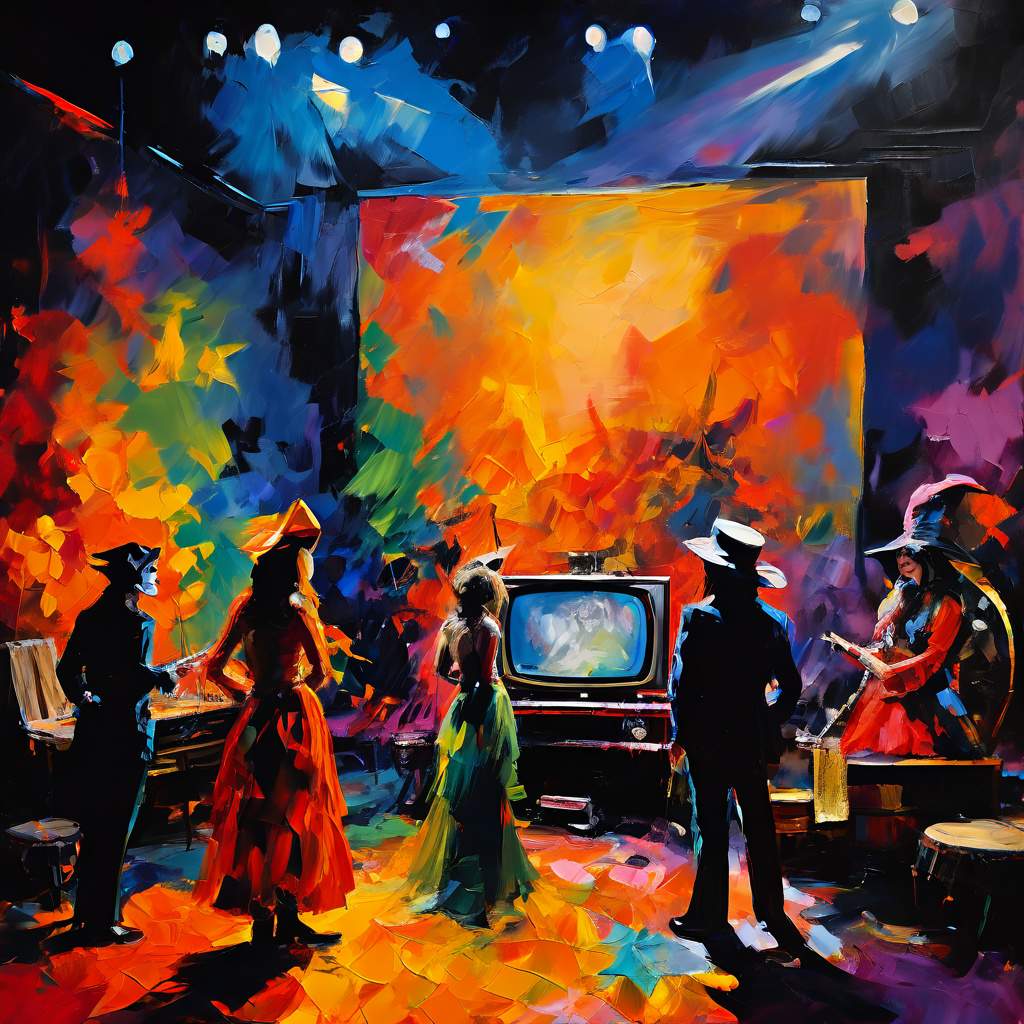
KISS 1976 Network TV Debut: Inside The Paul Lynde Halloween Special
Long before music videos dominated MTV, glam rock pioneers KISS made their primetime television debut on one of the most eccentric network specials ever broadcast. The year was 1976, and the platform was “The Paul Lynde Halloween Special,” a bewildering variety show that paired the face-painted rockers with Margaret Hamilton reprising her legendary role as the Wicked Witch of the West from “The Wizard of Oz.” What emerged was a camp television artifact that united 1970s pop culture touchstones—from sitcom veterans to rock stars—in a surreal Halloween narrative that defied conventional entertainment logic.
The special has since earned a reputation as a cult curiosity, circulating among collectors for decades before receiving an official DVD release. While contemporary critics might dismiss it as disjointed, the program remains a fascinating time capsule of network television experimentation, capturing a moment when ABC was willing to gamble on bizarre cross-demographic programming that placed hard rock musicians alongside septuagenarian movie villains and game show personalities.
KISS’s Primetime Introduction
For the four members of KISS, the October 1976 broadcast marked their first appearance on network television, introducing their theatrical rock aesthetic to mainstream American households. The band took the stage following an introduction by Margaret Hamilton herself, still donning the green face paint she first wore in 1939. “They perform such soothing dinner music,” the 74-year-old actress quipped in character, cackling as she welcomed the platform-booted rockers.
The performance lineup showcased the band’s rising dominance in the rock landscape. They launched into “Detroit Rock City,” their anthemic tribute to Motor City nightlife, followed by a comedic interlude where they bantered with host Paul Lynde. Later in the broadcast, they returned for “Beth,” their surprise acoustic power ballad hit, and “King of the Night Time World,” complete with Gene Simmons breathing fire—a signature theatrical element that translated surprisingly well to the small screen. This appearance came at a crucial moment for the band, bridging their underground club following with the mainstream visibility that would soon propel them to arena-headlining status.
The Return of the Wicked Witch
Margaret Hamilton’s participation represented more than a simple cameo; it marked a return to her most iconic role 37 years after first terrifying audiences in the 1939 classic. At 74, Hamilton demonstrated that she had lost none of her theatrical edge, delivering the same cackle that had made her the silver screen’s most famous villainess. The production notably utilized the same green face paint from the MGM classic, creating immediate visual continuity with one of cinema’s most enduring antagonists.
Her casting also reflected her ongoing presence in the Krofft television universe. Hamilton had recently completed a recurring role on “Sigmund and the Sea Monsters,” the 1973 Sid and Marty Krofft creation about a young boy hiding friendly sea creatures from his family. This Krofft connection created an unexpected through-line in the special’s casting, linking the Golden Age of Hollywood with the psychedelic children’s television of the 1970s, despite the Krofft brothers having no actual production credit on the Lynde special.
An Unlikely Ensemble of Television Royalty
The special functioned as a reunion of 1970s television personalities, creating an eclectic mix of demographics that likely confused as many viewers as it entertained. Billie Hayes reprised her role as Witchiepoo from the Krofft classic “H.R. Pufnstuf,” appearing alongside Billy Barty, a veteran of both “The Bugaloos” and “Sigmund and the Sea Monsters.” Florence Henderson brought her “Brady Bunch” persona to the proceedings, fresh from working with the Kroffts on “The Brady Bunch Hour.”
The guest roster reflected Lynde’s extensive network television connections:
- Donny and Marie Osmond: The sibling singing duo had featured Lynde in recurring appearances on their variety series, returning the favor for this Halloween gathering
- Betty White: Appearing as Miss Halloween, decades before becoming television’s perennial favorite
- Roz Kelly: Reprising her “Happy Days” role as Pinky Tuscadero, the mechanic love interest of Fonzie
- Tim Conway: The comedy veteran appeared in multiple character roles throughout the special’s loose narrative framework
This convergence represented a unique moment in network television history, where primetime variety formats could still support such experimental casting without focus-group testing or demographic optimization.
The ABC Contract Behind the Chaos
The existence of this oddity stemmed from specific contractual obligations between Paul Lynde and ABC. According to Bruce Vilanch, one of the special’s writers who also co-wrote “The Star Wars Holiday Special,” Lynde maintained a “sweetheart deal” with the network that guaranteed him periodic starring vehicles. This arrangement had already produced “The Paul Lynde Show” in 1972, which lasted 26 episodes before cancellation, and a one-year stint on “Temperatures Rising” in 1973.
Despite these setbacks, Lynde remained a valuable asset to the network, primarily due to his 1,083-episode run as the center square on “Hollywood Squares” from 1966 through 1979. His supporting role as Uncle Arthur on “Bewitched” and his camp comedic persona had established him as a beloved figure, even if audiences rejected him as a leading man in traditional sitcom formats. When “Temperatures Rising” failed to find its footing, ABC offered “The Paul Lynde Halloween Special” as a compromise to keep the performer under contract while acknowledging that his strengths lay in variety format chaos rather than narrative continuity.
The special’s premise positioned Lynde as the brother of both the Wicked Witch and Witchiepoo, visiting their shared home for Halloween festivities—a narrative framework loose enough to accommodate musical performances, comedy sketches, and celebrity cameos without requiring logical transitions.
Preservation and Cult Rediscovery
For decades following its initial broadcast, “The Paul Lynde Halloween Special” existed primarily through bootleg recordings circulated among devoted KISS collectors. The band’s performance of “King of the Night Time World” eventually surfaced on their official “Kissology, Volume One” DVD compilation, but the complete special remained unavailable until a 1997 DVD release finally brought the full program back into commercial circulation.
Critical reassessment has embraced the special’s chaotic energy. In a 2021 retrospective for the Boston Globe, Christopher Muther described the program as “so absolutely absurd, so gay, and so cringe-worthy that you’ll scream, ‘What in the name of all that’s holy is this mess?’” The observation specifically acknowledged Lynde’s closeted sexuality and camp performance style, which provided much of the special’s subversive appeal beneath the mainstream network veneer. Today, high-quality clips circulate online, allowing new audiences to witness this unique intersection of glam rock and golden-age Hollywood nostalgia.
The program endures not despite its strangeness, but because of it. In an era of polished, focus-grouped entertainment, the raw, unhinged enthusiasm of a 1976 network special—where a drag-adjacent comedian could host his witch sisters alongside fire-breathing rock gods and septuagenarian movie villains—offers a refreshing reminder of television’s capacity for beautiful chaos.
What’s After the Movie?
If you’re fascinated by television history and the intersection of film and music performances, What’s After the Movie offers comprehensive coverage of entertainment history, box office data, and industry analysis. Our platform provides detailed summaries, spoiler-free breakdowns, and archival research on the shows and films that shaped popular culture. Explore our concert film collection or browse our industry news archives to discover more cult classics and television milestones from the 1970s and beyond.
Continue reading


What's After the Movie?
Not sure whether to stay after the credits? Find out!
Check out our other apps:

SAT Sphere
Build confidence for the Digital SAT.

Mori Atlas
Discover wild places worth protecting.

Luntero
Search smarter for a home in Amsterdam.

Plot Explained
Unravel movie endings and hidden clues.

Pokechamp
Dive into Pokémon data and battle logic.

Driving Theory
Get ready for your European theory test.

Movie Dust
Plan your next cinema trip with ease.

Musemap
Find art and culture as you travel.

Selkobase
Compare credentials before committing.

Local Manual
Turn an unfamiliar country into practical next steps.

Lernavi
Compare school systems before your next move.

GymRoam
Find a workout stop wherever your plans take you.
Explore Our Movie Platform
New Movie Releases (2026)
Famous Movie Actors
Top Film Production Studios
Movie Plot Summaries & Endings
Major Movie Awards & Winners
Best Concert Films & Music Documentaries
Movie Collections and Curated Lists
© 2026 What's After the Movie. All rights reserved.
Privacy Policy