What's After the Blog?
news • feature
Clint Eastwood Criticized John Wayne’s ‘Reactor’ Acting Philosophy
Clint Eastwood publicly rejected John Wayne’s theory that acting is merely reacting, calling the concept incomprehensible in archived interviews. Their opposing views on performance craft contributed to a legendary Hollywood feud that prevented the two Western icons from ever sharing the screen.
July 2, 2026
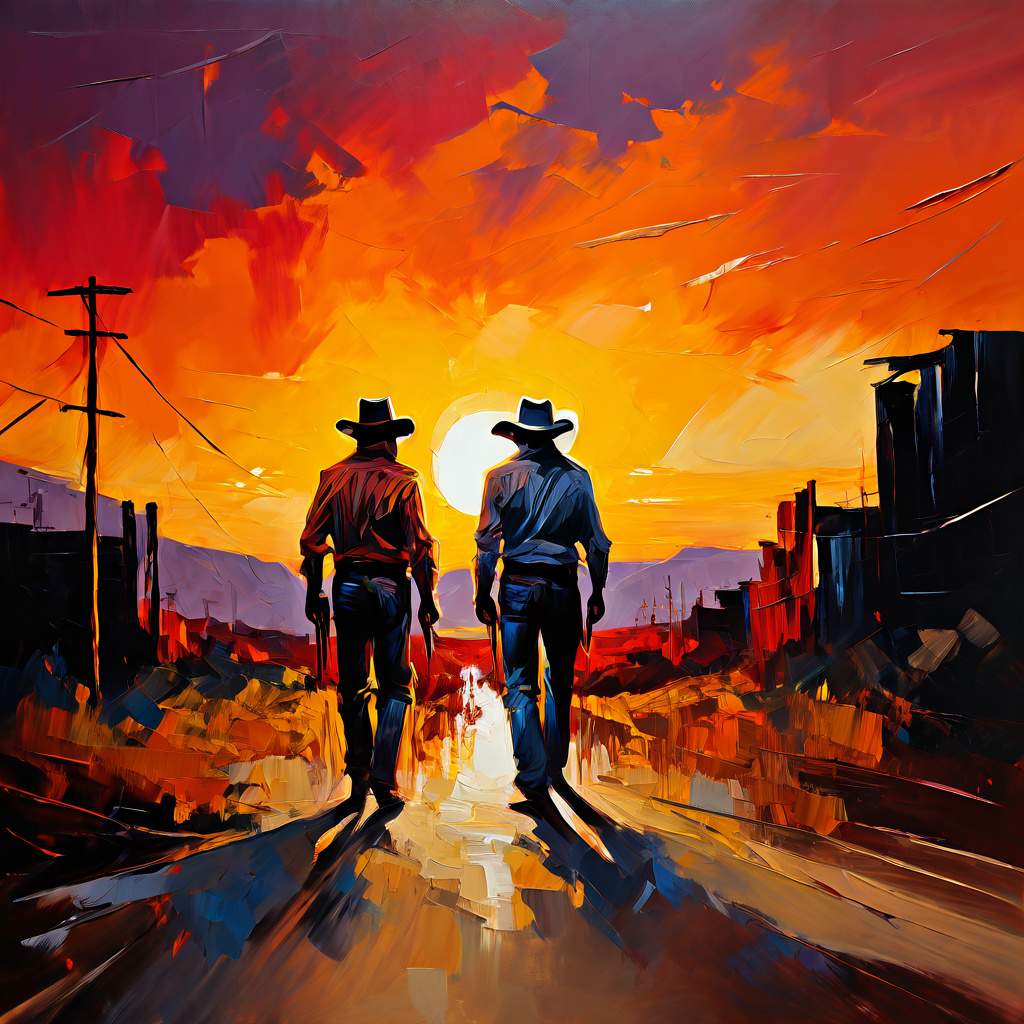
Clint Eastwood Criticized John Wayne’s ‘Reactor’ Acting Philosophy
The landscape of American Western cinema is defined by towering figures whose shadows still stretch across Hollywood’s understanding of the genre. Among the most prominent stand Clint Eastwood and John Wayne, two performers who embodied vastly different eras yet shared an intense, public rivalry that prevented any on-screen collaboration. Beyond their personal disagreements, these actors represented fundamentally opposed approaches to the craft itself, with Eastwood explicitly rejecting Wayne’s famous “reactor” theory of performance—a philosophical rift that illuminates why these giants never unified their legacies in a single film.
Their feud transcended typical Hollywood competitiveness, rooting itself in genuine artistic convictions about how truth should manifest on celluloid. While Wayne viewed himself as a vessel for sincerity who simply responded to circumstances, Eastwood approached characterization as a psychological construction requiring internal motivation and driving forces. This clash of methodologies helps explain not only why they never worked together, but also how the Western genre itself evolved from the straightforward moral clarity of Wayne’s era to the complex, often nihilistic revisionism that Eastwood came to represent.
The Generational Gulf in Western Cinema
The Western genre underwent seismic shifts between John Wayne’s heyday and Clint Eastwood’s rise to prominence. Wayne represented the classical era—larger-than-life, morally certain, embodying an American mythos that prioritized presence over psychological complexity. His performances relied on an innate screen charisma that required little external justification; audiences accepted him as the archetypal hero because he projected unshakeable certainty.
Eastwood arrived as part of the revisionist wave of the 1960s and 1970s, bringing ambiguity, grit, and a more internalized performance style that questioned the very heroism Wayne championed. Films like High Plains Drifter deliberately subverted the codes that Wayne had spent decades establishing, replacing noble sheriffs with mysterious anti-heroes whose morality remained deliberately opaque. This temporal and aesthetic distance created inevitable friction, but it was their conflicting beliefs about what constituted legitimate acting that truly cemented their estrangement and kept projects like the proposed The Hostiles from ever reaching production.
Wayne’s Philosophy: Sincerity Through Reaction
John Wayne viewed his craft through a deceptively simple lens that rejected theatrical pretension. According to his daughter Aissa Wayne’s memoir John Wayne: My Father, the Duke believed that authentic performance required no technical artifice—only genuine human reaction to presented circumstances. Wayne reportedly told the press: “I don’t act at all, I react. In a bad picture, you see them acting all over the place. In a good picture, they react in a logical way to a situation they’re in, so the audience can identify with them.”
This philosophy positioned Wayne as an everyman conduit rather than a constructed character. He saw his role as selling sincerity itself, a commodity he claimed to have marketed successfully throughout his career since his earliest days in the industry. Wayne’s disdain for theatrical training surfaced in his criticism of what he termed the “little theatre boys” and the “arty crowd,” whom he dismissed as possessing merely “surface brilliance” while lacking the “basic emotion” he considered real art.
Wayne applied this standard ruthlessly when assessing peers, showing little patience for performers he deemed overly theatrical or intellectually pretentious. Aissa Wayne recalls her father targeting Clark Gable with particular venom, claiming the Gone with the Wind star “acts because it’s the only thing he’s smart enough to do.” For Wayne, Gable represented the antithesis of his reactive ideal—an actor who manufactured effects rather than responding with authentic human behavior. This willingness to publicly disparage colleagues established a pattern that Eastwood would later continue when addressing Wayne’s own limitations.
Eastwood’s Counter: Motivation Over Reaction
While Wayne advocated for pure reaction stripped of artifice, Eastwood constructed his method around motivation and internal psychological drive. In Conversations with Clint: Paul Nelson’s Lost Interviews with Clint Eastwood, 1979-1983, the actor directly addressed Wayne’s famous dictum with blunt incomprehension that bordered on dismissal. “I don’t know what that means. I never have,” Eastwood stated when asked about the concept of acting as merely reacting.
Eastwood traced the concept specifically to Wayne’s public statements, noting, “He said, ‘I’m not an actor, I’m a reactor.’ You don’t just sit and react, though. You have motivating forces that drive you on as an actor, as a performer performing that character.” This distinction reveals Eastwood’s more analytical, constructionist approach—he viewed characterization as an active process requiring psychological propulsion, backstory, and internal logic, not merely behavioral responses to external stimuli.
The disagreement extended to semantics and professional identity. Eastwood concluded that the “reactor” concept “is not a very concise statement on what acting’s all about—if there is a concise statement on what acting’s all about.” Where Wayne saw overthinking and pretension, Eastwood saw necessary craft; where Wayne sought transparency and instinct, Eastwood sought complex construction. This fundamental divergence meant that even had they shared a scene, their approaches would have operated on incompatible wavelengths—Wayne present in the moment, Eastwood building toward psychological truth through accumulated motivation.
The Hostiles and High Plains Drifter Fallout
These incompatible ideologies had concrete professional consequences that deprived cinema history of a legendary collaboration. The article references The Hostiles, a proposed project that film historians consider among the greatest Westerns never made. The film would have united Wayne and Eastwood on screen, creating an unprecedented event that bridged classical and revisionist Western traditions. Yet the partnership collapsed, with Wayne ultimately refusing to participate, reportedly disliking the script’s tone and the direction in which Eastwood’s influence would have taken the narrative.
The hostility wasn’t limited to theoretical debates or script disagreements. Wayne reportedly wrote an angry letter to Eastwood regarding High Plains Drifter (1973), taking specific issue with the film’s darker, more nihilistic vision of the West and its treatment of community and violence. Eastwood, for his part, expressed harsh opinions about Wayne’s final Western, continuing the cycle of public criticism that characterized their decades-long non-relationship.
Their exchanges transcended mere professional rivalry, reflecting genuine artistic convictions about cinema’s moral and aesthetic responsibilities. Wayne viewed Eastwood’s work as betraying the heroic foundations of the genre, while Eastwood saw Wayne’s approach as simplistic and emotionally limited. Without a shared language of performance, collaboration became impossible, leaving audiences to wonder what might have resulted from a battle between these two fundamentally opposed approaches to acting.
Legacy of Opposing Approaches
The Eastwood-Wayne divide represents more than personal antipathy; it encapsulates the evolution of American screen acting from the studio system to the director-driven era. Wayne’s reactive model served the straightforward narratives of mid-century Hollywood, where clarity of emotion and immediate accessibility dominated commercial filmmaking. Eastwood’s motivated approach aligned with the New Hollywood’s demand for psychological realism, moral ambiguity, and performances that suggested interior lives beyond the script.
The fundamental differences between their methodologies can be summarized as follows:
- Wayne’s Method: Emphasized instinctual response, rejected theatrical training and “arty” pretension, prioritized audience identification through recognizable behavior and projected sincerity
- Eastwood’s Method: Required psychological motivation and internal drives, acknowledged performance as constructed craft, accepted complexity, darkness, and the artifice of cinema
- Professional Philosophy: Wayne viewed himself as a star selling authenticity; Eastwood viewed himself as an actor/director building characters through accumulated detail
These contrasting methodologies explain why The Hostiles remained unrealized and why the two giants maintained their distance throughout Wayne’s lifetime. The film would have forced a collision between Wayne’s reactive sincerity and Eastwood’s motivated intensity—a clash of gravitational pulls that might have destabilized the narrative itself. Instead, audiences received decades of sniping and missed opportunity, preserving two distinct acting philosophies in amber, never tested against each other in shared cinematic space.
What’s After the Movie
Exploring the history behind Hollywood’s greatest rivalries helps us appreciate how cinema evolves through these creative tensions. If you’re fascinated by the stories behind classic Westerns, iconic performances, and the industry forces that shape what gets made, What’s After the Movie offers comprehensive coverage of film history, box office analysis, and industry news. Discover detailed movie information and collections, track the latest box office trends, or dive deeper into the classics in our blog section.
Continue reading




What's After the Movie?
Not sure whether to stay after the credits? Find out!
Check out our other apps:

SAT Sphere
Build confidence for the Digital SAT.

Mori Atlas
Discover wild places worth protecting.

Luntero
Search smarter for a home in Amsterdam.

Plot Explained
Unravel movie endings and hidden clues.

Pokechamp
Dive into Pokémon data and battle logic.

Driving Theory
Get ready for your European theory test.

Movie Dust
Plan your next cinema trip with ease.

Musemap
Find art and culture as you travel.

Selkobase
Compare credentials before committing.

Local Manual
Turn an unfamiliar country into practical next steps.

Lernavi
Compare school systems before your next move.

GymRoam
Find a workout stop wherever your plans take you.
Explore Our Movie Platform
New Movie Releases (2026)
Famous Movie Actors
Top Film Production Studios
Movie Plot Summaries & Endings
Major Movie Awards & Winners
Best Concert Films & Music Documentaries
Movie Collections and Curated Lists
© 2026 What's After the Movie. All rights reserved.
Privacy Policy