What's After the Movie
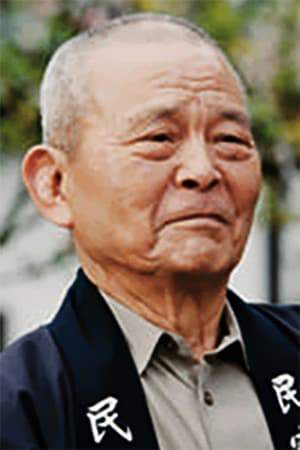
Hisashi Igawa
Hisashi Igawa (born 17 November 1936 in Mukden, Manchukuo, now Shenyang, China) is a veteran Japanese actor whose career spans over six decades. He began his professional work in the mid‑1950s, making his first screen appearances shortly after completing his studies at a local drama school. Igawa quickly gained recognition for his naturalistic style, which caught the attention of prominent directors of the Japanese New Wave. His breakthrough came when he was cast by Akira Kurosawa in Dodesukaden (1970), Kurosawa’s long‑awaited return to filmmaking after a decade‑long hiatus. The collaboration proved fruitful, leading to further roles in Kurosawa’s epic Ran (1985) and the reflective Madadayo (1993), each performance showcasing his remarkable ability to convey subtle emotional depth. In addition to cinema, Igawa demonstrated a strong stage presence, notably starring in Abe Kōbō’s surrealist play The Man Who Turned Into A Stick in 1969, a production that cemented his reputation as a versatile performer. Throughout the 1970s and 1980s he appeared in a wide array of genres, ranging from period dramas to contemporary thrillers, proving his adaptability across different storytelling styles. His distinctive screen persona often blended stoic authority with an underlying vulnerability, a contrast that resonated with both domestic and international audiences. By the turn of the millennium, Igawa had accumulated a filmography of more than one hundred titles, making him one of Japan’s most prolific actors. His contributions to Japanese cinema have been formally recognized with prestigious honors, including the Medal with Purple Ribbon in 2002. Beyond his professional accolades, Igawa’s personal life has remained largely private, though his dedication to the craft has inspired several younger actors who cite him as a mentor. He continues to work actively in film and television, with recent appearances in critically acclaimed series that explore contemporary social issues. The actor’s commitment to artistic excellence is reflected in his willingness to embrace experimental projects, such as independent avant‑garde films that challenge conventional narrative structures. In 2008, the Japanese government awarded him the Order of the Rising Sun, 4th Class, Gold Rays with Rosette, acknowledging his cultural impact and lifelong service to the arts. Critics often praise Igawa for his meticulous preparation, noting that he immerses himself in historical research when portraying samurai or aristocratic figures. His performances in Ran and Madadayo are frequently studied in film schools for their embodiment of Kurosawa’s thematic concerns, particularly the tension between duty and humanity. Despite his age, Igawa remains physically active, participating in workshops that promote traditional Japanese theater techniques to new generations. The actor’s legacy is also preserved through numerous retrospectives held by film festivals worldwide, where his work is celebrated for its profound emotional resonance. As a cultural figure, Hisashi Igawa symbolizes the enduring spirit of Japanese cinema, bridging the classic era of post‑war filmmaking with the innovative narratives of the 21st century. His ongoing presence on screen serves as a testament to his unyielding passion for storytelling and his unparalleled influence on the evolution of Japanese performing arts.
Biography, Career & Filmography
Learn more about Hisashi Igawa, including a detailed biography, career timeline, personal life insights, and complete filmography. Discover how Hisashi Igawa rose to fame, their major roles, industry impact, and personal milestones in the world of film.
Given Name: Hisashi
Born: Mukden, Manchukuo (present-day Shenyang, China)
Citizenship: Japanese
Birthday: November 17, 1936
Occupations: Actor
Years Active: 1955-present
External Links and Streaming Options
Explore more about on trusted external platforms like Metacritic, Rotten Tomatoes, IMDb or Wikipedia. Find additional details, reviews, and related content to deepen your understanding.





Movies Featuring Hisashi Igawa

Harakiri

Climbing to Spring

A Samurai Chronicle

Midnight Diner 2

Foujita

The Firefly

Have a Song on Your Lips
Hotoke

Letter from the Mountain

Akira Kurosawa: It Is Wonderful to Create: ‘Dodes’ka-den’

Farewell, Kuro

Yamato

The Professor and His Beloved Equation

Star Reformer

Half a Confession

Dreams

War and Youth

Rhapsody in August

Willful Murder

House on Fire

Black Board

Actress

Hachiko

Tokyo: The Last Megalopolis

Hole in the Pants

The Pass: Last Days of the Samurai

Demon Pond

Main Line to Terror

The Village

Fusa

Home from the Sea

Big Shots Die at Dawn

Summer Soldiers

Japan’s Longest Day

The Long Darkness

Basara: The Princess Goh

Glowing Autumn
Madadayo

Goyokin

Where Spring Comes Late

A Trap

Cash Calls Hell

The Wolves

Men and War II: Land of Love and Sorrow

Tora-san’s Runaway

Three Outlaw Samurai

The Story of Pure Love

Deep River

Luminous Moss

After the Rain

Double Suicide of Sonezaki

Bullet Ballet

The Love and Adventures of Kuroki Taro
Pitfall

The Face of Another

Dodes’ka-den

The Oil-Hell Murder

Goodbye for Tomorrow

Zatoichi’s Pilgrimage

Village of Eight Gravestones

The Human Condition II: Road to Eternity

The Summit: A Chronicle Of Stones to Serenity

Jose Torres
Career Timeline
Track the complete movie timeline of Hisashi Igawa, including all film releases, career breakthroughs, and notable roles. Follow their journey from early performances to recent blockbusters and upcoming projects.

Coming soon on iOS and Android
The Plot Explained Mobile App
From blockbusters to hidden gems — dive into movie stories anytime, anywhere. Save your favorites, discover plots faster, and never miss a twist again.
Sign up to be the first to know when we launch. Your email stays private — always.
Explore the mobile app
What's After the Movie?
Not sure whether to stay after the credits? Find out!
Check out our other apps:

SAT Sphere
Build confidence for the Digital SAT.

Mori Atlas
Discover wild places worth protecting.

Luntero
Search smarter for a home in Amsterdam.

Plot Explained
Unravel movie endings and hidden clues.

Pokechamp
Dive into Pokémon data and battle logic.

Driving Theory
Get ready for your European theory test.

Movie Dust
Plan your next cinema trip with ease.

Musemap
Find art and culture as you travel.

Selkobase
Compare credentials before committing.

Local Manual
Turn an unfamiliar country into practical next steps.

Lernavi
Compare school systems before your next move.

GymRoam
Find a workout stop wherever your plans take you.
Explore Our Movie Platform
New Movie Releases (2026)
Famous Movie Actors
Top Film Production Studios
Movie Plot Summaries & Endings
Major Movie Awards & Winners
Best Concert Films & Music Documentaries
Movie Collections and Curated Lists
© 2026 What's After the Movie. All rights reserved.
Privacy Policy