
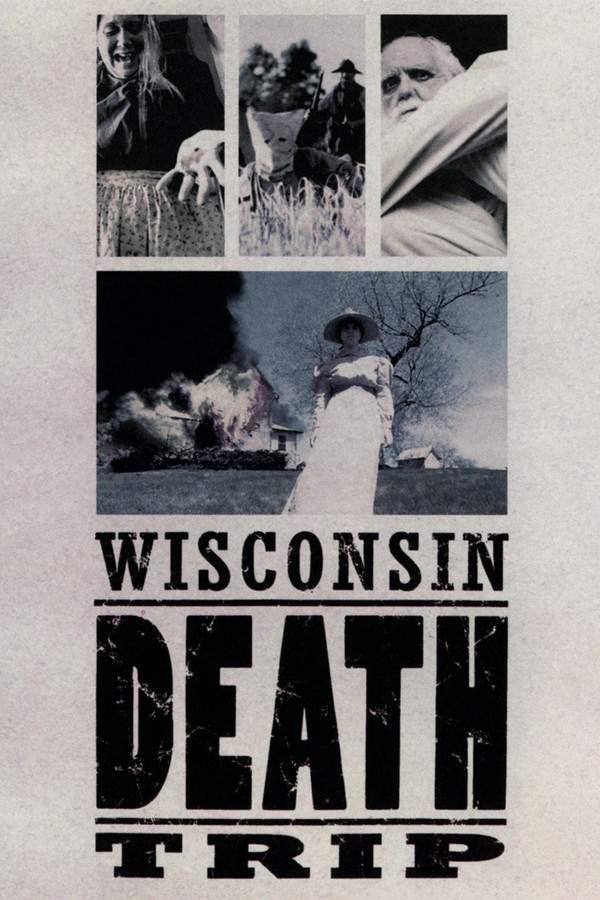
Wisconsin Death Trip 1999

Directed by

James Marsh
Made by

BBC
Wisconsin Death Trip Plot Summary
Read the complete plot summary and ending explained for Wisconsin Death Trip (1999). From turning points to emotional moments, uncover what really happened and why it matters.
In the late 19th century, specifically between 1890 and 1900, the northern region of Wisconsin becomes the setting for a series of unsettling and bizarre events that deeply affect the local communities, which are predominantly composed of German, Swedish, and Norwegian immigrants. These events unfold amidst a backdrop of economic collapse following the closure of several mines and the subsequent liquidation of local banks, leading to widespread hardship and societal unrest.
During this tumultuous period, numerous tragic incidents take place. Infants are abandoned by their desperate parents, with some of the children succumbing to disease, notably a diphtheria epidemic that claims many young lives. One notable case involves a local schoolteacher, Mary Sweeny, who, after falling under the influence of cocaine, goes on a violent rampage, smashing windows and damaging property, which results in her being institutionalized. The chaos extends to other tragic events—such as a young deaf and mute boy who impulsively shoots and kills his own sister with a pistol. In addition, a woman of German descent is mysteriously found frozen to death six miles outside of Black River Falls, mourning the loss of her own child, hinting at the intense emotional and psychological toll faced by the residents.
The region also witnesses a series of violent crimes, including a shocking murder in Brandon. Two young boys ambush and fatally shoot a farmer with a shotgun before taking over his home, creating a manhunt that ends with the capture and life imprisonment of the older brother, John. The area is marked by a rising wave of suicides—such as a Norwegian teenage girl who drowns herself, leaving behind a letter explaining her suffering from abuse and overwork by her parents. Several other young lovers also tragically end their lives by hanging or other methods. Young Anna, a Polish girl, emerges as a serial arsonist, responsible for multiple fires that devastate property in the region.
The psychological and emotional turmoil affects many young adults, leading to extreme acts of violence. For instance, a father violently murders his infant son before attempting to kill his wife. Another young man, rejected in love, shoots a woman who refuses his marriage proposal before turning the gun on himself. Religious fanaticism and delusions become widespread: [John Isaacson] held a violent religious gathering to confront perceived evil, believing he was combating Satan. Some individuals descend into paranoia and madness—such as a German immigrant who, convinced witches threaten him, starves his livestock to death, or [Mrs. Dutton] of La Crosse, who believes she is Jesus reincarnated. In another tragic case, [Mrs. Lawson] drowns her three children, convinced they are haunted by Satan, further illustrating the intense mental struggles faced by many residents.
In the small town of Brockway, a woman claiming to be the renowned French opera singer [Pauline L’Allemand] arrives from Chicago, accompanied by her son [Edgar]. She constructs a home and attempts to stage performances, but her deteriorating mental health—exacerbated by hearing voices and claiming to communicate with spirits—leads to her being declared legally insane and committed to Mendota Hospital. Her disheveled appearance and incoherent rants fuel local suspicion that she might be an imposter. Her case ends with her escape from the hospital, resurfacing later in Chicago and claiming to be tormented by mysterious ventriloquist acts, blending her reality with hallucinations.
Amidst this economic decline, social fabric frays further as adultery and betrayal lead to additional violence and murders. A tramp, attempting a robbery, kills several servant girls before taking his own life. Meanwhile, [Mary Sweeny] is released from her psychiatric confinement and continues her erratic wandering throughout Wisconsin, causing further destruction by vandalizing property, including at an Eau Claire train station. The character of Pauline L’Allemand also reappears later in Chicago, where she claims to have been tormented by supernatural forces during her time at Mendota.
The narrative draws a stark contrast between these grim historical events and the modern world, referencing infamous Wisconsin figures like [Ed Gein] and [Jeffrey Dahmer], whose crimes from the mid-to-late 20th century echo the dark mysteries and psychological torment seen in the 1890s. These stories—both past and present—highlight the depths of human despair, the fragility of the mind, and the shadows lurking within seemingly quiet communities.
“Throughout this tumultuous time, the line between sanity and madness often blurred, revealing a haunting landscape of human suffering, obsession, and the supernatural.”
Wisconsin Death Trip Timeline
Follow the complete movie timeline of Wisconsin Death Trip (1999) with every major event in chronological order. Great for understanding complex plots and story progression.
Bizarre Events Begin in Northern Wisconsin
Between 1890 and 1900, a series of strange occurrences start happening among immigrant communities in northern Wisconsin following mine closures and economic decline. Infants are abandoned, and a diphtheria epidemic sweeps through the region causing many children's deaths. Local residents experience rising instability and fear as these events unfold.
Mary Sweeny's Rampage
A schoolteacher named Mary Sweeny is institutionalized after going on a violent rampage, breaking windows of homes and buildings while under the influence of cocaine. Her behavior highlights the growing chaos and mental health struggles within the community. Her actions cause concern among local residents and authorities.
Tragic Death of a Woman Outside Black River Falls
A German immigrant's wife is found frozen to death six miles outside of Black River Falls. She had been mourning the death of her own child, and her death underscores the harsh conditions and emotional toll faced by the community during this tumultuous period.
Violent Crime in Brandon
In Brandon, two young boys ambush and murder a farmer using a shotgun before taking over his home. The elder brother flees, leading to a manhunt, and is eventually sentenced to life imprisonment. This event reflects the violence and lawlessness spreading in the region.
Suicides Among Young People
Several young individuals, including a Norwegian girl and other jilted lovers, commit suicides through drowning and hanging. These tragic acts are driven by personal despair, abuse, and social pressures prevalent in the community.
Anna the Arsonist
Anna, a Polish girl, is discovered to be a serial arsonist responsible for setting multiple properties on fire. Her destructive behavior adds to the climate of fear and chaos gripping the region during this time.
Violent Incidents Among Adults
A father kills his infant son and tries to murder his wife, while another young man shoots a woman over a rejected marriage proposal before taking his own life. These acts of violence illustrate the rising personal and social turmoil faced by residents.
Religious and Witch-Hunt Delusions
John Isaacson holds a knife to community members during a Christian meeting, believing he is vanquishing Satan. Additionally, a German immigrant blames witches for starving his livestock, while others believe they are haunted by evil spirits, reflecting widespread religious delusions.
Mrs. Dutton and Mrs. Lawson's Tragic Actions
Mrs. Dutton, believing she is Jesus reincarnated, and Mrs. Lawson, convinced she is haunted by Satan, drown their three children in lakes, highlighting the extreme mental instability and religious hysteria among some community members.
Pauline L'Allemand's Arrival and Decline
A woman claiming to be a French opera singer, Pauline L'Allemand, arrives in Brockway, building a home and performing music. Her mental health deteriorates, leading to her trial for insanity and institutionalization, revealing themes of mental instability among outsiders.
Collapse of Ventures and Infidelity
Economic collapse causes several businesses to fail, and adulterous affairs among middle-aged residents lead to further violence and murders. These events depict the social decay exacerbated by economic hardship.
Mary Sweeny's Continued Destruction
After being released, Mary Sweeny continues her destructive behavior, breaking windows at a train station in Eau Claire and wandering across the region, signaling ongoing chaos and mental instability.
Pauline's Disappearance and Later Reappearance
Pauline escapes from Mendota Hospital and later appears in Chicago, falsely claiming to have been tormented by spirits. Her story underscores the persistent influence of mental health issues and paranoia.
Juxtaposition with Contemporary Crimes
The narrative contrasts the historical chaos with modern crimes committed by Wisconsin natives Ed Gein and Jeffrey Dahmer, connecting past and present themes of violence and psychological disturbance.
Wisconsin Death Trip Characters
Explore all characters from Wisconsin Death Trip (1999). Get detailed profiles with their roles, arcs, and key relationships explained.
Mrs. Larson (Molly Nikki Anderson)
Mrs. Larson is portrayed as a tragic figure amidst the chaos, possibly involved in or affected by the strange events and societal decay surrounding her. Her character symbolizes the vulnerable and often unnoticed victims of the town’s tumultuous atmosphere.
Pauline L'Allemand (Marilyn White)
A woman claiming to be a French opera singer, Pauline's mental deterioration and obsession with spirits exemplify themes of madness. Her journey from performance to insanity highlights the fragility of identity and reality in turbulent times.
Young Anderson (Marcus Monroe)
The young boy’s involvement in violent acts, including shooting his sister, underscores the impact of trauma, neglect, and social disorder on innocent children. He embodies the chaos and unpredictability of the era’s troubled youth.
Wisconsin Death Trip Settings
Learn where and when Wisconsin Death Trip (1999) takes place. Explore the film’s settings, era, and how they shape the narrative.
Time period
1890s
The story unfolds during the 1890s, a decade marked by economic hardship and social turmoil in the United States. This period saw the decline of local industries like mining, widespread poverty, and a lack of modern medical care, which contributed to numerous tragedies and strange events portrayed in the film.
Location
Northern Wisconsin, Black River Falls, Brandon, Kenosha, La Crosse, Brockway, Chicago
The movie is set in the late 19th century in northern Wisconsin, an area characterized by its rural landscapes and small towns. Key locations include Black River Falls and Brandon, where small communities grapple with economic collapse and social upheaval. Chicago is also featured as an urban setting where some characters seek escape or confront their demons.
Wisconsin Death Trip Themes
Discover the main themes in Wisconsin Death Trip (1999). Analyze the deeper meanings, emotional layers, and social commentary behind the film.
🪦
Death & Tragedy
A central theme involves death, with many characters experiencing violent or tragic fates, including murders, suicides, and unexplained disappearances. The pervasive morbidity reflects the harsh realities of frontier life and societal instability during that era.
🌪️
Madness & Delusion
The film explores various instances of mental illness and delusional behavior, from Pauline L'Allemand's insanity to religious fanaticism and paranoia. These portrayals underscore the fragile mental states caused by hardship, social isolation, and personal trauma.

Coming soon on iOS and Android
The Plot Explained Mobile App
From blockbusters to hidden gems — dive into movie stories anytime, anywhere. Save your favorites, discover plots faster, and never miss a twist again.
Sign up to be the first to know when we launch. Your email stays private — always.
Explore the mobile appWisconsin Death Trip Spoiler-Free Summary
Discover the spoiler-free summary of Wisconsin Death Trip (1999). Get a concise overview without any spoilers.
In the waning years of the 19th century, the remote valleys of northern Wisconsin become a silent stage for a community caught between the promise of a new world and the crushing weight of economic ruin. The closure of mines and the collapse of local banks have left towns like Black River Falls teetering on the edge of desperation, where German, Swedish and Norwegian families cling to familiar customs while an undercurrent of unease spreads through their streets. Amidst this backdrop, the film paints a portrait of a seemingly genteel town whose ordinary façade conceals a collective anxiety that simmers beneath every porch light and church bell.
At the heart of this unsettled landscape are a handful of residents whose personal struggles echo the larger turmoil. Mary Sweeny, a schoolteacher whose once‑steady grip on reality begins to fray, embodies the fragile line between order and chaos, her erratic behavior hinting at secrets the community would rather keep hidden. John Isaacson presides over fervent gatherings that blur the boundaries of faith and fanaticism, his charismatic presence suggesting an undercurrent of belief that can both comfort and consume. Meanwhile, the enigmatic Pauline L’Allemand, a woman claiming the stature of a famed opera singer, arrives with grand aspirations that quickly dissolve into whispers of madness, her presence a mirror to the town’s own fragile grasp on sanity.
The film’s tone is one of pervasive dread softened by the stark beauty of the Wisconsin wilderness, where snow‑capped pines and frozen rivers reflect both the serenity and the isolation of the era. Its visual style leans into muted palettes and lingering shots, allowing the audience to feel the weight of every unspoken tension. Through careful character study and atmospheric storytelling, the narrative invites viewers to wonder what lies beneath the polite smiles and church hymns of a community on the brink—suggesting that darkness can thrive in even the most respectable of places, waiting for a moment to surface.
Movies with Similar Twists and Themes
Uncover films that echo the narrative beats, emotional arcs, or dramatic twists of the one you're exploring. These recommendations are handpicked based on story depth, thematic resonance, and spoiler-worthy moments — perfect for fans who crave more of the same intrigue.




Featured on this page

What's After the Movie?
Not sure whether to stay after the credits? Find out!
Check out our other apps:

SAT Sphere
Build confidence for the Digital SAT.

Mori Atlas
Discover wild places worth protecting.

Luntero
Search smarter for a home in Amsterdam.

Plot Explained
Unravel movie endings and hidden clues.

Pokechamp
Dive into Pokémon data and battle logic.

Driving Theory
Get ready for your European theory test.

Movie Dust
Plan your next cinema trip with ease.

Musemap
Find art and culture as you travel.

Selkobase
Compare credentials before committing.

Local Manual
Turn an unfamiliar country into practical next steps.

Lernavi
Compare school systems before your next move.

GymRoam
Find a workout stop wherever your plans take you.
Explore Our Movie Platform
New Movie Releases (2026)
Famous Movie Actors
Top Film Production Studios
Movie Plot Summaries & Endings
Major Movie Awards & Winners
Best Concert Films & Music Documentaries
Movie Collections and Curated Lists
© 2026 What's After the Movie. All rights reserved.
Privacy Policy