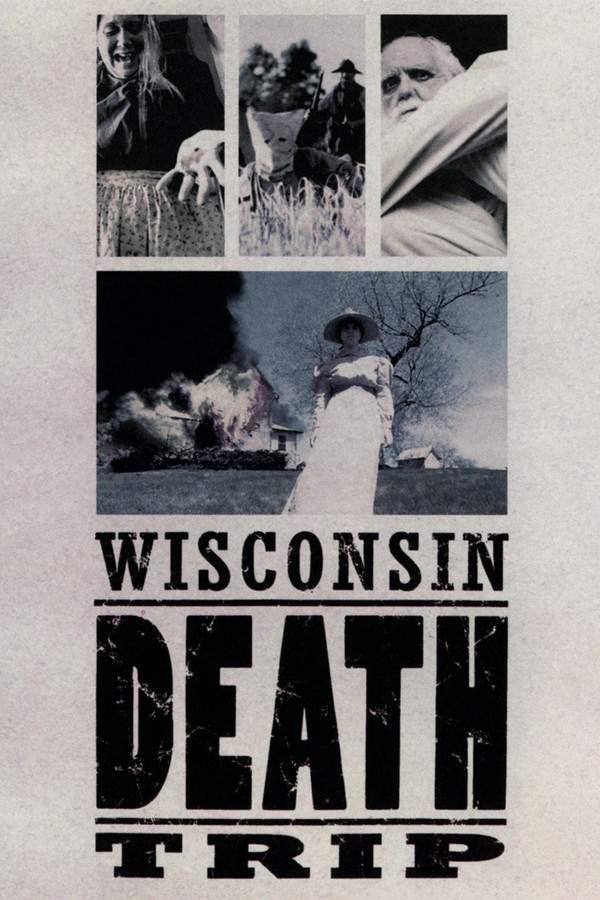
Wisconsin Death Trip 2001

Directed by

James Marsh
Made by

Home Vision Entertainment (HVE)
Wisconsin Death Trip Plot Summary
Read the complete plot summary and ending explained for Wisconsin Death Trip (2001). From turning points to emotional moments, uncover what really happened and why it matters.
As the 19th century edges toward its conclusion in the rural expanse of northern Wisconsin, the local community—predominantly consisting of German, Swedish, and Norwegian immigrants—finds itself engulfed in chaos and desperation. The sudden downfall of multiple mines, paired with a crippling economic crisis and the collapse of banks, sends ripples of fear and confusion throughout the populace. In the midst of this turmoil, an escalating sequence of bizarre and unsettling events begins to unfold, each more disturbing than the last.
Mary Sweeny, a local schoolteacher, suffers a cocaine-fueled breakdown, resulting in an outburst that leaves destruction in her wake, including broken windows in various homes and buildings. Concurrently, a young boy, who is both deaf and mute, experiences a tragic turning point in his life as he commits a senseless act of violence towards his own sister, shattering their once peaceful existence.
In the town of Brandon, two young criminals unleash a savage attack on a farmer, culminating in his murder via a shotgun blast. The older brother, John, portrayed by actor, escapes as panic spreads, igniting a massive manhunt that eventually leads to his capture and life imprisonment for his heinous actions.
As the region spirals deeper into madness, a Norwegian teenage girl tragically drowns herself in a nearby lake, leaving behind a suicide note that exposes her life shrouded in abuse and exploitation by her parents. This heart-wrenching incident acts as a precursor to a series of young lovers who follow her tragic path, choosing to end their lives through hanging and other harrowing methods.
In this thickening atmosphere of despair, Anna, a young Polish girl, is found to be the culprit behind a string of arsons that devastate numerous properties, further agitating the already fraught community.
The tensions simmering beneath the community’s surface become palpable as violent outbursts ensue. A father commits the unthinkable by brutally killing his infant son before attempting to take his wife’s life. In a separate incident, a young man tragically murders a woman who rejects his marriage proposal, subsequently turning the gun on himself in a moment of despair.
Madness continues to loom heavily over these local communities, with some individuals spiraling into delusions of grandeur and paranoia. One notable figure, John Isaacson, believes he is vanquishing Satan and takes it upon himself to hold an entire Christian meeting at knifepoint. In another peculiar turn of events, a German immigrant engages in the intentional starvation of his livestock, attributing the deaths to claims of witchcraft.
In a final, desperate act of delusion, Mrs. Dutton from La Crosse comes to believe she is the reincarnation of Jesus. Simultaneously, Mrs. Lawson of St. Croix tragically believes she is haunted by Satan and takes the lives of her three children in a senseless act of drowning in a nearby lake.
Amid these alarming occurrences, the quaint town of Brockway becomes home to Pauline L’Allemand, a mysterious figure and French opera singer, who claims to have inherited a plot of land from afar. Accompanied by her son, Edgar, she seeks to establish a new life filled with performances, despite facing skepticism from the locals regarding her disheveled appearance. As days pass, Pauline’s mental stability begins to fray, leading her to suffer from auditory hallucinations, convinced she is communicating with spirits. Edgar’s theft of cement to mend their crumbling home aggravates the situation, leading to a trial that reveals Pauline’s erratic behavior and her bizarre conspiracy theories regarding Catholicism. Ultimately, she is judged legally insane and placed in Mendota Hospital.
Simultaneously, the town is caught in a chaotic spiral as local businesses collapse alongside the economy. The middle-aged residents become embroiled in affairs, inciting a disturbing rise in violence and murder. A vagrant, amid attempts to rob, commits heinous acts before tragically taking his own life. Mary Sweeny, having just been released from Mendota, wanders the area aimlessly, continuing her rampage of destruction. In a startling turn, Pauline L’Allemand escapes from the hospital only to reappear later in Chicago, claiming she was tormented by a ventriloquist’s antics from the adjacent room during her stay.
This backdrop of turmoil sets the stage for a juxtaposition of contemporary events from the mid-to-late twentieth century alongside those tumultuous 1890s. This disturbing narrative is underscored by the sense of unease, especially when reflecting on the notorious crimes of Wisconsin natives Ed Gein and Jeffrey Dahmer, plunging readers deeper into a captivating yet foreboding tale.
Wisconsin Death Trip Timeline
Follow the complete movie timeline of Wisconsin Death Trip (2001) with every major event in chronological order. Great for understanding complex plots and story progression.
Economic Collapse
As the 19th century nears its end, northern Wisconsin faces a devastating economic crisis. The downfall of multiple mines and the collapse of banks trigger widespread fear and chaos within the predominantly immigrant community.
Mary Sweeny's Breakdown
Local schoolteacher Mary Sweeny experiences a cocaine-fueled breakdown, leading to violent outbursts. Her destruction results in broken windows across homes and buildings, reflecting the turmoil engulfing the community.
Tragic Violence Among Siblings
A deaf and mute boy undergoes a tragic event when he inexplicably commits an act of violence against his sister. This incident shatters their previously peaceful family dynamic, highlighting the increasing chaos in the area.
Murder in Brandon
In the town of Brandon, two young criminals attack a farmer in a savage assault, culminating in his murder by a shotgun blast. This brutal act triggers panic and a massive manhunt for the older brother, John, who ultimately faces life imprisonment.
Norwegian Girl's Suicide
A Norwegian teenage girl tragically drowns herself in a nearby lake, leaving behind a heartbreaking suicide note. Her death, tied to abuse and exploitation from her parents, marks a turning point, leading others to follow suit in despair.
Arson in the Community
Anna, a young Polish girl, is revealed to be responsible for a series of devastating arsons that ravage local properties. Her actions further heighten the community's anxiety and sense of impending doom.
Unthinkable Filicide
Amid rising tensions, a father commits the horrific act of killing his infant son and attempts to murder his wife. This violent outburst amplifies the community's fears and unpredictability, reflecting the chaos taking hold.
Despair Sparks Violence
A young man, rejected by a woman to whom he proposed marriage, tragically murders her before taking his own life. This act of desperation showcases the extreme emotional toll the community's turmoil has inflicted on its inhabitants.
Delusions in the Community
As madness spreads, John Isaacson takes it upon himself to rid the world of evil, believing he is combating Satan. He even convenes a Christian meeting at knifepoint, signposting the depths of paranoia overtaking the community.
Starvation and Witchcraft
A German immigrant engages in the deliberate starvation of his livestock, blaming their deaths on witchcraft. This peculiar action adds to the eerie atmosphere of superstitions and rampant delusions gripping the area.
Mrs. Dutton's Delusion
Mrs. Dutton from La Crosse descends into a delusion, believing she is the reincarnation of Jesus. Her warped perception leads to tragic consequences as she takes the lives of her three children in a drowning incident.
Pauline L'Allemand Arrives
Pauline L'Allemand, a French opera singer, arrives in Brockway, claiming she has inherited land. Skepticism from the locals about her appearance and intentions highlights the disarray enveloping the community.
Pauline's Mental Decline
As Pauline attempts to establish a new life, she begins to suffer from auditory hallucinations, convinced she is in contact with spirits. This further illustrates her deteriorating mental state amidst the already turbulent environment.
Collapse of Local Businesses
Parallel to the personal tragedies, local businesses face collapse due to the economic crisis. The middle-aged populace becomes embroiled in infidelity and violence, compounding the distress permeating the community.
Mary Sweeny's Rampage
Having been released from Mendota Hospital, Mary Sweeny wanders the area, continuing her path of destruction. Her return heightens fears as the community grapples with an overwhelming sense of despair and madness.
Wisconsin Death Trip Characters
Explore all characters from Wisconsin Death Trip (2001). Get detailed profiles with their roles, arcs, and key relationships explained.
Mary Sweeny
Mary is a local schoolteacher whose descent into chaos mirrors the turmoil of the community. Suffering from a cocaine-fueled breakdown, she unleashes destruction that contributes to the societal madness around her. Her character reflects the struggle with addiction and mental instability.
Pauline L'Allemand
A mysterious French opera singer, Pauline seeks to find stability in a chaotic environment. Her eccentric behavior and claims of mentorship from spirits indicate her crumbling mental state. Her journey embodies the search for acceptance amid societal judgment and mental health issues.
John Isaacson
John is a troubled figure who descends into delusion, believing he is on a mission to vanquish evil. His actions, including holding a meeting at knifepoint, illustrate the connection between faith, mental health, and violence in a community grappling with despair.
Wisconsin Death Trip Settings
Learn where and when Wisconsin Death Trip (2001) takes place. Explore the film’s settings, era, and how they shape the narrative.
Time period
19th century, mid-to-late twentieth century
The narrative primarily takes place in the turbulent 1890s, a time marked by economic upheaval, immigration, and societal challenges. This period witnesses various violent and bizarre events as communities grapple with despair and chaos. Juxtaposed against this, references to the mid-to-late twentieth century highlight the lasting impact of these events on local myths and infamous figures.
Location
Brandon, Brockway, Mendota, northern Wisconsin, Chicago
The story unfolds in the rural expanse of northern Wisconsin, particularly in towns like Brandon and Brockway. Known for its serene landscapes, this region is marred by economic strife and chaos as the 19th century approaches its end. The nearby Mendota Hospital symbolizes the struggle with mental health amidst societal collapse, while Chicago represents a glimmer of hope and a fresh start for some of the characters.
Wisconsin Death Trip Themes
Discover the main themes in Wisconsin Death Trip (2001). Analyze the deeper meanings, emotional layers, and social commentary behind the film.
💔
Tragedy
Tragedy pervades the story as characters confront unimaginable loss and despair. The events lead to horrifying outcomes, including multiple suicides and acts of violence, shaping the community's psyche. Each character’s journey reflects the broader theme of how the environment can drive individuals to commit acts of desperation.
🔪
Violence
The film explores the senseless and brutal violence that overwhelms a once peaceful community. Characters engage in horrific acts, revealing the darker sides of human nature and how societal pressures can lead to explosive consequences. This theme underscores the fragility of social order during times of crisis.
💭
Mental Health
The deterioration of mental health is a prominent theme as characters exhibit signs of torment and delusion. Pauline, Mary, and others find themselves caught in a web of hallucinations and irrational fears, raising questions about the community's understanding of mental illness. The film starkly portrays how untreated mental health issues can spiral into tragedy.

Coming soon on iOS and Android
The Plot Explained Mobile App
From blockbusters to hidden gems — dive into movie stories anytime, anywhere. Save your favorites, discover plots faster, and never miss a twist again.
Sign up to be the first to know when we launch. Your email stays private — always.
Explore the mobile appWisconsin Death Trip Spoiler-Free Summary
Discover the spoiler-free summary of Wisconsin Death Trip (2001). Get a concise overview without any spoilers.
In the waning years of the 19th century, a cluster of immigrant families forge a community amid the unforgiving woods and biting winters of northern Wisconsin. The town’s economy teeters on the brink as mines close and banks falter, casting a pall of uncertainty over the daily rhythms of farm work, schoolrooms, and church gatherings. The stark, snow‑laden landscape and the whispered folklore of the region create a vivid backdrop where hope and desperation constantly vie for dominance, setting a tone that feels both historic and eerily contemporary.
Among the residents, Mary Sweeny—a schoolteacher whose outward composure masks inner turbulence—struggles to keep her sense of purpose intact against the growing pressures of her environment. At the same time, Pauline L’Allemand, a French opera singer arriving with her young son, brings a breath of artistic mystery to the town, her presence stirring curiosity and subtle unease among the locals. Their contrasting journeys—one rooted in the familiar cadence of the community, the other foreign and theatrical—offer a lens through which the audience can sense the fragile equilibrium of the settlement.
The film unfolds through a collage of restored archival footage and imagined newsreels, weaving fact‑like reportage with haunting visual tableaux. This stylistic blend paints the era with a documentary sheen while allowing the story’s emotional undercurrents to surface, inviting viewers to feel the collective anxiety that seeps through cracked windows and empty storefronts. The ambiance is one of quiet dread, punctuated by moments of stark beauty that reveal both the resilience and the mounting strain of a town on the edge.
Through these interwoven perspectives, Wisconsin Death Trip invites contemplation of how a community confronts overwhelming hardship, how personal despair can echo through shared spaces, and how the ghosts of a turbulent past linger long after the snow melts. The narrative promises a meditation on loss, identity, and the thin line between survival and surrender, all without revealing the specific outcomes that await its inhabitants.
Movies with Similar Twists and Themes
Uncover films that echo the narrative beats, emotional arcs, or dramatic twists of the one you're exploring. These recommendations are handpicked based on story depth, thematic resonance, and spoiler-worthy moments — perfect for fans who crave more of the same intrigue.




Featured on this page

What's After the Movie?
Not sure whether to stay after the credits? Find out!
Check out our other apps:

SAT Sphere
Build confidence for the Digital SAT.

Mori Atlas
Discover wild places worth protecting.

Luntero
Search smarter for a home in Amsterdam.

Plot Explained
Unravel movie endings and hidden clues.

Pokechamp
Dive into Pokémon data and battle logic.

Driving Theory
Get ready for your European theory test.

Movie Dust
Plan your next cinema trip with ease.

Musemap
Find art and culture as you travel.

Selkobase
Compare credentials before committing.

Local Manual
Turn an unfamiliar country into practical next steps.

Lernavi
Compare school systems before your next move.

GymRoam
Find a workout stop wherever your plans take you.
Explore Our Movie Platform
New Movie Releases (2026)
Famous Movie Actors
Top Film Production Studios
Movie Plot Summaries & Endings
Major Movie Awards & Winners
Best Concert Films & Music Documentaries
Movie Collections and Curated Lists
© 2026 What's After the Movie. All rights reserved.
Privacy Policy