
Where the River Runs Black 1986


Directed by
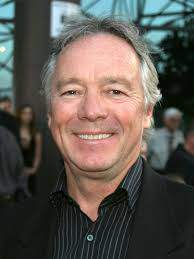
Christopher Cain
Made by

Metro-Goldwyn-Mayer
Where to Watch Where the River Runs Black
See current US streaming, rental, and purchase options for Where the River Runs Black (1986) via JustWatch.









Where the River Runs Black Plot Summary
Read the complete plot summary and ending explained for Where the River Runs Black (1986). From turning points to emotional moments, uncover what really happened and why it matters.
Brazil, 1976, is a story set in the lush yet perilous heart of the Amazon, where faith, ambition, and myth collide in a landscape that tests every human conviction. Father Mahoney, Peter Horton, arrives as a missionary with a stubborn belief that medicine and development can save a people long left to hardship. He clashes with his superior, Father O’Reilly, Charles Durning, who urges him to abandon grand plans and instead devote his energy to saving souls. The tension between these two visions sets the stage for a journey that will blur the lines between salvation and temptation.
When Mahoney ventures alone into the black, serpentine waters by canoe, he encounters the legendary Eagle Woman, a seductive spirit said to dwell in the river and to take the form of a river dolphin. The encounter is charged with desire and danger, and during this moment of intimacy he gives the woman the crucifix from around his neck. The meeting leaves a mark on him far beyond earthly boundaries, and soon after his return to the mission, tragedy strikes: he is killed by an anaconda, never knowing that the woman he left behind is now carrying a child. The child is Lazaro, a boy who will grow up in the jungle, in an idyll of river and dolphin, far from the structures of the mission.
Lazaro, Alessandro Rabelo, is raised by his mother in the forest, where he discovers a world of wonder—swimming with the river dolphins and moving with a natural ease through a landscape that feels like a living, breathing guardian. His early years are solitary, punctuated by moments of danger and beauty, and his mother’s life is cut short when hunters, led by Orlando Santos, arrive in the jungle and kill her in a struggle. The moment is witnessed from the trees by the child, who is then pulled from the river by the same river dolphins that will become his lifelong companions. They bring him safely to shore, and at the age of six he learns to survive on his own in the wild, an origin story that becomes central to the tale’s mythic thread.
News of a feral child travels to the towns along the river, and by the time Lazaro is ten, he is captured and taken to a local orphanage. There, Father O’Reilly, Charles Durning, recognizes the crucifix on the boy and understands that Lazaro is Mahoney’s child. He baptizes him and names him Lazaro, inviting him into a simple, if curious, Catholic world. Lazaro finds a friend in an older boy known as Segundo, Ajay Naidu, who helps him learn language and social norms. The orphanage, overseen by kindly nuns and supported by a benefactor seen as a potential governor, becomes a stage on which Lazaro’s dual inheritance—Jungle and civilization—will clash in the most human way.
As Lazaro grows, so does his longing for the life he left behind. He runs away with Segundo, driven by a desire for justice and vengeance against the man who killed his mother—Orlando Santos, the campaign financier who has risen to prominence in a provincial power struggle. Santos is a charismatic, dangerous figure who uses his influence to manipulate events, and Lazaro’s return to the world of men is marked by a tense pursuit through the forest and the city. Santos himself is linked to a hive of other characters, including his allies and the political machinery that props up his ambitions (a circle that includes people like Luis and others involved in the campaign, such as those portrayed by François Thijm and others in the ensemble).
In a moment of desperate confrontation, Lazaro confronts Santos at a gathering. Armed with a sharpened stake, he lunges at Santos in front of attendees, but the moment spirals into a violent, chaotic chase. Although Lazaro escapes, Segundo is captured by Santos’s security and becomes a pawn in a larger game. The pursuit forces Lazaro to move between the jungle’s embrace and the human world’s coercive reach, as Santos uses his influence to corner the boy and force a reckoning.
Father O’Reilly, meanwhile, pursues the truth by traveling up the Amazon, guided by a growing sense that Lazaro may return to the forest he once called home. The two paths—one toward mercy and the other toward retribution—converge on a riverbank where the old life and the new fate collide. Lazaro returns to the riverine world that raised him, and the forest finds him again as he walks a familiar path toward a place where river dolphins swim in the same river that carried him as a child. Santos closes in, grabbing Lazaro from behind and dragging him toward the water in a bid to finish a debt that cannot be paid in the human world alone.
In a climactic moment, the river dolphins attack Santos, striking him with their snouts and driving him to drown. The scene is charged with moral ambiguity: Father O’Reilly arrives as Santos falters, his instinct to save warring with a conviction that the man’s violent acts have earned their own consequence. He chooses to let the moment play out, leaving Santos to drown, and he finally confronts the possibility that forgiveness might require letting go of vengeance. The aftermath is quiet but resonant: O’Reilly reunites with Lazaro, yet he leaves the boy to be reared by the forest, a decision that suggests the jungle remains a place of refuge and risk, a place where a child can grow into a legend.
As the film completes its arc, Lazaro becomes a figure of local lore, a child of river and forest who may still be seen playing with the dolphins and perhaps even transforming into one of them. The narrator’s voice—Father O’Reilly’s confession and quest for forgiveness—frames the entire journey. The opening and closing cadence of the film anchors the myth in moral reflection, presenting a story in which a healing impulse collides with a brutal history, and where the boundaries between civilization and the wild are tenderly, unflinchingly tested.
Throughout, the film remains anchored in a cast of distinct figures who guide Lazaro from childhood into a morally fraught adulthood: Conchata Ferrell as Mother Marta offers care within the orphanage, Dana Delany as Sister Ana lends spiritual counsel, and Peter Horton as Father Mahoney represents the doomed impulse to heal at any cost. The cast around Lazaro—Castulo Guerra as Orlando Santos, Chico Diaz as Raimundo, Ariel Coelho as Francisco, Paulo Sergio Oliveira as Jose, François Thijm as Luis, and Geraldo Salles as the Priest in Confessional—paints a vivid, morally complex world in which faith, power, memory, and the wild coexist and collide.
Where the River Runs Black Timeline
Follow the complete movie timeline of Where the River Runs Black (1986) with every major event in chronological order. Great for understanding complex plots and story progression.
Opening confession frames the story
The film opens with Father O'Reilly in confession, wrestling with guilt over a life-or-death moment. His voiceover frames the tale as a meditation on faith, mercy, and the costs of inaction. This frame sets up the moral conflict that drives the rest of the narrative.
Mahoney's mission vs. Father O'Reilly's disapproval
In the Amazon, Father Mahoney pursues saving indigenous people through medicine and development. Father O'Reilly disapproves, urging a focus on saving souls rather than tangible aid. The clash highlights the central tension between reform and faith.
River encounter with the seductive spirit
Mahoney ventures by canoe into the black waters and meets an indigenous woman who tempts him. He becomes intimate with her and later gives her the crucifix from around his neck. She is seen as a seductive spirit capable of transforming into a river dolphin.
Death by anaconda
Returning from the encounter, Mahoney is killed by an anaconda. He never learns that the woman he left behind is now pregnant. His death sets the stage for a new lineage and a search for belonging.
The jungle mother and the river-born son
The woman raises her son in the jungle, where he grows up playing with river dolphins. Hunters led by Orlando Santos invade the area, killing the mother during a struggle. The boy is tossed into the river and rescued by the dolphins, who carry him to shore.
Ferality and independence
Over the years the boy grows feral, living in the forest with the companionship of river dolphins. At age six he is left to fend for himself, cut off from human contact. His infancy becomes a legend whispered along the river towns.
Capture at age ten; recognition
At ten years old the feral boy is captured and taken to town. Father O'Reilly recognizes him when he sees the crucifix around his neck, realizing Lazaro is Mahoney's child. The revelation ties his fate to the priest and to the past deeds of his father.
Baptism and orphanage
O'Reilly baptizes the boy, naming him Lazaro, and places him in an orphanage run by nuns. There Lazaro begins to speak and forms friendships, notably with another boy. O'Reilly continues to visit, teaching forgiveness and moral values.
Lazaro and Segundo; Santos revealed
Lazaro is befriended by an older boy named Segundo. The orphans are presented to a powerful benefactor who is also a gubernatorial candidate, Orlando Santos, whom Lazaro recognizes as the man who killed his mother. The memory of his mother's death fuels his resolve.
Escape and pursuit
Lazaro and Segundo run away from the orphanage and survive by shining shoes in the streets. They narrowly elude Father O'Reilly at an ice-cream stand, then trail Santos's campaign vehicle to his house. The escape marks Lazaro's move from the institution to the living spread of the city and jungle beyond.
Fundraiser confrontation; stake thrown
At Santos's house during a fundraising event, Lazaro hurls a sharpened stake toward Santos's head, but it misses. Segundo is captured by Santos's security, and Santos realizes Lazaro is the jungle boy he once killed. The moment intensifies the hunt and the personal vendetta.
Quarry pursuit and jungle escape
Santos uses Segundo as a lure and tracks Lazaro to a quarry. Lazaro helps Segundo escape, and they flee into the jungle together. Santos presses the pursuit through the wilderness, turning the conflict back toward Lazaro's homeland.
Final river confrontation and Santos' death
Lazaro and Santos finally collide on the river. Santos grabs Lazaro and tries to drown him, but the river dolphins attack and push Santos under. Father O'Reilly arrives, conflicted about saving a killer, and chooses not to intervene as Santos dies.
Reunion and exile
O'Reilly finds Lazaro and reunites with him, but ultimately leaves him in the forest where he grew up. The boy remains wild and is rumored to still play with the river dolphins, a living legend of the jungle.
Legend end
As the tale closes, Lazaro is said to be seen in the jungle with dolphins and possibly able to turn into one himself. The film ends on O'Reilly's reflection about forgiveness and the limits of mercy.
Where the River Runs Black Characters
Explore all characters from Where the River Runs Black (1986). Get detailed profiles with their roles, arcs, and key relationships explained.
Lazaro (Alessandro Rabelo)
Raised in the jungle after his mother is killed and his father dies, Lazaro grows up among river dolphins who rescue him at a crucial moment. He carries Mahoney's crucifix as a link to his past and a symbol of faith he cannot yet articulate. In the orphanage, he befriends Segundo and nourishes a fierce urge for revenge against Orlando Santos, who murdered his mother. His life becomes a fable of survival, loyalty, and legend as he traverses forest and river.
Segundo (Ajay Naidu)
An older boy at the orphanage who befriends Lazaro and becomes his steadfast ally. He accompanies Lazaro on dangerous quests, offering loyalty and practical support as they navigate the threats posed by Santos and his men. When the chase intensifies, Segundo's courage and camaraderie anchor Lazaro's resolve to confront his past. His fate becomes tied to Lazaro's journey through both city and jungle.
Father Mahoney (Peter Horton)
A missionary priest who wants to aid indigenous communities through medicine and development, opposing his superior's insistence on saving souls alone. His entanglement with the river and its seductive myth, culminating in a fateful encounter, sets Lazaro on his path. He leaves behind a crucifix and a moral reckoning, unaware of the son he has fathered. His death under the Amazonian canopy underscores the conflict between aspiration and peril.
Father O'Reilly (Charles Durning)
A conservative, authority-driven priest who prioritizes doctrinal salvation over immediate healing. He baptizes Lazaro and becomes a guiding, yet morally conflicted, influence on the boy. He ultimately witnesses Santos's drowning and chooses not to intervene, a decision that haunts him and defines his journey toward forgiveness.
Orlando Santos (Castulo Guerra)
A powerful businessman and gubernatorial candidate who ruthlessly uses wealth and influence to control people and events around the river. He killed Lazaro's mother, and his pursuit of Lazaro leads to a climactic confrontation. Santos is ultimately overwhelmed by the river's fury and his own past, drowning in the consequences of his actions.
Eagle Woman (Divana Brandão)
A seductive river spirit who exists at the intersection of myth and reality, capable of transforming into a river dolphin. She tempts and haunts Father Mahoney, embodying the jungle's seductive danger. The presence of Eagle Woman blurs the line between magic and fate, influencing events from the shadows.
Where the River Runs Black Settings
Learn where and when Where the River Runs Black (1986) takes place. Explore the film’s settings, era, and how they shape the narrative.
Time period
1976
The events occur in 1976 in the Brazilian Amazon, a period marked by frontier development and regional political maneuvering. The era frames the clash between traditional life along the river and the push for modernization.
Location
Amazon River, Brazilian Amazon, Brazil
Set along the Amazon River and its dense jungle, the film unfolds in a lush, dangerous frontier where travel relies on canoes and river networks. The landscape is home to indigenous cultures and old legends, including a seductive river spirit. The setting shapes choices, from missionary missions to perilous escapes into the forest.
Where the River Runs Black Themes
Discover the main themes in Where the River Runs Black (1986). Analyze the deeper meanings, emotional layers, and social commentary behind the film.
🕊️
Redemption
The narrative centers on forgiveness and moral accountability as Father O'Reilly and Father Mahoney confront the consequences of their actions. Lazaro's existence forces a reevaluation of whether salvation is offered through doctrine alone or through personal choices. The film asks whether mercy can extend to those who have caused harm, and whether characters can find peace after violence.
🏛️
Power and Corruption
Orlando Santos wields wealth and political influence to manipulate the lives along the river, exposing how power can distort ideals and wreck communities. The orphanage, the campaign, and the resort to murder reveal the moral cost of ambition. The story examines how development and exploitation are pursued under the banner of progress.
🐬
Nature and Myth
Lazaro's upbringing among river dolphins blurs the line between nature and legend, making the river feel like a living, protective force. The Eagle Woman embodies local myth, tempting and testing the human characters and symbolizing desires and dangers of the jungle. The film suggests nature's justice can supersede human law, inviting audiences to consider a primal balance between civilization and wilderness.

Coming soon on iOS and Android
The Plot Explained Mobile App
From blockbusters to hidden gems — dive into movie stories anytime, anywhere. Save your favorites, discover plots faster, and never miss a twist again.
Sign up to be the first to know when we launch. Your email stays private — always.
Explore the mobile appWhere the River Runs Black Spoiler-Free Summary
Discover the spoiler-free summary of Where the River Runs Black (1986). Get a concise overview without any spoilers.
The story opens deep in the Amazon’s tangled heart, a place where the river moves like a dark artery through a living cathedral of green. Mist clings to towering trees, river dolphins surface with uncanny grace, and the air hums with ancient myths that blur the line between nature and spirit. Against this backdrop, a modest mission led by Father Mahoney seeks to blend medicine and faith, while a more contemplative clergyman, Father O’Reilly, senses a deeper, unspoken thread that ties the wilderness to the world of believers.
At the centre of that thread is a boy who has known only the river’s current and the canopy’s shelter. Raised among the water’s playful creatures and the whispering shadows of the forest, he embodies a raw communion with the land that feels both timeless and fragile. His days are marked by the rhythmic flow of the river, the call of unseen birds, and an instinctive kinship with the river dolphins that seem to watch over him, hinting at a destiny that belongs as much to myth as to flesh.
When word of the child reaches the settlements along the river, Father O’Reilly recognizes a symbol that links the boy to a forgotten past and decides to bring him into the world of stone churches and spoken prayers. The boy’s entry into civilization sets up a delicate dance between two starkly different ways of living—one rooted in the untamed pulse of the jungle, the other framed by structured belief and community. As the two worlds brush against each other, the film settles into a lyrical, contemplative tone, inviting the audience to wonder how a soul shaped by river and forest will navigate the quiet currents of human society.
Movies with Similar Twists and Themes
Uncover films that echo the narrative beats, emotional arcs, or dramatic twists of the one you're exploring. These recommendations are handpicked based on story depth, thematic resonance, and spoiler-worthy moments — perfect for fans who crave more of the same intrigue.

Featured on this page

What's After the Movie?
Not sure whether to stay after the credits? Find out!
Check out our other apps:

SAT Sphere
Build confidence for the Digital SAT.

Mori Atlas
Discover wild places worth protecting.

Luntero
Search smarter for a home in Amsterdam.

Plot Explained
Unravel movie endings and hidden clues.

Pokechamp
Dive into Pokémon data and battle logic.

Driving Theory
Get ready for your European theory test.

Movie Dust
Plan your next cinema trip with ease.

Musemap
Find art and culture as you travel.

Selkobase
Compare credentials before committing.

Local Manual
Turn an unfamiliar country into practical next steps.

Lernavi
Compare school systems before your next move.

GymRoam
Find a workout stop wherever your plans take you.
Explore Our Movie Platform
New Movie Releases (2026)
Famous Movie Actors
Top Film Production Studios
Movie Plot Summaries & Endings
Major Movie Awards & Winners
Best Concert Films & Music Documentaries
Movie Collections and Curated Lists
© 2026 What's After the Movie. All rights reserved.
Privacy Policy