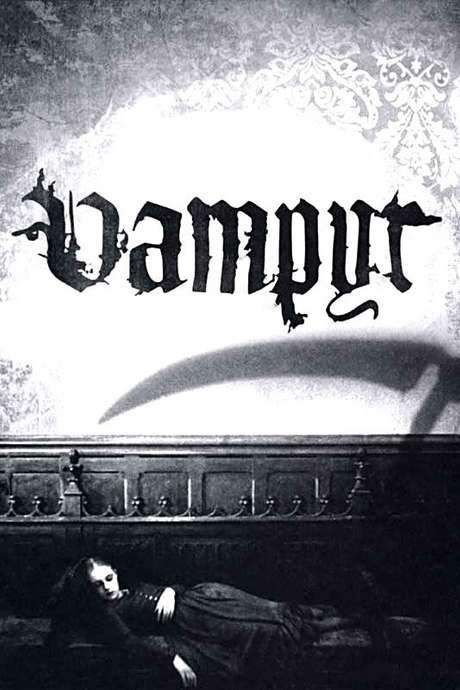
What Is The Vampire About?
The premise of The Vampire in 329 words, with nothing given away. The full story follows below.
In the humid heat of a remote Mexican town, a striking young woman returns after the loss of her beloved aunt. The journey home is as much a pilgrimage as it is a confrontation with memories that have lain dormant beneath the layered walls of the village. The landscape—canyons brushed with dusk, narrow cobblestone streets lit by flickering lanterns—feels both intimate and oppressive, a place where the past clings to every doorway and the wind carries whispers from the hills.
The community is alive with uneasy talk, a murmur that spreads like a slow‑moving fog: rumors of a vampire infestation that have settled into the town’s collective nervous system. These stories are told in hushed tones over steaming cups of coffee, in the dim corners of market stalls, and in the lingering scent of incense that seems to mask something deeper. The tone is one of quiet dread mixed with a bitter, almost reverent, humor that only those who have lived long enough to hear the legends can muster.
As the young woman begins arranging the funeral rites, she is drawn into a web of subtle glances and half‑spoken anxieties. Her aunt—still present in the house, though changed by grief—offers a kind of fragile steadiness that both comforts and unsettles her. Across the cracked plaster of the adjoining home lives an enigmatic next‑door neighbor, a figure wrapped in secrecy whose rhythm seems to echo the town’s unspoken fears. Their interactions are laced with polite distance, each word a measured step around a tension that feels almost palpable.
All the while, the town’s folklore creeps into everyday life, turning ordinary moments into potential clues. The atmosphere is thick with the scent of rain on dust, the distant call of nightbirds, and an undercurrent of something ancient stirring just beneath the surface. In this blend of heritage, grief, and whispered myth, the young woman must navigate the thin line between remembrance and the darkness that seems eager to claim the night.
What Happens in The Vampire?
The complete story of The Vampire, from the first scene to the last, in 560 words (about 2 minutes). Spoilers throughout.
Spoilers ahead
In San Francisco, a late-night discovery sets off a chain of unsettling events. The elderly Dr. Campbell had been toying with vampire bat blood as part of his experiments, and just before his death he leaves behind a clue in the form of a bottle of pills. Colleague Paul Beecher brings those pills home, hoping they hold the key to alleviating his patients’ pain, but fate takes a dark turn when his daughter Betsy accidentally swaps his father’s migraine tablets for the vampire blood concoction. The result is a troubling shift: Paul begins experiencing powerful blackouts that blur the line between doctor and danger.
During a routine consultation with Marion Wilkins, a patient battling congenital heart problems, Paul starts to feel the strangeness creeping in again. He asks Marion to reschedule, but the next day a chilling report arrives: Marion has fallen gravely ill, and when Paul responds to the hospital, he finds her terrified by his presence and dead with two puncture wounds on her neck. The mystery deepens as Paul returns to Campbell’s lab and encounters the university’s psychiatric head, Dr. Will Beaumont, who oversees the study, accompanied by the detached researcher Henry Winston. Beaumont explains Campbell’s broader aim: to regress minds to a primitive state and then reverse the process, a theory that promises to unlock newer levels of intellect. Yet the pills remain an enigma, and Paul, hungry for answers, finds himself increasingly unmoored.
The plot thickens as Henry is found dead in the same grisly fashion, with the same neck wounds and a disturbing tissue disintegration. Paul is summoned to perform surgery but finds himself distracted and unable to concentrate, forcing him to abandon the operation mid-procedure. As the moon grows full in the background of a creeping dread, Paul confronts the terrifying possibility that he himself is responsible for the killings that have shaken the community—acts he cannot recall committing during his blackouts. In a bid to protect Betsy, he sends her to stay with relatives, while he confronts Beaumont about the pills. Beaumont, though, suspects a delusion and locks the pill bottle away, attempting to steady Paul and prevent further harm.
That night, the transformation finally manifests in a brutal, undeniable form: the pills turn Paul into a vampire, propelling him to murder, and he wastes no time in disposing of Will’s corpse in a furnace. The investigation widens as Sheriff Buck Donnelly presses questions about Will’s experiments. He discovers an audio recording that confirms Will’s murder, weighing heavily on the case. Meanwhile, Paul’s nurse, Carol Butler, becomes unwittingly entangled in the nightmare as she checks Paul’s office. She notices a vial of poison and understands he might be contemplating suicide, but her alarm escalates when she witnesses Paul’s sudden change into a vampire. Buck arrives just in time to see Carol flee, pursued by Paul through the night.
The chase culminates in a tense wooded chase, with Carol escaping and Buck standing between the hunter and his quarry. As the danger closes in, Paul’s pursuit turns violent, and he fights Buck before a final intervention arrives: Officer Ryan shoots Paul, sending him tumbling into a shallow culvert. In a haunting final twist, the monstrous form fades, and Paul’s body reverts to its normal appearance as he dies, leaving behind a stark reminder of the vampire’s curse and the price of unrestrained science.
The Vampire Timeline: Every Key Event in Order
13 key events in the order they happen, from “Campbell's vampire-bat blood experiments” to “Officer Ryan shoots Paul; death and transformation reversal”. 13 events name a place, across 11 locations.
- 1
Campbell's vampire-bat blood experiments
In San Francisco, Dr. Campbell has begun experimenting with vampire bat blood just before his death. After Campbell's passing, his colleague Paul Beecher discovers a bottle of pills among his effects, hinting at the controversial research behind the blood work.
When:Late evening (before his death) Where:Campbell's laboratory, San Francisco
- 2
Betsy substitutes pills with migraine tablets
Betsy Beecher, the doctor’s daughter, accidentally substitutes the vampire-blood pills for her father's migraine tablets. The switch sets off the chain of events that will affect Paul and the course of the investigation.
When:That evening Where:Beecher residence
- 3
Paul Beecher's blackouts begin
Driven by the pills, Paul begins experiencing blackouts that disrupt his medical work and judgment. The episodes foreshadow more dangerous consequences linked to Campbell’s experiments.
When:The following day Where:Beecher household / hospital
- 4
Marion Wilkins dies after Paul’s visit
During a consultation with Marion Wilkins, who suffers from congenital heart problems, Paul feels unwell and asks her to return the next day. The following morning, Marion grows gravely ill and dies, with two puncture wounds found on her neck.
When:The following morning Where:Marion Wilkins' home
- 5
Paul returns to Campbell's lab; Beaumont and Winston brief him
Paul returns to Campbell's lab and encounters Dr. Will Beaumont, the head of the university’s psychiatric department, accompanied by Henry Winston. Beaumont explains that Campbell's work involved regressing minds to a primitive state and reversing the process to advance intellect.
When:That evening Where:Campbell's laboratory
- 6
Henry Winston is found dead with puncture wounds
The next morning, Henry Winston is mysteriously found dead, showing puncture wounds on the neck and tissue disintegration. Paul is unsettled by the deaths and the pattern he’s involved in.
When:The following morning Where:Campbell's laboratory
- 7
Paul struggles during an emergency surgery
Paul is called to perform an emergency surgery but cannot focus due to the lingering effects of the pills, forcing him to leave the operating room. The incident underscores the growing danger of his condition.
When:During the day Where:Hospital operating room
- 8
Betsy safety plan and Will's bottle-guarded pills
Realizing the murders may be his own doing, Paul arranges for Betsy to stay with an aunt for safety. He confronts Dr. Beaumont’s associate Will, who locks the pill bottle in a drawer to prevent access.
When:That night Where:Will's laboratory
- 9
Paul transforms into a vampire and murders Will
During the night, Paul transforms into a vampire and murders Will, disposing of his body in a furnace. The crime intensifies the mystery around the pills and Paul's own humanity.
When:The night Where:Will's laboratory
- 10
Sheriff Buck Donnelly investigates and finds evidence
Sheriff Buck Donnelly visits the lab and, suspecting Will’s experiments, discovers an audio recorder containing a recording of Will’s murder. The recording confirms foul play and implicates Paul.
When:The following day Where:University laboratory
Show the other 3 events of The Vampire Hide the last 3 events
- 11
Nurse Carol Butler confronts Paul and witnesses a transformation
Nurse Carol Butler visits Paul's office and notices a vial of poison. She realizes Paul may intend suicide and witnesses his transformation into a vampire before escaping.
When:That afternoon Where:Paul's office
- 12
Carol flees through the woods; Buck pursues
Carol flees into a nearby wood with Paul in pursuit, and Buck Donnelly follows, preparing to intervene as the danger escalates.
When:Evening Where:Nearby woods
- 13
Officer Ryan shoots Paul; death and transformation reversal
Officer Ryan arrives and shoots Paul, who falls into a shallow culvert. As he dies, his monstrous body reverts to his ordinary appearance, ending the threat.
When:Evening Where:Roadside culvert
Who Are the Main Characters in The Vampire?
8 characters, among them Dr. Paul Beecher, Marion Wilkins and Betsy Beecher: who each one is and the part they play in the story.
- DP
Dr. Paul Beecher
A once-kind physician whose life spirals after taking vampire pills, leading to deadly blackouts and murderous impulses. He grapples with the tension between his medical ethics and the monstrous urges unleashed by the drug, revealing a haunting duality.
- 🧪 Scientist
- ⚖️ Ethical dilemma
- 🩸 Monstrous transformation
- MW
Marion Wilkins
A patient with congenital heart problems who becomes frightened by Paul as his condition worsens. Her fear underscores the human cost of the experiments and foreshadows the escalating danger around Paul.
- ❤️ Patient
- 😨 Fear
- 🕯️ Vulnerability
- BB
Betsy Beecher
Dr. Beecher’s daughter who accidentally swaps vampire pills with her father’s migraine medication, triggering a chain of deadly events. She becomes an unwitting catalyst in the unfolding catastrophe.
- 💊 Mistake
- ⚠️ Catalyst
- 👪 Family
- DW
Dr. Will Beaumont
Head of the university’s psychiatric department who oversees Campbell’s work. Skeptical and methodical, he becomes entangled in the crisis as the pills’ effects come to light and the truth about the experiments emerges.
- 🧠 Scientist
- 🧭 Authority
- 🗝️ Skeptic
- HW
Henry Winston
A reserved researcher who is found dead with similar neck wounds, his death deepening the mystery surrounding the pills and the experiment.
- 🔬 Researcher
- 🩸 Victim
- 🕵️ Investigator
- SB
Sheriff Buck Donnelly
The local lawman who investigates the unusual deaths and follows the trail to the laboratory, confronting the unsettling truth behind the pills.
- 👮 Law enforcement
- 🕵️ Investigation
- ⚖️ Climax
- CB
Carol Butler
Paul’s nurse who senses danger and witnesses the vampire transformation. She becomes a key observer of the chaos as the pursuit unfolds.
- 💉 Nurse
- 🏃 Escape
- 🩸 Danger
- OR
Officer Ryan
A patrol officer who intervenes during the climactic pursuit and shoots Paul, bringing the monster’s rampage to an end as the body reverts.
- 👮 Police
- 🏁 Climax
- 🩸 Violence
Where and When Is The Vampire Set?
The Vampire is set in San Francisco. Here is why the place matters to the story.
Where
San Francisco
San Francisco serves as the backdrop for a mid-century medical drama. The city’s hospitals and research labs provide a tense urban setting where science collides with crime. Foggy streets and a bustling, coastal environment amplify the sense of danger as the experiments unfold.
- 🏙️ Urban setting
- 🌁 Foggy atmosphere
What Are the Themes of The Vampire?
3 ideas the story keeps returning to, among them Science, Transformation and Guilt.
-
01
Science
Unchecked experimentation drives the plot, with pills and mind-regression experiments leading to murder and chaos. The story questions whether scientific ambition can justify dangerous methods. Ethical boundaries blur as researchers push toward breakthroughs at the cost of human safety. The film emphasizes the peril of pursuing knowledge without accountability.
-
02
Transformation
A trusted physician becomes a predator as blackouts unleash a vampire within him. The transformation is both physical and psychological, revealing a fractured sense of self. The narrative explores how identity can fracture under the pressure of hidden impulses. The climax shows the fragility of humanity when the monstrous side takes over.
-
03
Guilt
The protagonist wrestles with guilt for crimes committed during his altered state, forcing him to confront responsibility for the harm caused. Those around him grapple with the consequences of his actions and the mystery behind the pills. Law enforcement and colleagues piece together what happened, revealing a web of culpability. The theme ties personal remorse to the thriller’s arc, driving the story toward its violent resolution.
What Kind of Film Is The Vampire?
Dark in tone, with steady pacing and a straightforward story, going by the plot summary.
- Tone
- Dark
- Pacing
- Steady
- Story
- Straightforward
- Intensity
- High
- Ending
- Sad
A dark and steadily escalating horror film that follows a doctor's tragic transformation into a vampire, creating a chilling atmosphere of paranoia and fatalistic dread as the body count rises.
- suspenseful
- gothic
- paranoid
- claustrophobic
- chilling
- fatalistic
- mad science
- psychological horror
- monster within
- blackouts
Content notes: murder, suicide themes, body horror.
Quiz
How well do you remember The Vampire? Test yourself on the story.