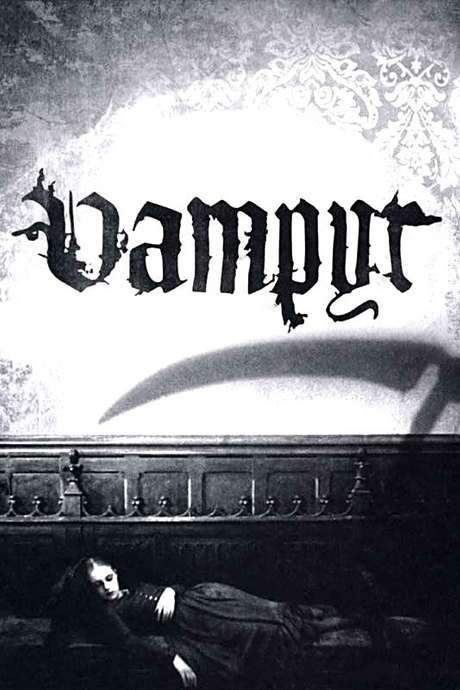
What Is The Vampire About?
The premise of The Vampire in 279 words, with nothing given away. The full story follows below.
In a quiet town where the rhythm of daily life is measured by the steady pulse of the local clinic, Dr. Paul Beecher is known for his steady hands and compassionate bedside manner. His world is one of routine appointments, whispered concerns, and the occasional mystery that a dedicated physician is expected to solve. When an experimental drug—derived from the blood of the elusive vampire bat—finds its way into his care, the ordinary suddenly tilts toward the uncanny. The medicine, intended for research, becomes an accidental dose that awakens something far older than any textbook.
The film settles into a brooding, atmospheric horror that blends the clinical precision of a medical drama with the primal dread of gothic legends. The town itself becomes a character, its fog‑shrouded streets and muted neon signs echoing the uneasy feeling that something familiar has slipped beyond control. The tone is restrained yet electric, whispering of a menace that is both scientific anomaly and mythic predator. Light and shadow play across hospital corridors, and every reflective surface hints at a hidden transformation taking place behind the mask of respectability.
As Dr. Beecher confronts the unsettling changes within himself, the narrative traces his internal struggle and the ripple effect it has on those who trust him. Family members, like his daughter Betsy, and the tight‑knit community begin to sense that the very heart of their town may be under siege by a force that defies logic. The story promises a tense clash between the sanctity of care and the feral instincts unleashed by a careless experiment, leaving the audience to wonder how far the line between science and something far darker can truly be crossed.
What Happens in The Vampire?
The complete story of The Vampire, from the first scene to the last, in 596 words (about 3 minutes). Spoilers throughout. Names in the text link to 7 cast member pages.
Spoilers ahead
In San Francisco, the shadowy path of horror begins after the celebrated but reclusive Dr. Campbell dies while pursuing experiments with vampire bat blood. Colleague Dr. Paul Beecher discovers a bottle of pills among Campbell’s effects and takes them home, unknowingly stepping into a nightmare of blood and mind. Campbell’s daughter, Betsy Beecher, misplaces or misuses the pills and substitutes vampire-blood capsules for her father’s migraine medicine. Almost at once, Beecher the elder begins to experience alarming blackouts, a creeping loss of control that unsettles his patients and colleagues alike.
During a routine consultation with a patient named Marion Wilkins—who battles a serious congenital heart condition—Beecher himself feels unwell and urges Marion to return the next day. The following morning brings a chilling development: Marion has fallen gravely ill, and when Beecher arrives at her room, she is visibly terrified by his presence, collapsing soon after. A distinctive pair of puncture wounds marks her neck, a sign that something monstrous may be at work.
Desperate for answers, Beecher returns to Campbell’s laboratory, where he runs into the university’s psychiatric chief, Will Beaumont, who oversees Campbell’s controversial research. Beaumont is accompanied by the aloof researcher Henry Winston, who helps interpret Campbell’s progress. Beaumont explains that Campbell’s work sought to regress animal minds to a primitive state and then reverse the process to sharpen intellect—a notion Beecher can barely grasp but cannot ignore. As evening falls, Beaumont retires to a nearby hotel, leaving Beecher alone with his questions about the pills. The next morning, Henry Winston is found dead in much the same way Marion was, his neck bearing the same puncture wounds and his tissues starting to disintegrate, a ghastly deja vu.
The pattern of horror intensifies when Beecher is called to an emergency operation he cannot complete due to a failure to maintain focus in the sterile corridor. Plagued by the blackouts, he confesses to himself that he may be responsible for a string of local murders. To protect Betsy, he sends her to stay with an aunt, stepping back from the danger that lurks in his own hands. He confronts Will Beaumont again, but the psychiatrist dismisses Beecher as delusional. Will agrees to stay by his side, only to lock the pill bottle away in a drawer, perhaps hoping to calm Beecher’s fear.
That night, the transformation Beecher has dreaded becomes a brutal reality: he becomes a vampire and murders Will, disposing of the body in a furnace. The next day, Sheriff Buck Donnelly—now suspicious that Will may have been conducting human experiments—visits the lab and uncovers an audio recorder containing a recording of Will’s murder. At Beecher’s office, his nurse, Carol Butler ( Beecher’s secretary and companion), notices a vial of poison and begins to suspect that Beecher might be plotting suicide. Before she can leave, she witnesses Beecher’s full transformation into a vampire. Buck arrives and sees Carol fleeing with Beecher in pursuit. Carol escapes into a nearby wood, where Beecher closes in and attacks her; Buck rushes after, but Beecher fights back and overpowers him as well.
The chase culminates when Officer Ryan, Sgt. George Ryan, arrives on the scene and shoots Beecher just as the monstrous creature collapses. The body tumbles into a shallow culvert, and as Beecher dies, the monstrous form quickly reverts to a normal human appearance, leaving a grim echo of what the city just endured. The town’s nightmare ends with the unsettling realization that the line between science and something far darker had been crossed—and that a single act of carelessness could unleash consequences beyond anyone’s control.
The Vampire Timeline: Every Key Event in Order
15 key events in the order they happen, from “Campbell's vampiric-bat blood experiments begin” to “Officer Ryan shoots Paul; death and body reversion”. 15 events name a place, across 13 locations.
- 1
Campbell's vampiric-bat blood experiments begin
In San Francisco, Dr. Campbell begins experiments using vampire bat blood as a basis for his research. The work is ambitious and secretive, hinting at breakthroughs that could alter intelligence. Campbell dies soon after, leaving behind clues of a dangerous program.
When:before his death Where:San Francisco
- 2
Beecher discovers Campbell's pills and takes them home
Colleague Paul Beecher finds a bottle of pills among Campbell's effects and takes them home. The pills appear linked to the vampire-bat research and hint at consequences to come. This discovery plants the seed for the strange side effects that follow.
When:later the same day Where:Beecher residence, San Francisco
- 3
Betsy substitutes pills for migraine tablets
Betsy Beecher accidentally substitutes the vampire-blood pills for her father's migraine tablets. Paul begins to experience unexplainable symptoms almost immediately. The mishap sets the dangerous chain of events in motion.
When:that night Where:Beecher residence
- 4
Paul's blackouts begin
After taking the pills, Paul Beecher starts experiencing blackouts during which he cannot control his actions. He remains unaware of the harm linked to the pills, while violent incidents around him escalate. The blackouts drive the plot into the subsequent murders.
When:the same night Where:Beecher residence
- 5
Paul treats Marion Wilkins; asks her to return next day
During a consultation with Marion Wilkins, who has congenital heart problems, Paul feels unwell and asks Marion to return the next day. This advisory foreshadows the toll the pills will take on his judgment. The scene moves the story toward the unfolding tragedy.
When:that afternoon Where:Marion Wilkins' consultation location
- 6
Marion Wilkins dies; neck punctures
The following morning, Marion makes a terrified impression during Paul's visit and dies suddenly. Two puncture wounds appear on her neck, suggesting a vampiric cause linked to Paul's condition. Paul is left to confront the deadly consequences of his condition.
When:the next morning Where:Marion Wilkins' home
- 7
Paul reunites with Beaumont and Winston; learns about Campbell's work
Back at Campbell's lab, Paul meets Will Beaumont and Henry Winston, who oversee the research. Will explains that Campbell's work aimed to regress minds to a primitive state and then reverse it to advance intellect. The conversation deepens the mystery of the pills and their powers.
When:that day Where:Campbell's lab / university lab
- 8
Henry Winston dies with puncture wounds
The next morning, Henry Winston is found dead with puncture wounds and tissue disintegration on his neck. The pattern of vampire-related killings grows more alarming. The tragedy pushes Paul toward a desperate realization.
When:the next morning Where:Campbell's lab
- 9
Paul cannot focus during surgery
Paul is called to perform an emergency operation but cannot focus due to the pills' effects and must abandon the surgery. The disturbance shows the pills are destroying his professional competence. The incident raises the stakes for everyone involved.
When:that day Where:Hospital operating room
- 10
Paul decides Betsy should stay with an aunt
Realizing his role in the killings, Paul arranges for Betsy to stay with an aunt for her safety. He tries to shield his family from the consequences of his condition. The move signals a major turning point in the personal ordeal.
When:that night Where:Beecher residence / Betsy's aunt's home
Show the other 5 events of The Vampire Hide the last 5 events
- 11
Paul confronts Will; transformation and murder
Paul confronts Will Beaumont about the pills; Will locks away the bottle. During the night, Paul undergoes a vampire transformation and murders Will, disposing of the body in a furnace. The grisly act confirms his monstrous change.
When:that night Where:Beaumont's lab
- 12
Buck Donnelly investigates; discovers murder recording
Sheriff Buck Donnelly questions Will and uncovers an audio recorder containing the murder recording. The evidence externalizes the crime and accelerates the investigation into the mystery. The discovery heightens tension as authorities close in.
When:the following day Where:Beaumont's lab
- 13
Carol Butler witnesses Paul's transformation
Nurse Carol Butler enters Paul's office and spots a vial of poison, suspecting suicide. Before she can leave, she witnesses Paul's vampire transformation. The sight confirms the danger surrounding Paul and endangers Carol as the pursuit intensifies.
When:that night Where:Paul's office
- 14
Chase through the woods
Paul chases Carol into a nearby wood while Buck Donnelly pursues him through the trees. The forest chase underscores Paul's loss of control as the creature within drives his actions. The woodland setting becomes the arena for the climactic pursuit.
When:that night Where:Nearby woods
- 15
Officer Ryan shoots Paul; death and body reversion
Officer Ryan arrives and shoots Paul, who falls into a shallow culvert. As he dies, Paul's monstrous body reverts to his normal appearance. The mortal end of the vampire threat is accompanied by a return to humanity in death.
When:that night Where:Wooded area near the culvert
Who Are the Main Characters in The Vampire?
8 characters, among them Dr. Paul Beecher (John Beal), Betsy Beecher (Lydia Reed) and Carol Butler (Coleen Gray): who each one is and the part they play in the story. Every profile links to the actor’s page.
- DP
Dr. Paul Beecher (John Beal)
Played by John Beal
A physician whose judgment is compromised by Campbell's pills, leading to dangerous blackouts and a gradual slide into vampiric violence. His clinical exterior masks a growing willingness to cross lethal boundaries.
- 🧪 Scientist
- 🧠 Obsessed
- 🩸 Monster
- BB
Betsy Beecher (Lydia Reed)
Played by Lydia Reed
Paul's daughter, whose accidental substitution of vampire blood pills sparks the chain of events. She becomes a catalyst for the unfolding danger, though she remains largely unaware of its full consequences.
- 👧 Daughter
- 🕰️ Catalyst
- 🕯️ Witness
-
Carol Butler (Coleen Gray)
Played by Coleen Gray
Paul's nurse who notices the strange changes and tries to warn others, ultimately fleeing from danger. She represents moral clarity and courage in the midst of a scientific nightmare.
- 🧑⚕️ Nurse
- 🏃♀️ Courage
- 🕊️ Hope
- BD
Buck Donnelly (Kenneth Tobey)
Played by Kenneth Tobey
Sheriff investigating the unusual deaths and disturbances in the lab. He provides practical resolve and pursues the truth as the situation spirals out of control.
- 🛡️ Sheriff
- 🕵️ Investigator
- ⚔️ Pursuit
- DW
Dr. Will Beaumont (Dabbs Greer)
Played by Dabbs Greer
Head of the university's psychiatric department and Campbell's supervisor, skeptical of Paul's claims yet entangled in the consequences of the pills. His detachment becomes a liability as events escalate.
- 🏥 Psychiatrist
- 🧪 Overseer
- ⚖️ Skeptical
- HW
Henry Winston (James Griffith)
Played by James Griffith
A researcher assisting with the experiments who is found dead with puncture wounds, underscoring the escalating danger behind the scientific enterprise.
- 🔬 Researcher
- 🕳️ Victim
- 🧭 Mysterious
- MW
Marion Wilkins (Ann Staunton)
Played by Ann Staunton
A patient with congenital heart problems whose fate highlights the stakes of medical experimentation and the vulnerability of patients under experimental medicine.
- 🫀 Patient
- 🧭 Stakes
- 👁️🗨️ Vulnerable
- DM
Dr. Matthew J. Campbell (Wood Romoff)
Played by Wood Romoff
The visionary researcher whose mind-regression work and vampire-blood pills set the plot in motion, ultimately facing the consequences of his scientific hubris.
- 🧪 Visionary
- 🔬 Researcher
- ⚖️ Ethical breach
Where and When Is The Vampire Set?
The Vampire is set in San Francisco. Here is why the place matters to the story.
Where
San Francisco
San Francisco, a bustling West Coast city, provides the backdrop for the story with its foggy bay, steep hills, and busy downtown streets. The setting allows scenes to unfold between laboratories and everyday urban life, placing a scientific nightmare right in a recognizable cityscape. The city serves as a familiar frame for mid-century horror with a scientific edge.
- 🌉 City
- 🧪 Science
- 🕵️ Mystery
What Are the Themes of The Vampire?
3 ideas the story keeps returning to, among them Scientific hubris, Transformation and Ethics of experimentation.
-
01
Scientific hubris
Researchers push beyond ethical boundaries, pursuing mind-regression and biological experiments that blur the line between science and danger. Campbell's pills and the search for greater intellect become catalysts for catastrophe, exposing the risks of unchecked ambition.
-
02
Transformation
Paul's blackouts trigger a literal transformation into a vampire, driving fear and unreliable perception. The change propels a cascade of violent acts and moral conflict as his humanity fights a monstrous instinct.
-
03
Ethics of experimentation
The story centers on the ethical failure of medical research—mind-altering pills, experimental procedures, and their potential weaponization. It contrasts compassionate intentions with dangerous methods and raises questions about responsibility when science goes too far.
What Kind of Film Is The Vampire?
Dark in tone, with steady pacing and a straightforward story, going by the plot summary.
- Tone
- Dark
- Pacing
- Steady
- Story
- Straightforward
- Intensity
- High
- Ending
- Sad
A chilling and desperate descent as a good man involuntarily transforms into a monstrous killer, creating a paranoid and tragic atmosphere of scientific horror.
- gloomy
- anxious
- claustrophobic
- paranoid
- desperate
- tragic
- scientific hubris
- metamorphosis
- loss of control
- guilt and remorse
Content notes: murder, blood, body disposal, suicidal themes.
Quiz
How well do you remember The Vampire? Test yourself on the story.