

What Is Voice in the Wind About?
The premise of Voice in the Wind in 339 words, with nothing given away. The full story follows below.
On the mist‑shrouded island of Guadalupe, a fragile enclave of refugees clings to the edge of the world, waiting for a promise that never quite arrives. The jagged coastline, the sigh of the sea, and the ever‑present hum of distant boats create a landscape that feels both isolated and oddly timeless. Life here moves in quiet, cautious rhythms, punctuated by whispered rumors of “murder boats” and the thin hope that a new shore might one day be within reach.
El Hombre drifts through this world like a fading melody. Once a celebrated concert pianist forced to play a forbidden song under the cruel eye of the Nazis, he now lives under a borrowed name, his memories fractured by torture and exile. When he sits at the piano that haunts the island’s modest refuge, the notes he coax out are somber and reverberate with a longing that seems to awaken something deep in everyone who hears them—an echo of a life half‑remembered and a yearning for a home that may no longer exist.
The community is held together by a handful of desperate, caring figures. Angelo, a pragmatic yet compassionate smuggler, offers the island its tenuous lifeline, while his brothers linger in the shadows, their motives as murky as the sea. Dr. Hoffman and his wife Anna tend to the fragile health of their charge, Marya Volny, whose own past is tangled with the pianist’s. Their interactions revolve around the piano’s mournful chords, each listening for a hint of familiarity, a promise of redemption, or a flash of forgotten love.
The film unfolds in a hauntingly lyrical tone, where surreal melancholy and psychological tension intermingle like the fog that rolls off the water. Music becomes both a bridge and a barrier, a conduit for memory and a mirror for the characters’ inner turmoil. As the island’s quiet desperation swells, the audience is drawn into a symphony of longing, where every whispered conversation and lingering note suggests that the past is never truly abandoned—it merely waits, patient, to be heard again.
What Happens in Voice in the Wind?
The complete story of Voice in the Wind, from the first scene to the last, in 741 words (about 3 minutes). Spoilers throughout. Names in the text link to 4 cast member pages.
Spoilers ahead
On the melancholy island of Guadalupe, a man known only as El Hombre, Francis Lederer, drifts between memory and oblivion. An amnesiac Czech pianist, he has survived Nazi torture for playing a banned song and now lives under a shadowed new identity, trying to recall his past even as he works for a refugee smuggler named Angelo, Alexander Granach. The island is home to a small, desperate world of displaced people, cut off from their homeland and waiting for some sign of permission to begin anew.
Among the strangers gathered there is the wary, haunted Dr. Hoffman, his wife Anna, and their fragile charge, Marya Volny. The atmosphere grows tense each time El Hombre sits at a piano and lets a somber melody drift through the room, a sound that stirs memories of a life that seems almost but not quite reachable. Anna, Olga Fabian, in particular is drawn to the music and the memory it unlocks of her own homeland and of Marya, her patient and companion in exile. The refugees hear the governor’s warning about so-called “murder boats” that promise asylum in the United States but leave asylum-seekers to perish at sea, and this grim note casts a pall over every hopeful plan.
As the days pass, El Hombre’s employer Angelo, a compassionate but practical man, becomes the focal point of danger and loyalty on Guadalupe. Angelo’s brothers, Luigi, J. Carrol Naish, and Marco, resent the stranger and wish him harm, feeding a clash that threatens to explode at any moment. When El Hombre’s playing unsettles the uneasy balance, Angelo’s world grows more fragile, and the threat from Luigi intensifies. The escalating tension culminates in a deed of violence that touches everyone connected to the boat and the island’s fragile economy of mercy.
The past comes into sharper focus through the memory fragments of Jan Volny, a famed pianist from Czechoslovakia who sought to escape the clutches of occupation. In Prague, the Nazis permit a concert but demand the exclusion of the beloved Moldau, a symbol of Czech patriotism. Jan defies the order with a four-minute paraphrase of the symphony, a moment of beauty that will seal his fate. He arranges for Anna and Marya to be smuggled out, hoping to save his wife from the oppression that has already claimed so much of their world. Before escape, Jan is captured and subjected to brutal violence, an ordeal that tears through his mind and reshapes his sense of self.
His capture and brutal experiences push him toward a dangerous path that eventually leads him across borders, to Lisbon, and then to Guadalupe aboard Angelo’s fishing boat. In the fog of dissociated memory, he loses his name and identity, and the refugees begin to know him only as El Hombre. The voyage to Guadalupe marks a second exile, one of memory and self, as he drifts through a life that feels both familiar and alien. When the Hoffmans finally arrive in Guadalupe to locate Marya, El Hombre withdraws into the shadows, where his memories begin to tease him with partial recollections.
One night, a moment of awakening comes as Marya, entranced by the sound of El Hombre’s piano, rises from her bed, descends to the street, and collapses in the street before the house. El Hombre finds her, his fingers lingering on the crucifix around her neck, and slowly, the past resurfaces. The Hoffmans search for Marya, and El Hombre retreats, listening to the echoes of a voice that once spoke to him in Prague. In a confrontation filled with fear and fearsome loyalty, Luigi violently confronts El Hombre, and Angelo confronts his brother’s violence. Shots ring out, and Angelo is found bleeding from a stab wound inflicted by Luigi.
The drama peaks when the intruder’s presence vanishes, and the wounded Angelo gives chase up the stairs to Marya’s room. Inside, the truth comes to light: Marya is dead, and El Hombre is nowhere to be found. In a final, devastating image, the man who has struggled to recover his memory cradles Marya’s lifeless body in his arms, calling to her as if the old promise—spoken to him long ago in their separation in Czechoslovakia—might somehow be fulfilled: that he would come for her. The moment ends with a quiet, aching plea for life to return to Marya, an ache that mirrors the ache within El Hombre as his memory begins to return in the quiet darkness of the room.
Voice in the Wind Timeline: Every Key Event in Order
12 key events in the order they happen, from “Jan Foley on Guadalupe” to “A final hold and vow”. 12 events name a place, across 9 locations.
- 1
Jan Foley on Guadalupe
Jan Foley, a Czech pianist with amnesia, lives under a new identity on the island of Guadalupe. He works for refugee smuggler Angelo while trying to recall his past life. His memory fragments threaten to surface as the war closes in around the refugees.
Where:Guadalupe (French-governed island)
- 2
El Hombre's trance at the piano
El Hombre, memory destroyed by Nazi brutality, sits trance-like at the piano and plays a somber melody. The music drifts into the refugees' room where Dr. Hoffman, Anna, and Marya Volny reside, triggering Anna’s painful recollections. The atmosphere hints at a hidden past connecting them all.
Where:Guadalupe refugee settlement
- 3
Warning and destruction
The governor warns refugees about 'murder boats' that promise asylum but leave them to perish at sea. Spurred by fear and resentment, El Hombre destroys Angelo's fishing boat, escalating tensions with Angelo's brothers. The act reveals a rift between the enigmatic outsider and the refugee community.
Where:Angelo's boat/shore, Guadalupe
- 4
The brothers' enmity
Angelo’s brothers, Luigi and Marco, loathe the stranger and advocate for his death. Their hostility foreshadows violence that pierces the fragile refugee circle.
Where:Angelo's operations on Guadalupe
- 5
Marya's decline and Anna's guilt
As Marya’s condition worsens, Anna blames herself for forcing the girl to leave her homeland. Anna’s reflections finally return her to the memories of Prague and the losses they endured during the Nazi occupation. The personal toll of exile weighs heavily on all of them.
Where:Guadalupe
- 6
Prague's forbidden Moldau and Volny's act
In Prague, the Nazis bar the patriotic symphony 'The Moldau.' Jan Volny defies the ban by finishing with a paraphrase of the piece, fully aware that his act may bring down the regime’s wrath. He realizes the danger for his wife Marya as well as himself, and he arranges for the Hoffmans to help her escape.
When:During Nazi occupation Where:Prague
- 7
Capture and brutalization
Volny is captured and subjected to brutal violence, which deranges him. Before his escape, he has arranged for Marya to be smuggled out, but the capture interrupts his plan and seeds his new identity as El Hombre.
Where:Prague
- 8
Escape to Lisbon and new identity
En route to a concentration camp, Volny overpowers guards and escapes, making his way to Lisbon. There he hides on Angelo’s fishing boat and travels to Guadalupe, but in the fog his memory erases and he becomes known simply as El Hombre.
Where:Lisbon and Guadalupe
- 9
Marya's lure and the memory return
Back on Guadalupe, Marya is drawn to the sound of El Hombre’s piano and goes to the street below. As he touches the crucifix around her neck, El Hombre’s memory begins to return, waking a recognition of their shared past.
Where:Guadalupe
- 10
The memory sharpens
The Hoffmans search for Marya while El Hombre hovers in the shadows, gradually recalling more of his life with Marya. Luigi’s voice cuts through the tension as the past bleeds into the present.
Where:Guadalupe
- 11
The confrontation and tragedy
Angelo hears shots and finds Luigi, gun in hand, standing over El Hombre. In the ensuing confrontation, Luigi stabs Angelo with an ice pick, and Angelo, wounded, follows a blood trail up the stairs to Marya’s room. The Hoffmans arrive to notify the police of Marya's death.
When:present Where:Angelo’s compound, Guadalupe
- 12
A final hold and vow
At Marya’s bedside, El Hombre cradles her lifeless body and begs her to return to life. The memory fully comes back as he recalls Marya’s words to him in Czechoslovakia, affirming that he will someday come for her.
When:present Where:Marya’s room, Guadalupe
Who Are the Main Characters in Voice in the Wind?
6 characters, among them Jan Volny / El Hombre (Francis Lederer), Anna Hoffman (Olga Fabian) and Marya Volny (Sigrid Gurie): who each one is and the part they play in the story. Every profile links to the actor’s page.
- JV
Jan Volny / El Hombre (Francis Lederer)
Played by Francis Lederer
A renowned Czech pianist whose memory has been erased by torture. His fragmented recollections drive him toward a hidden past and a fragile reunion with Marya. He drifts between present danger and faint recollections of his former life as a composer, revealing a stubborn, resilient core.
- 🎭 Complex
- 🧭 Amnesiac
- 🗝️ Identity
- AH
Anna Hoffman (Olga Fabian)
Played by Olga Fabian
A devoted wife haunted by loss and guilt over the homeland they left behind. She embodies resilience and restraint under pressure, and she carries the burden of responsibility for Marya’s fate. Her memories of Czechoslovakia fuel her concern for the refugees’ future.
- 🧭 Memory
- 🕊️ Resilience
- 🗡️ Protective
- MV
Marya Volny (Sigrid Gurie)
Played by Sigrid Gurie
An invalid charge whose illness heightens the emotional stakes. Her presence inspires the memory of Jan Volny and motivates others to protect her. Her delicate condition makes the refugee community’s care feel urgent and precarious.
- 💗 Vulnerability
- 🩺 Care
- 🕊️ Hope
- A(
Angelo (Alexander Granach)
Played by Alexander Granach
A compassionate refugee smuggler who runs a boat and helps others escape peril, though he is entangled with dangerous brothers. He embodies pragmatic mercy amid exploitation and risk. His enterprise highlights the margins between aid and danger in exile.
- 🧭 Refugee
- 🗺️ Merchant
- 🗡️ Tension
-
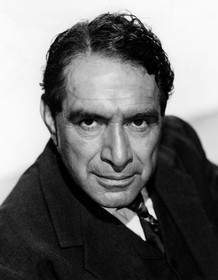
Luigi (J. Carrol Naish)
Played by J. Carrol Naish
Angelo’s harsh brother who resents the outsider El Hombre and resists the refugees’ safety. He embodies prejudice, zeal, and a violent undertone that destabilizes the fragile refuge. His actions catalyze key confrontations in the story.
- ⚔️ Conflict
- 🧨 Intolerance
- 🗡️ Violence
- DH
Dr. Hoffman (J. Edward Bromberg)
Played by J. Edward Bromberg
A physician whose marriage to Anna anchors the Hoffmans in exile. He is part of the moral orbit around Marya, and his fate intertwines with the refugees’ tragedy. He represents professional duty under a regime of fear.
- 🧭 Duty
- 🩺 Medicine
- 🕊️ Integrity
Where and When Is Voice in the Wind Set?
Voice in the Wind is set in Guadalupe Island, Prague and Lisbon (World War II era (late 1930s–1940s)). Here is why the time and place matter to the story.
When
World War II era (late 1930s–1940s)
The events unfold during the Second World War as Nazi oppression drives people from Prague and other occupied territories. Refugees are smuggled aboard ships and smuggling operations proliferate as authorities warn of dangerous boats and exploitative schemes. The narrative moves between exile on Guadalupe and earlier peril in Czechoslovakia, underscoring the era's upheaval.
Where
Guadalupe Island, Prague, Lisbon
The island of Guadalupe serves as the melancholy refuge where refugees are gathered under French governance. It is a fog-bound, liminal space where aid, danger, and rumors of 'murder boats' mingle with prayers for safety. The island's limited infrastructure and strict oversight make it a precarious sanctuary for people fleeing Nazi tyranny.
- 🗺️ Refugee hub
- 🏝️ Island setting
- 🗺️ Colonial administration
What Are the Themes of Voice in the Wind?
3 ideas the story keeps returning to, among them Memory and Identity, Displacement and Music as Resistance.
-
01
Memory and Identity
Jan Volny’s amnesia and El Hombre’s fragility drive the plot, and memory gradually returns as emotional triggers reconnect him to Marya. The contrast between memory’s clarity and the trauma of torture shows how identity is shaped by both past life and present vulnerability. The characters’ memories propel action and contribute to the tragic finale.
-
02
Displacement
The refugees are uprooted from their homeland and forced to seek safety far from home. Guadalupe becomes a fragile sanctuary where survival hinges on precarious shelter, help from smugglers, and the charity of strangers. The story examines how displacement fragments lives and tests loyalties across borders.
-
03
Music as Resistance
Music carries memory and longing, especially the piano pieces El Hombre plays that evoke home and resistance. Playing banned works provokes oppression and yet also sustains hope for the refugees. The instrument acts as a bridge between past glory and present vulnerability, shaping fate.
What Kind of Film Is Voice in the Wind?
Melancholic in tone, with slow pacing and a moderate story, going by the plot summary.
- Tone
- Melancholic
- Pacing
- Slow
- Story
- Moderate
- Intensity
- High
- Ending
- Sad
A haunting and slow-burning wartime drama steeped in surreal melancholy, following an amnesiac pianist's tortured journey through memory loss and exile, culminating in a tragic and emotionally devastating conclusion.
- melancholic
- haunting
- dreamlike
- somber
- anxious
- desperate
- world war two
- refugees
- amnesia
- psychological trauma
Content notes: torture, murder, war violence, psychological trauma.
Quiz
How well do you remember Voice in the Wind? Test yourself on the story.
Where to Watch Voice in the Wind
. US availability and prices from JustWatch.
Streaming availability in the US, powered by 


