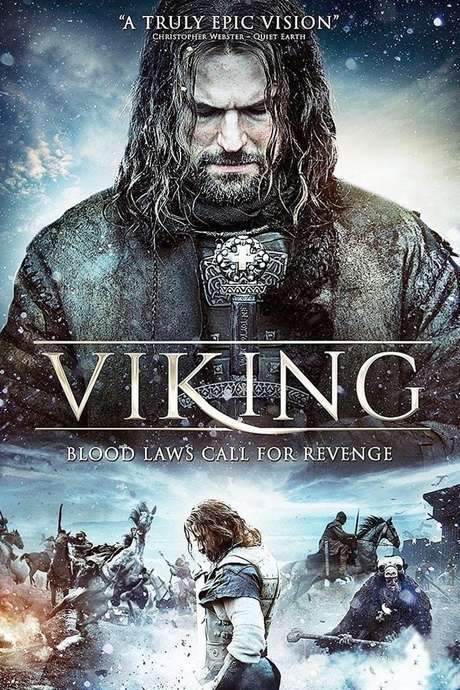
Viking 2016
Directed by
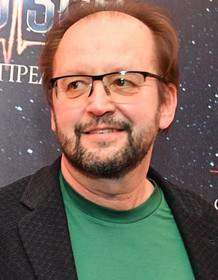
Andrey Kravchuk
Made by

Cinema Directorate Studio
Where to Watch Viking
See current US streaming, rental, and purchase options for Viking (2016) via JustWatch.






Viking Plot Summary
Read the complete plot summary and ending explained for Viking (2016). From turning points to emotional moments, uncover what really happened and why it matters.
After the death of grand prince Svyatoslav I, Yaropolk, Oleg, and Vladimir inherit the burden of rule over Kievan Rus’. While traveling toward Polotsk, a hunting party led by Lyut crosses paths with a rival group led by Oleg. Oleg has the chance to strike first at an aurochs, but when he hesitates, Lyut kills the animal instead. In a flash of rage, Oleg murders Lyut and pursues his men, colliding with Yaropolk’s main force. Sveneld tries to defuse the growing dispute, but Yaropolk’s men press the confrontation. The gates of Polotsk close against Oleg, and when he attempts to force a breakthrough along the causeway, he falls and dies. Polotsk’s lord Rogvolod closes the gates, and Sveneld’s attempts to intervene fail, forcing Yaropolk to reconsider how to mete out Lyut’s death. In the end, Sveneld escapes punishment and flees.
In the summer, Sveneld returns to Polotsk with Vladimir and his retinue of Viking mercenaries. Vladimir intends to marry Rogvolod’s daughter Rogneda, but she rebuffs him, accusing him of using the alliance to seize Polotsk’s soldiers and calling him the son of a slave—an insult that inflames his pride. Furious over the slight to him and his mother, Vladimir lays siege to Polotsk. When the Vikings demand a bold strike, they persuade him to drink their berserker potion to prove himself. Under its spell, he leads a brutal assault and, urged by the Vikings, he rapes Rogneda. After the raid, he discovers Rogvolod and his wife are dead, yet he manages to spare Rogneda, and his action seems to haunt him more than the executions.
The war party travels to Kyiv to bring Yaropolk’s death to account. Kyiv is empty, and Yaropolk has fled with the treasury. Yaropolk’s Christian wife Irina facilitates a negotiation between the brothers, with Vladimir proposing a peaceful solution. Yaropolk arrives in good faith, but is assassinated by two Vikings. Vladimir’s complicity remains unclear, and Sveneld proclaims Vladimir the new grand prince. Varyazhko, loyal to Yaropolk, swears revenge and gathers a large Pecheneg host to challenge Vladimir. Facing financial strain, Vladimir cannot pay his mercenaries, who grow restive, and the city under siege endures repeated assaults. Desperately, Kyiv’s inhabitants, including Rogneda, attempt a sacrificial ritual to the gods, seeking aid for Fyodor—the son of Vladimir’s warrior Fyodor. Both Fyodor and his infant son die when Vladimir does not intervene. Eventually, Vladimir agrees to a parley, but the Pechenegs attack, dealing heavy losses to his loyalists. In the face of this threat, emissaries from the Byzantine Empire arrive and offer support, and the combined forces stall the rebellion.
Realizing Kyiv’s defenses are formidable, Vladimir orders the destruction of the Roman aqueduct to starve the invaders. While the plan unfolds, Varyazhko and the Pechenegs attack, and the Vikings unleash a bold counterstrike by rolling longships down the hill and into the attackers. This daring move helps turn the battle in Vladimir’s favor. He defeats Varyazhko, insists on his own innocence in Yaropolk’s death, and spares him. With the rebels exposed, the invaders retreat, and the water supply is cut, forcing the rebels to surrender. Vladimir meets the bishop Anastas, and the spiritual counsel leads him to open up about his guilt—Yaropolk’s death, Rogvolod’s destruction, and Fyodor’s death, as well as Rogneda’s rape. Anastas absolves Vladimir of his sins and, moved by the Christian promise of forgiveness, inspires him to abandon killing and embrace Christianity for the Rus. The story closes with a mass baptism in the Dnieper, signaling a new faith for the people.
Viking Timeline
Follow the complete movie timeline of Viking (2016) with every major event in chronological order. Great for understanding complex plots and story progression.
Succession of the Rus after Svyatoslav's death
Grand Prince Svyatoslav's death leaves Kievan Rus divided among his sons Yaropolk, Oleg, and Vladimir. Each brother stakes a claim to leadership and to Svyatoslav's inheritance. Rivalries simmer as the three factions begin to consolidate power.
Aurochs hunt escalates into a fatal feud
On the road to Polotsk, Yaropolk's retinue runs into Oleg's party during a hunt for an aurochs. Lyut is allowed to kill the animal first, but Oleg murders Lyut in a sudden rage. The confrontation escalates into a broader chase as Yaropolk's host pursues Oleg.
Oleg dies at the gates of Polotsk
Oleg attempts to force entry into Polotsk but is stopped at the gates. He slips, falls from the causeway, and dies as the gates shut him out. The loss triggers a fresh round of vengeance among the factions.
Sveneld evades punishment for Lyut's death
Yaropolk orders Sveneld to answer for Lyut's death, but Sveneld thwarts the punishment and flees. The move destabilizes the delicate balance of power between the brothers. Sveneld's escape solidifies his alliance with Vladimir.
Vladimir returns with Viking mercenaries and eyes Rogneda
In the summer, Sveneld returns to Polotsk with Vladimir and a force of Viking mercenaries. Vladimir seeks Rogvolod's daughter Rogneda, but she rejects him and insults his mother. The siege of Polotsk looms as the Vikings push Vladimir to prove his ferocity.
Rape of Rogneda and the murder of Rogvolod
Under the Vikings' coercion, Vladimir drinks their berserker potion and assaults Rogneda. Rogvolod and his wife are murdered by Vladimir's men, and Vladimir later discovers the atrocity. He attempts to shield Rogneda, showing signs of remorse.
Kyiv becomes the arena for the Oleg death justice and mediation
The war party travels to Kyiv to demand Yaropolk answer for Oleg's death. Kyiv is empty as Yaropolk has fled with the treasury. Yaropolk's Christian wife Irina facilitates a negotiation between the brothers.
Yaropolk is assassinated; Vladimir rises
Yaropolk arrives in Kyiv in good faith but is murdered by two Vikings. Vladimir is distraught, and Sveneld proclaims Vladimir the new grand prince. The murder destabilizes the political order and sharpens the resolve of Vladimir's rivals.
Varyazhko forges an alliance with Pechenegs
Using Yaropolk's death as a spark, Varyazhko rallies support and recruits Pechenegs with the treasury. Vladimir cannot pay his mercenaries, and their loyalty dwindles. Kyiv braces for renewed assault as the threat grows.
The siege and royal executions
The Pechenegs strike as Vladimir's forces struggle to hold Kyiv. The city suffers direct assaults, and an attempt to appease the gods ends tragically when Fyodor's son dies during a failed sacrifice caused by Vladimir's inaction. The siege grinds on with mounting casualties.
Parley, betrayal, and Byzantine intervention
Vladimir agrees to a parley with Varyazhko, but the Pechenegs betray him during negotiations. Many of Vladimir's closest followers are killed, yet Byzantine emissaries arrive to offer aid and save him. A fragile lifeline forms as Byzantium becomes a potential ally.
Varyazhko and Pechenegs align with Byzantine rebels
Varyazhko and the Pechenegs join forces with Byzantine rebels, using a Roman city as a base. They offer to fund Vladimir against their common enemy, shifting the balance of power in the region. The alliance redraws the map of threats and supports Vladimir's position.
The aqueduct tactic and Vladimir's counterattack
Realizing Kyiv's defense is formidable, Vladimir orders the destruction of the Roman aqueduct to cut off the city’s water supply. While searching for the pipe, Varyazhko and the Pechenegs attack, and the Vikings crash their longships down the hillside to ram the Pechenegs. Vladimir defeats Varyazhko and emerges victorious.
Confession, absolution, and a vow to convert
Vladimir confesses his sins to Bishop Anastas, admitting to Yaropolk's death and Rogvolod, Fyodor, and Rogneda's fates. Anastas absolves him, moved by Christian forgiveness. Vladimir resolves to stop killing and embraces the Christian faith.
Mass baptism of the Rus in the Dnieper
The film closes with a mass baptism on the Dnieper, symbolizing Vladimir's conversion and a new Christian era for the Rus. The scene marks a hopeful rebirth after years of bloodshed and political strife. A new chapter begins under Christian guidance.
Viking Characters
Explore all characters from Viking (2016). Get detailed profiles with their roles, arcs, and key relationships explained.
Vladimir (Danila Kozlovsky)
A volatile Rus prince whose appetite for power drives the plot. He leads brutal acts, including sieges and coercive decisions, and relies on Viking mercenaries to cement his authority. Throughout the story he wrestles with guilt and, by the end, hints at a possible spiritual awakening.
Yaropolk (Aleksandr Ustyugov)
Svyatoslav’s son and early ruler, whose political maneuvering keeps the realm on edge. His death catalyzes the subsequent power struggle and escalates the brothers’ conflict. His death also sets the stage for Vladimir’s ascent and the ensuing feuds.
Oleg (Kirill Pletnyov)
A prince whose ambition sparks the initial clash with Yaropolk and Vladimir. He is driven to force his way through to the gates, but is ultimately cut down, illustrating the ruthlessness of palace politics.
Rogvolod (Andrey Smolnyakov)
Polotsk’s lord and father of Rogneda. His leadership and his refusal to bow to Vladimir set the siege in motion. His death becomes a catalyst for the war between the brothers and their mercenaries.
Rogneda (Aleksandra Bortich)
Daughter of Rogvolod who becomes a pawn and then a tragic figure in the marriage politics surrounding Vladimir. Her insult sparks a personal and political conflict that reverberates through the siege and treaty talks.
Sveneld (Maksim Sukhanov)
A veteran warrior from Svyatoslav’s circle who tries to manage conflicts and navigate shifting loyalties. He plays a crucial role in the political chess game and ultimately escapes the fallout of the upheaval.
Varyazhko (Igor Petrenko)
A loyal follower who channels Yaropolk’s death into a broader rebellion, assembling a host of Pechenegs. He embodies the brink between loyalty and treachery in the pursuit of power.
Anastas (Paweł Deląg)
A Christian bishop who offers Vladimir spiritual absolution and guides him toward repentance. His intervention pivots the story toward faith and moral reckoning.
Irina (Svetlana Khodchenkova)
Yaropolk’s Christian wife who navigates the political and religious currents surrounding the brothers. She helps broker negotiations, serving as a stabilizing, albeit cautious, voice in the turmoil.
Fyodor (Vladimir Yepifantsev)
A loyal warrior whose family is entwined with Vladimir’s destiny. His death and the death of his son during ritual pressure highlight the human costs of the power struggle.
Viking Settings
Learn where and when Viking (2016) takes place. Explore the film’s settings, era, and how they shape the narrative.
Time period
10th century
The events take place after the death of Svyatoslav I, during the rule of his sons Yaropolk, Oleg, and Vladimir. The film traces a brutal power struggle marked by assassinations, sieges, and shifting loyalties that define the early Kievan Rus'. It culminates in Vladimir's consolidation of power and a turning moment toward Christian transformation.
Location
Polotsk, Kyiv, Dnieper
The action unfolds across Polotsk and Kyiv in the early Kievan Rus'. Polotsk serves as a fortified seat under Rogvolod, a focal point of siege and political maneuvering. Kyiv functions as the political capital where rival factions converge, while the Dnieper River provides a strategic lifeline that shapes campaigns and culminates in the mass baptism scene.
Viking Themes
Discover the main themes in Viking (2016). Analyze the deeper meanings, emotional layers, and social commentary behind the film.
🛡️
Power
Power struggles drive the narrative as brothers and Viking factions clash over legitimacy and lands. Vladimir's ascent hinges on control of Polotsk, Kyiv, and mercenaries, while Sveneld and others maneuver behind the scenes. The film shows how ambition fuels brutal decisions, including murder, siege, and political purges. Loyalties shift as rulers attempt to outwit rivals, revealing the brutal logic of rulership.
⚔️
War
Mercenaries and Viking forces shape every major confrontation. Sieges, betrayals, and ruthless tactics highlight how external warriors tilt the balance of power. The Berserker attack marks a turning point, testing Vladimir's resolve and control. War exposes how alliances are bought, broken, or bent to the demands of survival.
✝️
Faith
Religious faith and forgiveness become a counterweight to brutality. Anastas offers spiritual absolution, challenging Vladimir to confront his sins. The narrative culminates in a mass baptism that signals a possible moral rebirth. Faith reframes political legitimacy as something more than force.
👑
Legitimacy
Who has the right to rule drives the political arc. The murder of Yaropolk and the manipulation of rival factions test claims to sovereignty. Vladimir's ultimate decision to seek peace and ally with Byzantines reframes legitimacy as both political and spiritual. The ending implies governance rooted in repentance and communal renewal.

Coming soon on iOS and Android
The Plot Explained Mobile App
From blockbusters to hidden gems — dive into movie stories anytime, anywhere. Save your favorites, discover plots faster, and never miss a twist again.
Sign up to be the first to know when we launch. Your email stays private — always.
Explore the mobile appViking Spoiler-Free Summary
Discover the spoiler-free summary of Viking (2016). Get a concise overview without any spoilers.
In the bleak dawn of the early Middle Ages, a powerful clan in the lands of Kievan Rus wrestles with the weight of ancient law and the fragile ties that bind its members. The sudden accident that claims a brother’s life leaves the realm shrouded in grief, while a rigid code of vengeance looms over the survivors, demanding that retribution be exacted by the next of kin. The towering figure of Yaropolk carries the heavy mantle of a grand duke whose guilt is as palpable as the snow‑capped horizons, and the expectations of tradition press down like the chill wind across the steppe.
Caught in the crossfire of honor and conscience is the younger, illegitimate sibling, Vladimir, whose very existence is marked by the conflict between blood‑bound duty and a flickering hope for a different path. As whispers of mercy and doubt stir within him, he finds himself at a crossroads where choosing peace may demand a sacrifice far more brutal than the swords that line the clan’s storied halls. His inner turmoil is mirrored by the skeptical counsel of the seasoned war‑lord Sveneld, whose pragmatic wisdom offers a counterpoint to the relentless call for blood‑shed.
The world of Viking unfolds in a gritty tapestry of harsh winters, wooden fortresses, and the ever‑present threat of marauding forces beyond the borders. Viking mercenaries glide through the mist, their presence a reminder of the restless, war‑torn seas that shape the lives of the Rus. Amidst this stark landscape, the lingering presence of Rogneda, a daughter whose destiny intertwines with the clan’s future, adds an undercurrent of political intrigue and personal longing.
All the while, the film’s tone balances stark realism with a lingering, almost lyrical melancholy, inviting the audience to contemplate whether true peace can ever be forged in a world where violence is woven into the very fabric of law. The stage is set for a confrontation not just of swords, but of the very ideas that define honor, loyalty, and the possibility of redemption.
Featured on this page

What's After the Movie?
Not sure whether to stay after the credits? Find out!
Check out our other apps:

SAT Sphere
Build confidence for the Digital SAT.

Mori Atlas
Discover wild places worth protecting.

Luntero
Search smarter for a home in Amsterdam.

Plot Explained
Unravel movie endings and hidden clues.

Pokechamp
Dive into Pokémon data and battle logic.

Driving Theory
Get ready for your European theory test.

Movie Dust
Plan your next cinema trip with ease.

Musemap
Find art and culture as you travel.

Selkobase
Compare credentials before committing.

Local Manual
Turn an unfamiliar country into practical next steps.

Lernavi
Compare school systems before your next move.

GymRoam
Find a workout stop wherever your plans take you.
Explore Our Movie Platform
New Movie Releases (2026)
Famous Movie Actors
Top Film Production Studios
Movie Plot Summaries & Endings
Major Movie Awards & Winners
Best Concert Films & Music Documentaries
Movie Collections and Curated Lists
© 2026 What's After the Movie. All rights reserved.
Privacy Policy