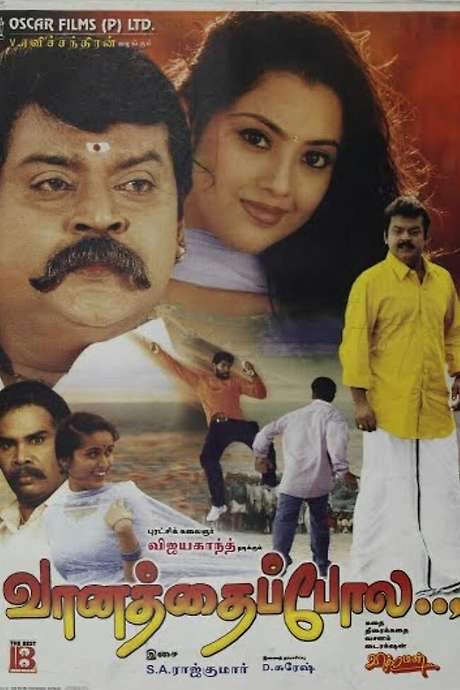
What Is Vaaname Ellai About?
The premise of Vaaname Ellai in 304 words, with nothing given away. The full story follows below.
In a contemporary Indian city where ambition collides with entrenched tradition, five strangers find themselves standing at a bleak crossroads. Disillusioned by the weight of expectation, corruption, and social barriers, they gather with a shared, desperate resolve—to end their lives together. Instead of surrendering to that darkness, they agree on a daring experiment: a 100‑day pact to seek moments of joy and meaning as a collective, testing whether hope can be reclaimed amid the pressures that surround them.
Deepak is the idealistic son of a powerful judge, whose eyes have been opened to the bribes that underlie his family’s comforts. Gautham hails from a wealthy business dynasty, caught between his own love and a marriage plan designed to expand his father’s empire. Karpagam, a spirited young woman, has fled an arranged union with an elderly, affluent suitor, yearning for autonomy. Akhila, a widowed mother, watches over her daughter’s future, fearing the widening gap that class divisions create. Finally, Pasupathy is a brilliant low‑caste graduate whose talent is stymied by systemic bias, embodying the frustration of countless youths denied a fair chance.
The film’s tone balances melancholy with a subtle, persistent optimism. Its world feels both intimate and representative, painting a nuanced portrait of a society that rewards appearance over virtue while leaving its younger generation unheard. The characters’ interactions oscillate between tension and fragile camaraderie, each bringing a distinct perspective that both challenges and supports the others. Their pact becomes a quiet rebellion against a culture that often seems to favor surrender over struggle.
As the days unfold, the group navigates the delicate art of finding light in ordinary moments. Their shared journey hints at the transformative power of friendship, responsibility, and the occasional unexpected encounter, suggesting that even the most disenfranchised spirits can choose a path toward resilience and, perhaps, a brighter future.
What Happens in Vaaname Ellai?
The complete story of Vaaname Ellai, from the first scene to the last, in 1,058 words (about 5 minutes). Spoilers throughout. Names in the text link to 1 cast member page.
Spoilers ahead
Five young people—Deepak, [Anand Babu], the idealist son of a judge who unravels the gifts his father showers him as bribes; Gautham, [Babloo Prithiveeraj], the pampered son of a wealthy business patriarch with a stubborn heart; Karpagam, [Madhoo], who runs from an arranged marriage with a very rich old man; Akhila, [Y. Vijaya], Suguna’s widowed mother who fears the class gap; and Pasupathy, [Gowtham Sundararajan], a bright, low‑caste youth who cannot find work despite his qualifications—are drawn together by a shared sense of disillusionment and destiny at a bleak crossroads. Each one carries a different burden: Deepak’s world of bribes and hollow luxuries, Gautham’s clash of love with a calculated family plan, Karpagam’s fight against an oppressive marriage, Akhila’s protective concern for Suguna’s future, and Pasupathy’s struggle to break through caste barriers to a fair chance at life. As these stories braid together, the film paints a portrait of a society that rewards appearances over virtue and leaves young people feeling unheard and unheard‑of, even by those meant to shelter them.
Deepak’s crisis unfurls when he confronts the moral rot around him. [Anand Babu] plays the role of a son who begins to see his father’s money as bribes rather than blessings, especially after he witnesses the father’s enormous bribe in a courtroom dispute. A homemade video song about corruption becomes a mirror that shouts back at him, prompting a charged confrontation with a friend who hints at their family’s complicity. His anger erupts, and the line between right and wrong starts to blur as he lashes out. The homefront collapses too when his mother starts justifying the very corruption Deepak objects to, helping to reveal how luxury—the bungalow, the car, the Yamaha bike—has been built on a hollow pedestal. The tension sharpens when Deepak’s own longing for a more righteous world collides with his father’s world of influence and power, forcing him to consider a radical break from the life he has known.
Across from him sits Gautham, [Babloo Prithiveeraj], the spoiled son of a powerful patriarch known as M. R. T. His love for Suguna is tested by his father’s plans to seal a strategic marriage to someone who would expand the family’s business might. Akhila, Suguna’s mother, [Y. Vijaya], sees the risk in such unions, while Suguna herself resists the stratified ladder that would place her in a role she never chose. The plan to stop the couple from marrying escalates into a web of social pressure and manipulation, with M. R. T. proposing to step in by turning Gautham into a stepchild of circumstance—making their romance appear as a rebellion against a system designed to keep them apart. Suguna’s defiance grows, and she begins to push back in bold, provocative ways, testing the boundaries of loyalty, respect, and family duty.
Karpagam, portrayed by [Madhoo], is another thread in this web, fleeing a marriage to a much older, extraordinarily wealthy man. The escape speaks to a broader theme of autonomy and the cost of societal expectations, while Akhila’s protective stance adds emotional weight to the dilemma. The third thread centers on a young girl named Subathra, introduced as a victim of grave violence; Subathra is brought to the fold as a person whose experiences illuminate the harsh realities many face, and Ramya Krishnan embodies this weighty character with quiet gravity.
Meanwhile, Pasupathy, [Gowtham Sundararajan], is introduced as a poor youth who earns top marks yet cannot secure employment because of the caste system that shadows his opportunities. His plight highlights the structural barriers that compound the personal pains of the others, even as he proves to be one of the few voices urging caution and hope amid despair. The group also intersects with other figures—Paathi Pandiyan, [Madhan Bob], a voice of hard‑edged realism who observes the larger social machinery at work, while Chevva, [Dhamu], and Deepak’s Friend, [Poovilangu Mohan], populate the supporting world that surrounds the five main characters, each contributing to the texture of the story in small but meaningful ways.
At the suicide point, the five youths finally decide to test life for 100 days, promising themselves a glimmer of joy amid mourning. They sing laments for futures they fear they may never have, all while trying to keep the spark of life alive in the face of a culture that seems set on ending it all too quickly. Pasupathy, however, makes an earnest attempt to pull them back from the edge, arguing that death is no joke and that there is value in trying to change their minds. The group’s doubts begin to bloom, and the plan starts to crack, even as the fear of the unknown intensifies.
Then a baby arrives at their doorstep, an unexpected responsibility that tugs at their hearts and complicates their resolve. The pressure of caring for a child binds them more tightly to one another and to a sense of duty they had not anticipated. The situation catches up with them when Deepak’s father, [Sethu Vinayagam], tracks his son’s letters with difficulty, arriving to confront the group with a heavier weight than any courtroom bribe could ever carry. His grief—he mourns his son’s death and blames the remaining youths for the tragedy—shadows the house and tests their will to go on. The group’s initial plan to die is hastily reconsidered as they witness the impact of loss and the stark consequences of their choices.
What follows is a revelation: Pasupathy’s death is faked, orchestrated to shock and awaken the remaining friends. He and his father arrange for the child to be placed with an orphanage, a move designed to force the youths to reassess the point of their own lives. The film then introduces encounters with people living with disabilities who show that a full life can still be rich, meaningful, and joyful. The two paths—death and life—collide with renewed energy, and the five youths, inspired by the resilience and courage they meet, choose to live. They decide to embrace a long, brave life, drawing strength from the hardships they have faced and the humanity they have seen in those around them, including the courage of the disabled individuals they meet along the way. The journey concludes with a hard‑won sense that hope can outshine despair, and that a future built on care, responsibility, and solidarity is within reach for those willing to fight for it.
Vaaname Ellai Timeline: Every Key Event in Order
15 key events in the order they happen, from “Five youths form a suicide pact” to “Inspiration and a plan to live”. 15 events name a place, across 12 locations.
- 1
Five youths form a suicide pact
At the suicide point, Deepak, Gautham, Karpagam, Ramya, and Pasupathy decide to live 100 days and then end their lives, hoping to escape the despair of their circumstances. They sing mourning songs for their impending deaths and imagine a future without hope. This marks the start of a dangerous experiment in shared desperation.
When:Day 0 Where:Suicide Point
- 2
Deepak confronts corruption at home
Deepak, the son of judge K. Manjunath, sees the bribes his father takes and challenges him. His mother begins to justify the corruption as a means to luxury for the family. The confrontation sours as Anand's resentment over dowry and the family’s greed grows, setting tensions in motion.
When:Day 1-2 Where:Deepak's home
- 3
Anand rebels and leaves home
Anand, unable to bear his family's greed, burns his Yamaha motorbike as a symbolic act of protest against dowry and corruption. He storms away from home, severing ties with the lavish lifestyle his sisters rely on. His departure intensifies the group's sense of despair and prompts isolation.
When:Day 2 Where:Anand's home
- 4
Gautham pursues love despite his father's plans
Gautham loves Suguna, but his father M. R. T. forbids the match, aiming to marry him off to a wealthy business partner's daughter. The couple's romance clashes with moneyed plans and class expectations, highlighting social divides. Gautham remains determined to pursue Suguna regardless of consequences.
When:Day 3-4 Where:Gautham's home / office
- 5
M. R. T. schemes to stop the couple
To prevent the union, M. R. T. persuades Suguna's widowed mother Akhila to marry him, effectively making Gautham and Suguna step-siblings. The arrangement would complicate their relationship and appease his business partner fears. The plan deepens the family's entanglements and heightens the group's emotional strain.
When:Day 4-5 Where:M. R. T.'s household / office
- 6
Suguna's rebellious public display
Suguna retaliates against her stepfamily's manipulation by flaunting her independence in public, boozing, and even exposing her ties to her stepfather. When arrested for public nuisance, she declares herself as M. R. T.'s daughter to humiliate him. Her actions underscore the social power dynamics at play.
When:Day 6-7 Where:Public area / police station
- 7
Karpagam flees an arranged marriage
Karpagam escapes from an impending arranged marriage to a very rich but old man, seeking autonomy and safety. Her flight introduces another layer of desperation and a search for personal agency among the group. Her story foregrounds the pressure of traditional arrangements.
When:Day 5-6 Where:Karpagam's home
- 8
Ramya and Pasupathy contextualize social injustice
Ramya is introduced as a gang-rape victim, and Pasupathy is a bright but poor youth denied employment due to caste-based reservation. These backstories reveal the social injustices driving despair. The five youths increasingly connect their struggles to a larger social context.
When:Day 6-7 Where:City / various locations
- 9
The 100-day period begins
The five youths settle into their pact and begin the 100 days of living together, indulging in light-hearted fun while secretly preparing for the grim finale. They sing mourning songs for their imagined deaths and try to build a sense of camaraderie despite their inner turmoil. The plan to end life remains their source of tension and hope at once.
When:Day 8-9 Where:Suicide Point / shared home
- 10
Pasupathy tries to steer them away from death
Pasupathy, sensing the danger of their pact, quietly attempts to change his friends' minds and avert the planned suicide. They resist, insisting their minds are made up, deepening the rift and urgency. The moment marks the first serious internal challenge to the plan.
When:Day 10-15 Where:Suicide Point
Show the other 5 events of Vaaname Ellai Hide the last 5 events
- 11
Pasupathy's suicide as a cautionary act
Pasupathy secretly ends his life early and tells the others he did so to prove that death is not a joke and to test if anyone would change their minds. His death shocks the group and unsettles their resolve, triggering doubts about their own intentions. His death serves as the catalyst for a shift in perspective.
When:Day 16-17 Where:Suicide Point
- 12
A baby arrives and changes everything
A baby is found at their doorstep, and the five youths are compelled to care for it, forming a new family without planning. The child bonds with them and softens their hardened attitudes, introducing a new sense of responsibility. This unexpected responsibility helps them reframe their life choices.
When:Day 18-20 Where:Their home
- 13
Pasupathy's father arrives and mourns
Pasupathy's father discovers his son's letters and learns of the suicide, mourning deeply and blaming the youths. His arrival adds emotional weight and forces the group to consider his grief. The family's reaction highlights the consequences of their pact.
When:Day 21-22 Where:City / doorstep
- 14
The reveal: the death was faked and a new purpose emerges
The group heads to the suicide point, only to meet the 'dead' Pasupathy there. He reveals that he staged his own death and arranged for the child and his father to help dissuade them. The revelation shifts the mood from despair to possibility, showing that life can be worth living.
When:Day 23-24 Where:Suicide Point
- 15
Inspiration and a plan to live
The youths visit an orphanage and meet people with disabilities who have achieved much in life. Their conversations and examples inspire the youths to choose resilience and bravery over self-destruction. They resolve to live a long, meaningful life.
When:Day 25-26 Where:Orphanage / disability community center
Who Are the Main Characters in Vaaname Ellai?
11 characters, among them Deepak (Anand Babu), Gautham (Babloo Prithiveeraj) and Akhila (Y. Vijaya): who each one is and the part they play in the story. Every profile links to the actor’s page.
- D(
Deepak (Anand Babu)
Played by Anand Babu
An idealistic son of a judge who slowly discovers his father’s bribe-taking. He creates a video song about societal corruption and confronts his family’s moral decay, sparking a personal crisis. His journey from anger to a renewed will to live drives the group’s arc and the film’s message about choosing life over despair.
- 🎭 Drama
- 🕊️ Hope
- 💬 Integrity
- G(
Gautham (Babloo Prithiveeraj)
Played by Babloo Prithiveeraj
Rich, carefree son of M. R. T. who loves Suguna despite his father’s disapproval. His world is upended when a plan to separate the lovers is hatched, pushing him toward emotional extremes. His path from pampered youth to a man reassessing his priorities mirrors the film’s critique of privileged indecision.
- 🎭 Drama
- 💔 Love
- 🏛️ Privilege
- A(
Akhila (Y. Vijaya)
Played by Y. Vijaya
Suguna’s widowed mother who worries about social status and is drawn into a complex web of family alliances. She embodies the pragmatic pressures of marriage, dowry, and social climbing that the youths reject. Her stance illustrates the generational tension between tradition and modern impulses.
- 👪 Family
- 💼 Social Pressure
- 🪪 Tradition
- K(
Karpagam (Madhoo)
Played by Madhoo
A woman fleeing an arranged marriage with a very wealthy, much older man. Her decision to escape highlights the cost of oppressive customs and the longing for self-determination. She becomes part of the collective quest for a life chosen freely rather than forced by circumstance.
- 🎭 Drama
- 🏃♀️ Escape
- ✊ Autonomy
- R(
Ramya (Ramya Krishnan) as Subathra
Played by Ramya Krishnan
A gang-rape victim whose experience exemplifies the social injuries the youths confront. Her presence underscores the film’s critique of gender-based violence and the resilience required to reclaim dignity. Her arc intersects with the group’s broader search for purpose and justice.
- 💢 Trauma
- 💪 Resilience
- 🫂 Support
- P(
Pasupathy (Gowtham Sundararajan)
Played by Gowtham Sundararajan
A poor, high-caste youth whose academic scores belie his economic vulnerability. He serves as the moral conscience of the group, secretly trying to redirect his friends away from suicide. His staged death and the father’s reaction become a catalyst for the others to reconsider life’s value.
- 🎭 Drama
- 🧭 Conviction
- 💔 Class struggle
-

M. R. T. (Cochin Haneefa)
Played by Cochin Haneefa
A powerful, controlling father figure orchestrating his son’s future through wealth and alliances. He embodies the corrupt structures the youths resist. His opposition to young love and his broader ambitions set the stage for conflict and eventual self-reflection among the younger characters.
- 🎭 Drama
- 🏛️ Authority
- 💰 Wealth
- DF
Deepak's Father (Deepak's Father; Judge K. Manjunath)
Played by Sethu Vinayagam
A judge whose professional success is shadowed by personal moral compromises. His bribe-taking habits reveal a clash between public duty and private gain, prompting Deepak’s fierce critique of corruption. His actions catalyze the family’s unraveling and the youths’ rebellious response.
- ⚖️ Justice
- 💸 Corruption
- 🪪 Status
- BA
Babu and Sabu's Mother (S. N. Lakshmi)
Played by S. N. Lakshmi
The mother of Babu and Sabu, representing the older generation’s concern for family reputation and security. Her presence hints at the domestic pressures that often accompany dowry and arranged marriages. She embodies the continuity of traditional values within the changing social landscape.
- 👩👧 Family
- 🏠 Duty
- 💬 Tradition
- S(
Sabu (Charle)
Played by Charle
A friend within the group who accompanies the four youths through their 100-day experiment with life. His interactions help reveal different attitudes toward risk, responsibility, and the value of living with purpose. His presence adds humor and humanity to the ensemble.
- 🎭 Drama
- 🤝 Friendship
- 🧭 Guidance
- DF
Deepak's Friend (Deepak's Friend; Poovilangu Mohan)
Played by Poovilangu Mohan
A friend who witnesses Deepak’s transformation and participates in the collective decision to re-evaluate life’s meaning. His role underscores the importance of peer influence in moments of crisis and renewal. He represents ordinary citizens drawn into a larger moral conversation.
- 👫 Peer Presence
- 🧠 Reflection
- 🎯 Resolve
Where and When Is Vaaname Ellai Set?
Vaaname Ellai is set in Tamil Nadu and India (Early 1990s). Here is why the time and place matter to the story.
When
Early 1990s
The events take place in a period when corruption, dowry issues, and family prestige were prominent social concerns in India. Technology like computers appears in everyday life, signaling a modern era but within traditional structures. The characters’ struggles—love across class lines, parental control, and public demonstrations—fit a pre-globalized yet rapidly changing Indian milieu.
Where
Tamil Nadu, India
The story unfolds in a contemporary Tamil society, blending urban living with close-knit communities. It centers on middle-class families and their battles with corruption, dowry, and social expectations. The setting includes homes, offices, and the symbolic suicide point, reflecting a society under pressure yet capable of collective empathy.
- 🎭 Drama
- 🏙️ Urban
- 🇮🇳 Indian Setting
What Are the Themes of Vaaname Ellai?
3 ideas the story keeps returning to, among them Hope, Choice and Compassion.
-
01
Hope
Despair among the youths is tempered by moments of compassion and responsibility. The group’s decision to help a baby and to seek meaningful lives shows that life can still be worth living. Their encounters with disabled people and the diverse struggles they witness spark a belief in personal transformation. The film ultimately champions resilience over fatalism.
-
02
Choice
The characters are forced to confront the meaning of their own existence in the face of societal pressures. Each chooses whether to surrender to despair or to redefine their future. The suicide pact serves as a critique of nihilism and a turning point toward self-determination. The narrative reinforces that personal choices shape communal destiny.
-
03
Compassion
Empathy becomes the catalyst for change as the youths encounter people facing different forms of hardship. Caring for the vulnerable—whether a gang-rape victim or a deserted baby—offers them a new purpose. The film uses these acts of solidarity to contrast with the corrupt structures around them. Through compassion, they discover a longer, braver path to life.
What Kind of Film Is Vaaname Ellai?
Hopeful in tone, with steady pacing and a complex story, going by the plot summary.
- Tone
- Hopeful
- Pacing
- Steady
- Story
- Complex
- Intensity
- High
- Ending
- Happy
A socially conscious and emotionally heavy drama that begins in a place of collective despair but evolves into a profound and uplifting journey of resilience, driven by a complex web of personal injustices and the redemptive power of found family.
- despairing
- introspective
- uplifting
- resilient
- socially critical
- melancholic
- suicide pact
- social injustice
- found family
- class struggle
Content notes: suicide, rape, suicidal ideation.
Quiz
How well do you remember Vaaname Ellai? Test yourself on the story.