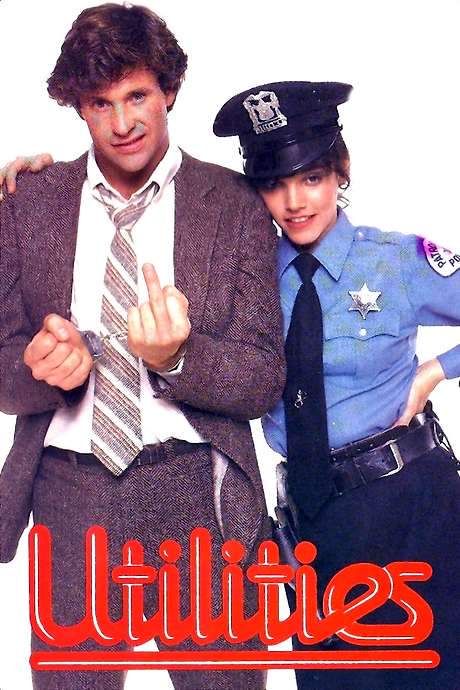
Utilities 1983

Directed by

Harvey Hart
Made by

Moviestore Entertainment
Utilities Plot Summary
Read the complete plot summary and ending explained for Utilities (1983). From turning points to emotional moments, uncover what really happened and why it matters.
Bob Hunt, a dedicated social worker, is called to help a longtime client, Dr. Martha Louise Rogers, whose electricity has been cut off because she cannot pay the bill. With the help of neighbors and friends, the community rallies to keep her lights on, and the bill is settled entirely in coins. The clerk, overwhelmed by the unusual payment, is told that such a large sum cannot be accepted in coins, yet the good will behind the gesture remains clear.
A miscommunication at the utility company prevents the reconnection, and the vulnerable elderly woman is soon hospitalized after suffering hypothermia. This failure to restore power becomes a personal trigger for Hunt, who spirals into a calculated campaign of retaliation against the systems that support people in trouble. He begins to sabotage various safety nets and infrastructure, aiming to expose what he sees as a flawed, profit-driven public service network.
In one memorable moment of subterfuge and symbolism, Hunt evades detection at a site by pressing himself into a wall with wet paint, leaving behind a single raised finger impression. The newspaper and television portray this anonymous saboteur as “The Finger,” a name that captures the audacity and mystery of the act and fuels public curiosity and fear alike. The media coverage amplifies the mystique, turning Hunt’s seemingly small acts into a provocative statement about accountability and power.
When the phone company becomes a target, it issues a public denial that an overload of billing records could enable long-distance calls without charge. The film, set in 1981 when long-distance calls carry a hefty price tag, quickly shows the absurdity of the situation: a young woman makes a reckless overseas call and even lets a Styx album run on a loop, mocking the notion that costs should be so easily shrugged off.
The climactic courtroom sequence unfolds as a rate-hike proposal from Kenneth Knight and his utility, Eastern Gas & Electric, is put to a vote before a public commission. A crowd of protestors is invited to speak, and Hunt takes the floor to reveal his identity: “I am The Finger.” His confession ignites a larger revolt, as Spartacus-style, several others in the room claim to be the anonymous vigilante, echoing a collective demand for accountability and change.
As the commission edges toward approval of the rate increase, a new development shifts the balance. Police officer Marion Edwards bursts into the courtroom with news that shatters the expected narrative. Hunt anticipates arrest, but Edwards reveals a startling truth: Knight has been destroying his own substations to arouse public sympathy and sway opinion. In the blackout that follows, the city lights go out and the spectators in the courthouse respond with a mixture of relief, celebration, and uneasy triumph, underscoring the film’s meditation on justice, vulnerability, and the deep flaws within systems meant to protect the public.
Utilities Timeline
Follow the complete movie timeline of Utilities (1983) with every major event in chronological order. Great for understanding complex plots and story progression.
Electric bill leads to a community effort
Dr. Martha Louise Rogers has her electricity cut off because she can't pay the bill. Bob Hunt notices and helps coordinate neighbor contributions to cover the debt. The bill is paid entirely in coins, a plan that shocks the clerk, who is later told that payments in excess of a certain coin quantity are not accepted.
Failed reconnection and hospital admission
The electric company fails to reconnect the power due to a communications snafu. The elderly woman is taken to the hospital suffering from hypothermia.
Hunt embarks on his vendetta against the system
Hunt begins a vendetta, sabotaging assorted support systems across the city in protest of the outages. His actions target critical infrastructure and everyday services, escalating the conflict between citizens and the utilities. The sabotage triggers widespread disruptions and draws intense media attention.
The Finger is born
To avoid detection at one site, Hunt flattens himself against a wall with wet paint, leaving the impression of a hand with one raised finger in the paint. News media discover the detail and nickname the saboteur 'The Finger'.
Phone company responds to sabotage
When the phone company is hit, it releases a public statement denying that long-distance calls can be made without a charge because of sabotage to its billing records. The claim heightens public curiosity and fuels speculation about who is behind the disruptions.
Styx call demonstration
A girl makes an overseas call and plays a Styx double album over the phone, illustrating the unintended effects of the sabotaged billing system. The stunt demonstrates the public's willingness to exploit the system and underscores the stakes of the conflict.
Courtroom showdown over rate hikes
In a long courtroom hearing, a proposed rate hike by Kenneth Knight and Eastern Gas & Electric is to be voted on by a public commission. Citizens are given a chance to speak, and Hunt publicly confesses: 'I am The Finger.' The confession electrifies the room and sets the stage for a dramatic confrontation.
Spartacus moment in the courtroom
Many others in the courtroom rise to claim they are The Finger, in a Spartacus-style gesture. Their masses solidarity amplifies the opposition to the rate hike and highlights the public's anger toward the utility.
Arrest and revelation
Police officer Marion Edwards bursts in to arrest Hunt as the commission nears its decision. She reveals that Knight has been destroying his own substations to gain public sympathy.
Power outage and celebration
The lights of the city go dark, signaling Knight's manipulation coming to light. Spectators in the courthouse celebrate the blackout as the scheme is exposed.
Utilities Characters
Explore all characters from Utilities (1983). Get detailed profiles with their roles, arcs, and key relationships explained.
Bob Hunt (Robert Hays)
A social worker who becomes a driven, vengeful force after witnessing systemic neglect. He targets failing support networks to expose vulnerabilities in public services, believing drastic action can force reform. His methods blur the line between justice and obsession, and his identity as 'The Finger' becomes a citywide symbol.
Dr. Martha Louise Rogers (Jane Mallet)
An elderly physician whose electricity is cut off, putting her health at risk. She becomes a focal point for community sympathy and a tangible example of how utility failures affect vulnerable individuals. Her plight motivates neighbors to rally and supports the broader call for accountability.
Marion Edwards (Brooke Adams)
A police officer involved in upholding order, who also uncovers a larger manipulation within the utility saga. She embodies authority and determination, and her actions help reveal the extent of corporate and regulatory games. Her involvement ties law enforcement to the fight for public welfare.
Kenneth Knight (James Blendick)
A power broker behind the utility, rumored to orchestrate substation sabotage to gain public sympathy and influence rate decisions. He represents corporate manipulation and political calculation, driving much of the film's antagonistic pressure. His plans test the boundary between strategic exploitation and ethical governance.
Roy Blue (John Marley)
An older neighbor whose experience and community involvement anchor local resistance to unfair utility practices. He participates in discussions and public demonstrations, reflecting collective resilience. His perspective emphasizes solidarity and pragmatic support for those affected by outages.
Ruby Blue (Helen Burns)
Roy Blue's partner, a compassionate voice in the neighborhood who aids neighbors facing hardship. She embodies communal care and the importance of shared resources during a crisis. Her presence underscores the role of everyday citizens in driving public accountability.
Tom Walker (Shelby Gregory)
A citizen who participates in the broader protest and public discourse surrounding the utility dispute. He personifies civic engagement and the collective voice of residents. His involvement highlights how ordinary people shape the outcome of policy debates.
Eddie (Benjamin Gordan)
A neighbor who contributes to the community effort to support those affected by power outages. He represents ordinary citizens who mobilize resources and lend assistance during a crisis. His presence reinforces the theme of community resilience.
Walt (Steve Pernie)
A neighbor whose role adds texture to the urban tapestry, reflecting how ordinary people observe and respond to the unfolding events. He contributes to the sense of a living, interconnected community under pressure. His character helps illustrate everyday scrutiny of power and fairness.
Reporter #1 (John Corbett)
A member of the press covering the trial and public hearings. He helps shape the narrative through questions and coverage, highlighting the media’s influence on public perception. His presence reinforces the blurred line between journalism and societal drama.
Utilities Settings
Learn where and when Utilities (1983) takes place. Explore the film’s settings, era, and how they shape the narrative.
Time period
early 1980s
The events are set in the early 1980s, a pre-digital era when households faced manual billing and long-distance calls were expensive. Public commissions and regulatory hearings anchor the plot, reflecting the period's political processes. Media coverage and neighborhood activism frame the tempo of social conflict during this time.
Location
Mid-sized North American city
The story unfolds in a bustling urban area with a visible electricity grid and a courthouse environment. Neighborhoods, streets, and local services anchor the drama as power and billing disputes disrupt daily life. Public spaces become stages for citizen action and community support around the central medical case.
Utilities Themes
Discover the main themes in Utilities (1983). Analyze the deeper meanings, emotional layers, and social commentary behind the film.
🕵️
Vigilantism
A social worker's quest to force reform evolves into a vendetta against failing social systems. The Finger becomes a symbol exposing weaknesses in civic infrastructure and accountability. The narrative probes whether individual action can catalyze change or foster chaos. It questions who should police public welfare and at what cost.
🗞️
Media & Public Opinion
Media coverage drives the mystery and shapes how the public perceives the conflict between citizens and utilities. Sensational reporting magnifies small clues, influencing fear, sympathy, and outrage. The courtroom and street protests become stages where information and rumor compete for power. The film suggests media narratives can propel reform or manipulate sentiment.
💡
Utilities & Power
Central to the plot are the operations and decisions of a public utility and its rate hikes. Corporate interests and regulatory maneuvering frame the struggle between profit and public welfare. Sabotage reveals the fragility of essential services and tests the resilience of the city’s infrastructure. The public commission embodies a critical check on power.

Coming soon on iOS and Android
The Plot Explained Mobile App
From blockbusters to hidden gems — dive into movie stories anytime, anywhere. Save your favorites, discover plots faster, and never miss a twist again.
Sign up to be the first to know when we launch. Your email stays private — always.
Explore the mobile appUtilities Spoiler-Free Summary
Discover the spoiler-free summary of Utilities (1983). Get a concise overview without any spoilers.
In a modest city where the hum of everyday life is interrupted by the occasional bureaucratic hiccup, a simple act of kindness becomes the spark for a larger conversation about responsibility and compassion. Neighbors rally around an elderly resident whose lights have been cut off, pooling together a surprisingly large sum of pennies to settle the debt. The gesture is heartfelt, but the utility’s rigid policies turn a community effort into a bureaucratic roadblock, highlighting the tension between human generosity and institutional inflexibility.
Enter Bob Hunt, a devoted social worker who has spent years building trust with the people he serves. When he learns that his longtime client, Dr. Martha Louise Rogers, is left in the cold after the utility refuses the coin payment and fails to restore power, his sense of duty is shaken to its core. The stakes feel personal, and the scene is set against a backdrop of winter chill and the stark glow of streetlights that never quite reach the one home in need.
The incident pushes Hunt beyond the role of caretaker and into the realm of reluctant activist. He begins to question the structures that allow such a failure to happen, feeling a growing urge to expose the cracks in a system that prizes profit over people. As his frustration mounts, a mysterious moniker—“The Finger”—emerges in the press, hinting at a covert campaign aimed at making the invisible visible. The media’s fascination with the anonymity adds a layer of intrigue, turning a private outrage into a public symbol.
The film balances a gritty, almost documentary‑like realism with moments of dark humor, underscoring how ordinary citizens can become catalysts for change when ordinary systems falter. It invites viewers to contemplate the thin line between civic duty and rebellion, and how a single act of solidarity can ripple outward, challenging the very foundations of a community’s most essential services.
Movies with Similar Twists and Themes
Uncover films that echo the narrative beats, emotional arcs, or dramatic twists of the one you're exploring. These recommendations are handpicked based on story depth, thematic resonance, and spoiler-worthy moments — perfect for fans who crave more of the same intrigue.



Featured on this page

What's After the Movie?
Not sure whether to stay after the credits? Find out!
Check out our other apps:

SAT Sphere
Build confidence for the Digital SAT.

Mori Atlas
Discover wild places worth protecting.

Luntero
Search smarter for a home in Amsterdam.

Plot Explained
Unravel movie endings and hidden clues.

Pokechamp
Dive into Pokémon data and battle logic.

Driving Theory
Get ready for your European theory test.

Movie Dust
Plan your next cinema trip with ease.

Musemap
Find art and culture as you travel.

Selkobase
Compare credentials before committing.

Local Manual
Turn an unfamiliar country into practical next steps.

Lernavi
Compare school systems before your next move.

GymRoam
Find a workout stop wherever your plans take you.
Explore Our Movie Platform
New Movie Releases (2026)
Famous Movie Actors
Top Film Production Studios
Movie Plot Summaries & Endings
Major Movie Awards & Winners
Best Concert Films & Music Documentaries
Movie Collections and Curated Lists
© 2026 What's After the Movie. All rights reserved.
Privacy Policy