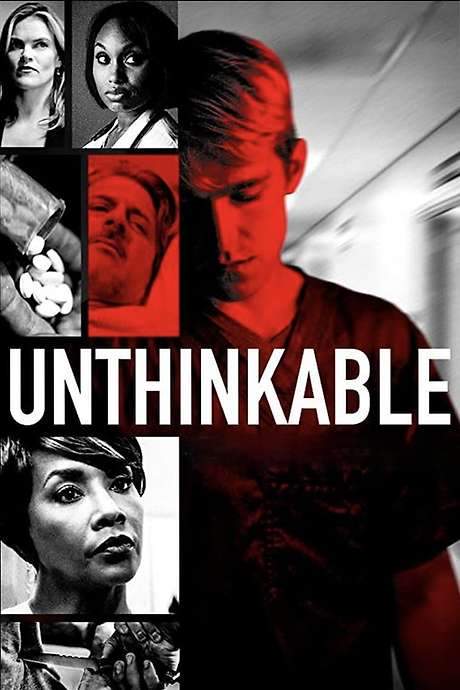



Where to Watch Unthinkable
See current US streaming, rental, and purchase options for Unthinkable (2018) via JustWatch.

Magnolia Selects Amazon Channel
HD
Philo
HD
Warriors and Gangsters Amazon Channel
HD
Hoopla
SD
Kanopy
HD
Fandango at Home Free
HD
Tubi TV
SD
YouTube Free
HD
Amazon Video
SD
Apple TV Store
HD Fandango At Home
SD
Google Play Movies
SD Streaming availability powered by 
Unthinkable Plot Summary
Read the complete plot summary and ending explained for Unthinkable (2018). From turning points to emotional moments, uncover what really happened and why it matters.
An American former Delta Force operator, Steven Younger, records a videotape that triggers a tense crisis in Los Angeles as the FBI closes in on the truth behind his claim. The team is summoned to a high school that has been repurposed as a black-site holding Yusuf Mohamed, a man who insists he has placed three nuclear bombs in major U.S. cities. As investigators dissect the tape, they are forced to confront a chilling scenario: three devices scheduled to explode in synchrony unless their demands are met.
In the shadow of the crisis, an aggressive interrogator known simply as H is brought in to extract every possible detail about the bombs’ locations. He makes his intent brutally clear by severing one of Yusuf’s fingers, a move that leaves FBI supervisor [Saunders] unsettled and Helen Brody deeply troubled. Brody, however, finds herself torn between moral responsibility and the urgency of preventing mass casualties. The dynamic unfolds with her assuming the role of the good cop, attempting to counterbalance H’s relentless brutality. The tension escalates as the government’s core premise—“ten million deaths”—looms over every choice.
“good cop”
Yusuf’s demands demand a political reversal: the President must publicly denounce support for puppet regimes and dictatorships in Muslim countries and announce a withdrawal of American troops from those regions. The team immediately rejects any notion of negotiating with terrorists, clinging to a policy built on non-negotiation with such actors, while the clock ticks toward catastrophe.
As the inquiry deepens, Yusuf reveals a disturbing ruse to test the moral fiber of the United States. He claims the bomb threat was a manipulation meant to provoke a response and to expose deep-seated flaws. He provides an address that appears to corroborate the fabrication, and the search leads them to a room matching the video—yet there is no bomb in sight. Then catastrophe strikes in another form: a soldier’s action—pulling Yusuf’s photo down—triggers a C-4 explosion at a nearby shopping mall, claiming the lives of 53 people. Brody’s outrage erupts as she confronts the brutal reality of what’s happened, and she confronts Yusuf directly, cutting his chest with a scalpel. Yusuf remains unfazed, arguing that the toll of American violence every day dwarfs any single act of terrorism.
The moral line between capture and coercion widens when Yusuf’s wife and children are detained. In a chilling sequence, H brings Yusuf’s wife before him and threatens to mutilate her right there. Brody and the others step back in horror as H slashes her throat, and she bleeds out in front of Yusuf. He endures the horror without breaking, insisting that he will not harm his children, even as the threat of torture is levied to extract the bombs’ locations. Yusuf’s resolve reaches a breaking point when the two children are brought in; the interrogator warns that he will torment them if the locations aren’t disclosed. The group moves to protect the children, but the coercion continues to press on.
In a twist linked to the volume of missing nuclear material—roughly eighteen pounds reported missing, with about 4½ pounds required per device—the possibility of a fourth bomb looms large. H argues that Yusuf could have anticipated the torture and planted a fourth device as a contingency. The officials demand more extreme measures, including torture of the children, and Brody refuses to trade two innocent lives for millions of potential victims. The moral clash peaks as Yusuf, realizing the endgame, seizes an opportunity: he grabs the official’s pistol, pleads with Brody to take care of his children, and then ends his own life. The crisis resolves with Brody walking out of the building, carrying Yusuf’s children to safety—an ending that leaves a lasting, unsettling impression about the human cost of extreme tactics in the name of national security.
Dr. Sherry Cooper, Vivica A. Fox, lends a clinical perspective during the escalating emergency, while other key figures step into experimental roles within the room’s claustrophobic drama. The ensemble of professionals and the relentless pressure of time illuminate the fragility of ethics when lives hang in the balance, and the film closes on a stark note: the line between justice and revenge is thin, and sometimes the hardest choice is to protect the innocent at the cost of complicating one’s own sense of right and wrong.
In an intertwined chorus of voices, the film grounds its tension in a complex network of individuals—Carrie Ingall, Dr. Brooks, Lucy Clark, Alana Williams, Mr. Joseph Stone, Ambassador Chris Williams, Miles Berg, Pharmacist Nilsson, Dr. Julien Drugov, Dr. Leigh Waters, and Jones Berg. Each name, a thread in a tapestry of fear, duty, and the uneasy ethics of interrogation.
Unthinkable Timeline
Follow the complete movie timeline of Unthinkable (2018) with every major event in chronological order. Great for understanding complex plots and story progression.
Younger records a videotape
Steven Younger, a former Delta Force operator, records a videotape. The content and purpose of the tape are later linked to his alias Yusuf Mohamed.
Team arrives at LA high school black site
Brody and her FBI team are summoned to a Los Angeles high school commandeered by the military as a black site holding Younger (calling himself Yusuf Mohamed). They watch Yusuf's tape, which shows three nuclear bombs in separate U.S. cities.
Interrogation begins; H demonstrates ruthlessness
A special interrogator named H is brought in to force Yusuf to reveal bomb locations. He immediately demonstrates his ruthlessness by severing one of Yusuf's fingers, signaling the extreme methods to come.
Moral clash over torture
Brody tries to stop the measures while Saunders argues the 10 million potential deaths justify torture. H escalates his methods, and Brody adopts a 'good cop' stance in the room.
Yusuf's demands are revealed
Yusuf states his demands: the President must cease support for puppet governments and withdraw American troops from Muslim countries.
Demands dismissed; no negotiation
The group dismisses the possibility of meeting his demands, citing the U.S. policy of not negotiating with terrorists.
Yusuf admits the threat was a ruse
Yusuf breaks down and admits the bomb threat was a ruse, and he provides an address to prove it.
No bombs found in the suspected location
They locate a room that matches a scene from the tape, but there is no nuclear bomb present.
Mall explosion triggered by a photo being pulled down
A soldier pulls Yusuf's photo down, triggering a C-4 explosion at a nearby shopping mall, killing 53 people.
Brody confronts Yusuf after the massacre
Angry at the senseless deaths, Brody returns to Yusuf and cuts his chest with a scalpel. Yusuf remains unafraid and rationalizes the deaths as a consequence of American actions.
Wife is killed; children detained
Yusuf's wife and children are detained; H threatens to mutilate her in front of Yusuf, and she is killed by H.
Tension over the children; torture threatened
Yusuf's two children are brought in; H warns he will torture them if the bomb locations are not disclosed, while others try to intervene.
Missing fourth bomb and material discussed
H notes that missing nuclear material suggests a potential fourth bomb, arguing Yusuf may have planned an additional device.
Final coercion and Yusuf's suicide
An official pressures H to torture the children for the fourth bomb. Brody resists, escorting the children away, and Yusuf grabs the official's gun to kill himself, allowing Brody to leave with the children.
Unthinkable Characters
Explore all characters from Unthinkable (2018). Get detailed profiles with their roles, arcs, and key relationships explained.
Damien Berg (Voice) — Mark Moses
A voice-driven role tied to the central conflict, Damien Berg is depicted as a calm, controlled figure whose presence amplifies the tension of the crisis. The character’s interactions with the team suggest a hidden influence over the unfolding events. His exact allegiance remains ambiguous, inviting scrutiny of motives.
Dr. Sherry Cooper — Vivica A. Fox
A medical professional in the crisis-response environment who questions coercive tactics. She foregrounds ethical considerations in a high-stakes, authoritarian setting. Her perspective anchors the moral debate within the team.
Carrie Ingall — Missi Pyle
A member of the operation’s team who contributes to the procedural side of the crisis. Her actions reflect practical concerns, balancing urgency with procedural constraints.
Dr. Brooks — Tanner Anderson
A doctor involved in the response who embodies the scientific rationality that underpins the operation. He provides technical assessments that influence decision-making under pressure.
Lucy Clark — Katalina Viteri
A character connected to the high-stakes investigation, representing the civilian perspective amid escalating security measures. Her presence adds a human dimension to the crisis.
Alana Williams — Natalija Nogulich
A figure at the intersection of policy and procedure, embodying institutional concerns during the crisis. She interacts with decisions that affect life-and-death outcomes.
Mr. Joseph Stone — Jack Donner
A notable official or executive involved in the operation, representing top-down pressure shaping interrogation and response strategies.
Ambassador Chris Williams — Christopher Cousins
A diplomatic figure signaling the international or political dimensions of the crisis. His actions reflect broader fallout from security decisions.
Miles Berg — Nick Airus
A character linked by surname to Damien Berg, possibly a colleague or relative within the crisis environment. His role emphasizes the wider network around the central incident.
Pharmacist Nilsson — Aleksander Ristic
An on-site pharmacist involved in the tactical plot, highlighting the logistical side of the operation and the handling of dangerous materials.
Dr. Julien Drugov — Konstantin Lavysh
A physician or researcher contributing expertise to the team’s efforts during the crisis. Drugov’s role centers on scientific assessment under extreme pressure.
Dr. Leigh Waters — Angell Conwell
A doctor who provides medical insight within the operation, likely evaluating risks and communicating consequences of action under the duress of a crisis.
Jones Berg — George Loomis
A Berg family-connected character, representing personal stakes and potential influence outside the official proceedings.
Unthinkable Settings
Learn where and when Unthinkable (2018) takes place. Explore the film’s settings, era, and how they shape the narrative.
Time period
Present day
Set in the modern United States, the story uses current counter-terrorism tactics and interagency coordination. It unfolds over a tight, real-time timeline that emphasizes immediacy and public pressure. The contemporary backdrop underscores the ethical and logistical challenges of handling a high-stakes crisis.
Location
Los Angeles, New York, Dallas
The action centers on Los Angeles, where a high school is commandeered as a black site. The investigation expands across major cities after a staged threat triggers a national crisis. Contemporary urban settings and facilities frame a high-stakes counter-terrorism environment.
Unthinkable Themes
Discover the main themes in Unthinkable (2018). Analyze the deeper meanings, emotional layers, and social commentary behind the film.
⚖️
Ethics
The film centers on a moral dilemma: whether torture and coercive tactics can ever be justified to save countless lives. It weighs the humanity of the victim against the supposed greater good. The narrative challenges the audience to consider where lines should be drawn in the name of security.
🏛️
Authority
The story scrutinizes the power of state institutions in crisis situations, highlighting pressure from officials to extract information at any cost. It contrasts ruthless efficiency with the risk of eroding civil liberties. The presence of an extreme interrogator demonstrates how authority can blur ethical boundaries.
💔
Sacrifice
The human cost of the crisis is laid bare, including the death of innocents and the toll on families. Yusuf's willingness to face consequences highlights the sacrifices made by individuals on both sides of the conflict. The climax shows what is lost when security priorities override compassion.

Coming soon on iOS and Android
The Plot Explained Mobile App
From blockbusters to hidden gems — dive into movie stories anytime, anywhere. Save your favorites, discover plots faster, and never miss a twist again.
Sign up to be the first to know when we launch. Your email stays private — always.
Explore the mobile appUnthinkable Spoiler-Free Summary
Discover the spoiler-free summary of Unthinkable (2018). Get a concise overview without any spoilers.
In a stark, covert facility hidden beneath everyday life, a desperate situation forces the nation’s most disciplined investigators into a shadowed arena where the line between duty and conscience blurs. When a captured operative claims to hold the deadly keys to multiple imminent catastrophes, the government assembles a small, elite team to extract the truth before time runs out. The setting—an austere, high‑security complex turned makeshift courtroom—radiates a cold, relentless pressure that seeps into every conversation.
At the center of this moral crucible stands Helen Brody, an FBI special agent whose steady resolve is tested by the gravity of what’s at stake. Her counterpart, the enigmatic interrogator known only as H, brings a reputation for unforgiving methods, creating a volatile partnership that swings between calculated restraint and raw intensity. Together, they navigate a maze of ethical dilemmas, each step hinting at deeper layers of secrecy and the far‑reaching consequences of their choices.
The film’s tone is a tightly wound thriller, drenched in anxiety and ethical ambiguity. It invites the audience to feel the weight of each decision, the hum of fluorescent lights echoing the ticking clock, and the unsettling awareness that every revelation carries the potential to reshape political realities. The atmosphere is dense with quiet tension, punctuated by moments of fierce dialogue that reveal both the personal stakes for the operatives and the larger, unseen forces at play.
As the interrogation proceeds, the narrative hints at a sprawling conspiracy that extends beyond the immediate threat, suggesting that truth and duty may be more intertwined—and more perilous—than anyone anticipates. The story promises a relentless exploration of how far a nation will go to protect itself, and what it costs the individuals sworn to its defense.
Featured on this page

What's After the Movie?
Not sure whether to stay after the credits? Find out!
Check out our other apps:

SAT Sphere
Build confidence for the Digital SAT.

Mori Atlas
Discover wild places worth protecting.

Luntero
Search smarter for a home in Amsterdam.

Plot Explained
Unravel movie endings and hidden clues.

Pokechamp
Dive into Pokémon data and battle logic.

Driving Theory
Get ready for your European theory test.

Movie Dust
Plan your next cinema trip with ease.

Musemap
Find art and culture as you travel.

Selkobase
Compare credentials before committing.

Local Manual
Turn an unfamiliar country into practical next steps.

Lernavi
Compare school systems before your next move.

GymRoam
Find a workout stop wherever your plans take you.
Explore Our Movie Platform
New Movie Releases (2026)
Famous Movie Actors
Top Film Production Studios
Movie Plot Summaries & Endings
Major Movie Awards & Winners
Best Concert Films & Music Documentaries
Movie Collections and Curated Lists
© 2026 What's After the Movie. All rights reserved.
Privacy Policy