
Unfaithfully Yours 1948

Directed by

Preston Sturges
Made by

20th Century Fox
Unfaithfully Yours Plot Summary
Read the complete plot summary and ending explained for Unfaithfully Yours (1948). From turning points to emotional moments, uncover what really happened and why it matters.
Sir Alfred de Carter [Rex Harrison] returns from a visit to his native England and discovers that trouble has followed him home. The world-famous conductor is confronted not by music, but by a tangled web of suspicion spun by his wealthy brother-in-law, August Henshler [Rudy Vallee], who has misunderstood Alfred’s casual instruction to keep an eye on his much younger wife, Daphne de Carter [Linda Darnell]. In a move that seems driven by mischief and fear, August hires a private detective named Sweeney [Edgar Kennedy], and the troubling dossier he receives sets the tone for a tense domestic drama. When the report lands in Alfred’s hands, he tears it apart in a flash of rage, yet the idea of infidelity lingers like a sour note in a symphony he cannot quite quiet. The suspicion gnaws at him, coloring his every reaction and turning a simple return home into a quiet crisis of trust.
To understand the gravity of what he’s been told, Alfred seeks out Sweeney’s address, apparently to destroy any copies that might survive. In a revealing exchange, Sweeney summarizes the key finding for Alfred: late at night, Daphne was seen in the vicinity of the hotel room belonging to Alfred’s secretary, Tony Windborn [Kurt Kreuger], where she stayed for thirty-eight minutes. The image of that brief encounter unsettles Alfred more than the physical presence of danger; it stirs a cascade of what-ifs and a longing for a clean, definitive answer that reality refuses to provide. The mood inside the home shifts from admiration to doubt, and Alfred’s internal orchestra begins to play in chromatic, unsettled keys.
Before the concert, a storm of emotion overtakes Alfred, and he quarrels with Daphne in a clash charged with fear, pride, and a desperate need to protect his own ideal of loyalty. Then he takes the baton and steps onto the podium, attempting to dissolve the tension with music. As he conducts three distinct pieces, the music becomes a series of moral reveries. In the first, Overture to Semiramide, he envisions a perfect crime—a methodical murder of Daphne with a straight razor and a plan to frame Tony Windborn [Kurt Kreuger] for the crime. In the second, Prelude to Wagner’s Tannhäuser, he imagines a path of forgiveness backed by a generous check, as if money could restore faith and erase the hurt. And in the third, a stark scene of a Russian roulette-like game—dramatic, perilous, and ultimately leading to Alfred’s own imagined death as the first trigger is pulled, set to the intensity of Francesca da Rimini by Tchaikovsky.
The aftermath of the concert reveals a man who is not only consumed by fear but also by his own misgivings about control. Alfred attempts to recreate the murder fantasy at home, but in his feverish efforts he makes a mess of their apartment and disrupts the imagined recording device that would lure Tony to the scene. He even records at the wrong speed, a small but telling catastrophe of his psyche. Daphne returns, tender and devoted, and patches up his wounded thumb after he tests the razor’s edge, a quiet moment of practical care that contrasts with the storm raging in his head. He then pivots to the forgiveness fantasy, only to spill ink across his checkbook, a symbolic blemish that suggests forgiveness will not come easily or cleanly.
As the tension refuses to settle, Alfred cannot shake the nagging question: has he truly seen the signs or merely crafted them in his imagination? He asks Daphne a cautious question about her visits to Tony Windborn’s room, trying to read the truth beneath the surface of her calm response. She answers with surprising honesty, admitting she had gone to Barbara Henshler [Barbara Lawrence], August’s wife, in search of answers about a possible affair with Tony Windborn. She explains that she found herself trapped in a difficult moment when she realized Sweeney [Edgar Kennedy] was spying on the room, a sight that further destabilizes the fragile balance of trust in their household. In a final, intimate surrender, Daphne offers Alfred forgiveness, attributing his uneasy mood to the “creative temperament of a great artist.” The episode leaves both spouses with no clear resolution, only a deeper awareness of the fragility of trust and the length to which love and art will go to protect it.
Unfaithfully Yours Timeline
Follow the complete movie timeline of Unfaithfully Yours (1948) with every major event in chronological order. Great for understanding complex plots and story progression.
Alfred learns the detective was hired to follow Daphne
Sir Alfred de Carter returns from England and discovers that August Henshler hired a private detective to shadow Daphne. He is livid at the invasion of privacy and the implication of infidelity, even before seeing any concrete proof. The discovery sets a tense mood for the night ahead.
August hands over the detective's report
August presents the private detective's report to Alfred, detailing sightings that allegedly link Daphne to Tony. Alfred reads with growing unease, though he remains outwardly controlled. This moment plants the seeds of confrontation that mirrors the later performances.
Alfred tears the report to pieces
Livid and suspicious, Alfred tears the report to pieces rather than confronting Daphne outright. He decides to act as curator of the truth, determined to determine the meaning of the allegations himself. The act marks a turn toward private scheming rather than honest discussion.
Alfred secretly obtains Sweeney's address
Despite his stated intent to destroy any copies, Alfred secretly obtains Sweeney's address to ensure no trace of the report remains. He plans to erase any evidence of the detective's findings and to hide the suspicions from Daphne. The move shows his controlling mindset and foreshadows the coming manipulations.
Sweeney summarizes the report for Alfred
Sweeney gives Alfred a concise summary of the detective's findings, framing the alleged late-night visit as a potential infidelity affair. Alfred absorbs the outline and becomes consumed by the possibilities. The summary fuels the vengeful fantasies he will imagine during the concert.
Alfred and Daphne have a pre-concert quarrel
Before the concert, Alfred confronts Daphne, and their quarrel exposes the strain of jealousy. Daphne tries to reason with him and maintain calm, but the tension remains high. The discord sets a volatile tone for the evening.
The concert and imagined perfect crime
During the performance, Alfred conducts three pieces of music while envisioning a 'perfect crime.' In the first, he imagines killing Daphne with a razor and framing Tony, synced to Rossini's Semiramide Overture. His mind wanders through danger and control as the audience watches.
The forgiveness/charitable fantasy with a check
In another vision, Alfred imagines forgiving Daphne and even offers her a generous check as blessing. He imagines normalizing the situation while the Prelude to Wagner's Tannhäuser underscores the hopeful but hollow fantasy. The moment blends generosity with underlying manipulation.
Russian roulette fantasy begins but ends short
Another fantasy sequence sets up a game of Russian roulette between Alfred, Daphne, and Tony, with Alfred destined to die on the first pull. The tense moment is underscored by Francesca da Rimini, heightening the sense of doom. The plan remains only in imagination.
After the concert, Alfred searches for the recording device
After the concert, Alfred tries to act on the murder fantasy by locating a recording device to lure Tony to the scene. He makes a mess in the apartment and ends up recording at the wrong speed, derailing the plan. The failed attempt reveals his inability to translate fantasy into reality.
Daphne returns home and tends Alfred's cut thumb
Daphne comes home and questions Alfred about his erratic behavior. When he tests the razor, he cuts his thumb, and she bandages it with care. Her calm forgiveness contrasts with his mounting paranoia.
The forgiveness fantasy collapses with ink spill
He attempts the forgiveness fantasy again but spills ink all over his checkbook, ruining the plan to give her money and absolve the situation. The accident exposes the fragility of his schemes and deepens the emotional distance between them. Daphne's patience remains constant, but the air remains heavy.
The bullets mystery stalls the ending
The Russian roulette sequence collapses when Alfred cannot recall where the bullets are kept. He cannot complete the fatal prop, and the moment ends inconclusively. The failure to act leaves him in a limbo of suspicion and self-doubt.
Daphne reveals her visit to Tony's room while searching for Barbara
During a tense exchange, Alfred asks if she has ever been to Tony's room. She admits visiting to search for her sister Barbara, who might be involved with Tony. She explains she was trapped there when she saw Sweeney spying on the room, adding another layer of tension to the already fragile trust.
Reconciliation and acceptance of the creative temperament
Alfred begs Daphne's forgiveness for his irrational behavior, and she accepts it, attributing his actions to the creative temperament of a great artist. They resume their life together with a fragile, uneasy peace. The ending leaves the couple's trust tested but still standing.
Unfaithfully Yours Characters
Explore all characters from Unfaithfully Yours (1948). Get detailed profiles with their roles, arcs, and key relationships explained.
Sir Alfred de Carter (Rex Harrison)
World-famous symphony conductor whose temper and jealousy are inflamed by rumors of his wife Daphne's infidelity. He channels his insecurity into elaborate murder fantasies staged during his concert, guiding the narrative with musical cues. His artistic intensity is matched by a volatile need to control both love and life.
Daphne de Carter (Linda Darnell)
Alfred's devoted wife who becomes the subject of his suspicions. She remains loyal and caring, even as the tension peaks and he questions her fidelity. Her actions—like tending to Alfred's injured thumb—reveal a patient, supportive side amid his irrational behavior.
August Henshler (Rudy Vallee)
Barbara's husband and Daphne's brother-in-law, a wealthy patron whose misinterpretation of Alfred's request to watch over his wife leads him to hire the private detective. He embodies meddling upper-class influence that amplifies the central conflict. His actions catalyze the film's surveillance and suspicion plotline.
Anthony 'Tony' Windborn (Kurt Kreuger)
Alfred's secretary, a man closer in age to Daphne who becomes the focal point of the romantic tension. He is the object of the conductor's dramatic plots and is entangled in the suspicion surrounding the alleged affair. He stands at the crossroads of professional duty and intimate intrigue.
Sweeney (Edgar Kennedy)
Private detective hired by August to monitor Daphne, whose reports feed Alfred's paranoia. He operates as the mechanism by which the couple's private life is exposed to scrutiny, intensifying the melodrama. His surveillance role underscores the invasion of privacy at the heart of the plot.
Barbara Henshler (Barbara Lawrence)
Barbara is August's wife and Daphne's sister, whose presence highlights the family dynamics within the web of suspicion. Her involvement, whether direct or implied, adds another layer to the interwoven relationships featured in the story. She represents the collateral impact of marital rumors on relatives.
Unfaithfully Yours Settings
Learn where and when Unfaithfully Yours (1948) takes place. Explore the film’s settings, era, and how they shape the narrative.
Time period
1940s
The story unfolds in the late 1940s within a metropolitan American setting, featuring concert halls, luxury apartments, and refined social circles. Postwar sophistication and moral tension frame the drama, where art, wealth, and private lives collide. The era’s style is reflected in the formal, high-society atmosphere and the prominence of classical music as a narrative device.
Unfaithfully Yours Themes
Discover the main themes in Unfaithfully Yours (1948). Analyze the deeper meanings, emotional layers, and social commentary behind the film.
💔
Infidelity
Suspicion surrounding Daphne's fidelity drives the central tension. Alfred's prickly jealousy is provoked by rumors and a private detective report, fueling his irrational fantasies. The drama examines how trust, or the lack thereof, can distort perception and push characters toward extreme actions, even when love remains intact.
🗡️
Murder Fantasies
Alfred envisions three crime scenarios during the concert, each paired with a musical cue: a 'perfect crime' to the Overture to Semiramide, a forgiveness fantasy to the Prelude to Tannhäuser, and a Russian roulette fantasy to Francesca da Rimini. These fantasies reveal how art can become a playground for darker impulses. The boundary between imagination and reality becomes dangerously porous as the music guides his impulses.
🎨
Artistic Temperament
Alfred's creative temperament shapes his worldview and responses to conflict. His obsession with operatic drama bleeds into his personal life, turning marital strain into stage-worthy spectacle. The film uses his conductorial authority and musical metaphors to explore how an artist's inner life can override rational judgment. Creativity here serves as both expression and danger.

Coming soon on iOS and Android
The Plot Explained Mobile App
From blockbusters to hidden gems — dive into movie stories anytime, anywhere. Save your favorites, discover plots faster, and never miss a twist again.
Sign up to be the first to know when we launch. Your email stays private — always.
Explore the mobile appUnfaithfully Yours Spoiler-Free Summary
Discover the spoiler-free summary of Unfaithfully Yours (1948). Get a concise overview without any spoilers.
In the elegant world of concert halls and aristocratic drawing rooms, the celebrated maestro Sir Alfred de Carter returns from a brief European trip to find his home humming with a different kind of tension. His reputation as a world‑famous symphony conductor carries an air of disciplined artistry that contrasts sharply with the domestic uncertainty that begins to settle over his household.
A casual request to his brother‑in‑law, August Henshler, to keep an eye on the conductor’s much younger wife, Daphne de Carter, is swiftly transformed into an uneasy investigation. Intent on protecting his own reputation, August enlists a private detective, Sweeney, whose early findings hint that Daphne may have been seen near the hotel room of Alfred’s secretary, Tony Windborn. The simple act of “watching” soon spirals into whispered doubts, setting the stage for a delicate drama where professional pride and personal jealousy intersect.
The film’s tone is as layered as a symphonic score, blending the polished elegance of high society with the undercurrents of suspicion and artistic temperament. Music becomes a silent character, reflecting the dissonance between outward composure and inner turmoil. As Alfred grapples with the fragile balance of trust, the atmosphere remains charged with a quiet, almost physical tension that pervades each conversation and glance.
Against this backdrop of refined settings and simmering uncertainty, the story explores how a single misinterpreted instruction can unravel even the most disciplined of lives. It invites the audience to listen for the unresolved chords that linger in the air, promising a journey where love, loyalty, and the relentless pursuit of certainty are tested by the very rhythm of everyday existence.
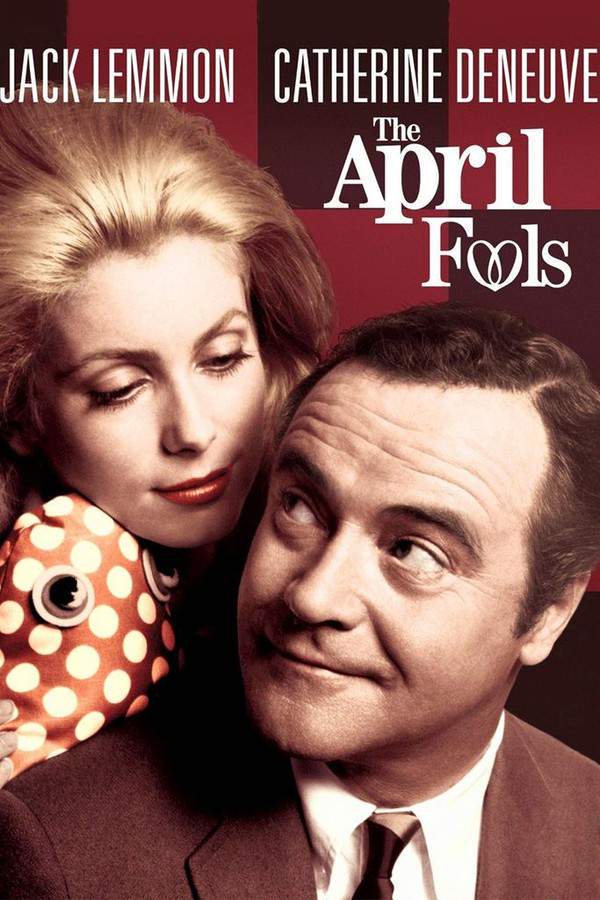
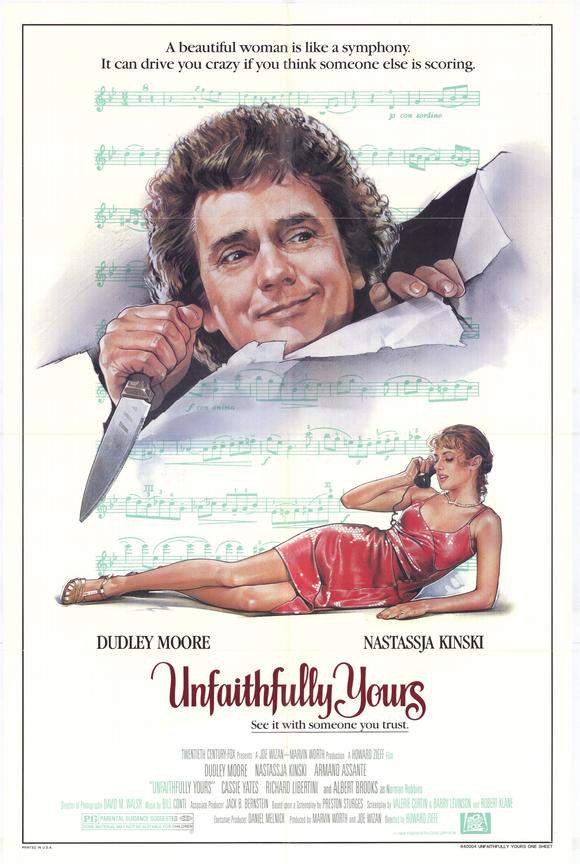
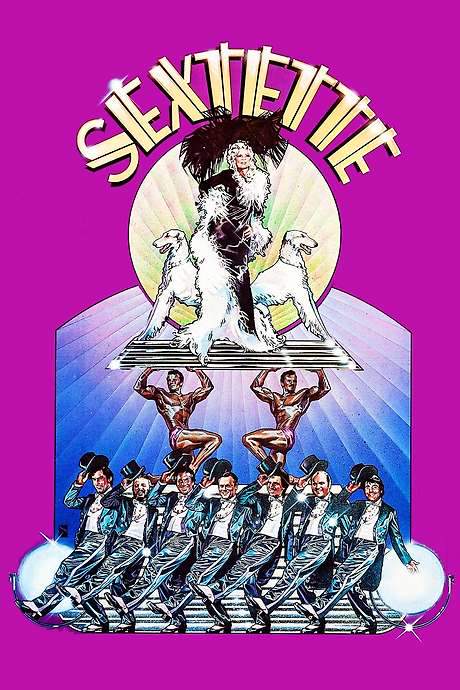
Movies with Similar Twists and Themes
Uncover films that echo the narrative beats, emotional arcs, or dramatic twists of the one you're exploring. These recommendations are handpicked based on story depth, thematic resonance, and spoiler-worthy moments — perfect for fans who crave more of the same intrigue.


Featured on this page

What's After the Movie?
Not sure whether to stay after the credits? Find out!
Check out our other apps:

SAT Sphere
Build confidence for the Digital SAT.

Mori Atlas
Discover wild places worth protecting.

Luntero
Search smarter for a home in Amsterdam.

Plot Explained
Unravel movie endings and hidden clues.

Pokechamp
Dive into Pokémon data and battle logic.

Driving Theory
Get ready for your European theory test.

Movie Dust
Plan your next cinema trip with ease.

Musemap
Find art and culture as you travel.

Selkobase
Compare credentials before committing.

Local Manual
Turn an unfamiliar country into practical next steps.

Lernavi
Compare school systems before your next move.

GymRoam
Find a workout stop wherever your plans take you.
Explore Our Movie Platform
New Movie Releases (2026)
Famous Movie Actors
Top Film Production Studios
Movie Plot Summaries & Endings
Major Movie Awards & Winners
Best Concert Films & Music Documentaries
Movie Collections and Curated Lists
© 2026 What's After the Movie. All rights reserved.
Privacy Policy