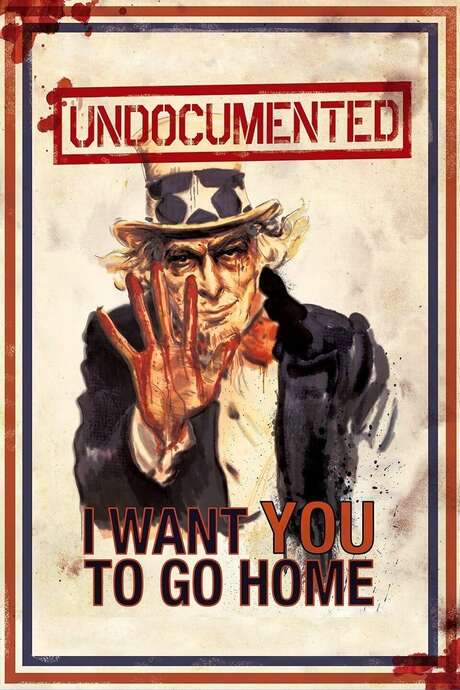
Undocumented 2010

Directed by

Chris Peckover
Made by

Sheperd Glen Productions
Where to Watch Undocumented
See current US streaming, rental, and purchase options for Undocumented (2010) via JustWatch.


Streaming availability powered by 
Undocumented Plot Summary
Read the complete plot summary and ending explained for Undocumented (2010). From turning points to emotional moments, uncover what really happened and why it matters.
Filmmakers Travis, William, Liz, Davie, and Jim set out to shoot a documentary about illegal Mexican immigration, aiming to expose a social issue from a perspective that feels raw and immediate. Their early interviews with Davie’s family and their aggressive probing of an employer named Whitaker soon pull them into a dangerous, morally gray world. They join a large caravan of immigrants, including Alberto and his wife and child, as they attempt the perilous crossing from Mexico into the United States.
What begins as journalism quickly spirals into a high-stakes trap. Once the group reaches U.S. soil, the truckload of immigrants is diverted to a facility that reveals a grim, escalating power dynamic. The captors are a radical, anti-immigrant faction led by a ruthless figure known as Z. Their proposition to the filmmakers is stark and chilling: document the torture of the immigrants and earn freedom, or share the grim fate of everyone involved. The possibility of safety for the children among the detainees briefly complicates the decision, as the faction spares Alberto’s daughter, introducing a moment of uneasy mercy amid cruelty.
The first brutal sequence makes the moral stakes undeniable. A drug-smuggling immigrant is tortured, and despite Liz’s desperate attempt to intervene, the man is beaten to death. The film then follows a grimmer tour of the facility: a harsh examination room, an oppressive “pens” system for the men and women, and the public theater of fear that the patriots choreograph. Alberto’s rage at the treatment of the detainees intensifies the pressure, and the violence that follows spills over to the filmmakers themselves when Alberto is subjected to a test of knowledge about American government and history. A wrong answer to the question, “Which historical figure said ‘Give me liberty or give me death!’”—a mistake that Alberto makes with information supplied by [William]—triggers an even more devastating consequence: the deaths of Alberto’s wife and William.
That same night, the group makes a perilous bid for escape under the cover of darkness. A misstep with a fence startles the guards, and a tense pursuit unfolds. The escape effort is overshadowed by tragedy as Alberto’s daughter’s body is found caught in razor wire, a shocking reminder of the human cost at stake. Alberto’s grief becomes a flashpoint, drawing the attention of [Z]’s henchmen and a relentless watchdog that inflicts severe injuries on Jim. The trio and the rest of the filmmakers are recaptured and confined to a harsher, more monitored room, where the captors compel them to document another atrocity: the removal of organs from living detainees. The sight is so overwhelming that Jim collapses, and the atmosphere within the facility grows steadily more claustrophobic and brutal.
Tensions boil over as Liz clashes with Z, and the group’s fragile solidarity begins to fracture. The filmmakers experience a renewed sense of urgency to signal help, attempting to attract a passing truck’s attention. In a cruel turn, Davie’s aunt is killed, and Davie himself is beaten when he confronts a henchman. Travis is coerced into interviewing Whitaker and the coyote who led the immigrants into the country; both are killed, underscoring the deadly reach of the faction’s control. The violence leaves a mark on everyone, including Liz and Travis, who are branded with the group’s symbol as a stark reminder of their new status as captives.
The captivity continues to erode the boundaries between observer and participant. A sedated and delirious Travis is forced to swing a baseball bat at a piñata that is unknowingly wrapped around Jim, while Liz, in a moment of fierce resolve, tries to strike Z with the bat but is restrained by sedation before she can act. The captors announce that the pair will be kept indefinitely, a sentence that seems to seal the filmmakers’ fate within the abusive regime.
A surge of violence finally jolts the situation toward a possible breakthrough. Travis, growing increasingly dangerous under the pressure, defeats a guard and seizes his gun, then shoots another guard in the leg. The dynamic shifts as Travis and Liz seize the opportunity to release the inmates and try to flee with the immigrants. They make a break for an old truck, and in a critical confrontation, Z nearly kills Travis, but is shot by Alberto before he can pull the trigger himself. The escape succeeds at last, and outside, state police conduct a raid that dismantles the compound and ends the immediate threat.
In the aftermath, [Alberto] returns to Mexico after nine months, and anonymous tapes reach a media center in Arizona, revealing that Z has grown his operation into an even larger network. The film closes on a note of haunting ambiguity: the cycle of violence, fear, and manipulation may have been temporarily disrupted, but the underlying forces that profited from fear and exploitation remain at large.
Overall, the narrative unfolds as a measured, unflinching examination of how a sensational pursuit of truth can collide with coercive power, cruelty, and the fragility of ethical boundaries. The film does not shy away from difficult questions about how far documentary crews should go to tell a story, and it leaves viewers with a stark meditation on accountability, humanity, and the consequences of viewing suffering as spectacle.
Undocumented Timeline
Follow the complete movie timeline of Undocumented (2010) with every major event in chronological order. Great for understanding complex plots and story progression.
Filmmakers set out to document immigration issues
A core team of filmmakers begins a project to expose illegal Mexican immigration as a social issue viewed through a raw lens. They conduct early interviews with Davie's family and probe employer Whitaker, which pulls them into a dangerous, morally gray world. The pursuit of truth quickly entangles their own safety with the migrants' peril.
They join a caravan and attempt the crossing
The crew links up with a large caravan of immigrants, including Alberto and his wife and child. They follow the perilous crossing from Mexico into the United States. The situation shifts from observation to participation as danger closes in.
Detention facility and sinister offer from Z
Upon reaching U.S. soil, the group is diverted to a grim detention facility run by the anti-immigrant faction led by Z. The captors present a stark choice: document the torture and win their freedom, or share the fate of the captives. A moment of uneasy mercy comes when Alberto’s daughter is briefly spared.
First brutal torture and death
The first brutal sequence unfolds as a drug-smuggling immigrant is tortured in front of the group. Liz tries to intervene, but the man is beaten to death, underscoring the lethal stakes of their involvement. The crew's sense of journalism collides with overwhelming cruelty.
Harsh tour of the facility
The film then tours the facility's harsh regimes: an examination room, the imprisoning 'pens' for men and women, and a public theater of fear that the captors choreograph. Alberto's rage grows as he witnesses the inhumane treatment. The environment tightens the noose around the filmmakers and detainees alike.
Death of Alberto's wife and William after a wrong answer
During a brutal test of knowledge about American government, Alberto is forced to answer a question about liberty. His incorrect reply—supplied by William—triggers the brutal deaths of Alberto's wife and William. The violence exposes how the captors manipulate truth and put the crew's lives at risk.
Night escape attempt
That same night, the group makes a desperate bid for escape under cover of darkness. A fence misstep alerts guards, and a tense chase erupts through the facility grounds. The plan teeters on disaster as survival instincts kick in for everyone.
Tragedy of Alberto's daughter and recapture
As the escape unfolds, Alberto’s daughter's body is found caught in razor wire, a shocking symbol of the human cost. Grief fuels Alberto's resolve while drawing the attention of Z's henchmen. The escape turns into a manhunt that ends with the filmmakers and migrants recaptured.
Organ removal footage and claustrophobic brutality
Back in confinement, the captors compel the crew to document the removal of organs from living detainees. The scene is so overwhelming that Jim collapses, intensifying the claustrophobic, brutal atmosphere. Tensions rise as the group’s humanity is squeezed by the regime.
Rift within the crew and lethal consequences
Tensions boil over as Liz clashes with Z and the group’s solidarity fractures. Davie’s aunt is killed, and Davie is beaten when he confronts a henchman. Travis is forced to interview Whitaker and the coyote who led the immigrants; both are killed, and the group is branded with the captors' symbol.
Sedation and indefinite captivity
The captivity erodes boundaries between observer and participant as Travis is sedated and forced to swing a piñata around Jim. Liz tries to strike Z with the bat but is restrained by sedation. The captors announce that the pair will be kept indefinitely.
Breakthrough and escape; Z's downfall
A surge of violence shifts the balance as Travis overpowers a guard, seizes his gun, and shoots another guard in the leg. He and Liz free the inmates and attempt to flee with the immigrants toward an old truck. Z nearly kills Travis, but Alberto shoots Z, allowing the escape to succeed as state police raid the compound.
Aftermath and expansion of Z's network
In the aftermath, Alberto returns to Mexico after nine months. Anonymous tapes reach a media center in Arizona, revealing that Z has grown his operation into a larger network. The film ends with a lingering sense that the systemic forces behind fear and exploitation persist.
Closing ambiguity about accountability
The film closes with a meditation on accountability, humanity, and the consequences of treating suffering as spectacle. It questions how far documentary crews should go to tell a story when power dynamics are at play. TheEnding leaves viewers with a stark, unresolved takeaway.
Undocumented Characters
Explore all characters from Undocumented (2010). Get detailed profiles with their roles, arcs, and key relationships explained.
Liz (Alona Tal)
A documentary filmmaker driven by a desire to expose a pressing social issue, Liz strives to balance urgency with ethical restraint. She attempts to intervene when violence erupts, risking her own safety for the sake of the people she’s filming. As events spiral, she becomes a captive and must navigate moral compromises while preserving her integrity as a witness.
Z (Peter Stormare)
The ruthless leader of the anti-immigrant faction who turns the detention site into a theater of fear. He uses power to manipulate both captives and captors, enforcing discipline through violence and intimidation. His cold calculation centers control and profit from others’ desperation.
Alberto (Yancey Arias)
An immigrant father whose protectiveness for his family intensifies as they are subjected to cruel treatment. His grief bursts into anger over the brutal conditions, culminating in a desperate bid for his daughter’s safety. The deaths surrounding him become a catalyst for action and a stark reminder of human cost.
Davie (Greg Serano)
A member of the filmmaking group whose sense of loyalty is tested by violence and coercion. He bears witness to the cruelty inflicted on detainees and to the personal losses that ripple through the crew. Davie’s reactions to the regime reveal the strain between friendship, ethics, and survival.
Jim (Kevin Weisman)
A member of the crew who endures torture and brutality within the facility. His experience embodies the film’s visceral cost and the fragility of the line between observer and participant. The physical and psychological strain on Jim underscores the moral complexity of bearing witness.
Travis (Scott Mechlowicz)
A crew member who is coerced into dangerous tasks, including interrogating figures tied to the crossing. He grows increasingly dangerous under pressure, eventually leveraging force in an attempt to free detainees. His arc highlights the corrosive effects of fear and coercion on judgment.
The Artist (Nicholas Tucci)
A member of the group whose presence foregrounds the tension between documentary art and real-world brutality. The Artist’s role prompts reflection on how storytelling intersects with spectacle and complicity. His perspective embodies the film’s examination of truth, representation, and moral responsibility.
Whitaker (Chad Brummett)
An employer tied to the migration operation who becomes entangled in the faction’s network. He represents another layer of complicity—economic and corrupt—within a system built on fear. His fate alongside others underscores the reach of danger beyond the immediate captors.
Undocumented Settings
Learn where and when Undocumented (2010) takes place. Explore the film’s settings, era, and how they shape the narrative.
Location
Mexico, United States (Arizona border region), detention facility
The narrative unfolds across the Mexico–United States border region, tracing a dangerous crossing into the United States. It shifts from arid border landscapes to a harsh, tyrannized detention facility where power dynamics are laid bare. The setting emphasizes the mortal stakes for immigrants and the observers who chase a story, revealing how place can magnify fear and control. The climax centers around a raid that disrupts the regime and exposes the brutality of the captivity system.
Undocumented Themes
Discover the main themes in Undocumented (2010). Analyze the deeper meanings, emotional layers, and social commentary behind the film.
🔒
Captivity
The captors turn a pursuit for truth into a coercive trap, using confinement to force obedience. The filmmakers’ autonomy is eroded as they become part of the system they set out to document. The brutal environment of the pens and interrogations illustrates how power can dehumanize both captives and captors. The escape sequence offers a flicker of agency, even as the cost of resistance remains painfully high.
🎥
Ethics of Filmmaking
The crew grapples with where to draw the line between报道 and exploitation. The camera functions as both shield and instrument of cruelty, pressuring them to reveal even as they witness atrocities. The film questions accountability—who bears responsibility for suffering recorded for public consumption? Viewers are invited to ponder whether truth is a product or a responsibility.
🌍
Immigration & Humanity
Immigration is shown as a perilous journey shaped by risk, fear, and systemic violence. Alberto’s devotion to family contrasts with the brutality they endure, highlighting enduring human resilience. The detention regime exposes a dehumanizing machinery that treats people as commodities. The ending leaves open questions about whether acts of mercy can alter a larger, entrenched cycle of exploitation.

Coming soon on iOS and Android
The Plot Explained Mobile App
From blockbusters to hidden gems — dive into movie stories anytime, anywhere. Save your favorites, discover plots faster, and never miss a twist again.
Sign up to be the first to know when we launch. Your email stays private — always.
Explore the mobile appUndocumented Spoiler-Free Summary
Discover the spoiler-free summary of Undocumented (2010). Get a concise overview without any spoilers.
In the stark desert landscape that marks the U.S.–Mexico border, a modest film crew sets out to turn a pressing social issue into a raw, on‑the‑ground documentary. Their goal is to follow the hidden currents of illegal migration, allowing cameras to capture the humanity often omitted from headlines. The project is framed as an urgent, immersive investigation, a glimpse into a world that many see only from afar, and the tone is deliberately unvarnished, walking the line between reportage and lived experience.
The team is a kaleidoscope of perspectives. Travis, the de‑facto leader, balances a journalistic instinct with a personal curiosity about the border’s moral complexities. William brings a technical eye and an unflinching willingness to push boundaries, while Liz supplies a compassionate counterweight, often questioning how far the lens should go. Davie, whose own family ties straddle both sides of the fence, offers an intimate connection to the subjects, and Jim rounds out the group with a steadier, more skeptical outlook. Their interplay is as much a study of friendship and ethical tension as it is a means to frame the story they hope to tell.
When the crew joins a large caravan of migrants—among them Alberto and his small family—their cameras become witnesses to a journey fraught with uncertainty, hope, and the unspoken peril that haunts every step across the desert. The atmosphere is thick with the weight of unseen forces, the whisper of law‑enforcement patrols, and the raw determination of those seeking a new life. The documentary style stays intimate, allowing moments of quiet conversation to sit beside the broader, relentless march of the convoy.
Yet the border is more than a geographic line; it is also a contested space where ideology and survival collide. As the filmmakers press deeper, they sense an undercurrent of hostility from fringe elements who view the migrants—and anyone documenting them—with suspicion and aggression. This looming tension shapes the film’s mood, turning every interview and every mile traveled into a delicate negotiation between truth‑seeking and self‑preservation, and leaving the audience to wonder just how far the crew—and the people they film—will go when the line between observer and participant begins to blur.
Featured on this page

What's After the Movie?
Not sure whether to stay after the credits? Find out!
Check out our other apps:

SAT Sphere
Build confidence for the Digital SAT.

Mori Atlas
Discover wild places worth protecting.

Luntero
Search smarter for a home in Amsterdam.

Plot Explained
Unravel movie endings and hidden clues.

Pokechamp
Dive into Pokémon data and battle logic.

Driving Theory
Get ready for your European theory test.

Movie Dust
Plan your next cinema trip with ease.

Musemap
Find art and culture as you travel.

Selkobase
Compare credentials before committing.

Local Manual
Turn an unfamiliar country into practical next steps.

Lernavi
Compare school systems before your next move.

GymRoam
Find a workout stop wherever your plans take you.
Explore Our Movie Platform
New Movie Releases (2026)
Famous Movie Actors
Top Film Production Studios
Movie Plot Summaries & Endings
Major Movie Awards & Winners
Best Concert Films & Music Documentaries
Movie Collections and Curated Lists
© 2026 What's After the Movie. All rights reserved.
Privacy Policy