
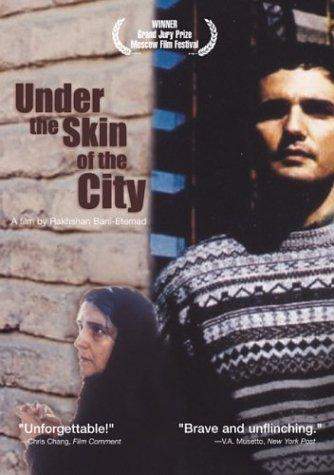
Under the Skin of the City 2001

Directed by

Rakhshan Banietemad
Made by

Farabi Cinema
Under the Skin of the City Plot Summary
Read the complete plot summary and ending explained for Under the Skin of the City (2001). From turning points to emotional moments, uncover what really happened and why it matters.
Tooba, a working-class woman living in Tehran, navigates a life defined by scarcity and resilience alongside her husband, daughter Mahboubeh, and their two sons, Abbas and Ali. Ali, the youngest, is curious about the country’s politics and becomes increasingly involved in campaigns during the sixth House of Representatives elections, despite his father’s warnings. His budding political interest often lands him at the police station, pulled in by the authorities for taking part in demonstrations. Tooba herself bears the strain of poverty and long hours at a textile factory, where unsafe working conditions take a toll on her health, especially her asthma.
Abbas, the eldest son, toils in a clothing shop and dreams of earning enough to someday travel to Japan to support the family financially. He longs for the affection of a local girl who works nearby, hoping that such a connection could bring some happiness into their tough life. The elder daughter returns home pregnant after suffering abuse from her husband, and Tooba urges her to stay with the family, even as her siblings protest and worry about the stability of their home. The family’s plight deepens when Abbas and his father, without Tooba’s presence to intervene, transfer the deed to their house to an “architect” who has been pressing to buy the property.
Meanwhile, their neighbor Maryam, who shares a bond with Tooba at the factory, is preparing to celebrate her eldest daughter Somaya’s wedding. Masoumeh, Maryam’s younger daughter, runs away from home after enduring abuse from her brother for coming home late. Mahboubeh, a close friend to Masoumeh, secretly searches for her in Mellat Park and brings her back home, only to be seized by the police when leaving the park. The news of Mahboubeh’s arrest becomes a turning point for the family, triggering a desperate plan: Tooba decides to pawnbroker the house deed to secure her daughter’s release, but the deed has vanished from their home. She confronts the architect, yet the deed remains elusive.
In a bid to set things straight, Abbas uses the money he has been saving for his Japan journey to bail out his sister. When he returns to the visa office, he finds the building empty and realizes the operation was illegitimate. In a desperate move to make fast money, Abbas begins working for a local drug trafficker who offers him money in exchange for smuggling drugs into the city. He delivers clothes embedded with drugs to Orumieh, but discovers, too late, that Ali has secretly stowed away in the back of the truck out of concern for his safety and ends up being beaten by Abbas for meddling.
With the job left incomplete, Abbas hides in the city and is visited by Tooba, who provides him with the rest of the family’s savings and urges him to flee. The boss catches up with Abbas, but he escapes with his mother’s help. In the final moments, Tooba speaks to documentarians on Election Day, reflecting on her choice to reveal the truth about their family’s struggles and declaring that it is better to capture a video from inside her heart. The film closes on a note that underscores personal sacrifice, social pressure, and the cost of political engagement in a corner of Tehran where the family’s fate is tightly bound to the wider currents of public life.
Under the Skin of the City Timeline
Follow the complete movie timeline of Under the Skin of the City (2001) with every major event in chronological order. Great for understanding complex plots and story progression.
Daily life under hardship in Tehran
Tooba's life centers on scarce resources while she endures long hours at a textile factory. The family's finances depend on her labor, and the house is crowded and tense as they stretch every riyal. The bond with neighbor Maryam hints at support but does not erase the strain they live under.
Ali's entry into politics and police detentions
Ali, the youngest, grows curious about the country's politics and joins in campaigns during the sixth House of Representatives elections. His activities lead to repeated detentions by the police for participating in demonstrations. The political climate exerts pressure on the family and foregrounds the risks of civic engagement.
Abbas dreams of Japan and earns from clothing shop work
Abbas works in a clothing shop to support the family and dreams of saving enough to travel to Japan someday. He longs for the affection of a local girl who works nearby, hoping such a connection would bring happiness amid hardship. His practical ambitions are tempered by economic reality.
Elder daughter returns home pregnant
The elder daughter comes back home pregnant after enduring abuse from her husband. Tooba urges her to stay with the family, even as her children worry about the stability this could bring. The situation deepens the family’s strain and tests their unity.
Deed pressure: Abbas and father sign over house
Without Tooba present to intervene, Abbas and his father transfer the house deed to an architect who has been pressing to buy the property. This move seeds anxiety about losing their home and foreshadows further conflicts with outsiders seeking their assets. The family becomes more vulnerable to manipulation.
Masoumeh runs away; Mahboubeh searches in Mellat Park
Masoumeh leaves home after abuse, and Mahboubeh goes looking for her in Mellat Park. On leaving the park, Mahboubeh is seized by the police, underscoring how danger can intrude on public spaces and ripple through the family. The girls' troubles escalate alongside the patriarch's worries.
Arrest triggers a plan to rescue Mahboubeh
News of Mahboubeh's arrest pushes Tooba toward a desperate plan: pawning the house deed to secure her daughter's release. The deed has vanished from their home, and an encounter with the architect hints that someone may have misled them. The family is forced to improvise under pressure.
Abbas uses savings to bail out his sister; visa office panic
Abbas spends his Japan fund to bail out his sister, hoping to restore balance. When he returns to the visa office, he finds the building empty and learns the operation to obtain visas was illegitimate. The dream of outward mobility clashes with coercive realities of the system.
Abbas turns to drug trafficking for fast money
Desperate, Abbas accepts work with a local drug trafficker who pays for smuggling narcotics into the city. He delivers clothes embedded with drugs to Orumieh, chasing quick cash to salvage the family finances. The plan puts everyone at risk and blurs the line between crime and survival.
Ali hides in the truck and Abbas retaliates
Ali secretly hides in the back of the drug-laden truck out of concern for his safety, and Abbas discovers him and beats him for meddling. The brothers' dangerous choices collide with family bonds and moral boundaries, highlighting the costs of desperation. The trafficker and his men close in as the operation stumbles.
Tooba helps Abbas escape with the family savings
With the route blocked and the boss closing in, Tooba visits Abbas in hiding and gives him the remaining family savings, urging him to flee. The two rely on each other under pressure while the criminal network intensifies its pursuit. The mother’s risk underscores her willingness to sacrifice for her children.
Election Day: Tooba speaks about truth
On Election Day, Tooba speaks to documentarians, reflecting on choosing to reveal their family's truth. She explains that capturing a video from inside her heart is more powerful than any outside recording. The film closes on a note of personal sacrifice and the cost of political engagement in Tehran.
Under the Skin of the City Characters
Explore all characters from Under the Skin of the City (2001). Get detailed profiles with their roles, arcs, and key relationships explained.
Tooba (Baran Kosari)
Tooba is a working-class mother whose health suffers from long factory hours and unsafe conditions. She anchors the family with quiet strength, navigating poverty while safeguarding her children from exploitation and harm. Her choice to speak to documentarians on election day marks a pivotal moment of personal sacrifice for truth.
Abbas (Mohammad Reza Foroutan)
Abbas is the eldest son who dreams of earning enough to send money home and longs for a better life in Japan. Faced with economic desperation, he descends into questionable work with a drug trafficker, testing his loyalty to family and moral boundaries.
Ali (Mohsen Ghazi Moradi)
Ali is the youngest, curious about politics and drawn to campaigns during the election. His inexperience makes him vulnerable to trouble as he gets involved in demonstrations, highlighting the gap between youthful idealism and harsh realities.
Maryam (Homeira Riazi)
Maryam is the neighbor who shares a bond with Tooba at the textile factory and navigates her own family’s pressures, including preparing for her eldest daughter's wedding. She embodies the solidarity and strain of working-class urban life.
Masoumeh (Mehrave Sharifinia)
Masoumeh, Maryam’s younger daughter, endures abuse and eventually runs away, her plight drawing others into a rescue attempt. Her storyline exposes the vulnerabilities within family life and the social dangers lurking in the city.
Somaya (Golab Adine)
Somaya is Maryam’s elder daughter whose wedding unfolds against the backdrop of the family’s struggles. She represents hope and the pressure of social expectations in a marginalized community.
Architect (Ebrahim Sheibani)
The architect is a pressuring figure who seeks to push the family’s house deed into his control, representing predatory property deals and the threat of losing one’s home to unscrupulous schemes.
Drug Boss (Ahmad Yavari Shad)
The drug trafficker is a danger looming over Abbas’s illegal work, illustrating how crime networks exploit economic desperation and pull the family deeper into peril.
Under the Skin of the City Settings
Learn where and when Under the Skin of the City (2001) takes place. Explore the film’s settings, era, and how they shape the narrative.
Time period
Early 2000s
The events occur during Iran’s sixth parliamentary elections, a time of political campaigning and public demonstrations in urban centers. Life is defined by scarcity, long factory hours, and pressure from both family obligations and political currents. The period anchors a sense of urgency as characters navigate survival within a changing sociopolitical landscape.
Location
Tehran, Iran, Mellat Park, Orumiyeh
The story unfolds in Tehran's working-class districts, where cramped apartments and crowded textile factories shape daily life. Mellat Park appears as a backdrop for moments of search and danger amid the city’s public bustle. The plot also brings a segment of the journey to Orumiyeh, reflecting the reach of crime and labor networks beyond the capital.
Under the Skin of the City Themes
Discover the main themes in Under the Skin of the City (2001). Analyze the deeper meanings, emotional layers, and social commentary behind the film.
🏚️
Poverty
Poverty threads through every decision: dangerous factory work, debt, and the theft of the house deed to secure money for basic needs. The family’s attempts to protect each other collide with harsh economic conditions and predatory schemes. Survival requires sacrifice, sometimes at the cost of personal safety and dignity.
🗳️
Politics
The sixth elections frame the world outside as a force pressing on private life. Ali’s political curiosity pulls him toward demonstrations and campaigns, while Tooba’s choice to reveal the truth shows how public events can strain or save a family. The film probes the cost of political engagement in a city where power and poverty are tightly interwoven.
👪
Family resilience
The family remains the central refuge and battleground as love, duty, and fear intersect. Parents provide for children while grappling with safety and honor; siblings tempt fate for a better future. The narrative emphasizes endurance, mutual support, and the difficult decisions made to keep the family intact.

Coming soon on iOS and Android
The Plot Explained Mobile App
From blockbusters to hidden gems — dive into movie stories anytime, anywhere. Save your favorites, discover plots faster, and never miss a twist again.
Sign up to be the first to know when we launch. Your email stays private — always.
Explore the mobile appUnder the Skin of the City Spoiler-Free Summary
Discover the spoiler-free summary of Under the Skin of the City (2001). Get a concise overview without any spoilers.
In the cramped, humming districts of Tehran, Tooba shuffles between the deafening rhythm of a textile factory and the tighter, dimly‑lit space of her modest home. The factory’s relentless clatter mirrors the strain on her lungs and the weight of endless bills, while the city outside swirls with a mix of hope and uncertainty. The film’s visual language is grounded and unflinching, favoring long, observant shots that let the textures of daily life—dusty work‑rooms, crowded streets, cramped kitchens—speak for themselves, creating a world that feels both intimate and universal.
At the heart of Tooba’s household are the conflicting currents of her children. Mahboubeh, her pregnant daughter, returns to the family roof with a weary resolve, caught in a marriage that threatens to unravel her fragile stability. Ali, the youngest son, is drawn to the restless buzz of political rallies, his curiosity about the nation’s future pulling him toward the streets and the watchful eyes of authority. Meanwhile, Abbas, the eldest son, balances a job in a clothing shop with a far‑flung dream of earning enough to travel to Japan, hoping a new horizon might lift the weight of their present hardships. Their intertwined aspirations and anxieties paint a portrait of a family navigating personal survival amid broader social currents.
The film adopts a quietly observant tone, blending social realism with a hint of documentary intimacy. It captures the quiet endurance of a working‑class family while subtly foregrounding the societal pressures that shape their choices. Through muted colors, lingering frames, and the occasional breath of Tehran’s bustling markets, the story invites viewers to feel the tension between duty and desire, resilience and fragility, without ever stepping beyond the immediate world the characters inhabit.
Movies with Similar Twists and Themes
Uncover films that echo the narrative beats, emotional arcs, or dramatic twists of the one you're exploring. These recommendations are handpicked based on story depth, thematic resonance, and spoiler-worthy moments — perfect for fans who crave more of the same intrigue.
Featured on this page

What's After the Movie?
Not sure whether to stay after the credits? Find out!
Check out our other apps:

SAT Sphere
Build confidence for the Digital SAT.

Mori Atlas
Discover wild places worth protecting.

Luntero
Search smarter for a home in Amsterdam.

Plot Explained
Unravel movie endings and hidden clues.

Pokechamp
Dive into Pokémon data and battle logic.

Driving Theory
Get ready for your European theory test.

Movie Dust
Plan your next cinema trip with ease.

Musemap
Find art and culture as you travel.

Selkobase
Compare credentials before committing.

Local Manual
Turn an unfamiliar country into practical next steps.

Lernavi
Compare school systems before your next move.

GymRoam
Find a workout stop wherever your plans take you.
Explore Our Movie Platform
New Movie Releases (2026)
Famous Movie Actors
Top Film Production Studios
Movie Plot Summaries & Endings
Major Movie Awards & Winners
Best Concert Films & Music Documentaries
Movie Collections and Curated Lists
© 2026 What's After the Movie. All rights reserved.
Privacy Policy