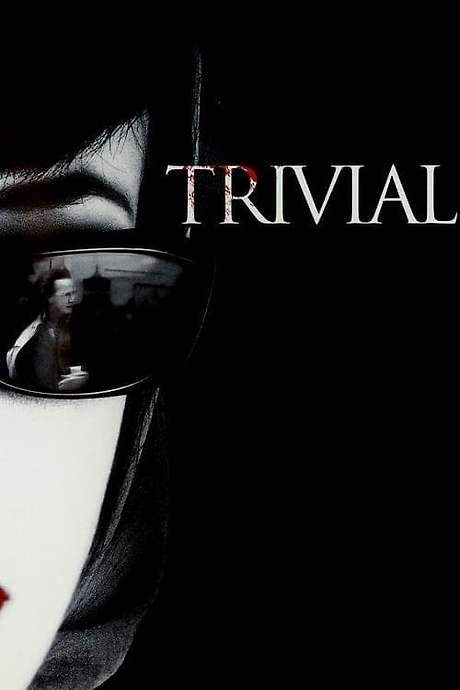
What Is Trivial About?
The premise of Trivial in 271 words, with nothing given away. The full story follows below.
In the fog‑kissed coastal towns of Le Havre and Deauville, a weary police lieutenant is pulled from his own shadows to investigate the sudden disappearance of an elderly hotel manager. Still haunted by the loss of his wife and the lingering echo of a failed suicide attempt, Jacques Renard bears the weight of personal grief while navigating a case that promises little more than a routine missing‑person report. The hotel’s opulent façade, however, conceals a network of family secrets and an atmosphere thick with unspoken histories, turning the assignment into a delicate dance between duty and obsession.
Renard’s investigation is quickly complicated by the arrival of a mysterious woman who vanishes as abruptly as she appears, leaving behind an unsettling sense that something—or someone—else is guiding his steps. As he delves deeper, the whisper of a long‑dead actress begins to surface, her spectral presence offering cryptic assistance that blurs the line between reality and imagination. The ghostly counsel suggests that the past is not merely a backdrop but an active, perhaps malevolent, participant in the present mystery.
The film’s tone balances moody, rain‑slicked streets with the eerie quiet of the hotel’s corridors, where each portrait and forgotten photograph feels like a portal to another time. Renard must confront his own fractured psyche, questioning whether the guidance he receives is a supernatural lifeline or a manifestation of his own desperation. The interplay of lingering melancholy, understated suspense, and the thin veil separating the living from the dead creates a compelling tableau that invites the viewer to wonder what is truly hidden behind closed doors—and whether some mysteries are meant to remain unsolved.
What Happens in Trivial?
The complete story of Trivial, from the first scene to the last, in 874 words (about 4 minutes). Spoilers throughout. Names in the text link to 6 cast member pages.
Spoilers ahead
Lt. Jacques Renard, Christopher Lambert, is a Le Havre police lieutenant who battles a deep-seated depression after the sudden death of his wife, Chloé. Six months of therapy and a stint in a mental hospital after a suicide attempt have left him shaken and solitary, his days haunted by fleeting visions of his lost partner. One day, a mysterious woman, Sophie Marceau, sits in his car and begs him to travel to Deauville to seek out the Hotel Normandy’s manager, Antoine Bérangère, a man of old wealth and old secrets. She insists only Renard can help her, and before long she vanishes from his life as abruptly as she appeared.
Renard heads to Deauville and checks into the opulent Hotel Normandy, where he encounters Bérangère’s son, Nicolas Briançon as Camille Bérangère. He learns that Bérangère disappeared forty-eight hours earlier, leaving behind no identification or money and only a hunting rifle. Camille, wary and protective, warns Renard off, but the detective’s instincts tell him there is more than a missing-person case at hand, especially after he discovers that Room 401—the room Camille denies exists—may hold the key to the mystery.
A key to Room 401 leads Renard into a trove of old photographs, newspaper clippings, and mementos tied to Bérangère’s first wife, Victoria Benutti, a film actress who died in 1970, exactly on the anniversary of Bérangère’s own disappearance. Victoria’s likeness seems to echo the enigmatic woman Renard chased in the hotel’s corridors, blurring the line between memory and present danger. The link between Victoria and the present tragedy intensifies as Renard—driven by a mix of professional duty and personal obsession—presses deeper into the hotel’s secrets. Victoria Benutti, Sophie Marceau, looms large in the case as the past bleeds into the present.
Camille’s frustration grows as Renard’s inquiries rattle through the hotel. Renard’s partner, Simon Abkarian, believes the case could be a straightforward suicide, but Renard senses manipulation and foul play, especially when Mélanie, Antoine’s second wife, acts with unsettling secrecy. Mélanie’s shadowy behavior reinforces Renard’s belief that someone close is hiding a far more sinister motive behind Bérangère’s disappearance.
At the heart of the hotel, the Duchess, played by Judith Magre, hints that the “ghost of Victoria” still haunts the place, a spectral presence that has outlived the woman herself and now haunts Renard’s every move. As Renard confronts the specter of the past, the mysterious woman reappears briefly in the lobby, and he gives chase across stairwells and onto the roof, only to see her slip away again into the night.
The investigation takes a grim turn when Bérangère’s car is found abandoned on the cliffs below Deauville, and a body—presumed to be Bérangère—appears in the city morgue with its skull and face battered beyond recognition, a gunshot from Bérangère’s own rifle having sealed the fate. While the crime scene continues to unravel, Renard notices the same mysterious woman watching from a distance and follows her to a nearby gas station. A chance conversation reveals that a Mercedes had stopped there after Victoria’s accident decades earlier, reinforcing Renard’s suspicion that Bérangère played a larger role in the past.
Renard makes his way to the cemetery where Victoria and her daughter are buried, and there he finds Victoria’s Volvo containing a DVD labeled “Lucie 1982.” A viewing reveals home movies of a teenager—Lucie—being molested, a truth that ties Bérangère to a history of abuse and control. With this revelation, Renard remembers Lucie as Victoria’s daughter and realizes the woman he’s been pursuing is connected to Renard’s own memories of loss. He seeks out the hospital records to uncover Lucie’s address, but the system and its memories are difficult to navigate, and Renard ends up in custody, accused of instability by his colleagues.
Camille visits Renard in jail and pieces together the chain of betrayals that brought them to this point. He recounts how his nanny, Evelyne, Brigitte Damiens, vanished after the crash that claimed Victoria’s life and set in motion a chain of lies designed to protect a predator. Evelyne’s apartment holds a crucial clue: a DVD showing Evelyne herself being molested by Bérangère, a discovery that cements the theory of long-buried abuse and complicity within the family.
Meanwhile, Lucie visits a wounded Bérangère on Victoria’s yacht, a man who has manipulated and haunted Lucie for years. Obsessed with the memory of Victoria, Bérangère fakes his own death so he and Lucie can flee together, and Lucie, scarred by years of abuse, tries but cannot bring herself to kill him. When Pierre bails Renard out of jail, the detective learns from Mélanie that Bérangère may be hiding on the family yacht, Victoria’s legacy turned into a final hideout.
On the yacht, Renard closes in as Bérangère gathers money and prepares to flee. Lucie steps forward with a weapon and ties up the surprised detective. As the vessel heads to sea, Bérangère tries to end Renard’s pursuit for good, but Lucie’s decisive move—throwing the mast aside—throws Bérangère into the ocean, where he meets his end. Freed from custody, Renard and Lucie return to Deauville, and some time later, Lucie seeks out Renard on the cliffs and they share a quiet, hopeful kiss, closing a case rooted in memory, trauma, and the tenuous path toward healing.
Trivial Timeline: Every Key Event in Order
15 key events in the order they happen, from “Renard's depression and hospitalization” to “Climax on the yacht and final kiss”. 15 events name a place, across 14 locations.
- 1
Renard's depression and hospitalization
Lt. Jacques Renard, a Le Havre police lieutenant, is still haunted by the death of his wife, Chloé. He has spent six months in a mental hospital after a suicide attempt, and the memories of his loss shadow his every move. The weight of grief leaves him withdrawn and emotionally exhausted as he drags himself through each day.
When:Six months after Chloé's death Where:Le Havre, France
- 2
Mysterious visitor in his car
A mysterious woman waits for Renard in his car and pleads with him to help. She insists that he visit the Hotel Normandy's manager in Deauville, mentioning Room 401 by name. Before he can react, she vanishes, leaving him unsettled and curious about a case he has yet to begin.
When:That day Where:Renard's car
- 3
Journey to Deauville and the disappearance
Renard travels to Deauville to search for answers. There he meets Camille, the manager Antoine Bérangère's son, who informs him that Bérangère disappeared about 48 hours earlier under suspicious circumstances. With no identification and no clue, Renard learns there is no Room 401 at the Hotel Normandy.
When:That same day Where:Hotel Normandy, Deauville
- 4
Room 401 key and Victoria's memory
Renard searches Bérangère's room and finds a key to Room 401. Inside, the room is decorated with old photographs and mementos of Bérangère's deceased first wife, Victoria Benutti, a film actress who died in 1970. The eerie display hints at a long, hidden connection between past infidelity, fame, and present disappearances.
When:Shortly after arrival Where:Room 401, Hotel Normandy
- 5
Suspicion of foul play
Camille resents Renard's intrusion, while Pierre remains pragmatic and leans toward suicide as a simple explanation. Renard, however, senses something far darker at work and grows suspicious of Mélanie, Bérangère's second wife, whose evasive behavior fuels his concerns.
When:Following the room discovery Where:Hotel Normandy
- 6
The hotel ghost
A Duchess guest at the hotel tells Renard that Victoria's ghost still haunts the premises. The tale injects a supernatural tint into the investigation and deepens the sense that the hotel holds long-buried secrets. Renard hesitates but proceeds, compelled by the clues piling up around him.
When:Soon after Where:Hotel Normandy
- 7
Chase on the roof
Renard spots the mysterious woman again and pursues her through the hotel until they reach the roof. She eludes him once more, leaving him with an even more puzzling tie between the woman and the hotel’s hidden past. The chase heightens the tension and pushes him deeper into the mystery.
When:Shortly after Where:Hotel Normandy roof
- 8
Cliffs, car, and a presumed corpse
Police discover Berangère's car abandoned on the Deauville cliffs. A body turns up in the morgue, the skull and face obliterated by a gunshot from Berangère's own rifle, suggesting a staged death. Renard suspects foul play rather than a simple suicide and starts chasing the true culprits.
When:Days later Where:Cliffs of Deauville; Morgue
- 9
Gas station clue about the Mercedes
During the investigation, Renard learns at a gas station that, after Victoria's car crash in 1970, a man in a Mercedes stopped to call for an ambulance. This clue points to a deliberate cover-up tied to Berangère and Victoria's past, complicating the case further.
When:Around the same period Where:Deauville gas station
- 10
Cemetery discovery and Lucie clue
Renard visits the cemetery where Victoria and Chloé are buried and discovers the mysterious woman's Volvo with a DVD labeled 'Lucie 1982' inside. The find hints at a link between Lucie, Victoria, and the hotel’s dark history, pushing Renard to connect the dots.
When:Later Where:Deauville Cemetery
Show the other 5 events of Trivial Hide the last 5 events
- 11
The Lucie revelation on the DVD
Renard watches the DVD and confronts home movies of a teenager—Lucie—being molested by Berangère. The footage makes it clear that the mysterious woman is Lucie, Victoria's daughter, and begins to unlock Renard's suppressed memories about Lucie.
When:Shortly after Where:Cemetery; Mental hospital
- 12
Memory returns and the hospital search
Back at the mental hospital, the head nurse confirms that Lucie was treated there, and Renard finally remembers her. He steals the hospital computer to search for Lucie's address, with Pierre hot on his heels as the pursuit escalates.
When:Later Where:Mental hospital
- 13
Evelyne and the crash revelation
Camille visits Renard in jail and explains the 1970 crash: Victoria, her lover, and Camille were in the car when Berangère forced them off the road. He also reveals Evelyne, the nanny, disappeared after the crash, implying a deeper conspiracy surrounding the family’s past.
When:Following the interrogation Where:Jail; flashbacks
- 14
Evelyne’s apartment and the abuse DVD
Camille locates Evelyne's apartment and uncovers a DVD showing Berangère molesting Evelyne. The discovery corroborates years of abuse and the lengths to which Berangère went to maintain control, adding motive to the crimes tied to Lucie and Victoria.
When:Shortly after Where:Evelyne's apartment
- 15
Climax on the yacht and final kiss
Renard tracks Berangère to the family yacht, where Lucie steps forward with a gun and ties up the startled lieutenant as Berangère plans to flee with money. In the ensuing struggle, Lucie lets go of the mast, knocking Berangère into the sea where he drowns. They return to Deauville, and sometime later Lucie meets Renard on the cliffs to share a kiss, signaling a fragile new start.
When:Climax and aftermath Where:Family yacht, Deauville; Deauville cliffs
Who Are the Main Characters in Trivial?
9 characters, among them Jacques Renard (Christopher Lambert), Victoria Benutti (Sophie Marceau) and Camille Bérangère (Nicolas Briançon): who each one is and the part they play in the story. Every profile links to the actor’s page.
-

Jacques Renard (Christopher Lambert)
Played by Christopher Lambert
A Le Havre police lieutenant haunted by his wife's death, struggling with depression while pursuing a case that may defy conventional explanation. He is relentless, stubborn, and driven by a sense of justice that borders on self-destructive obsession. His personal grief colors every deduction and decision, making him both tenacious and unstable at times.
- 🧭 Detective
- 🌀 Haunted
- 🔎 Persistent
-

Victoria Benutti (Sophie Marceau)
Played by Sophie Marceau
A celebrated film actress whose tragic, decades-old death casts a long shadow over the present mystery. She appears as a mysterious figure tied to the investigation, embodying the past that refuses to stay buried. Her memory personifies the link between Renard's own loss and the hotel’s haunted history.
- 🪬 Ghost
- 🕊️ Tragic figure
- 💫 Dreamlike
- CB
Camille Bérangère (Nicolas Briançon)
Played by Nicolas Briançon
Antoine Bérangère's son, skeptical of Renard's intrusion yet drawn into the family history. He acts as a bridge between the past and present, helping to uncover motivations behind the disappearances and the hotel’s secrets.
- 🧩 Witness
- 🗝️ Family secret
- 🗺️ Motive
- MB
Mélanie Bérangère (Marie-Christine Barrault)
Played by Marie-Christine Barrault
Antoine's second wife who navigates shifting loyalties amid a web of hidden agendas. Her involvement adds layers to the investigation as revelations about Victoria and the family history come to light.
- 💼 Motive
- 🧪 Secret
- ⚖️ Revelation
- AB
Antoine Bérangère (Robert Hossein)
Played by Robert Hossein
A powerful, enigmatic figure whose disappearance and presumed murder catalyze the unraveling of long-held family secrets. His past actions and influence shape the course of Renard's investigation.
- 🗡️ Villain
- 🗝️ Secret
- 🧱 Power
-

Pierre (Simon Abkarian)
Played by Simon Abkarian
Renard's pragmatic partner who remains skeptical of memory-driven theories while supporting the investigation. He provides a counterbalance to Renard's emotional drive and helps keep the pursuit grounded.
- 🤝 Ally
- 🗺️ Partner
- 🛡️ Skeptic
- D(
Duchesse (Judith Magre)
Played by Judith Magre
A dignified, enigmatic presence who embodies the hotel's storied past. She hints at lingering memories and the spectral atmosphere that surrounds the case.
- 👑 Archetype
- 🧭 History
- 🗺️ Atmosphere
- E(
Evelyne (Brigitte Damiens)
Played by Brigitte Damiens
The nanny who vanished after a life-altering crash, carrying a hidden history of abuse and loyalty. Her role underscores the darker undercurrents of the family saga.
- 👶 Caretaker
- 🕯️ Secret keeper
- 🧭 Clue
- M(
Momo (Ahcène Nini)
Played by Ahcène Nini
A supporting figure whose presence hints at the wider network of people affected by the era's secrets. He contributes small but meaningful pieces to the puzzle Renard tries to assemble.
- 🧍♂️ Minor role
- 🧩 Clue
- 🗄️ Secret
Where and When Is Trivial Set?
Trivial is set in Le Havre, Deauville and Hotel Normandy (2000s). Here is why the time and place matter to the story.
When
2000s
The story unfolds in contemporary times, with key references to decades past (the 1970 car crash and 1982 home videos) shaping the mystery. The main investigation occurs in the early 2000s, while long-buried family secrets surface through memories and relics from earlier years.
Where
Le Havre, Deauville, Hotel Normandy
The action unfolds along the Normandy coast, anchored by Le Havre and the resort town of Deauville. The Hotel Normandy serves as the central locus for secrets, disappearances, and memories that haunt the present. Cliffside roads, a cemetery, and a seaside yacht provide a moody, maritime backdrop for a police investigation that blends past and present.
- 🏖️ Coastal towns
- 🏨 Luxury hotel
- 🗺️ Investigation setting
What Are the Themes of Trivial?
3 ideas the story keeps returning to, among them Memory, Obsession and Power & Abuse.
-
01
Memory
Memory drives the investigation as Renard reconstructs a tangled past. Clues emerge from old photographs, hospital records, and home videos that reconnect him with his late wife and with the figure of Victoria. The past dictates present danger and motive, blurring the line between grief and truth. The film uses memory to give the present a ghostly texture.
-
02
Obsession
Renard's fixation with the mystery spirals into an all-consuming pursuit that tests his judgment and limits. The hunt for answers becomes a distraction from his own trauma, risking personal and professional collapse. The mysterious woman and a trail of secrets push him toward dangerous edges. Obsession drives the narrative forward as each clue reshapes his understanding of guilt and justice.
-
03
Power & Abuse
The plot exposes a pattern of predatory power, including abuse and manipulation within a fractured family. Bérangère's control over Lucie and the uncovering of past molestations reveal how violence is hidden behind the façade of respectability. As secrets unravel, the story confronts the lasting harm inflicted on victims and the corrupting influence of wealth and status. The resolution centers on breaking these cycles of abuse and accountability.
What Kind of Film Is Trivial?
Dark in tone, with steady pacing and a complex story, going by the plot summary.
- Tone
- Dark
- Pacing
- Steady
- Story
- Complex
- Intensity
- High
- Ending
- Bittersweet
A steady-paced, dark psychological thriller that follows a grieving detective into a web of long-buried family trauma, creating a somber and suspenseful atmosphere blurring the lines between reality and haunting memories.
- melancholic
- suspenseful
- haunting
- somber
- mysterious
- atmospheric
- grief and loss
- investigation
- supernatural aid
- childhood sexual abuse
Content notes: childhood sexual abuse, suicide attempt, child death.
Quiz
How well do you remember Trivial? Test yourself on the story.