
Torn Curtain 1966

Directed by
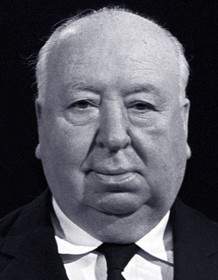
Alfred Hitchcock
Made by

Alfred J. Hitchcock Productions
Torn Curtain Plot Summary
Read the complete plot summary and ending explained for Torn Curtain (1966). From turning points to emotional moments, uncover what really happened and why it matters.
In 1965, Michael Armstrong, a US physicist and rocket scientist, travels to a conference in Copenhagen with his assistant and fiancée, Sarah Sherman, Julie Andrews. Armstrong receives a radiogram to pick up a book in Copenhagen, a note that reads “Contact π in case of emergency.” He tells Sherman he is bound for Stockholm, but she soon discovers he is actually headed to East Berlin and follows him. On arrival, they are greeted by representatives of the East German government, and Sherman realizes that Armstrong has defected. The prospect is chilling: given the tense climate of the Cold War, if she stays with him she may never see her home or family again.
Armstrong’s next stop is a visit to a contact known only as the “farmer,” a meeting that uncovers a startling plan: Armstrong’s defection is a calculated ruse designed to win the trust of the East German scientific establishment and to learn how much their chief scientist, Gustav Lindt, and by extension the Soviet Union, truly know about anti-missile systems. The ruse is part of a larger scheme to test the Western interest in the gamma‑five program, and Armstrong has secretly prepared a way back through an escape network called π. Yet the path to freedom is anything but straightforward. Armstong’s chaperone, Hermann Gromek, an East German security officer, tracks Armstrong closely. What begins as a careful mission escalates into a brutal struggle when Gromek realizes the truth of the π network and tries to call the police; Armstrong fights back, killing Gromek and the farmer’s wife in the tense confrontation. The fatal outcome leaves Gromek’s motorcycle and evidence buried on the farmland, but a taxi driver who had brought Armstrong to the farm witnesses the aftermath and reports the missing security officer, sending ripples through both sides of the border.
The next day, Armstrong and Sherman travel to Karl Marx University in Leipzig for an interview with the physics faculty. The proceedings are abruptly interrupted when security officials press Armstrong about Gromek’s disappearance, and the faculty interrogate Sherman about her knowledge of the American “Gamma Five” anti-missile program. Sherman refuses to cooperate, and Armstrong privately confides his true motives, urging her to go along with the ruse despite the personal risk. The tension thickens as Lindt’s skepticism over Armstrong’s competence disintegrates under the strain of official scrutiny, until Armstrong goads Lindt into revealing his anti-missile equations in a moment of pique and pride.
The revelation forces a reckoning: Lindt realizes that he has compromised sensitive information without gaining anything in return. Armstrong and Sherman seize the moment to escape with the help of the university clinic physician, Dr. Koska, Gisela Fischer. Their flight now moves from the university to the streets of East Berlin, with the Stasi hot on their trail. They ride a decoy π‑bus and are shepherded through a dangerous sequence involving roadblocks and a convoy of Soviet deserters, all while trying to keep the escape plan intact and avoid capture.
A Countess, Countess Kuchinska, the exiled Polish aristocrat who has settled into East Berlin, enters the chase and becomes a key ally who leads them toward a potential path to a US visa by visiting the Friedrichstraße post office. Her intervention is pivotal, and she guides Armstrong and Sherman to a new route as guards close in. The pursuit shifts toward the arts world when two men approach with an offer to smuggle them out via the ballet—tickets for the troupe that night, concealed inside the backstage bustle.
At the ballet, the couple is nearly exposed when the lead dancer, a sharp-eyed performer, reports them to the authorities. The tension peaks as Armstrong and Sherman manage to slip away by shouting “fire” and hiding in two separate hampers of costumes. They are ferried across the Baltic Sea to Sweden aboard an East German freighter, aided by the ballet troupe’s disguise. The lead ballerina, Tamara Toumanova herself, observes the aide’s actions and inadvertently triggers a close inspection. Guards begin to close in, and the situation becomes a perilous race against time.
In a calculated move to stay one step ahead, the aides create a misdirection: the ballerina spots the wrong hampers being communicated with, allowing Armstrong and Sherman to slip free and swim to shore when chaos erupts on the pier. The disguises hold long enough for the pair to reach Sweden, where the next page of their uncertain odyssey awaits, and the couple steps into a new chapter beyond the reach of East Berlin’s watchful eyes.
The journey is marked by tension, deception, and careful collaboration, with a cast of characters who each contribute to the high-stakes game of Cold War espionage. From the initial radiogram and the notion of defecting as a cover, to the perilous escape through universities, post offices, and a ballet troupe, the story traces how love and loyalty intersect with political calculation and scientific ambition. The final act leaves the door open to the next phase of Armstrong and Sherman’s lives, as they navigate the fragile boundary between allegiance to country and commitment to each other.
Torn Curtain Timeline
Follow the complete movie timeline of Torn Curtain (1966) with every major event in chronological order. Great for understanding complex plots and story progression.
Radiogram prompts Copenhagen departure
Armstrong travels to Copenhagen for a conference and receives a radiogram directing him to pick up a book. The message says contact pi in case of emergency. He tells Sarah Sherman that he is headed for Stockholm, but secretly travels toward East Berlin to defect, and Sherman decides to follow.
Armstrong arrives in East Berlin; defection revealed
Armstrong lands in East Berlin and is welcomed by representatives of the East German government. Sherman realizes that he has defected and understands that she may never return home if she stays. She faces a difficult choice about continuing the mission or returning to the West.
The farmer contact explains the ruse
Armstrong visits a contact known as the farmer to gain the confidence of the East German scientific establishment. The farmer explains that the defection is a ruse designed to learn how much Gustav Lindt and the Soviet Union know about anti missile systems. Armstrong uses the ruse to gather intelligence while maintaining the appearance of loyalty.
Confrontation with the chaperone
Gromek follows Armstrong to the farm and realizes that Armstrong is a double agent in the pi plan. A tortuous struggle ends with Gromek killed by Armstrong and the farmer's wife. The bodies are buried on the farm while the police are alerted.
Taxi driver reports Gromek's fate
The taxi driver who drove Armstrong to the farm notices Gromek and the ensuing disappearance. He sees Gromek reported missing in the newspaper and contacts the police.
Leipzig university interrogation
Armstrong visits Karl Marx University in Leipzig for an interview with the physics faculty. The scientists question him about the missing Gromek. Sherman is pressured to reveal details about the Gamma Five program, but she refuses to cooperate. Armstrong privately shares his true motives with Sherman and asks her to go along with the ruse.
Lindt's confession and escape
Armstrong goads Professor Lindt into revealing his anti missile equations. Lindt realizes that he has given up secrets while learning nothing in return. Armstrong and Sherman escape from the university with the help of Dr Koska.
Pursuit and decoy bus chaos
The couple head back toward East Berlin and are pursued by the Stasi. A decoy bus run by the pi network triggers a chaotic chase with roadblocks and deserters. The authorities close in as the fugitives try to stay ahead.
Countess guides to the post office
They encounter the exiled Polish countess Kuczynska who guides them to the Friedrichstrasse post office in hopes of a US visa. Her presence helps them stay ahead of the guards, but danger remains as the pursuit closes in.
Ballet tickets and smuggling plan
Two men, including the farmer, arrange ballet tickets to provide cover for smuggling the couple to Sweden that evening inside the ballet troupe luggage. Armstrong and Sherman accept the plan and prepare to board.
Ballet performance and Hampers deception
During the ballet, the lead ballerina spots the couple and reports them to the guards. Armstrong and Sherman hide in two costume hampers and are ferried toward the Baltic Sea. The guards shoot the loaded hampers, and the aide had spoken to the wrong hampers on purpose, allowing the true fugitives to swim ashore in Sweden.
Escape to Sweden
Armstrong and Sherman reach Sweden safely after swimming ashore, completing their escape from East Berlin. They have escaped the Stasi and begin a new chapter together.
Torn Curtain Characters
Explore all characters from Torn Curtain (1966). Get detailed profiles with their roles, arcs, and key relationships explained.
Michael Armstrong (Paul Newman)
A US physicist and rocket scientist who uses a staged defection to gain access to East German secrets while orchestrating his escape. He is cool under pressure, highly strategic, and willing to bend reality to achieve his goals. His balance between personal loyalty and Cold War duty drives much of the tension.
Sarah Sherman (Julie Andrews)
Armstrong’s assistant and fiancée who follows him into danger. She remains resolute under pressure, initially resisting manipulation but ultimately playing a crucial role in their escape. Her determination and caution test the limits of trust in a war-weary world.
Hermann Gromek (Wolfgang Kieling)
East German security officer who suspects Armstrong's defection is a ruse. He relentlessly pursues the couple, becoming a central obstacle in their path. His pursuit intensifies the stakes until his confrontation with Armstrong ends in tragedy.
Gustav Lindt (Ludwig Donath)
Chief scientist whose anti-missile equations become the focal point of Armstrong’s mission. He underestimates Armstrong, revealing secrets only under stress and pride. His moment of pique exposes the human vulnerabilities behind scientific breakthroughs.
Mr. Jacobi (David Opatoshu)
Leader of the π network, coordinating the escape plan and guiding Armstrong and Sherman through a web of signals and routes. He embodies the calculated, long-game approach to defection and survival.
Countess Kuchinska (Lila Kedrova)
Exiled Polish noblewoman who helps guide Armstrong and Sherman toward a US visa route. Her presence adds a layer of aristocratic tension and humanitarian risk in a fractured Europe.
Prof. Winkelmann (Robert Boon)
University professor who becomes a focal point in the interrogation scene, representing the academic world intersecting with state security. He embodies learned prestige pressed into service by the era’s paranoia.
Dr. Koska (Gisela Fischer)
Clinic physician who provides a rare, humane intervention and helps the couple escape. Her actions reveal the possibility of kindness within a surveillance-heavy system.
Farmer (Mort Mills)
A contact within the π network whose farm serves as a cover and a staging ground for the defection plot. His quiet cooperation is pivotal to the network’s functioning.
Torn Curtain Settings
Learn where and when Torn Curtain (1966) takes place. Explore the film’s settings, era, and how they shape the narrative.
Time period
1965
Set in the mid-1960s, the film mirrors the peak of Cold War espionage and the race for military technologies. Defection plots, double agents, and clandestine operations dominate the landscape, underscoring how science and ideology intersect with global politics. The era's paranoia amplifies every decision the characters make, from trust to betrayal.
Location
Copenhagen, East Berlin, Leipzig, Stockholm, Sweden
The story moves through Copenhagen as the initial drop point, then deep into East Berlin where suspicion runs high and the Stasi keep watch. Leipzig hosts the physics faculty where Armstrong's defection caper unfolds and scientific interrogations begin. The journey continues toward the Baltic crossing to Sweden, highlighting a perilous escape route under political tension.
Torn Curtain Themes
Discover the main themes in Torn Curtain (1966). Analyze the deeper meanings, emotional layers, and social commentary behind the film.
🕵️
Espionage
The narrative centers on intelligence work, double identities, and the constant risk of discovery. Armstrong’s ruse to gather anti-missile knowledge drives the plot and pits him against security forces. The pursuit by the East German security apparatus tightens the suspense and questions who truly controls information.
🎭
Deception
Deception is the engine of every major move, from Armstrong’s staged defection to the fake bus decoy that hides their escape. Trust between Armstrong and Sherman is continually tested as motives blur and outcomes hinge on misdirection. The film renders truth as a moving target, always contingent on the next gambit.
🧪
Science/Defense
At its core is the exchange of missile-defense knowledge, revealing how scientific breakthroughs can become geopolitical leverage. The scientists’ egos and institutional pressures influence what is shared and what remains secret. The interplay shows how academia can become a battlefield in a larger power struggle.

Coming soon on iOS and Android
The Plot Explained Mobile App
From blockbusters to hidden gems — dive into movie stories anytime, anywhere. Save your favorites, discover plots faster, and never miss a twist again.
Sign up to be the first to know when we launch. Your email stays private — always.
Explore the mobile appTorn Curtain Spoiler-Free Summary
Discover the spoiler-free summary of Torn Curtain (1966). Get a concise overview without any spoilers.
In the fraught landscape of the mid‑1960s, a continent is split by ideology, and the iron curtain that divides Berlin hums with whispers of secrecy. The Cold War’s shadow looms over every street, turning ordinary encounters into potential betrayals and every crossing into a gamble. Within this tense tableau, scientific ambition and geopolitical maneuvering collide, creating a world where loyalties are tested as sharply as the barbed wire that marks the border.
Michael Armstrong, a brilliant American physicist with a reputation forged in rocket laboratories, is summoned for a mission that blurs the line between duty and deception. Officially, he appears to abandon his country, offering the East German authorities a tantalizing glimpse of Western expertise. Beneath that façade, however, lies a covert objective: to acquire a coveted resin‑solution formula that could shift the balance of power. His intellect and calm under pressure make him the ideal operative for such a delicate ruse.
Alongside him is his devoted fiancée, Sarah Sherman, an assistant whose love is as steadfast as it is innocent of the true stakes at play. When she discovers his true destination and chooses to follow him, the carefully crafted operation spirals into a frantic, high‑tension pursuit. Their partnership, once rooted in personal affection, is suddenly thrust into the unforgiving arena of espionage, where every misstep could seal their fates.
The film unfolds with a relentless, breath‑holding rhythm, marrying the cold, methodical world of scientific intrigue with the raw, human urgency of love caught in the crosshairs of history. Its tone is taut and atmospheric, inviting the audience to feel the pressure of a divided city while wondering how far two people will go to protect each other when the very ground beneath them is unstable.
Movies with Similar Twists and Themes
Uncover films that echo the narrative beats, emotional arcs, or dramatic twists of the one you're exploring. These recommendations are handpicked based on story depth, thematic resonance, and spoiler-worthy moments — perfect for fans who crave more of the same intrigue.






Featured on this page

What's After the Movie?
Not sure whether to stay after the credits? Find out!
Check out our other apps:

SAT Sphere
Build confidence for the Digital SAT.

Mori Atlas
Discover wild places worth protecting.

Luntero
Search smarter for a home in Amsterdam.

Plot Explained
Unravel movie endings and hidden clues.

Pokechamp
Dive into Pokémon data and battle logic.

Driving Theory
Get ready for your European theory test.

Movie Dust
Plan your next cinema trip with ease.

Musemap
Find art and culture as you travel.

Selkobase
Compare credentials before committing.

Local Manual
Turn an unfamiliar country into practical next steps.

Lernavi
Compare school systems before your next move.

GymRoam
Find a workout stop wherever your plans take you.
Explore Our Movie Platform
New Movie Releases (2026)
Famous Movie Actors
Top Film Production Studios
Movie Plot Summaries & Endings
Major Movie Awards & Winners
Best Concert Films & Music Documentaries
Movie Collections and Curated Lists
© 2026 What's After the Movie. All rights reserved.
Privacy Policy