What Is To Be or Not to Be About?
The premise of To Be or Not to Be in 287 words, with nothing given away. The full story follows below.
In occupied Warsaw, a once‑lively theater becomes a fragile refuge against the backdrop of World War II. The Bronski troupe scrambles to keep the curtain up while the city trembles under the weight of conflict, blending the absurdity of stagecraft with the stark realities of war. Their world is a tightrope of humor and fear, where every rehearsal is a quiet act of defiance and every audience, however small, a reminder that art can survive even in darkness.
At the heart of the company is Frederick Bronski, a demanding actor‑director whose meticulous control both steadies and strains the ensemble. His marriage to the luminous leading lady Anna Bronski adds another layer of tension; Anna’s magnetic performances draw adoring crowds, amplifying Frederick’s protective instincts and underscoring a delicate balance of power both on and off the stage. Their relationship crackles with rivalry and affection, a private drama that mirrors the larger spectacle unfolding around them.
The war’s relentless pressure nudges Andrzej Sobinski, a charming young officer, into Anna’s orbit, sparking a flirtatious entanglement that injects fresh comedic chaos into the troupe’s routine. Their unlikely connection offers a fleeting escape from the surrounding turmoil, while also highlighting the thin line the characters walk between personal desire and the collective survival of their art.
Amidst the uncertainty, Frederick conceives a daring, elaborate scheme that leans on his theatrical expertise. By turning rehearsals into covert rehearsals for a secret mission, he shows that the stage can be more than a place for applause—it can become a conduit for bravery. The film promises a blend of wit, tension, and heartfelt performance, inviting the audience to wonder how far a group of actors will go when the stakes extend far beyond the footlights.
What Happens in To Be or Not to Be?
The complete story of To Be or Not to Be, from the first scene to the last, in 712 words (about 3 minutes). Spoilers throughout. Names in the text link to 2 cast member pages.
Spoilers ahead
In wartime Warsaw, the Bronski Theatre is a large ensemble company led by Frederick Bronski, whose meticulous control often grates on the troupe, especially his wife Anna Bronski, whose performances consistently win the audience’s praise. Their domestic tension overlaps with the company’s ambitions, as Anna’s artistry and popularity heighten Frederick’s sense of ownership over the troupe.
Anna’s personal life becomes entangled when she begins a flirtation with bomber pilot Andre Sobinski, whom she invites to her dressing room during Frederick’s staging of Hamlet. The moment is buoyant and risky, a brief escape from the mounting pressure, but it is soon overshadowed by the looming threat of war. The mood shifts as the Nazi invasion of Poland disrupts their world, forcing Sobinski to return to his squadron and the troupe to face an uncertain future.
As the Bronski Theater fights to stay open under Gestapo censorship, Sobinski and the Royal Air Force’s Polish squadron find common cause with Dr. Siletski, a Polish radio broadcaster who claims he is returning to Poland with messages for family members and for the Polish Underground. The arrangement grows tense when Sobinski notices that Siletski cannot recognize Anna’s name, even though he had claimed to live in Warsaw. This discrepancy spurs deepening suspicion, and Sobinski seeks help from British intelligence, who quickly conclude that Siletski is a Nazi sympathizer plotting to deliver the names to the Gestapo.
A daring plan unfolds: Sobinski parachutes into Warsaw and reunites with Anna and Frederick, who have taken refuge with Anna’s dresser Sasha after their home becomes Gestapo Headquarters. In the city, Siletski takes Anna to his room at the Europa Hotel—now repurposed as German Military Headquarters—under the pretense of discussing Sobinski’s supposed personal message. He invites her to dinner, convinced there is no military value in the exchange, while back at home Anna explains the situation to Frederick and Sobinski. They soon realize that Siletski and Gestapo leader Colonel Erhardt have never actually met, and they hatch a plan in which Frederick will pose as Erhardt to retrieve the list and protect Anna.
The ruse deepens as the night intensifies: actors disguised as Gestapo interrupt Anna’s date with Siletski and drag him away to “headquarters,” the Bronski Theater. Frederick, adopting Siletski’s guise, manages to recover the list but cannot help reacting to news of Anna’s liaisons, which momentarily exposes his masquerade. Siletski attempts a frantic escape through the theater, but Sobinski shoots him, removing any chance he posed of revealing the larger scheme. Frederick must now double down on the deception, posing again as Siletski to retrieve a copy of the list and to secure Anna’s safety, all while the ever-present danger of Gestapo scrutiny lingers.
The theater becomes a battleground as Nazi soldiers assault the troupe for harboring Sasha, who is targeted for being homosexual. The performance space itself is compromised and several actors rally to protect him, but the theater is forced to close. With Anna taken to Gestapo headquarters under Erhardt’s orders, Frederick disguises himself as Siletski once more to retrieve her, unaware that the Germans have already found Siletski’s body. In a tense moment, Ehrhardt leaves Frederick alone in a room with the dead Siletski, and Frederick improvises a final gambit: he removes Siletski’s beard and applies a fresh disguise beard, goading Ehrhardt into pulling it off and convincing him that Frederick is the real Siletski—enough to secure Sasha’s release.
Yet the ruse cannot last. As the plan nears its breaking point, Sobinski and the Bronski troupe orchestrate one last dramatic-smokescreen: a special performance for the visiting Hitler designed to distract the occupiers and provide a path to safety for the Jewish refugees sheltered by Frederick. The performance stumbles at times, but it achieves its purpose, and the troupe escapes the clutches of Occupied Poland. They reach the airport, where German security briefly closes in, but Sobinski’s piloting carries them to the skies and on to England.
In gratitude, the British government grants the Bronskis permission to perform in London, even as the finale of their journey hints at a bitter irony: on the stage in London, a new, young soldier rises and leaves Frederick’s renowned To be or not to be speech unfinished, signaling that the cost of war has touched even their most iconic moments.
To Be or Not to Be Timeline: Every Key Event in Order
12 key events in the order they happen, from “Tension at the Bronski Theatre” to “Escape to London and the Final Cut”. 12 events name a place, across 10 locations.
- 1
Tension at the Bronski Theatre
Frederick Bronski runs a large ensemble show in Warsaw, but his nitpicking creates friction with the cast. The rest of the company grows weary of his demands, especially Anna who receives much of the audience praise. The backstage atmosphere is tense as power dynamics unfold behind the scenes.
When:1939 Where:Bronski Theater, Warsaw
- 2
Anna's Flirtation with Sobinski
Anna defies Frederick's control by inviting bomber pilot Sobinski to her dressing room during the Hamlet performance. The flirtation sparks jealousy and complicates the couple's already strained relationship. The moment foreshadows the dangers looming over their lives.
When:1939 Where:Bronski Theater dressing room
- 3
Nazi Invasion Interrupts
Germany invades Poland, forcing the production to confront censorship and danger. Sobinski leaves to rejoin his RAF squadron, while the troupe tries to keep the show alive under new constraints. The strain between Frederick and Anna deepens as the outside war presses in.
When:1939-1940 Where:Warsaw, Poland
- 4
Siletski’s Arrival and Suspicion
Sobinski and the Polish squadron meet Dr. Siletski, a radio broadcaster who claims to return to Poland with messages for families and the Underground. Siletski's behavior and memory gaps raise questions, and Sobinski notes he might be more dangerous than he appears. The possibility of being used as a spy hangs over the troupe.
When:1939-1940 Where:Bronski Theater / Polish Radio
- 5
British Intelligence Involvement
Sobinski confers with British intelligence, who deduce that Siletski is a Nazi sympathizer aiming to hand over the Underground network's names. The discovery confirms the danger of Siletski's messages and the need for caution. A plan forms to intercept him and protect the resistance.
When:1939-1940 Where:British intelligence offices, London
- 6
Sobinski Returns to Warsaw
Sobinski parachutes into Warsaw to rejoin Anna and Frederick, who have moved in with Anna's dresser Sasha after their home becomes Gestapo Headquarters. The trio prepares for a dangerous confrontation with the Gestapo while maintaining appearances. Tension remains high as they shelter under constant risk.
When:1939-1940 Where:Warsaw, Poland
- 7
Siletski’s Dinner Invite
Siletski brings Anna to his hotel room in the Europa Hotel to question her about Sobinski's message and then invites her to dinner. The encounter blends danger with personal intrigue, further entangling Anna with Siletski. The stakes rise as Frederick and Sobinski weigh how to act.
When:1939-1940 Where:Europa Hotel, Warsaw
- 8
Deception Plan Formed
Frederick and Sobinski hatch a plan for Frederick to pose as Erhardt, the Gestapo officer, to retrieve a copy of the list. The scheme relies on careful disguises and timing to outmaneuver the German security and protect Anna. The decision marks a turning point from covert tension to active deception.
When:1939-1940 Where:Bronski Theater
- 9
Disguise Breaks Cover
Actors disguised as Gestapo interrupt Anna's date with Siletski and haul him off to 'headquarters' at the Bronski Theater. Frederick manages to grab the list but accidentally blows his cover by reacting to news of Anna's affair with Sobinski. The ruse risks collapsing right as the clock runs out.
When:1939-1940 Where:Bronski Theater
- 10
Siletski's Death and Beard Trick
Siletski is killed, and Frederick must assume the role of Siletski to retrieve a further copy of the list and keep Anna safe. He shaves Siletski's beard, applies a fake, and goads Ehrhardt to rip off the disguise, exposing the ruse and securing Sasha's release. The German guard's disbelief buys precious moments.
When:1939-1940 Where:Gestapo Headquarters
- 11
Sasha Arrests and Final Capture
Nazi soldiers arrest Sasha for being homosexual, and the troupe's efforts to protect him fail as the theater is shut down. Anna is taken to Gestapo HQ, and Frederick again disguises as Siletski to attempt a rescue. Ehrhardt's suspicions burn hot as the deception continues to spiral.
When:1939-1940 Where:Bronski Theater / Gestapo Headquarters
- 12
Escape to London and the Final Cut
With a daring plan in place, Sobinski and the troupe stage a special performance for Hitler as a smokescreen to get themselves and the Jewish refugees out of Occupied Poland. The escape is set in motion as they flee to England, where the British government allows the Bronskis to perform in London. During the London engagement, a young soldier stands and walks out on Frederick's famous 'To be, or not to be' moment, underscoring the film's mix of heroism and vanity.
When:1940-1941 Where:London, England
Who Are the Main Characters in To Be or Not to Be?
6 characters, among them Frederick Bronski (Mel Brooks), Anna Bronski (Anne Bancroft) and Andre Sobinski: who each one is and the part they play in the story. 2 of them link to the actor’s page.
-
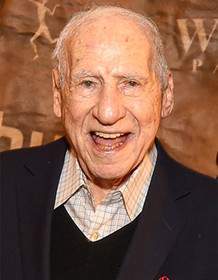
Frederick Bronski (Mel Brooks)
Played by Mel Brooks
A larger-than-life theater director who runs the Bronski ensemble in Warsaw. He is controlling and quick to undermine his wife Anna, yet his quick wits and theatrical flair allow him to improvise daring schemes against the Gestapo.
- 🎭 Theatre-director
- 🧠 Wily
- 🏃 Risk-taker
-

Anna Bronski (Anne Bancroft)
Played by Anne Bancroft
A talented actress who earns the audience's praise, often clashing with Frederick. Her flirtation with Sobinski reveals a complexity beneath her poise, balancing personal desire with the dangers of occupation.
- 🎭 Actress
- 💃 Independent
- 🔒 Loyal
- AS
Andre Sobinski
A bomber pilot connected to the Polish squadron and the Royal Air Force who becomes romantically involved with Anna. He embodies boldness and a willingness to take risks for his country and friends.
- 🛩️ Pilot
- 🗡️ Courageous
- 🕯️ Loyal
- DS
Dr. Siletski
A Polish radio broadcaster who tries to relay messages to family and the Underground, only to be revealed as a Nazi sympathizer seeking to betray his country.
- 🧭 Informant
- 🔎 Manipulative
- 🕵️♂️ Deceptive
- CE
Colonel Erhardt
The Gestapo leader who interrogates and pursues the troupe, a calculating adversary who uses his authority to hunt down resistance.
- 🛡️ Antagonist
- 🗡️ Authoritarian
- 🕳️ Menacing
- S
Sasha
Anna's dresser, a friend within the troupe who becomes entangled in the danger around censorship and arrest as the occupation intensifies.
- 🧭 Ally
- 🗺️ Loyal
- 🗡️ Perilous
Where and When Is To Be or Not to Be Set?
To Be or Not to Be is set in Warsaw, Poland, London and England (World War II (1939–1945)). Here is why the time and place matter to the story.
When
World War II (1939–1945)
Set during the early years of World War II, Poland is invaded and occupied by Nazi Germany, transforming daily life into a perilous game of deception and survival. Censorship tightens around performances and information, while resistance networks operate in the shadows. The narrative moves between wartime Poland and the danger-filled escape to Britain, underscoring a sense of urgency.
Where
Warsaw, Poland, London, England
The story centers on Warsaw, a city under brutal Nazi occupation where the Bronski Theater operates under censorship. It later shifts to London, reflecting the troupe’s exile and the broader escape of Polish refugees. Key locations include the Bronski Theater, the former Europa Hotel turned German base, and Gestapo headquarters, highlighting how art, danger, and resistance intersect in wartime Europe.
- 🏰 War-torn Warsaw
- 🛡️ Nazi-occupied city
What Are the Themes of To Be or Not to Be?
3 ideas the story keeps returning to, among them Disguise & Deception, Resistance & Courage and Love & Loyalty.
-
01
Disguise & Deception
Characters repeatedly assume false identities and use theatrical disguises to outwit the Gestapo. The Bronski Theater becomes a microcosm where truth is subverted for survival, and each performative facade risks exposure. The urgency of wartime demands clever ruses, even as personal loyalties blur.
-
02
Resistance & Courage
The troupe crafts a daring plan to protect refugees and undermine the occupiers, turning a public performance into a cover for escape. Small acts of defiance—helping families, misleading the Gestapo—symbolize a larger fight for freedom. Courage comes from solidarity in the face of peril.
-
03
Love & Loyalty
Anna's flirtation with Sobinski exposes the tension between personal desires and political danger. Relationships form fragile alliances when trust is tested by surveillance and betrayal. The story probes loyalty to loved ones alongside loyalty to a cause, under the strain of occupation.
What Kind of Film Is To Be or Not to Be?
Light in tone, with fast pacing and a moderate story, going by the plot summary.
- Tone
- Light
- Pacing
- Fast
- Story
- Moderate
- Intensity
- Medium
- Ending
- Bittersweet
A rapid-fire, satirical wartime comedy that uses high-stakes theatrical deception and tension to create a story that feels both risky and surprisingly brave.
- satirical
- risky
- tense
- deceptive
- brave
- absurd
- world war ii
- theatrical deception
- resistance
- infiltration
Content notes: war violence, nazi persecution, homophobic persecution.
Quiz
How well do you remember To Be or Not to Be? Test yourself on the story.
Where to Watch To Be or Not to Be
Stream it on Shout! Factory. US availability and prices from JustWatch.
Stream 1
 Shout! Factory Amazon Channel
 Streaming availability in the US, powered by