

Thunderstorm Plot Summary
Read the complete plot summary and ending explained for Thunderstorm (1934). From turning points to emotional moments, uncover what really happened and why it matters.
Thunderstorm examines how rigid traditionalism and hollow morality corrode a wealthy, modern family and lay bare the wounds of secrecy, desire, and power. Set against the backdrop of a prestige-filled household, the drama centers on Zhou Puyuan, a powerful businessman whose authority and sense of propriety mask a pattern of domination, hypocrisy, and hidden appetites. The full-text version begins with a prologue that shifts the scene to a former Zhou mansion turned hospital run by Catholic nuns. There, an old man visits two distressed women—one silent and morose, the other violently unsettled—while nurses reveal through their conversation that a tragedy struck the house a decade earlier, leaving the place rumored to be haunted. The old woman at the window finally falls, signaling the weight of the past pressing into the present.
In Act I, the action moves to the summer of 1925, when the Zhou family house becomes a pressure chamber for desire, class, and loyalty. Lu Gui, a servant, confides in his daughter Sifeng about a forbidden affair between Fanyi, the master’s refined but brittle wife, and her stepson Zhou Ping. Sifeng herself harbors a delicate romance with Ping, and the revelation unsettles her as she finds herself entangled in a web of social boundaries. Fanyi’s fragility is matched by a steely core; she is both drawn to Ping and haunted by the family’s expectations. Zhou Puyuan returns from the mine with a stern, commanding presence, correcting Ping’s indulgences and scolding him for habits that signal a deeper contempt for convention. To control the household’s narrative, Puyuan enlists Fanyi’s complicity in a medical ritual, forcing her to drink a traditional remedy to address a supposed “mental imbalance.” When she refuses, he weaponizes authority to bend her to his will, a display that foreshadows the coercive climate at the heart of the family. Puyuan’s conversations with Lu Gui and his wife Mrs. Lu hint at a buried history; a photograph of a woman named Shiping—tied to Ping’s origin—appears as a thread that will later pull tight. The act ends with a disturbing sense of impending reckoning, as Puyuan’s disapproval widens the rift between the generations and classes.
Act II intensifies the already volatile dynamics. Zhou Ping contemplates leaving the family business to seek a life in the countryside, a move that would upend the household’s carefully constructed order. Sifeng pleads with him to stay, while Fanyi confronts Ping with memories of abuse and a torrent of resentment. Ping’s insistence on a future with Sifeng collides with Fanyi’s demand for loyalty and stability, and a bitter argument erupts. The moment crystallizes the social fissures beneath the surface: Ping’s longing for a life free from his father’s control collides with Fanyi’s desire for security and vindication. Into this tense mix enters Mrs. Lu, a figure who begins to recognize herself in Shiping’s photograph—Shiping being Ping’s birth mother and Puyuan’s former lover. Mrs. Lu’s recognition does not yet resolve the moral maze; it rather deepens the mystery surrounding Ping’s parentage and the power that Puyuan exerts over family fate. Puyuan soon learns that Shiping’s grave lies somewhere nearby, and a new layer of parental history reveals itself: Shiping’s own life had been a series of betrayals and survival, a narrative that now interlocks with the Zhou family’s current crisis. When Lu Dahai, Ping’s half-brother in the eyes of the law but not yet in the minds of the family, arrives to confront Puyuan about workers’ exploitation at the mine, his confrontation exposes the cost of the mine’s prosperity on the workers who fuel it. The act closes with a sudden consolidation of the act’s themes: the family’s hypocrisy, the allure of upward mobility, and the fear of a hidden truth that could upend social standing.
Act III shifts the focus to Sifeng’s home, where the consequences of the Zhou household’s actions begin to ripple outward. Lu Gui accuses Dahai of destabilizing Sifeng’s life, sparking a quarrel that highlights the precarious position of those in the serving class who are pulled into the family’s dramas. Ping visits Sifeng in the evening, and an uneasy attempt at reconciliation sits alongside a growing sense that the social order is breaking apart. Dahai interprets Ping’s presence as a temptation to desecrate Sifeng, and he threatens to act on his own grievances, while Mrs. Lu continues to misread the loyalties at play. The night deepens as Zhou Ping climbs through Sifeng’s window to be with her, a secret romance that is both tender and dangerous. Fanyi—still haunted by the fear of losing control—appears briefly at the window, a ghostly reminder of the household’s surveillance and the price of desire. The lovers’ moment is abruptly disrupted by Dahai’s intrusion, and the family’s pursuit of truth and protection becomes a race against the rain that darkens the night.
Act IV intensifies the crisis as the truth about lineage and desire erupts in the Zhou living room. Puyuan pursues a fragile, uneasy effort to mend relations with his son Chong, only to be met with a cold resistance that underlines the growing estrangement between generations. As Ping and Fanyi confront their own feelings, Fanyi’s isolation deepens; she begins to confront the possibility that Ping’s attachment might threaten the entire family’s stability. Dahai returns, determined to safeguard his sister Sifeng’s future, and the tension culminates as Ping reveals his love for Sifeng and promises to return to marry her. Dahai relents when faced with the warning from his mother and hands Ping a pistol to defend himself in a precarious moment. Sifeng discovers she is pregnant with Ping’s child, and Mrs. Lu takes on the role of gatekeeper, insisting that the couple flee as far as possible to avert disaster. Yet the revelation that Ping and Sifeng are half-siblings, a truth kept hidden until now, shatters the family’s sense of order and devastates all involved. Fanyi, driven by jealousy and a thirst for revenge, disrupts the fragile accord by exposing the affair to Chong, only to be confronted with the sudden, devastating consequences of her own choices. The room becomes a chamber of recognition when Puyuan, unaware of the lovers’ exact relationship, confirms that Mrs. Lu is Ping’s mother and Sifeng’s and Ping’s shared bloodline makes their love incestuous. A deadly silence fills the space, and the tragedy escalates in a final, unforeseeable turn: Sifeng and Chong both perish after stepping onto a broken, electrified wire, and a gunshot rings out as Zhou Ping takes his own life. The play’s cruelty is not in a single act of violence but in the cascading revelations that leave the family’s ideals and pretenses irreparably shattered.
The Epilogue returns us to the hospital, ten years later, where the old Zhou remains a watcher of the past. He asks a nun about the old woman and the connection to Shiping’s son, Lu Dahai, in a search that reveals how the past continues to haunt the living. He longs for resolution that never comes, a reminder that the consequences of a family’s moral laxity extend far beyond the immediate circle of power and privilege.
Thunderstorm unfolds as a slow-burning critique of a society that prizes appearances over honest accountability. Its characters navigate a maze of love, class tension, and the heavy burden of legacy, where even acts of affection can unleash a chain of events that exposes the hollowness of wealth and the fragility of family bonds. The play’s most powerful moment may be the quiet, inexorable realization that the truth—no matter how long suppressed—will reshape every relationship it touches, leaving behind a cost that no wealth or social standing can ever erase.
Thunderstorm Timeline
Follow the complete movie timeline of Thunderstorm (1934) with every major event in chronological order. Great for understanding complex plots and story progression.
Prologue: Haunting at the Zhou mansion hospital
Two children stumble into the former Zhou mansion, now a Catholic hospital. Inside, two disturbed patients are cared for by nuns while an elderly man, old Mr Zhou, visits. Through nurses' remarks, it is revealed that three people died there ten years earlier and the house is considered haunted. The prologue ends with the older woman collapsing at the window.
Lu Gui reveals the forbidden affair to Sifeng
In the Zhou drawing room, Lu Gui tells Sifeng about Fanyi's secret affair with Zhou Ping. Sifeng is shocked because she herself is secretly in love with Ping. The conversation exposes the danger of scandal within the family and foreshadows the tragedy to come.
Ping and Fanyi's unsettling complexity; medicine demanded
Zhou Ping enters with a tense air, while Fanyi shows mixed feelings about the family's expectations. Puyuan orders Fanyi to drink a traditional medicine to cure her 'mental imbalance', and she reluctantly obeys under his authority. Ping watches, uneasy, as the power of tradition cements its grip on the household.
Shiping memory and Ping's parentage
Puyuan fondly recalls Shiping, Ping's supposed birth mother, and displays her photograph in the drawing room. He rebukes Ping for his drinking and loose conduct, underscoring the entrenched hypocrisy of the family. The memory hints at a hidden lineage that will explode later.
Dahai's arrival and confrontation
Lu Dahai, Shiping's son who does not yet know Puyuan is his father, arrives at the Zhou house to challenge the master's exploitation. Ping confronts him, Dahai insults the Zhou family, and Ping punches Dahai while servants eject him. Mrs Lu exits with Dahai, revealing the volatile clash between class, loyalty, and the family's secrets.
Ping contemplates leaving for the country
In the afternoon, Ping privately meets Sifeng in the drawing room and tells her of his plan to leave the family and work in the countryside with his father. Sifeng begs him not to go, but he remains torn between love and duty. The moment deepens the rift between them and raises the stakes of their secrecy.
Mrs Lu's arrival and Shiping's identity hint
Mrs Lu, Sifeng's mother, arrives for an appointment with Fanyi and recognizes herself in Shiping's photograph, though she does not disclose this to Sifeng. She keeps her truth hidden to protect the fragile peace of the household. The exchange foreshadows the buried past that will erupt with fatal consequences.
Ping and Sifeng's clandestine meeting
Zhou Ping secretly meets Sifeng in the drawing room and declares his intention to leave his home for good. Sifeng pleads for him to stay despite the social costs. The lovers' resolve tightens the web of secrets binding the Zhou family.
Midnight visit and escape path
Late at night, Zhou Ping climbs through Sifeng's window for a private embrace. Dahai suddenly enters with a pistol, forcing a confrontation that drives the lovers to flee into the rain. The family races after them into a storm that mirrors the coming catastrophe.
2am confrontation and torn loyalties
Back in the Zhou living room, Fanyi confronts Ping and accuses him of conspiring with his father. She begs him to take her away and, in a fit of rage, tears up Shiping's picture. The illusion of family order fractures as guilt and rage spill over.
Pregnancy, flight plan, and hidden truths
Sifeng reveals she is pregnant with Ping's child, intensifying the urgency to flee. Mrs Lu attempts to stop them, aware of the social and familial dangers, while the brothers wrestle with what they owe to each other. The escape plan becomes a desperate gamble against an unbridgeable past.
Revelation of half-siblings and mother's identity
Puyuan enters and, unaware of the full romance, learns that Mrs Lu is Ping's mother and that Sifeng and Ping are half-siblings. A hushed, catastrophic truth settles over the room as the last chance for reconciliation vanishes.
Tragedy erupts: electrocution and suicide
The escape degenerates into tragedy as Sifeng and Zhou Chong are electrocuted by a broken live wire while fleeing the house. Ping, overwhelmed by desperation, shoots himself, leaving the family to confront their ruin. The house remains haunted by the revelation of their hidden lineage.
Epilogue: ten years later at the hospital
In a hospital ten years later, old Mr Zhou asks about the old woman and laments the lack of news about Lu Dahai. He remains haunted by the past as he stares into the fire, a man defined by his losses. The tragedy continues to echo through the present, long after the events have ended.
Thunderstorm Characters
Explore all characters from Thunderstorm (1934). Get detailed profiles with their roles, arcs, and key relationships explained.
Zhou Ping
A young heir to the Zhou mining fortune who is torn between love and lineage. He becomes entangled with Fanyi and forms a forbidden bond with Sifeng, revealing his inner conflict between desire and duty. Ping's choices expose the fragility of the family’s power and culminate in a tragedy born from hidden truths.
Sifeng
Daughter of the household’s servant line, she falls in love with Ping and challenges class boundaries. Her relationship with Ping is central to the tragedy, especially after it is revealed that she is pregnant. Sifeng embodies innocence crushed by social forces and the revelation of painful lineage ties.
Fanyi
The refined, fragile wife of Zhou Puyuan, whose jealousy and need for control propel much of the conflict. She manipulates situations to protect her own standing and to punish perceived transgressions. As secrets unfold, her temperament contributes to the family’s inevitable collapse.
Zhou Puyuan
The patriarch and mine owner who personifies rigid tradition and moral hypocrisy. He wields wealth and authority to maintain control, often at the expense of others. His hidden past and cold governance fuel the family’s downfall as truth finally confronts him.
Lu Dahai
A fiery worker and a leader in the mine's labor movement, Dahai embodies the rising tension between labor and elite privilege. He challenges the Zhou family's exploitation and becomes a pivotal force in the escalation that drives the tragedy.
Mrs Lu
A compassionate figure with a hidden past tied to Shiping, Sifeng's family history. She recognizes the deeper connections that tie the characters together and acts with a cautious sense of duty to protect her daughter while confronting painful truths.
Zhou Chong
Ping’s ally and a younger member of the Zhou circle, Chong embodies youthful idealism and conflicted loyalties. He navigates the family’s politics with a mix of naivety and sincerity, aiming to preserve harmony even as the mansion’s secrets unravel.
Shiping
Ping’s birth mother and a figure from the past whose history with Zhou Puyuan haunts the present. Her story is a crucial piece of the family’s legacy, catalyzing revelations that shift loyalties and threaten to destroy the household.
Thunderstorm Settings
Learn where and when Thunderstorm (1934) takes place. Explore the film’s settings, era, and how they shape the narrative.
Time period
1925
The main action unfolds in the summer of 1925, a period when traditional social codes clash with changes brought by wealth and modernization. The narrative also references events from ten years earlier and culminates in an epilogue set ten years later, highlighting a broader arc of loss and revelation. The time frame emphasizes the consequences of privilege and repression within a changing China.
Location
Zhou Mansion (Zhou Family Estate), Hospital operated by Catholic nuns
The primary setting is the Zhou family mansion, a vast estate tied to the mining fortune of Zhou Puyuan. In the prologue, the mansion forms a hospital operated by Catholic nuns, hinting at a haunted reputation. The house functions as the crucible where wealth, power, and rigid tradition corrode human relationships.
Thunderstorm Themes
Discover the main themes in Thunderstorm (1934). Analyze the deeper meanings, emotional layers, and social commentary behind the film.
🪞
Hypocrisy
The Zhou family keeps up appearances of decorum and virtue while privately decaying from greed, control, and crueller motives. The estate and its rituals reveal a world where reputation matters more than truth. As secrets mount, the cost of maintaining the facade becomes the family’s undoing. The play uses mirrors of behavior to show how appearances mask moral rot.
💔
Forbidden Love
Zhou Ping and Sifeng share a love that crosses class lines and faces relentless social scrutiny. Their relationship is entangled with Ping's hidden parentage, amplifying the stakes and making their union seem impossible. The romance triggers jealousy, manipulation, and a cascade of betrayals that culminate in tragedy. The lovers' fate underscores the destructive power of secret desire within a rigid hierarchy.
⚖️
Tradition vs Modernity
The era's wealth and privilege uphold old codes that brutalize those who defy them, while workers and lower-class voices push for change. The conflict between ancestral authority and emerging social awareness drives key confrontations. The family’s failures to adapt lead to irreversible consequences, illustrating the cost of clinging to tradition at all costs. The drama pits entrenched custom against awakening consciences.

Coming soon on iOS and Android
The Plot Explained Mobile App
From blockbusters to hidden gems — dive into movie stories anytime, anywhere. Save your favorites, discover plots faster, and never miss a twist again.
Sign up to be the first to know when we launch. Your email stays private — always.
Explore the mobile appThunderstorm Spoiler-Free Summary
Discover the spoiler-free summary of Thunderstorm (1934). Get a concise overview without any spoilers.
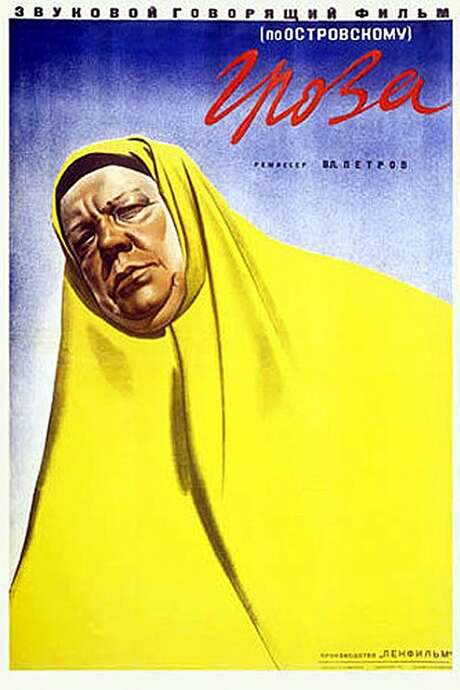
In a quiet Volga town where the river’s current mirrors the slow, unyielding flow of tradition, life is governed by an unspoken code that rewards conformity and punishes deviation. The town’s merchant elite, referred to ominously as the “dark kingdom,” move through cobbled streets beneath soot‑gray skies, their homes heavy with the weight of reputation and a legacy that seems as permanent as the water itself. The atmosphere hums with a restrained tension, a sense that every gesture is watched and every whisper could become a scandal.
Katerina enters this world as a young woman whose gentle disposition masks an aching restlessness. Married to Tikhon, a violent drunk whose presence turns the household into a storm of fear and oppression, she finds herself trapped not only by his temper but also by the rigid expectations of the family she now serves. The marriage, arranged more out of social convenience than affection, places her in a role that demands silent endurance, even as her own hopes flicker weakly beneath the surface.
The domineering Kabanikha, Katerina’s mother‑in‑law, rules the home with an iron will wrapped in the veneer of maternal concern. Her relentless scrutiny and insistence on propriety tighten the invisible bars that hold Katerina in place, creating a daily clash between duty and desire. Yet, in the rare moments when Tikhon is absent, a different possibility surfaces: a chance encounter with Boris, a man whose very demeanor offers a glimpse of the freedom Katerina longs for. His presence is a quiet whisper of an alternative life, stirring within her a yearning that the town’s stale air has long suppressed.
The film breathes with a moody, lyrical tone, its visuals drenched in muted colors that echo the emotional fog surrounding its characters. It paints a portrait of a society where tradition looms like a looming storm, and a single woman’s quiet rebellion against it becomes the pulse that drives the narrative forward, inviting the audience to wonder whether the tempest inside her can ever find a way to break through the walls of the “dark kingdom.”
Movies with Similar Twists and Themes
Uncover films that echo the narrative beats, emotional arcs, or dramatic twists of the one you're exploring. These recommendations are handpicked based on story depth, thematic resonance, and spoiler-worthy moments — perfect for fans who crave more of the same intrigue.



Featured on this page

What's After the Movie?
Not sure whether to stay after the credits? Find out!
Check out our other apps:

SAT Sphere
Build confidence for the Digital SAT.

Mori Atlas
Discover wild places worth protecting.

Luntero
Search smarter for a home in Amsterdam.

Plot Explained
Unravel movie endings and hidden clues.

Pokechamp
Dive into Pokémon data and battle logic.

Driving Theory
Get ready for your European theory test.

Movie Dust
Plan your next cinema trip with ease.

Musemap
Find art and culture as you travel.

Selkobase
Compare credentials before committing.

Local Manual
Turn an unfamiliar country into practical next steps.

Lernavi
Compare school systems before your next move.

GymRoam
Find a workout stop wherever your plans take you.
Explore Our Movie Platform
New Movie Releases (2026)
Famous Movie Actors
Top Film Production Studios
Movie Plot Summaries & Endings
Major Movie Awards & Winners
Best Concert Films & Music Documentaries
Movie Collections and Curated Lists
© 2026 What's After the Movie. All rights reserved.
Privacy Policy