
The Assault 2022
Directed by

Adilkhan Yerzhanov
Made by

LookFilm
The Assault Plot Summary
Read the complete plot summary and ending explained for The Assault (2022). From turning points to emotional moments, uncover what really happened and why it matters.
This film unfolds as a tightly structured meditation on memory, told through a brief prologue and five episodes dated 1945, 1952, 1956, 1966, and 1981. It centers on twelve-year-old Anton Steenwijk, who lives with his parents and older brother on the outskirts of Haarlem during the Nazi Occupation in January 1945. One evening, after hearing shots, they witness the aftermath of a brutal act: Fake Ploeg, a prominent Dutch collaborator, has been assassinated. In the chaotic hours that follow, the Steenwijks’ neighbors, the Kortewegs, move the body from its original site in front of the Steenwijks’ house to a position in front of their own. In the ensuing violence, Anton’s family is killed and their house is set ablaze, while he spends a night in a dark police station cell in Heemstede, comforted by an unseen young woman prisoner. As the convoy proceeds toward Amsterdam, a German soldier dies protecting him when the convoy comes under air attack, and Anton is placed in the care of an aunt and uncle in the city.
All the rest is postscript–the cloud of ash that rises from the volcano, circles around the earth, and continues to rain down on all its continents for years.
In the decades that follow, Anton grows into an anesthesiologist, marries twice, and has a child with each wife. He carries the weight of repressed memories and a limited understanding of what happened that night, never fully grasping the diverse motives that night’s events may have reflected. Instead of actively chasing witnesses, he stumbles upon crucial details through chance encounters, leaving him with riddles rather than neat resolutions. He weighs the various motives, consequences, and ethical judgments—pondering how much of what occurred was intentional, and how much was the result of accident. His personal history unfolds against a shifting Dutch society, where the Cold War, anti-establishment protests, and large anti-nuclear demonstrations form a tense backdrop.
In Haarlem, 1952, Anton returns for a party and visits the Beumers, reconnecting with the town’s memory and the monument dedicated to his parents and the others who died that night. A few years later, he encounters Fake Ploeg’s son, who bears his father’s name, and the two occupy starkly different paths: the orphan who pursued medicine and the son of a collaborator who repairs water heaters. Their exchange lays bare the moral rifts created by war and reprisal, as each man measures their shared loss against their diverging destinies.
We’re in the same class, your parents are shot, but you’re doing medical studies all the same, whereas my father was shot and I repair water heaters.
In 1966, at a funeral for an older man connected to his father-in-law’s circle, Anton overhears a discussion about a resistance action and realizes the subject is Ploeg’s assassination. He talks at length with Cor Takes, a steadfast critic of leniency toward collaborators, who argues for justice beyond mere aging or remorse. The two men exchange what they know—and what they don’t—about that fateful night, acknowledging how much remains uncertain even as they uncover more details about the plot and the identity of the woman who comforted Anton years earlier.
Finally, in 1981, as Anton nears grandfatherhood, he meets a neighbor who had moved Ploeg’s body in front of his house. This conversation reveals why the Kortewegs acted as they did that night and why they chose to direct the body toward the Steenwijks’ home, a revelation that ties together the moral questions that have haunted Anton for decades: the difference between what is right, what is possible, and what the passage of time can finally reveal about guilt, innocence, and the human cost of wartime choices.
The narrative is quiet in its tone but expansive in its implications, inviting readers to weigh intention against circumstance, memory against history, and the way small, seemingly random acts can echo across generations. It is as much a study of a single life under occupation as it is a broader meditation on a society emerging from war and confronting its own unresolved past.
The Assault Timeline
Follow the complete movie timeline of The Assault (2022) with every major event in chronological order. Great for understanding complex plots and story progression.
Ploeg's assassination triggers a brutal reprisal
January 1945: After the shot that kills Fake Ploeg, neighbors move the body from in front of the Steenwijks' house to a position in front of the Steenwijks' door. The act unleashes chaos as rumors spread and the family next door becomes entangled in the events. Anton's family is killed and their house is set on fire, scattering Anton into the night. The moment marks the beginning of Anton's long struggle to understand what happened that night.
Anton spends the night in a police cell
Anton spends the night in a dark police station cell in Heemstede, overwhelmed by fear and confusion. An unseen young woman prisoner offers him quiet comfort in the bleak hours after the violence. The scene plants the seeds of memory that will echo throughout his life, even as he does not yet know what to make of it.
Convoy to Amsterdam and a soldier's protection
As Nazi authorities transport him toward Amsterdam, a German soldier dies trying to protect Anton during an air attack. The peril underscores how fragile his safety remains in the chaos of occupied Europe. After the convoy, he is placed in the care of an aunt and uncle in Amsterdam.
1952: Return to Haarlem and the war memorial
The first postwar return to Haarlem brings Anton to a party and a visit to his old neighbors, the Beumers. He confronts the monument erected to honor his parents and the others who died that night, confronting the visible scar of the past. The trip marks a moment of public memory in a personal history.
1956: Encounter with Fake Ploeg's son
A few years after his 1952 visit, Anton encounters Fake Ploeg's son and they compare their divergent paths. Anton, the orphan who built a medical career, faces the son of a collaborator who survived in a different role. The conversation probes the unfairness and complexity of guilt, punishment, and memory.
Postwar life: becoming an anesthesiologist and a family man
In the ensuing decades, Anton trains and practices as an anesthesiologist, shaping his professional identity. He marries twice and has one child with each wife, building a personal life that exists alongside his unsettled memories. His recollections remain fragmented, and he learns mainly through chance encounters rather than deliberate pursuit of the truth.
1966: funeral sparks new revelations
At the funeral of an older man connected to his father-in-law, old resistance members debate current politics and the pace of justice. Anton overhears a recount of a resistance action that points to Ploeg's assassination, deepening the mystery. He shares his knowledge with Cor Takes, whose memory of the night is incomplete.
1966: uncovering the identity of the comforter
During the gathering, Anton learns more about the likely identity of the unnamed woman who comforted him in the police cell. The revelation adds a human hook to the night’s events, but many details remain unresolved. The moment underscores how memory is partial and unreliable.
1981: final revelation about the body’s placement
As Anton approaches grandfatherhood, a neighbor explains why Ploeg’s body was moved toward the Steenwijks’ house rather than away, revealing a motive rooted in what the neighbor knew that night. The explanation reframes the night’s moral calculus but stops short of complete closure. The memory persists, shaping how he sees his family and history.
Background of postwar era: Cold War and social movements
The narrative places the night within a broader postwar context—the emergence of the Cold War, anti-establishment Provo movements, and a large anti-nuclear demonstration. These social currents frame how Dutch society confronts its wartime past. The backdrop colors the characters' choices and the meaning of memory.
Memory and interpretation: the protagonist's ongoing sense of mystery
Across the decades, Anton wrestles with memories he cannot fully reconstruct and with motives others may have hidden. He weighs actions and consequences, and the delicate boundary between intention and accident. The novel makes memory itself a central protagonist, always partial and evolving.
The Assault Characters
Explore all characters from The Assault (2022). Get detailed profiles with their roles, arcs, and key relationships explained.
Anton Steenwijk
Twelve-year-old Anton survives the night of violence during the occupation and becomes a lifelong observer of the past. He grows into an anesthesiologist who builds a family life around a fragmented memory, often unsure about what truly happened that night. His cautious, introspective nature masks a deep drive to understand the truth behind the tragedy.
Lena
A female figure tied to Anton’s wartime experiences, whose presence hints at hidden truths surrounding that night. Her role raises questions about memory, guilt, and the unseen connections that influence a survivor’s path.
Cor Takes
An older resistance figure whose conversations about the past challenge simple moral judgments. He embodies persistent anti-fascist sentiment and foregrounds debates about punishment and forgiveness across decades.
Fake Ploeg's Son
A contemporary voice who contrasts his life with the fate of his father, prompting reflections on luck, memory, and the social fallout of wartime loyalties. He articulates resistance-to-collaboration views that force the protagonist to confront multiple versions of the past.
The Assault Settings
Learn where and when The Assault (2022) takes place. Explore the film’s settings, era, and how they shape the narrative.
Time period
1945-1981
The timeline begins with the Nazi occupation in January 1945 and follows Anton Steenwijk through the ensuing decades of Dutch society. It moves from the immediacy of war to the 1950s, 1960s, and into the 1980s, capturing evolving political and social currents. The period encompasses the Cold War, the Provo movement, and large anti-nuclear demonstrations, illustrating how memory and history intertwine with public life.
Location
Haarlem, Heemstede, Amsterdam, Netherlands
The story unfolds across Dutch towns surrounding Haarlem and Amsterdam, including the Steenwijks' neighborhood and nearby streets where a house is torched. The setting anchors a wartime incident and its reverberations through decades of postwar life, as ordinary streets witness memories that refuse to fade. The landscape of quiet neighborhoods, police stations, and monuments frames the mystery of what happened that night.
The Assault Themes
Discover the main themes in The Assault (2022). Analyze the deeper meanings, emotional layers, and social commentary behind the film.
🧠
Memory
Memory drives the narrative as a lifelong burden and clue, shaping how the protagonist perceives his past. Small, ambiguous details and chance encounters expose the limits of what is remembered and what remains hidden. The story shows memory as imperfect, selective, and emotionally charged, never providing neat answers.
⚖️
Morality
The text scrutinizes how people judge actions during occupation, balancing revenge, justice, and forgiveness. It reveals the murky gray areas where intention and consequence diverge, and where victims and perpetrators alike grapple with guilt. Through conversations and reflections, the moral complexity of that era comes into sharper relief.
🕯️
Truth
Truth emerges piecemeal through dialogue and memory, not through a single revelation. The protagonist uncovers competing versions of events, each colored by time and perspective. The pursuit of an objective truth is challenged by memory's fragility and the shifting currents of history.

Coming soon on iOS and Android
The Plot Explained Mobile App
From blockbusters to hidden gems — dive into movie stories anytime, anywhere. Save your favorites, discover plots faster, and never miss a twist again.
Sign up to be the first to know when we launch. Your email stays private — always.
Explore the mobile appThe Assault Spoiler-Free Summary
Discover the spoiler-free summary of The Assault (2022). Get a concise overview without any spoilers.
In the remote Karatas secondary school, a sudden, brutal incursion shatters the fragile peace of a snow‑bound winter. Masked gunmen sweep through the corridors, seizing the students and staff in a chilling display of power, while a fierce blizzard traps everyone, keeping the army at bay for days. The relentless white landscape turns the school into an isolated fortress, where ordinary routine is replaced by a raw, tense silence that crackles with the unseen threat of further violence. The atmosphere hangs heavy with dread, yet a stubborn spark of defiance refuses to be extinguished.
At the heart of the uneasy stand‑still is Tazshi, a maths teacher whose quiet competence suddenly becomes the school’s only hope. Faced with an impossible situation, he steps beyond the classroom, driven by a personal blend of duty and hidden resolve. He pulls together an unlikely coalition: his estranged ex‑wife, a pragmatic but weary former partner; the burly gym teacher, whose physical presence offers both comfort and conflict; the timid school principal, whose nervous leadership masks an unexpected courage; an alcoholic night watchman, whose broken edges hide moments of clarity; the village idiot, a source of unsettling insight; and an inept police chief, whose well‑meaning blunders add a volatile edge. Each member brings a distinct, often contradictory personality, setting the stage for uneasy alliances and tense negotiations.
The film unfolds in a stark yet intimate tone, balancing the cold, oppressive weather with the warm, flawed humanity of its characters. The isolation amplifies every whispered plan, every reluctant trust, and every flicker of hope that a makeshift rescue might succeed before the storm’s grip tightens. As the snow continues to fall, the school becomes a crucible where ordinary lives are forced into extraordinary roles, hinting at both the fragility and the resilience of community when faced with unimaginable pressure.
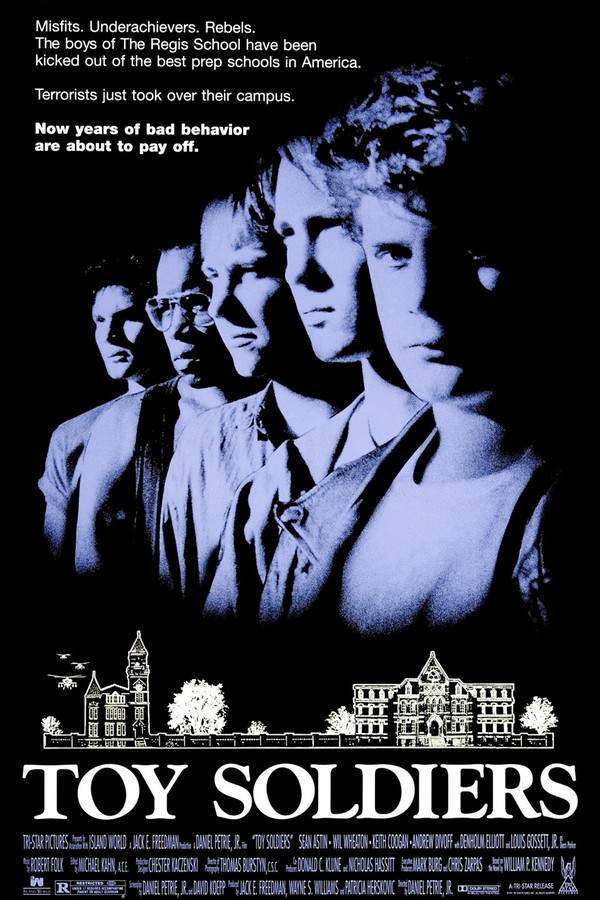
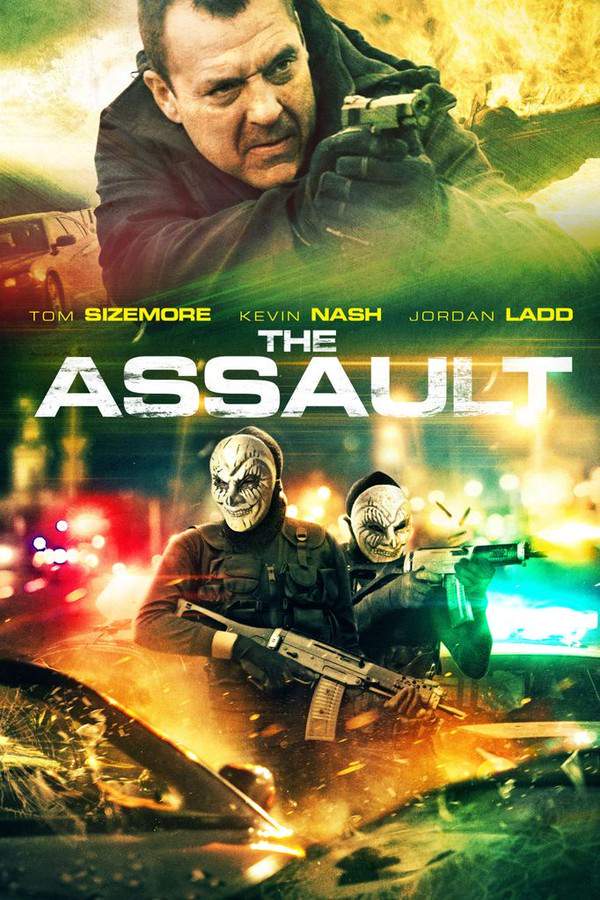
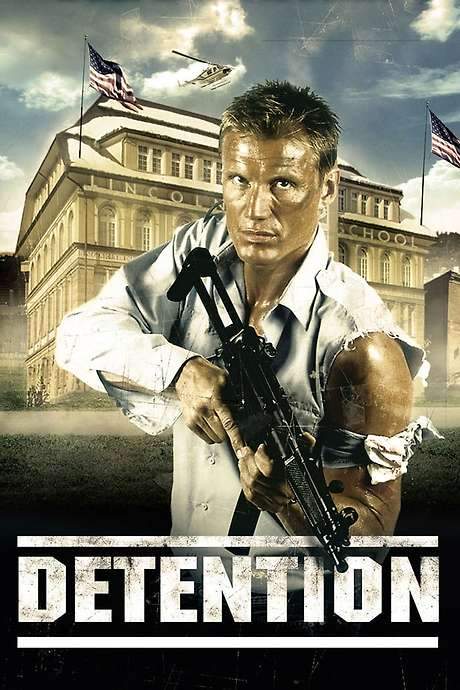
Movies with Similar Twists and Themes
Uncover films that echo the narrative beats, emotional arcs, or dramatic twists of the one you're exploring. These recommendations are handpicked based on story depth, thematic resonance, and spoiler-worthy moments — perfect for fans who crave more of the same intrigue.



Featured on this page

What's After the Movie?
Not sure whether to stay after the credits? Find out!
Check out our other apps:

SAT Sphere
Build confidence for the Digital SAT.

Mori Atlas
Discover wild places worth protecting.

Luntero
Search smarter for a home in Amsterdam.

Plot Explained
Unravel movie endings and hidden clues.

Pokechamp
Dive into Pokémon data and battle logic.

Driving Theory
Get ready for your European theory test.

Movie Dust
Plan your next cinema trip with ease.

Musemap
Find art and culture as you travel.

Selkobase
Compare credentials before committing.

Local Manual
Turn an unfamiliar country into practical next steps.

Lernavi
Compare school systems before your next move.

GymRoam
Find a workout stop wherever your plans take you.
Explore Our Movie Platform
New Movie Releases (2026)
Famous Movie Actors
Top Film Production Studios
Movie Plot Summaries & Endings
Major Movie Awards & Winners
Best Concert Films & Music Documentaries
Movie Collections and Curated Lists
© 2026 What's After the Movie. All rights reserved.
Privacy Policy