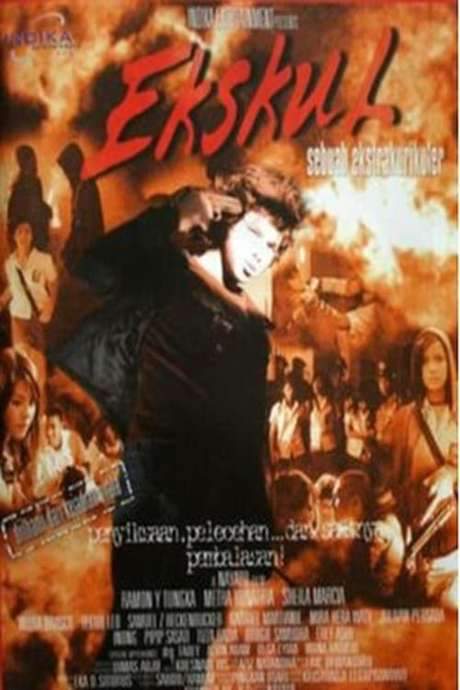
Ekskul 2006

Directed by

Nayato Fio Nuala
Made by

Indika Entertainment
Ekskul Plot Summary
Read the complete plot summary and ending explained for Ekskul (2006). From turning points to emotional moments, uncover what really happened and why it matters.
The pre-title scene opens with a tense image: Joshua Ramon Y. Tungka sits in a psychiatrist’s office, stubbornly resisting the shrink’s attempts at persuasion. The exchange slips into a few awkward, slightly jokey lines about transsexual brothers, setting a offbeat, uneasy tone before the title card finally appears.
Cut to a sprawling police presence around Joshua’s school, a dramatic web of officers, SWAT teams, and snipers ready for action. Joshua has bought a gun and has locked himself inside the school counselor’s office with six students as hostages. The calm of the corridors is broken by radio chatter, tense glances, and a stark, high-stakes standoff that dominates the film’s momentum.
The bulk of the narrative unfolds through flashbacks that reveal the events leading up to the crisis. Joshua’s sense of isolation is laid bare as he recalls brutal beatings from a school gang and suffering at the hands of his own father, who is present in the memory as a harsh, controlling force. He is pinned down at the school gate, his collar gripped tightly, and his face is forced into humiliating degradation, each memory amplifying the hurt that fuels his choices in the present crisis. The flashbacks also touch on his brief romance with Cathy Metha Yunatria, a popular student who sees something human in him, and Sabina Sheila Marcia, a beautiful yet introverted girl who offers quiet sympathy.
Within these recollections, the film sketches Joshua’s complex relationships. There is the supportive, practical presence of Mrs. Miranda Olga Lydia, the school counselor who tries to bridge understanding with the increasingly volatile student, while Joshua’s parents, including his father Boogie Samudra (the father who embodies a painful part of his past), watch with a mix of concern and helplessness.
As negotiations unfold, the authorities hope to persuade Joshua to release the hostages. The dialogue is punctuated by Joshua’s raw expressions of frustration, broadcast to the press and viewers alike, painting a portrait of a young man pushed to the edge by years of torment. The tension intensifies when he begins to loosen the grip on his captives, first freeing the female hostages—Cathy among them—before deciding to keep the male hostages, including those who had tormented him for so long.
In a chilling sequence that blends cruelty with a perverse sense of justice, Joshua forces the male captives to confront the consequences of their actions. He compels them to witness the humiliation of their strongest leader by shoving his head into a toilet, then subjects Jerry Teguh Leo to a fearsome display of power from the school roof. It’s a brutal, almost ritual moment that underscores Joshua’s sense of reprisal.
Mrs. Miranda pleads for the release of all hostages, urging mercy and a chance to end the crisis without more bloodshed. Joshua remains defiant, insisting that those who harmed him deserve to die. Yet a critical breakthrough arises when the police arrest the man who sold Joshua his gun and learn something that could alter the course of the situation: Joshua apparently has only one bullet left. Mrs. Miranda uses this information as leverage to press for surrender, hoping for a peaceful conclusion, though Joshua’s real plan remains shrouded in ambiguity.
As officers position themselves to sweep the roof and secure the scene, Joshua makes a final, devastating choice. In a moment that dissolves the boundary between desperation and resolve, he points the gun at his own head and takes his own life, ending the siege in a stark, tragic finale.
It’s judgement time.
Ekskul Timeline
Follow the complete movie timeline of Ekskul (2006) with every major event in chronological order. Great for understanding complex plots and story progression.
Intro: Joshua in the psychiatrist’s office
The pre-title scene frames Joshua sitting resolutely in a psychiatrist's office, resisting the shrink's attempts to steer him. The conversation slides into awkward, jokey lines about transsexual brothers, hinting at an uneasy, offbeat tone that foreshadows the crisis to come. The title card soon interrupts this tense exchange.
Siege begins at the school
A sprawling police presence converges on Joshua's school, with officers, SWAT teams, and snipers braced for action. Inside, Joshua has bought a gun and locked himself in the counselor’s office with six students as hostages. The tense radio chatter and glances heighten the sense of an impending, high-stakes standoff.
The flashbacks begin
The bulk of the narrative unfolds through flashbacks that reveal the events leading up to the crisis. Joshua’s isolation deepens as memories of brutal beatings from a school gang surface. His father’s harsh, controlling presence appears in memories, amplifying the hurt behind his actions.
At the school gate
One memory pins Joshua at the school gate, his collar gripped tightly as he’s humiliated. The vivid image underscores the humiliation that fuels his present choices. The past pain is shown as a direct trigger for the male hostage situation.
A fragile romance
The flashbacks include Joshua’s brief romance with Cathy, who sees something human in him despite his loneliness. Their connection offers a counterpoint to the violence coursing through his life. It's a glimpse of tenderness amid escalating tension.
Sabina’s quiet sympathy
Another memory centers on Sabina, an introverted girl who offers quiet sympathy, hinting at a softer side Joshua rarely shows. Her presence contrasts with the brutality surrounding him. The flashbacks together sketch the complexity of his relationships.
Mrs. Miranda intervenes
Back in the present, Mrs. Miranda, the school counselor, tries to bridge understanding and calm the crisis. She pleads for mercy and a chance to end the standoff without further bloodshed. Her practical support marks one of the few humane threads amid escalating tension.
Negotiations and revelations
Authorities negotiate with Joshua, hoping to persuade him to release the hostages. He vents his frustration on the airwaves, broadcasting his feelings to the press and viewers. A key turn comes when investigators learn Joshua has only one bullet left.
Release of female hostages
In a chilling sequence, Joshua loosens his grip by freeing the female hostages, including Cathy. He keeps the male captives, creating a stark gendered dynamic to the standoff. The atmosphere shifts as some sense mercy while others fear what he will do next.
Humiliation of the male captives
Joshua forces the male captives to confront the consequences of their actions. He humiliates their strongest leader by shoving his head into a toilet and then displays power from the school roof by terrifying Jerry. The scene underscores Joshua’s brutal, ritualistic sense of reprisal.
Gun-seller arrested
The police arrest the man who sold Joshua the gun, revealing critical information about ammunition. This moment gives authorities a potential leverage point to push for surrender without more bloodshed. The discovery raises the stakes for a peaceful resolution.
The final act
With negotiations stalling and the police closing in, Joshua makes a devastating choice. He points the gun at his head and takes his own life, ending the siege in a stark, tragic finale. The scene closes with a grim declaration that judgment time has arrived.
Ekskul Characters
Explore all characters from Ekskul (2006). Get detailed profiles with their roles, arcs, and key relationships explained.
Joshua (Ramon Y. Tungka)
A troubled student driven to the edge by years of bullying and an abusive father. He appears cold and calculating in the moment of crisis, but flashbacks reveal a deeply wounded, seeking connection beneath the anger. His actions are fueled by isolation and a desperate need to claim control over his pain.
Cathy (Metha Yunatria)
A popular student who sees humanity in Joshua and briefly connects with him. Her compassion stands out amid the chaos, revealing the possibility of grace even in difficult circumstances. Her presence offers a glimmer of hope to Joshua and the other hostages.
Mrs. Miranda (Olga Lydia)
The school counselor who tries to bridge the gap between Joshua and the adults handling the crisis. Pragmatic and compassionate, she negotiates for mercy while pressing for a peaceful resolution. Her steady presence anchors the human response to the breakdown.
Jerry (Teguh Leo)
One of the male hostages and a figure whose power and aggression have shaped the dynamics of the siege. His status as a tormentor in Joshua’s memories adds a layer of personal conflict to the crisis. The confrontation with him underscores themes of punishment and revenge.
Sabina (Sheila Marcia)
An introverted girl who offers quiet sympathy and serves as a reflective counterpoint to the chaos around her. Her subdued presence highlights the human need for empathy in tense moments. She represents the vulnerable among the hostages who clings to mercy.
Ayah Joshua (Boogie Samudra)
Joshua’s father, portrayed as a harsh, controlling figure who contributes to the boy’s trauma. His memories infiltrate Joshua’s psyche, influencing both past and present actions. The character embodies the cycle of abuse that haunts the protagonist.
Bu Amanda (Kepala Sekolah) (Pipip Sasati)
The principal who faces the crisis from a leadership angle, balancing authority with a concern for the students’ safety. She participates in the negotiation dynamics and supports attempts to end the siege without additional bloodshed. Her presence marks the institutional response to trauma.
Ekskul Settings
Learn where and when Ekskul (2006) takes place. Explore the film’s settings, era, and how they shape the narrative.
Time period
Contemporary
The events unfold in a modern-day school, with police, SWAT, and media presence signaling a current, real-world crisis. Flashbacks reveal Joshua’s past abuse and bullying, shaping his present actions. The narrative moves through a single, high-stakes day in a contemporary setting.
Location
Sekolah
The action centers on a school campus during a tense siege. Hallways, a counseling office, and a police perimeter create a claustrophobic backdrop as Joshua holds hostages and negotiates for control. The setting highlights the pressures of a modern educational environment under extreme stress.
Ekskul Themes
Discover the main themes in Ekskul (2006). Analyze the deeper meanings, emotional layers, and social commentary behind the film.
💔
Trauma
The story traces Joshua’s lifelong trauma from bullying and an abusive father, showing how past pain bleeds into the present. Flashbacks illuminate the emotional wounds that harden him and drive his actions during the siege. Trauma is depicted as both a personal burden and a catalyst for drastic behavior.
⚖️
Revenge
The hostage crisis becomes a venue for Joshua to retaliate against those who harmed him. His humiliating display of power over male captives reveals a distorted sense of justice born from years of mistreatment. The violence is framed as a ritual punishment rather than a mere escape.
🕊️
Mercy
Negotiations with Mrs. Miranda and the police explore whether mercy can override vengeance in a deadly crisis. The movie juxtaposes mercy with duty, testing whether dialogue and compassion can avert further bloodshed. Mercy remains a hopeful thread amid escalating violence.

Coming soon on iOS and Android
The Plot Explained Mobile App
From blockbusters to hidden gems — dive into movie stories anytime, anywhere. Save your favorites, discover plots faster, and never miss a twist again.
Sign up to be the first to know when we launch. Your email stays private — always.
Explore the mobile appEkskul Spoiler-Free Summary
Discover the spoiler-free summary of Ekskul (2006). Get a concise overview without any spoilers.
In a cramped high‑school that feels more like a battlefield than a place of learning, the everyday rhythm is punctuated by whispered threats, clenched fists, and the ever‑present hum of surveillance. The corridors echo with a mix of teenage angst and the heavy weight of authority, creating an atmosphere that is simultaneously familiar and unsettling. Within this pressure‑cooked world, the line between victim and aggressor blurs, hinting at the fragile balance that holds the community together.
Joshua moves through this environment like a storm gathering strength beneath a calm surface. Tormented by relentless bullying from Mike’s gang and subjected to harsh discipline at home, he carries a deep sense of isolation that gnaws at his confidence. The daily humiliations—being hung from a fence, shoved into a toilet—leave scars that are both physical and emotional, while his own family offers little sanctuary. This accumulation of pain fuels a quiet, simmering rage that quietly reshapes his perception of the world around him.
Amid the chaos, Joshua finds fleeting moments of compassion in unexpected places. Shabina, the daughter of a police captain, becomes a rare confidante, offering a brief respite from the relentless oppression. At the same time, Katie—who dates one of Mike’s friends—embodies the social hierarchy that keeps him on the margins, further highlighting the chasm between him and his peers. Driven to a breaking point, Joshua takes the drastic step of crafting a homemade pistol, a decision that propels him into a desperate confrontation that places six classmates inside the school in a tense standoff.
The film’s tone is a gritty, uneasy blend of psychological drama and social commentary, where the stark realism of teenage cruelty collides with the surreal edge of an imminent crisis. The looming presence of law enforcement outside the school, the whispered negotiations, and the heavy air of uncertainty keep the audience perched on the edge of anticipation, inviting them to contemplate how far a young mind can be pushed before it erupts.
Movies with Similar Twists and Themes
Uncover films that echo the narrative beats, emotional arcs, or dramatic twists of the one you're exploring. These recommendations are handpicked based on story depth, thematic resonance, and spoiler-worthy moments — perfect for fans who crave more of the same intrigue.




Featured on this page

What's After the Movie?
Not sure whether to stay after the credits? Find out!
Check out our other apps:

SAT Sphere
Build confidence for the Digital SAT.

Mori Atlas
Discover wild places worth protecting.

Luntero
Search smarter for a home in Amsterdam.

Plot Explained
Unravel movie endings and hidden clues.

Pokechamp
Dive into Pokémon data and battle logic.

Driving Theory
Get ready for your European theory test.

Movie Dust
Plan your next cinema trip with ease.

Musemap
Find art and culture as you travel.

Selkobase
Compare credentials before committing.

Local Manual
Turn an unfamiliar country into practical next steps.

Lernavi
Compare school systems before your next move.

GymRoam
Find a workout stop wherever your plans take you.
Explore Our Movie Platform
New Movie Releases (2026)
Famous Movie Actors
Top Film Production Studios
Movie Plot Summaries & Endings
Major Movie Awards & Winners
Best Concert Films & Music Documentaries
Movie Collections and Curated Lists
© 2026 What's After the Movie. All rights reserved.
Privacy Policy