

What Is The World, the Flesh and the Devil About?
The premise of The World, the Flesh and the Devil in 353 words, with nothing given away. The full story follows below.
In a world stripped of its familiar noise, a lone survivor emerges from the blackened depths of a collapsed Pennsylvania coal mine to find a New York City emptied by a sudden, invisible catastrophe. The streets lie silent, the skyline looms like a skeleton, and the remnants of newspapers whisper the story of a lethal radioactive cloud that erased humanity in a matter of days. Against this stark backdrop, the film moves with a measured, almost meditative pace, letting the desolation speak as loudly as any dialogue while hinting at the fragile pulse of hope that still lingers beneath the ash.
Ralph Burton, a Black mine inspector whose practical skill and quiet determination become the engine of survival, begins to carve a routine out of the ruins, coaxing power and water back to a solitary building and even fashioning companionship from the inanimate. His solitary existence is unsettled by the sudden appearance of Sarah Crandall, a young white woman who has been watching from the shadows. Their interaction is cautious and charged, each bringing a different memory of a world that once divided them by color, now forced to negotiate intimacy in a place where the old social order no longer holds any authority.
The arrival of a third survivor, Benson Thacker, adds another layer to the tentative community forming among the abandoned streets. His presence introduces a subtle rivalry and a new set of cultural tensions, prompting the trio to confront the lingering echoes of prejudice and the instinct to protect what little they have found. As the three navigate the empty avenues, the film balances a haunting atmosphere with moments of quiet humor and the persistent question of how humanity might rebuild when the familiar markers of identity have been erased.
Through stark visuals, a restrained score, and a focus on the everyday acts of restoration, the story invites viewers to contemplate what it means to forge bonds in the aftermath of annihilation. The tone is both bleak and luminous, suggesting that even in the deepest silence, the human spirit can spark connections that hint at a future beyond mere survival.
What Happens in The World, the Flesh and the Devil?
The complete story of The World, the Flesh and the Devil, from the first scene to the last, in 853 words (about 4 minutes). Spoilers throughout. Names in the text link to 2 cast member pages.
Spoilers ahead
Ralph Burton, a Black mine inspector, finds himself trapped underground when a collapse seals him in a Pennsylvania coal mine. For days he clings to life as the sound of distant pickaxes fades and the pumps that keep the shaft from flooding fall silent. He digs frantically, clawing his way toward the surface, only to emerge into a world stripped of all people, living or dead. What he discovers above ground comes alive in fragments of discarded newspapers that tell a chilling global story: a devastating radioactive cloud released into the atmosphere by an unknown nation, lethal for five days. The isotopes decay into harmless dust only after that window has closed, leaving humanity erased in an eerie silence.
Refusing to surrender to despair, he heads for New York City in search of any survivors. Back in the city, he begins to restore basic utilities, breathing life back into a ruined building by reactivating power and water. To keep loneliness at bay, he creates companionship from mannequins, a decision that unsettles him as much as it amuses him. When a mannequin is yanked from the edge of the roof by a sudden scream, he discovers a living presence: Sarah Crandall, a White woman in her early twenties who had been secretly watching him from the shadows. Her scream wasn’t a confession of despair but a startled reaction—she thought he had killed himself.
The two become tentative allies, with Ralph’s technical genius and practical know-how gradually improving their apartment buildings’ utilities and their quality of life. Yet even as friendship deepens, the social residue of a racially divided society persists in sharp, tender ways. When Sarah casually declares she is “free, white, and 21,” Ralph calls the phrase “an arrow in my guts” and presses home how out of reach her world feels to him. He also retorts to her suggestion that she move into his building, choosing instead to keep distance, uncertain how she would react if she learned others were still alive. The pair learns to coexist in a shattered metropolis, their shared humanity slowly bridging the line between estrangement and intimacy.
Across the radio waves, Ralph keeps searching for other survivors, and finally a signal comes through in French, confirming that people still exist somewhere beyond their desolate streets. The prospect of connection brightens the horizon, and hope takes a tangible form when a frail but hopeful man named Benson Thacker arrives by boat. Benson, played by the actor responsible for bringing this new dynamic into the story, is ill when he lands, but Ralph and Sarah work to nurse him back to health. Once recovered, Benson’s arrival injects a new tension into the fragile balance between Ralph and Sarah: Benson sees Sarah as a potential partner and begins to view Ralph as a rival who stands in the way of his future.
The three become a wary trio as they navigate the empty city, with Ralph intentionally giving Benson space to win Sarah’s affections. Yet fear and possessiveness give way to a larger question: what does it mean to begin anew when the old social order has fractured so completely? The pursuit escalates into a tense cat-and-mouse through the silent streets as the two men face off, eyeing each other across lifeless avenues. A pivotal moment comes when Ralph, passing by the United Nations headquarters in Ralph Bunche Park, reads an inscription from the Book of Isaiah etched on a wall: “They shall beat their swords into plowshares. And their spears into pruning hooks. Nation shall not lift up sword against nation. Neither shall they learn war any more.” He lays down his rifle and steps into the open, unarmed, a gesture of surrender that momentarily defeats Benson’s resolve.
Sarah appears at the critical juncture, and a powerful, almost ceremonial choice unfolds. She reaches for Ralph’s hand and then pulls him toward her by extending her other hand to Benson as well. In that quiet, decisive moment, the three of them join hands and walk together through the deserted streets toward an uncertain but shared future. The message is clear: even in a world stripped of its old codes, a path toward harmony is possible when fear yields to trust. The film closes not with a final “The End,” but with an emphatic, hopeful proclamation: The Beginning.
They shall beat their swords into plowshares. And their spears into pruning hooks. Nation shall not lift up sword against nation. Neither shall they learn war any more
- The narrative underscores the resilience of human connection in the wake of catastrophe, contrasting the personal struggles of Ralph, Sarah, and Benson with a broader urge to rebuild society from empathy rather than resentment.
- The isolation of a once-bustling city becomes a canvas for introspection about race, belonging, and the cost of living under old social mores when there is no longer a daily census to confirm one’s place in the world.
- Through careful restoration work, fragile companionship, and a dramatic confrontation that yields to a symbolic peace, the story moves from survival to a shared vision of what comes after catastrophe.
The World, the Flesh and the Devil Timeline: Every Key Event in Order
13 key events in the order they happen, from “Mine collapse and escape” to “A new beginning”. 13 events name a place, across 9 locations.
- 1
Mine collapse and escape
Ralph Burton is trapped by a cave-in in a Pennsylvania coal mine. He can hear rescuers digging toward him, but after five days their efforts slow down and stop, and the pumps keeping the shaft from flooding fail. Faced with a dwindling hope of rescue, he begins to dig his own way out.
When:Five days after the cave-in Where:Pennsylvania coal mine
- 2
Emergence into an empty world
Ralph emerges to a city devoid of people, living or dead. He scavages discarded newspapers and discovers headlines hinting at a global catastrophe and the collapse of civilization. The absence of humanity makes rescue seem impossible and loneliness seem inevitable.
When:Immediately after escape Where:Surface outside the mine
- 3
The cause of the disaster
From taped broadcasts on a radio station, Ralph learns that an unknown country dispersed radioactive isotopes into the atmosphere. The lethal dust cloud spreads globally, killing anyone who comes into contact with it over five days, before decaying to harmlessness. The world is effectively wiped clean of people, leaving a silent, empty city behind.
When:Soon after escape Where:Radio station / city
- 4
Return to New York and take shelter
Ralph travels to New York City hoping to find survivors but finds none. He restores power to a ruined building and takes up residence, rebuilding utilities to make living possible in an otherwise lifeless city.
When:Shortly after escape Where:New York City
- 5
Companionship with mannequins
To stave off loneliness, Ralph places mannequins in his apartment and treats them as companions. After a time, he hurls one from the building and hears a scream from the street, revealing a living observer who has been watching him.
When:Early in stay in the city Where:Ralph's building, New York City
- 6
Sarah Crandall reveals herself
Sarah Crandall, a young White woman, had been secretly living in the city and observing Ralph for some time. She is afraid to reveal herself, and her scream earlier caused Ralph to realize someone else may be alive.
When:Shortly after the mannequin incident Where:New York City
- 7
Growing closeness and racial tension
Ralph and Sarah form a cautious friendship and gradually grow closer while maintaining separate apartments. Their conversations expose the persisting racial tensions from a segregated society, including Sarah's remark about being 'free, white, and 21' and Ralph's painful reaction.
When:Early phase after Sarah's reveal Where:New York City
- 8
Broadcasts and confirmation of others
Ralph continues broadcasting on the radio in the hope of contacting other survivors. He eventually receives a transmission in French confirming there are others still alive somewhere.
When:Later, after Sarah's reveal Where:New York City, radio
- 9
Ben's arrival and recovery
Benson Thacker, an ill white man, arrives by boat and Ralph and Sarah nurse him back to health. His presence disrupts the fragile balance between Ralph and Sarah as he becomes a potential romantic rival.
When:After transmission Where:New York City harbor
- 10
Ben's threat
Once recovered, Ben fixates on Sarah and sees Ralph as a rival. He warns Ralph that the next time they meet, he will try to kill him.
When:After recovery Where:New York City
Show the other 3 events of The World, the Flesh and the Devil Hide the last 3 events
- 11
The pursuit to UN square
The two armed men hunt each other through the empty streets. Ralph passes by the United Nations headquarters, climbs the steps in Ralph Bunche Park, and reads the Isaiah inscription about beating swords into plowshares.
When:During the pursuit Where:Near UN Headquarters, Ralph Bunche Park
- 12
Confrontation and the breaking of the stalemate
Ralph finally confronts Ben unarmed after discarding his rifle, but Ben discovers he cannot shoot. Sarah arrives, and together the three walk down the street toward a possible future, choosing to face a new beginning rather than further violence.
When:Climax Where:New York City street
- 13
A new beginning
The film ends not with The End but with The Beginning, as Ralph, Sarah, and Ben walk together into dawn toward building a future in this post-apocalyptic world.
When:Ending Where:New York City street
Who Are the Main Characters in The World, the Flesh and the Devil?
3 characters, among them Ralph Burton (Harry Belafonte), Sarah Crandall (Inger Stevens) and Benson Thacker (Mel Ferrer): who each one is and the part they play in the story. Every profile links to the actor’s page.
-
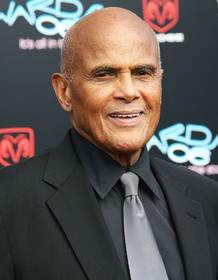
Ralph Burton (Harry Belafonte)
Played by Harry Belafonte
A skilled engineer and coal mine inspector who uses practical know-how to survive and help others. Resourceful, cautious, and morally driven, he navigates a world stripped of society while grappling with the persistence of racial tensions. He negotiates leadership, isolation, and the pull toward meaningful connection, especially with Sarah.
- 🏷️ Survival
- 🧭 Leadership
- 🧠 Intelligence
- SC
Sarah Crandall (Inger Stevens)
Played by Inger Stevens
A young woman who has been quietly observing Ralph and choosing to reveal herself. She embodies resilience and emotional openness, challenging Ralph's reserve and the town's lingering prejudices. Her growing bond with Ralph (and openness to Ben) pushes the story toward a shared future.
- 💗 Companionship
- 🌍 Cross-cultural barriers
- 🧭 Insight
-
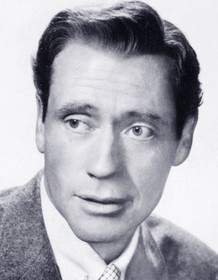
Benson Thacker (Mel Ferrer)
Played by Mel Ferrer
An emaciated but determined survivor who arrives seeking companionship and to claim Sarah. He sees Ralph as a rival and uses his presence to heighten tension, testing loyalties and moral boundaries. His survival instincts and ambition threaten the fragile balance of the trio.
- ⚔️ Rivalry
- 🧭 Ambition
- 🕯️ Vulnerability
Where and When Is The World, the Flesh and the Devil Set?
The World, the Flesh and the Devil is set in Pennsylvania coal mine, New York City and United Nations headquarters (Ralph… (1950s). Here is why the time and place matter to the story.
When
1950s
Set in the mid-20th century against Cold War anxieties about nuclear fallout. The five-day window after the atmospheric dispersal of a radioactive cloud drives the plot and characters' actions. The period's fear of atomic catastrophe shapes how survivors treat one another and what they consider a future.
Where
Pennsylvania coal mine, New York City, United Nations headquarters (Ralph Bunche Park)
Ralph Burton's story begins in a Pennsylvania coal mine and expands to a desolate New York City after the catastrophe. He surfaces into a world emptied of others, with landmarks like the United Nations headquarters standing as silent witnesses. The ruined cityscape emphasizes the fragility of civilization and the loneliness that follows its collapse.
- 🏭 Post-apocalyptic setting
- 🧭 Isolation
- 🗽 Urban ruins
What Are the Themes of The World, the Flesh and the Devil?
3 ideas the story keeps returning to, among them Isolation, Racial Tensions & Relationships and Hope & Rebuilding.
-
01
Isolation
An entire world vanishes, forcing individuals to confront their own solitude. Ralph and Sarah's attempts at forming companionship are tested by the absence of others. The film uses space and silence to examine what it means to be human when society is stripped away.
-
02
Racial Tensions & Relationships
Racism and lingering social mores survive the apocalypse, shaping choices and judgments even when most of society has vanished. Ralph's discomfort with a cross-racial bond contrasts with Sarah's longing for connection. The film uses their evolving relationship to critique prejudices and to argue that humanity's future depends on overcoming divisions.
-
03
Hope & Rebuilding
Despite loneliness and danger, acts of cooperation hint at renewal. The trio's decision to seek a shared future suggests that civilization can be rebuilt through empathy. The ending reframes survival as a collective beginning rather than a solitary victory.
What Kind of Film Is The World, the Flesh and the Devil?
Hopeful in tone, with slow pacing and a straightforward story, going by the plot summary.
- Tone
- Hopeful
- Pacing
- Slow
- Story
- Straightforward
- Intensity
- Medium
- Ending
- Happy
A slow-paced, meditative post-apocalyptic drama that builds from profound loneliness into a tense examination of racial and social tensions, ultimately concluding with a symbolic gesture of hope for a new beginning.
- lonely
- reflective
- tense
- hopeful
- melancholic
- atmospheric
- post-apocalyptic
- survival
- race relations
- love triangle
Content notes: nuclear apocalypse, racial tension, end of civilization.
Quiz
How well do you remember The World, the Flesh and the Devil? Test yourself on the story.
Where to Watch The World, the Flesh and the Devil
Stream it on Kanopy, or rent or buy it from Amazon Video and Apple TV Store. US availability and prices from JustWatch.
Stream 1
 Kanopy




Streaming availability in the US, powered by 


