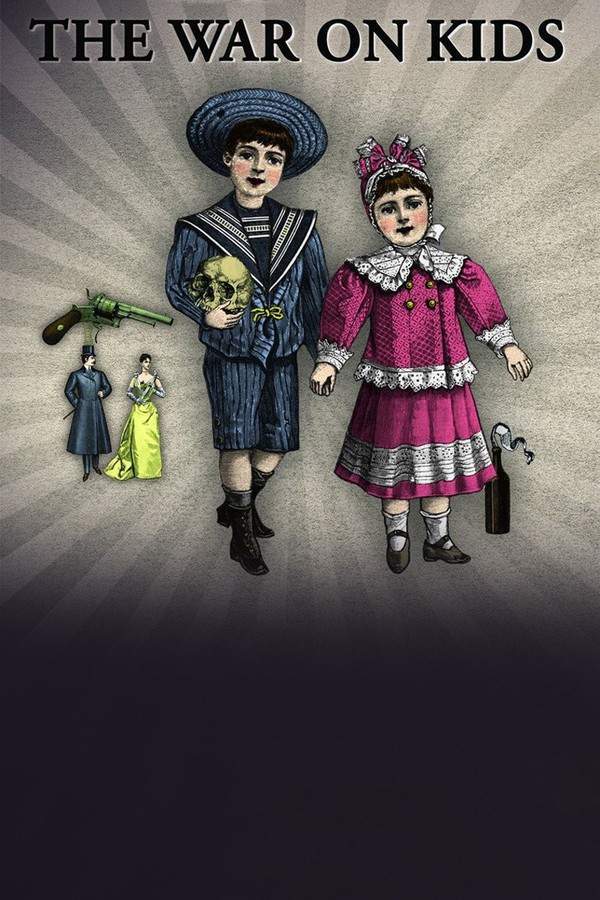
The War on Kids 2009

Directed by

Cevin D. Soling
Made by

Spectacle Films
Where to Watch The War on Kids
See current US streaming, rental, and purchase options for The War on Kids (2009) via JustWatch.

Streaming availability powered by 
The War on Kids Plot Summary
Read the complete plot summary and ending explained for The War on Kids (2009). From turning points to emotional moments, uncover what really happened and why it matters.
Blame for the issues plaguing the education system in America is frequently assigned to inadequate funding or the supposed deficiencies of today’s youth. Yet, there are instances where parents, teachers, and administrators are also held responsible. However, any attempts to enhance educational quality are bound to falter if the structural issues within the system remain unexamined. After being in production for over six years, THE WAR ON KIDS boldly unveils that the root of public education’s failures lies within the institution itself. Astonishingly, reform initiatives consistently neglect to consider this as a possibility, putting the future of both children and American democracy in jeopardy.
In its thorough 95-minute runtime, THE WAR ON KIDS highlights the myriad ways in which the public school system has failed to serve children and safeguard our future by stripping students of essential freedoms, driven largely by irrational fears. It illustrates how children are forced to endure an environment resembling a prison, complete with oppressive security measures, arbitrary punishments, and pharmacological misuse through the enforced prescription of harmful medications. Despite these extreme tactics, schools continue to fall short in educating students, with the focus on teaching overshadowed by the need to exert control.
The film kicks off by tracing the origins of the Zero Tolerance policy. During the 1990s, educational institutions began implementing regulations aimed at removing weapons and drugs from school grounds. However, school officials quickly began to arbitrarily define what constituted a weapon or drug. This has led to countless incidents where children have been suspended or expelled for harmless items such as food knives, nail clippers, and even candy. Shockingly, kindergarteners have received suspensions for innocently playing cops and robbers using their fingers as guns. Under the Zero Tolerance guise, administrators have amassed considerable power, free from the burdens of accountability, which has increasingly been exploited, leaving students feeling hopeless and fearful in an environment reminiscent of Kafka’s literary nightmares.
The documentary makes it clear that students’ civil rights have been nearly eradicated. They endure random searches, drug testing, and are often denied the right to express themselves both verbally and in writing, all while being subjected to corporal punishment without due process. The protection from self-incrimination is routinely ignored, and in some grave cases, students can even be strip-searched without parental consultation. Courts typically support schools’ rights to act as they see fit regarding children, often at the expense of their well-being.
Today, schools bear striking similarities to prisons in their structure and operations, and the film effectively illustrates this through a direct comparison. Viewers witness the noticeable substandard conditions of the average public school relative to a prison in terms of resources and maintenance. Most troubling is the reality that the school ambiance is far more oppressive and bleak.
Security concerns have overshadowed all aspects of schooling, and THE WAR ON KIDS points out the futility of these deeply invasive security measures. For instance, despite the presence of security cameras at Columbine High School during the tragic shooting, they provided no deterrent or protection. Interviews with students featured in the film reveal that the surveillance only fosters anxiety and fear, creating an even more hostile atmosphere. Methods such as locker checks and metal detectors have proven ineffective yet contribute to the school’s oppressive environment.
Harrowing footage captures a 2003 SWAT team raid at Stratford High School in Goose Creek, SC, prompted by the principal’s suspicion of drug activities. The aggressive response, which involved firearms and police dogs, yielded no findings, illustrating the relentless oversight that students are subjected to and the lack of boundaries when dealing with children.
In addition to physical pressure, the film exposes widespread psychiatric abuse within schools. Experts shed light on the alarming rise of ADD diagnoses and the unscrupulous behavior of pharmaceutical companies. The overwhelming evidence presented indicates that the drugs, such as Ritalin, frequently prescribed to children can have severe and lasting negative effects, leading to tragedies like murder and suicide. What is marketed as a solution often proves to be more harmful than the issues it seeks to address. Moreover, it becomes apparent that the students who question authority and educators are the very ones targeted for drugging, ultimately forcing their compliance.
In summary, THE WAR ON KIDS reveals that as authoritarian institutions, schools are fundamentally flawed and incapable of genuine reform. Children endure some of the most extreme and invasive controls imaginable, stripped of basic human rights typically granted even to prisoners of war. The chilling implications extend beyond the immediate effects on these children, jeopardizing the very foundations of American society as an entire generation grows up oblivious to the significance of civil rights within a democratic framework.
The War on Kids Timeline
Follow the complete movie timeline of The War on Kids (2009) with every major event in chronological order. Great for understanding complex plots and story progression.
Introduction of Zero Tolerance Policy
The documentary opens by discussing the inception of the Zero Tolerance policy in the 1990s, aimed at removing weapons and drugs from schools. However, the enforcement of these policies quickly became arbitrary, with school officials defining harmless items as contraband.
Harsh Punishments for Minor Offenses
As the Zero Tolerance policy took hold, countless children faced severe consequences for actions deemed violations. Young students have been suspended for innocently carrying food items or playing pretend games, illustrating the excessive reach of school authorities.
Erosion of Students' Civil Rights
The film highlights the alarming reduction of students' civil rights within the education system. Students face random searches, arbitrary punishments, and a significant lack of freedom of expression, all without the procedural protections afforded to them.
Comparing Schools to Prisons
A stark comparison is drawn between the physical and operational conditions of schools and prisons. The film showcases how the oppressive environment in schools mirrors that of correctional facilities, challenging viewers to consider the consequences of such a structure on developing minds.
Ineffective Security Measures
The documentary argues that aggressive security protocols fail to enhance safety in schools. Despite measures like security cameras and metal detectors, incidents of violence persist, contradicting the notion that such surveillance fosters a sense of security among students.
SWAT Team Raid at Stratford High School
Footage from a 2003 SWAT team raid at Stratford High School in Goose Creek, SC, underscores the intense policing of students. The operation, based solely on unverified suspicions, resulted in no findings and raised concerns about the appropriateness and escalation of tactics used against children.
Psychiatric Abuse and ADD Diagnoses
The film exposes widespread psychiatric abuse in schools, particularly the alarming increase in ADD diagnoses. It points out that pharmaceutical companies often play a detrimental role, pushing medications like Ritalin that may do more harm than good to children's mental health.
Consequences of Overprescription
According to experts featured in the documentary, the over-prescription of medications to children has led to severe outcomes, including tragic cases of violence and self-harm. The solution purported by these drugs often exacerbates the original issues, highlighting a flawed approach to managing behavioral problems.
Students as Victims of Authority
In a disturbing trend, students who express dissent or question authority figures are frequently targeted for drugging. The film details how compliance is often enforced through medication, stripping away children’s ability to think critically or independently.
Implications of an Authoritarian Education System
The documentary concludes by articulating the chilling implications of an authoritarian educational system. It asserts that the deprivation of basic human rights among students not only affects their immediate well-being but also poses a grave threat to the future of American democracy.
Critical Look at Reform Initiatives
As reform efforts are explored, the film critiques how these initiatives overlook fundamental issues within the education system itself. It argues that without addressing the structural flaws, attempts to rectify educational quality will ultimately be futile.
Learning Environment as a Prison
The documentary emphasizes that students are subjected to an environment resembling a prison, with punitive measures often taking precedence over education. This atmosphere of fear and control hinders genuine learning and personal development.
The Future of American Democracy at Risk
The film warns that allowing children to grow up in a system that criminalizes normal behavior is a threat to their understanding of democracy and civil rights. This alarming trend could result in a generation that is unaware of their rights in society.
The War on Kids Settings
Learn where and when The War on Kids (2009) takes place. Explore the film’s settings, era, and how they shape the narrative.
Time period
1990s to present
The film spans several decades, focusing on the implementation of the Zero Tolerance policy that began in the 1990s, which led to draconian measures in schools. It addresses the consequences of these policies that have carried into the present, highlighting ongoing systemic failures in safeguarding children's rights and welfare within a modern educational context.
Location
American public schools, Goose Creek, SC
The movie unfolds primarily within the confines of American public schools, which are depicted as increasingly authoritarian environments. Goose Creek, SC, serves as a significant location that highlights the extremes of school security measures, shown through the harrowing SWAT team raid on Stratford High School, exemplifying the fears and mismanagement within the educational system.
The War on Kids Themes
Discover the main themes in The War on Kids (2009). Analyze the deeper meanings, emotional layers, and social commentary behind the film.
🔒
Authoritarianism
The theme of authoritarianism pervades the film, showcasing how public schools have transformed into oppressive institutions that suppress children's freedoms. The documentary reveals systemic power abuses where students face severe punishments for minor infractions, reflecting a troubling trend towards treating children more like prisoners than learners.
📉
Failure of Education
The film explores the critical failures of the American education system and the consequences of neglecting structural issues. It points to a concerning trend where educational reforms overlook fundamental problems, thereby jeopardizing both the future of students and the health of democracy.
💊
Psychiatric Abuse
Psychiatric abuse is a significant theme, as the documentary sheds light on the troubling increase in ADD diagnoses and the corresponding over-prescription of medications like Ritalin. The film highlights how students who exhibit non-compliance with authority are often targeted, leading to harmful consequences from these treatments.

Coming soon on iOS and Android
The Plot Explained Mobile App
From blockbusters to hidden gems — dive into movie stories anytime, anywhere. Save your favorites, discover plots faster, and never miss a twist again.
Sign up to be the first to know when we launch. Your email stays private — always.
Explore the mobile appThe War on Kids Spoiler-Free Summary
Discover the spoiler-free summary of The War on Kids (2009). Get a concise overview without any spoilers.
In a stark, unflinching portrait of America’s public‑school system, the filmmaker opens a window onto a world where classrooms have begun to feel less like places of learning and more like institutions of control. The documentary sets its stage in everyday hallways, bustling cafeterias and security‑filled entryways, drawing the viewer into an atmosphere that is simultaneously familiar and unsettling. By framing the schools as microcosms of a larger societal shift, it hints at a tension between the promise of education and the reality of ever‑tightening authority.
The tone is investigative and urgent, marrying quiet, observational footage with pointed interviews that echo a quiet chorus of concern. A subdued visual palette underscores the seriousness of the subject, while the measured narration carries a sense of quiet outrage, inviting the audience to question the underlying assumptions about safety, discipline and civic freedom. The film’s style is deliberately methodical, allowing the viewer to feel the weight of policies that have reshaped the daily experience of countless young people.
At its core, the story follows the perspectives of those who live within the system—students, teachers, parents and policymakers—each serving as a lens through which the broader critique is examined. The filmmaker’s voice guides us through these viewpoints, planting seeds of curiosity about how the balance between protection and oppression is negotiated in the corridors of public education. As the documentary unfolds, it suggests that the current trajectory may have far‑reaching consequences for both individual liberty and the democratic fabric of the nation, leaving the audience eager to explore the deeper implications hidden beneath the surface.
Movies with Similar Twists and Themes
Uncover films that echo the narrative beats, emotional arcs, or dramatic twists of the one you're exploring. These recommendations are handpicked based on story depth, thematic resonance, and spoiler-worthy moments — perfect for fans who crave more of the same intrigue.

Featured on this page

What's After the Movie?
Not sure whether to stay after the credits? Find out!
Check out our other apps:

SAT Sphere
Build confidence for the Digital SAT.

Mori Atlas
Discover wild places worth protecting.

Luntero
Search smarter for a home in Amsterdam.

Plot Explained
Unravel movie endings and hidden clues.

Pokechamp
Dive into Pokémon data and battle logic.

Driving Theory
Get ready for your European theory test.

Movie Dust
Plan your next cinema trip with ease.

Musemap
Find art and culture as you travel.

Selkobase
Compare credentials before committing.

Local Manual
Turn an unfamiliar country into practical next steps.

Lernavi
Compare school systems before your next move.

GymRoam
Find a workout stop wherever your plans take you.
Explore Our Movie Platform
New Movie Releases (2026)
Famous Movie Actors
Top Film Production Studios
Movie Plot Summaries & Endings
Major Movie Awards & Winners
Best Concert Films & Music Documentaries
Movie Collections and Curated Lists
© 2026 What's After the Movie. All rights reserved.
Privacy Policy