

What Is The Voice of the Moon About?
The premise of The Voice of the Moon in 278 words, with nothing given away. The full story follows below.
In a sun‑splashed Italian countryside that feels equal parts postcard and television set, the world of The Voice of the Moon swirls with relentless commercials, booming rock anthems, solemn Catholic processions and wild pagan rites. The landscape itself seems to pulse to a constant broadcast, turning everyday villages into stages for absurd spectacles. Amid this kaleidoscopic backdrop, a sense of both wonder and weariness hangs in the air, as if the very horizon is humming a lullaby that is both playful and melancholy.
Fresh from the confines of a mental asylum, Ivo Salvini steps back into society with a restless curiosity and an almost devotional longing for the moon’s elusive glow. His path quickly entwines with that of Gonnella, a former prefect whose career was derailed by a growing paranoia that now fuels a bizarre partnership. Together they drift from town to town, their oddball alliance a parody of authority and ambition, while they encounter an array of eccentric figures—an oboist’s silent wife, rooftop meditatists, and other dream‑like personalities that flicker in and out of the scene like fleeting radio frequencies.
A central thread in their wandering is Aldina Ferruzzi, a woman who embodies the lunar light Ivo reveres, sparking an intense but unreciprocated infatuation that colors his every move. Their journey also brushes against the enigmatic presence of the Micheluzzi brothers, whose larger‑than‑life aspirations hint at a world where the ordinary is constantly reshaped by the extraordinary. The film balances razor‑sharp satire with a tender sadness, inviting viewers to linger in its surreal carnival, listening for the quiet moments that linger beneath the clamor of a society that never quite knows how to turn the volume down.
What Happens in The Voice of the Moon?
The complete story of The Voice of the Moon, from the first scene to the last, in 591 words (about 3 minutes). Spoilers throughout. Names in the text link to 5 cast member pages.
Spoilers ahead
In a film that nods to the lunar-obsessed cadence of Italian poet Giacomo Leopardi, the story unfolds as a sharp, surreal fable about desire, chaos, and the oddly sacred power of the moon. At the center is a fractured trio of the Micheluzzi brothers—among them Giuanin Micheluzzi and Terzio Micheluzzi—who manage to literally pull the moon down from the sky with colossal farming gear, rousing awe, disbelief, and a flurry of political theater as the spectacle is turned into official propaganda. Amid this larger-than-life oddity, Ivo Salvini, freshly released from a mental hospital, becomes infatuated with Aldina Ferruzzi, a woman who embodies the moonlight he reveres. He pursues her with a fevered intensity, even as she makes it clear she wants nothing to do with him. Ivo’s fixation frames the film’s mood: brittle, wry, and tipped toward a carnival of lunacy that never quite loses its melancholy.
As Ivo fumbles his pursuit, he crosses paths with a cast of eccentric figures who seem plucked from a fever dream. There’s Gertrude, the oboist’s wife, who drifts through the days in a cemetery-quiet world, a man who spends his time meditating on rooftops, and Gonnella, the ex-prefect who has been fired for his growing paranoia. Gonnella takes Ivo under his wing, appointing him as his lieutenant in a ridiculous, shadowy investigation into the “wild conspiracies” that only seem to bloom in this feverish landscape. The pair lurch from one bizarre encounter to another, their partnership a parody of authority, ambition, and the thin line between genius and madness.
The film hurtles into a farcical beauty pageant, where Aldina is crowned “Miss Flour of 1989” and then finds herself wandering the moonlit farmlands, her path crossing with graceful African women chanting in the moonlight. The journey then sidesteps into a warehouse of dreams and distortions: inside this forgotten space, a brutal disco of fashion victims erupts, their delirious dancing set to Michael Jackson’s “The Way You Make Me Feel.” The moment is a riot of color and sound, a capsule of the film’s feverish energy that teeters between celebration and chaos. Ivo’s realization that Aldina’s shoe fits every Cinderella who dares it on becomes a playful, maddening joke inside the larger absurdist universe.
Meanwhile, the three Micheluzzi brothers’ moon capture becomes a ceremony of contradictions. What should be a sacred, almost magical moment is upended by the appearance of priests and politicians who seize the scene for propaganda, turning awe into a public spectacle. The gathering devolves into a volatile confrontation when a pistol-wielding madman erupts, crying out, “What am I doing here? Why was I put here in the first place?” The scene snaps with raw, uneasy energy, a reminder of the film’s willingness to mix farce with a piercing, unsettled undercurrent. The aftermath leaves Ivo Salvini at the center of the storm, the final, haunting moment settling on his weary, revealing words:
If we all quieted down a little, maybe we’d understand something.
This line lingers as the screen fades, a quiet counterpoint to the night’s loud, surreal revelry. The movie overall crafts a delicate balance between satire and sadness, using a moonlit carnival as a lens to explore longing, miscommunication, and the messy humanity that arises when dreams collide with reality. The performances—led by the mournfully comic energy of Ivo Salvini and the offbeat charisma of Gonnella—thread a hypnotic, hypnotizing mood that lingers long after the credits roll, inviting audiences to question what they hear, what they see, and what they believe when the world seems to tilt toward the impossible.
The Voice of the Moon Timeline: Every Key Event in Order
11 key events in the order they happen, from “Ivo is released and fixates on Aldina” to “Ivo's final words”. 11 events name a place, across 10 locations.
- 1
Ivo is released and fixates on Aldina
Newly released from a mental hospital, Ivo Salvini fixates on Aldina Ferruzzi and sets out to seduce her. He frames her blond beauty as the moon, a symbol he believes holds the source of his madness. The town begins to watch as his obsession shades into a surreal, uneasy pursuit.
Where:Town vicinity
- 2
Ivo encounters a gallery of oddball locals
Ivo crosses paths with a chorus of madcap locals, including an oboist who sleeps in the cemetery and a man meditating on rooftops. These encounters deepen the film's off-kilter mood and hint at the networks of eccentric characters around Ivo. The surreal atmosphere grows as his pursuit continues.
Where:Town
- 3
Gonnella becomes Ivo's lieutenant and investigates conspiracies
Gonnella, the ex-prefect fired for rising paranoia, teams up with Ivo as his reluctant ally. Together they begin to probe the town’s ‘wild conspiracies’ that float around them. Their partnership anchors the narrative in a tension between sanity and farce.
Where:Town
- 4
Aldina crowned at the Miss Flour of 1989 pageant
In a farcical beauty pageant, Aldina is crowned Miss Flour of 1989, a moment that amplifies the feverish mood of the town. The event becomes a focal point for vanity and spectacle. Aldina's surreptitious shoe fitting with multiple candidates adds a Cinderella-like twist to the scene.
Where:Beauty pageant venue
- 5
Aldina vanishes into the farmlands
After the pageant, Aldina ends up lost in the farmlands, wandering among graceful African women chanting in the moonlight. The sequence blends ritual and dream, heightening the moon metaphor that haunts Ivo. It marks a turning point as the ordinary world tilts toward the surreal.
Where:Farmlands
- 6
An Inferno-like disco in a derelict warehouse
Inside an abandoned warehouse, the film reveals an Inferno-like disco of fashion victims dancing to Michael Jackson's The Way You Make Me Feel. The club becomes a counterpoint to the pageant and the moon plot, a surreal eruption of pop-culture delirium. The gathering underscores the town's destabilized reality.
Where:Abandoned warehouse
- 7
Gonnella conducts a waltz and smashes the records
During the revelry, Gonnella orchestrates a waltz for the crowd but is thrown out after smashing the DJ’s cache of records. The act epitomizes the collapse of order amid the night's chaos. It highlights the tenuous control characters try to exert over a world gone strange.
Where:Disco venue
- 8
The moon is captured and roped in a stable
The three Micheluzzi brothers capture the moon using gigantic farming equipment and rope it down in a stable. The celestial symbol is turned into a domestic, almost bureaucratic spectacle. The stable becomes a bizarre stage for this surreal achievement.
Where:Stable
- 9
The moon capture becomes official propaganda
Priests and politicians convert the moon-capture into a propaganda conference announced to the assembled public. The sacred moment is repurposed for political messaging, revealing the manipulation of spectacle. The town shifts from wonder to political theater.
Where:Conference venue
- 10
The conference erupts in violence
The conference degenerates into chaos as a madman fires a pistol and screams, 'What am I doing here? Why was I put here in the first place?' The eruption shatters any sense of unity and exposes the town’s collective fragility. Ivo Salvini is left amid the disruption, pondering the meaning of it all.
Where:Conference hall
- 11
Ivo's final words
With the mayhem fading but meaning unresolved, Ivo Salvini delivers the film’s last line: 'If we all quieted down a little, maybe we'd understand something.' The line reframes the moon-obsessed frenzy as a plea for quiet reflection rather than triumph. The ending lingers on the film's lingering mystery.
Where:Final scene
Who Are the Main Characters in The Voice of the Moon?
5 characters, among them Ivo Salvini (Roberto Benigni), Aldina Ferruzzi (Nadia Ottaviani) and Gonnella (Paolo Villaggio): who each one is and the part they play in the story. Every profile links to the actor’s page.
-
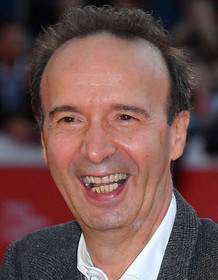
Ivo Salvini (Roberto Benigni)
Played by Roberto Benigni
Fresh out of a mental hospital, Ivo is volatile and relentlessly driven by an unrequited love for Aldina. He treats Aldina as the moon—the source of both his beauty and his madness—fueling a cascade of reckless schemes. His charm is tangled with desperation, making him both charismatic and dangerous as he pursues his fixation.
- 🌀 Frenzied
- 🌙 Moon-obsessed
- 💘 Infatuation
- 🤪 Erratic
- AF
Aldina Ferruzzi (Nadia Ottaviani)
Played by Nadia Ottaviani
Aldina resists Ivo’s advances and embodies a cool detachment amid his feverish pursuit. Her beauty and aloof demeanor fuel the satirical pageant scene where she is crowned Miss Flour of 1989. Her journey through the farmlands and moonlit chant sequences underscores the surreal loneliness at the heart of the story.
- 💃 Beauty
- 👑 Fame
- 🕊️ Enigma
- G(
Gonnella (Paolo Villaggio)
Played by Paolo Villaggio
An ex-prefect fired for rising paranoia, Gonnella becomes Ivo’s uneasy ally and lieutenant. He leads the duo through a succession of absurd conspiracies and bureaucratic misadventure, blurring lines between authority and folly. His theatrical involvement culminates in a chaotic disruption of the night’s propaganda and performance.
- 👮 Authority
- 🧠 Paranoia
- 🎭 Satire
- GM
Giuanin Micheluzzi (Nigel Harris)
Played by Nigel Harris
One of the three Micheluzzi brothers, Giuanin drives the moon-capture plot with overlarge farming equipment. His family’s lunacy translates into a spectacle where a celestial body becomes a prop in a rural carnival. The brothers’ antics propel the surreal events that destabilize the town’s sense of reality.
- 🧠 Eccentric
- 🛠️ Invention
- 🌕 Moon-obsession
- TM
Terzio Micheluzzi (Dominique Chevalier)
Played by Dominique Chevalier
Terzio is another of the Micheluzzi brothers, sharing in the bizarre moon-capture plan and the duo’s wild schemes. His presence reinforces the theme of collective madness and the collapse of ordinary limits. Together with his brothers, he threads the film’s surreal undercurrent through their outrageous acts.
- 🧠 Eccentricity
- 👥 Sibling duo
- 🌗 Surreal
Where and When Is The Voice of the Moon Set?
The Voice of the Moon is set in Italy and rural Italian town (1989). Here is why the time and place matter to the story.
When
1989
The events occur in the late 1980s, anchored by pop culture motifs and the era’s peculiar politics. References to the year 1989 appear in the pageant and social scenes, underscoring a period of flamboyance and paranoia. The tone reflects a pre-Y2K sense of absurd modernity in a transitioning Italy.
Where
Italy, rural Italian town
The story unfolds in a rural Italian town surrounded by farmland and a quiet cemetery. The setting blends mundane, small-town life with surreal, moon-haunted imagery that pervades the community. Key locations include a deserted warehouse and open farmland where the bizarre events play out against a backdrop of local rituals and idle gossip.
- 🌍 Italy
- 🏞️ Rural town
- 🎭 Surreal setting
- 🕰️ 1989
What Are the Themes of The Voice of the Moon?
3 ideas the story keeps returning to, among them Obsession, Propaganda and Surrealism.
-
01
Obsession
The moon serves as a metaphor for Ivo’s fixation and unraveling sanity. His infatuation with Aldina mirrors a broader hunger for escape and meaning in a world that seems to mock conventional norms. The pursuit drives most of the plot, highlighting how desire can distort reality and fuel reckless schemes. The film uses this obsession to thread between romance, fantasy, and madness.
-
02
Propaganda
What starts as a carnival of eccentricity devolves into a political farce where priests and politicians try to instrumentalize the moon for public propaganda. The moon ceremony and subsequent public spectacle become a stage for official messaging, quickly spiraling into chaos. The commentary satirizes how power exploits spectacle to manufacture consensus and control. Throughout, individuals grapple with authentic voice vs. manipulated narrative.
-
03
Surrealism
The film thrives on absurd, dreamlike sequences that blur the line between reality and performance. A beauty pageant, a disco inside an abandoned warehouse, and a moon captured by farming gear create a carnival of imagery. Characters drift through these scenes with a theatre-like seriousness that amplifies the comedy and critique. The surreal tone invites the audience to question what is truly happening beneath the surface.
What Kind of Film Is The Voice of the Moon?
Melancholic in tone, with variable pacing and a complex story, going by the plot summary.
- Tone
- Melancholic
- Pacing
- Variable
- Story
- Complex
- Intensity
- Medium
- Ending
- Ambiguous
A melancholic and surreal carnival of images and encounters, this film feels like a fever dream that oscillates between whimsical satire and a profound sense of longing, leaving the viewer with a quiet, contemplative ache.
- surreal
- dreamlike
- melancholic
- satirical
- feverish
- whimsical
- surrealism
- disillusionment
- madness vs sanity
- media satire
Content notes: psychological instability.
Quiz
How well do you remember The Voice of the Moon? Test yourself on the story.


