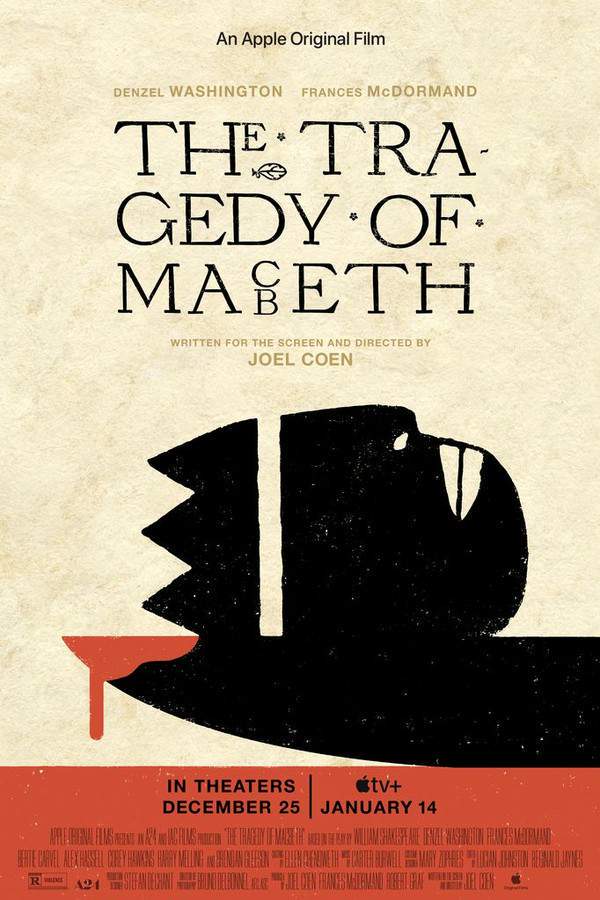
What Is The Tragedy of Macbeth About?
The premise of The Tragedy of Macbeth in 303 words, with nothing given away. The full story and the ending follow below.
In a stark, windswept Scotland where stone castles loom over mist‑cloaked glens, the world feels both ancient and unnervingly immediate. Joel Coen’s vision casts the landscape in harsh chiaroscuro, letting every flicker of torchlight and the distant echo of drums amplify a sense of relentless tension. The film’s tone is unapologetically ruthless, a tapestry woven from whispers of power, foreboding superstition, and the ever‑present shadow of violence that seems to seep from the very earth itself.
The story follows Macbeth, a celebrated war hero newly elevated by his sovereign’s favor. While returning from a triumphant campaign, he encounters a trio of enigmatic figures whose cryptic riddles hint at a destiny far beyond his current station. Their prophecy plants the seed of a tantalizing future, suggesting that greatness may be within his reach—yet also implying that the path forward will be fraught with peril and moral ambiguity.
Beside him stands Lady Macbeth, a figure whose fierce intellect and unyielding resolve match her husband’s ambition. Their partnership becomes a crucible for the raw desire to seize the promise whispered by the mysterious trio. As ambition tightens its grip, the couple must navigate the delicate balance between loyalty to the crown, personal yearning, and the unsettling pressure of expectations that loom larger with each passing sunrise.
Soon, the once‑celebrated hero feels the weight of unseen eyes and growing distrust, as the world around him spirals into a haze of paranoia and looming dread. Allies and rivals alike become silhouettes in a landscape where certainty is a luxury and every decision teeters on the edge of darkness. The film invites the audience to linger in that charged atmosphere, wondering how far a man will go when the allure of power and the fear of oblivion intertwine, leaving the fate of a kingdom—and a soul—hanging in the balance.
What Happens in The Tragedy of Macbeth?
The complete story of The Tragedy of Macbeth, from the first scene to the last, in 530 words (about 2 minutes). Spoilers throughout. Names in the text link to 2 cast member pages.
Spoilers ahead
Macbeth and Banquo return victorious from battle, having defeated the traitorous Thane of Cawdor. Their success draws the attention of three witches on the battlefield, who greet Macbeth with bizarre prophecies: he is destined to rise from the Thane of Glamis to Thane of Cawdor, ultimately claiming the crown. They also foretell that Banquo will be the ancestor of a line of kings. Following this revelation, King Duncan orders the Thane of Ross to execute Cawdor and bestow the title upon Macbeth.
As Macbeth learns that Duncan has named his son Malcolm as the Prince of Cumberland, he feels a mounting sense of alarm; this development poses a significant obstacle to his ambition for the throne. Unable to contain his excitement, Macbeth writes to Lady Macbeth about the witches’ predictions. When Duncan plans a visit to Macbeth’s castle, Lady Macbeth persuades her husband to carry out a heinous act—regicide. She intoxicants the King’s guards, and in a moment of hesitation, Macbeth ultimately succumbs to her pressure and commits the murder. The next morning, Macduff, the Thane of Fife, uncovers the gruesome scene, while Macbeth deceptively kills the sleeping guards to erase his involvement. Fearing for his life’s safety, Malcolm flees to England, leaving Macbeth to ascend as the new King.
Haunted by the prophecy concerning Banquo, Macbeth devises a plot to eliminate him and his son, Fleance. Macbeth’s hired killers successfully murder Banquo, though Fleance manages to escape, leading to a tense chase orchestrated by the character of Ross, who plays a critical role as the Third Murderer.
As time passes, Macbeth grows increasingly paranoid and tyrannical. During a royal feast, he experiences a disturbing hallucination, confronting Banquo’s ghost while embarrassing himself before the court. Lady Macbeth intervenes, dismissing the guests and seeking to sedate her husband. During one of Macbeth’s trances, the witches reappear, presenting chilling visions: they caution him about Macduff, inform him that he will reign until Great Birnam Wood moves to Dunsinane Hill, and assert that he cannot be harmed by anyone born of a woman. In response, Macbeth orders the annihilation of Macduff’s entire family, although Macduff himself has escaped to England.
Meanwhile, Lady Macbeth is tormented by guilt, leading her into a downward spiral that culminates in sleepwalking and madness. Ross discreetly visits England to inform Macduff of his family’s tragic fate, igniting a fire of vengeance within him. In a bid to rally forces, Malcolm enlists help from the English, and they camouflage themselves with branches from Birnam Wood, fulfilling the prophecy as they march toward Macbeth’s fortress at Dunsinane.
In the midst of her turmoil, Lady Macbeth meets her tragic end, deepening Macbeth’s despair. Yet, he remains firmly convinced of his own invulnerability. The inevitable clash occurs when Macduff confronts Macbeth, declaring himself not born of a woman but “untimely ripped” from his mother’s womb. Initially resistant, Macbeth eventually accepts the challenge. In their duel, Macduff prevails, and in a pivotal moment, beheads Macbeth, bringing the final prophecy to fruition.
With Macbeth defeated, Malcolm is declared the new King of Scotland, while Fleance, having survived the turmoil, is secretly whisked away by Ross, suggesting a future beyond the tragedy that has unfolded.
The Tragedy of Macbeth Timeline: Every Key Event in Order
16 key events in the order they happen, from “Victorious Return from Battle” to “Malcolm's Ascendancy”. 7 events name a place, across 5 locations.
- 1
Victorious Return from Battle
Macbeth and Banquo return victorious after defeating the traitorous Thane of Cawdor. Their triumph earns them accolades and the attention of many, setting the stage for future events.
- 2
Witches' Prophecies
On the battlefield, three witches meet Macbeth and Banquo, delivering cryptic prophecies. They predict Macbeth's rise to Thane of Cawdor and future king, and foretell that Banquo will father a line of kings, igniting their ambition.
Where:Battlefield
- 3
Thane of Cawdor Executed
King Duncan orders the execution of the Thane of Cawdor for treason. The title is then bestowed upon Macbeth, furthering his rise in power and ambition.
- 4
Duncan Names His Heir
Duncan announces his son, Malcolm, as the Prince of Cumberland, which alarms Macbeth. This development intensifies Macbeth's ambition and fear, fueling his desire to claim the throne.
- 5
Lady Macbeth's Persuasion
Macbeth writes to Lady Macbeth, sharing the witches' predictions. When Duncan comes to their castle, she persuades him to commit regicide to fulfill his ambition, marking a turning point in their lives.
Where:Macbeth's Castle
- 6
The Murder of Duncan
In a moment of hesitation, Macbeth kills King Duncan, spurred on by Lady Macbeth. This heinous act sets into motion a series of events leading to his tragic downfall.
Where:Macbeth's Castle
- 7
Discovery of Duncan's Murder
The next morning, Macduff discovers Duncan’s body and is horrified. Macbeth pretends to kill the guards to cover his tracks, emphasizing his descent into deceit.
Where:Macbeth's Castle
- 8
Macbeth Becomes King
With Duncan dead, Macbeth ascends the throne as the new King of Scotland. However, this victory is tainted by his fear of Banquo and the witches' prophecy about Banquo's heirs.
- 9
Banquo's Assassination
Haunted by the witches' prophecy, Macbeth orchestrates the murder of Banquo and his son, Fleance. Although Banquo is killed, Fleance escapes, leaving Macbeth unsettled.
- 10
Macbeth's Hallucination
During a royal feast, Macbeth is haunted by a vision of Banquo's ghost, revealing his deteriorating mental state. Lady Macbeth intervenes, fearing for her husband's public persona and sanity.
Where:Banquet Hall
Show the other 6 events of The Tragedy of Macbeth Hide the last 6 events
- 11
Witches' Chilling Visions
The witches return to provide Macbeth with ominous warnings and visions. They tell him to beware of Macduff and assure him he cannot be harmed by anyone born of a woman, deepening his belief in invulnerability.
- 12
Massacre of Macduff's Family
In a fit of paranoia, Macbeth orders the massacre of Macduff’s family. This brutal decision further solidifies his tyranny and estranges him from potential allies.
- 13
Lady Macbeth's Madness
Lady Macbeth, overwhelmed by guilt for her role in Duncan's murder, succumbs to madness. She begins sleepwalking, haunted by her actions and unable to escape her conscience.
- 14
Malcolm Rallies Forces
Malcolm seeks allies in England to overthrow Macbeth, disguising their approach with branches from Birnam Wood. This strategic move fulfills the witches' prophecy, drawing closer to Macbeth's downfall.
Where:England
- 15
Final Confrontation
Macduff confronts Macbeth, revealing that he was 'untimely ripped' from his mother. In a fierce duel, Macduff kills Macbeth, ending his tyrannical reign and fulfilling the final prophecy.
Where:Dunsinane
- 16
Malcolm's Ascendancy
With Macbeth defeated, Malcolm is crowned King of Scotland, symbolizing the restoration of order. Meanwhile, Fleance's survival suggests hope for a brighter future.
Who Are the Main Characters in The Tragedy of Macbeth?
5 characters, among them Macbeth (Denzel Washington), Lady Macbeth (Frances McDormand) and Macduff (Corey Hawkins): who each one is and the part they play in the story. Every profile links to the actor’s page.
-
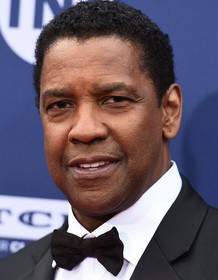
Macbeth (Denzel Washington)
Played by Denzel Washington
Macbeth is a once-valiant warrior whose ambition spirals out of control after receiving prophecies from the witches. His inner conflict manifests as paranoia and tyranny, leading him to commit heinous acts to secure his power. Ultimately, his overwhelming guilt and hallucinations drive him to madness.
- ⚔️ Tragic Hero
- 👑 Ambitious
- 😱 Paranoid
-

Lady Macbeth (Frances McDormand)
Played by Frances McDormand
Lady Macbeth is the driving force behind Macbeth's ambition, pushing him towards regicide. Initially strong-willed and ruthless, her guilt over their actions leads to her psychological unraveling. Her descent into madness highlights the devastating effects of ambition and remorse.
- 👩💼 Manipulative
- 😢 Guilt-ridden
- 🔥 Strong-willed
-

Macduff (Corey Hawkins)
Played by Corey Hawkins
Macduff emerges as a key figure representing justice and vengeance. After suffering the loss of his family at the hands of Macbeth, he becomes resolute in his mission to confront the tyrant. His character embodies the struggle against tyranny and the quest for rightful leadership.
- ⚔️ Avenger
- 🇸🇨 Justice-seeker
- 💔 Grief-stricken
-

Banquo (Ralph Ineson)
Played by Ralph Ineson
Banquo is Macbeth's closest friend and fellow warrior, whose honor stands in stark contrast to Macbeth's ambition. The prophecy of his progeny becoming kings haunts Macbeth, resulting in Banquo's tragic fate. His character symbolizes loyalty and the consequences of betrayal.
- 🔊 Loyal
- ⚔️ Honor-bound
- 💔 Tragically doomed
-

Ross (Alex Hassell)
Played by Alex Hassell
Ross serves as a messenger and ally through the tumultuous events, playing a pivotal role in relaying key information. He is often caught between loyalty to the crown and the unfolding chaos. His character exemplifies the complexities of political maneuvering in a time of upheaval.
- 📜 Messenger
- 🔍 Observer
- 🤝 Diplomatic
Where and When Is The Tragedy of Macbeth Set?
The Tragedy of Macbeth is set in Scotland, Dunsinane and Birnam Wood (Medieval Scotland). Here is why the time and place matter to the story.
When
Medieval Scotland
The events unfold in a fictionalized version of medieval Scotland, a time of feudal lords, battles for power, and supernatural beliefs. This period is characterized by struggles for the throne and the heavy influence of fate and prophecy on one's destiny, reflecting the dark themes of ambition and morality.
Where
Scotland, Dunsinane, Birnam Wood
The movie is set in Scotland, primarily around the castle of Dunsinane, which serves as Macbeth's stronghold. The dense Birnam Wood is notable for its pivotal role in the prophecy, as it becomes a symbol of fate and rebellion. These locations are steeped in Scottish history and folklore, providing a haunting backdrop to the tale of ambition and downfall.
- 🏰 Castle
- 🌲 Forest
- 🌍 Scotland
What Are the Themes of The Tragedy of Macbeth?
3 ideas the story keeps returning to, among them Ambition, Guilt and Fate vs. Free Will.
-
01
Ambition
Ambition is a central theme in the story, manifesting in Macbeth's relentless desire for power at any cost. His aspirations lead him to betray and murder, plunging him into a cycle of guilt and paranoia. The destructive nature of unchecked ambition echoes through the characters, ultimately resulting in tragedy and downfall.
-
02
Guilt
Guilt haunts both Macbeth and Lady Macbeth as their heinous deeds weigh heavily on their consciences. Macbeth's descent into madness and Lady Macbeth's sleepwalking are manifestations of their inner turmoil and remorse. This theme illustrates how guilt can consume individuals, leading to their eventual ruin.
-
03
Fate vs. Free Will
The tension between fate and free will is explored through the witches' prophecies and Macbeth's choices. While the prophecies set the course for Macbeth's rise and fall, it is his actions that ultimately lead to his demise. This theme raises questions about the extent of human agency in the face of predetermined destiny.
How Does The Tragedy of Macbeth End?
The last act of The Tragedy of Macbeth and what it means, in 279 words. The ending lands as bleak. Big spoilers: read the plot summary first if you have not seen it.
The final act, in full
The ending of The Tragedy of Macbeth is notably different from the traditional Shakespeare finale, mainly due to a new, wordless scene that leaves the story open-ended and more ambiguous. In the film, it is revealed that Fleance, Banquo’s son who was supposed to be dead after Macbeth’s murderous plot, is actually alive and hidden in the countryside by Ross. This detail is significant because, in Shakespeare’s original play and many adaptations, Fleance’s survival signifies a potential future threat to Macbeth’s throne, but his fate after that remains uncertain. Here, Ross is portrayed as a morally complex character, and his involvement hints that Fleance isn’t just fleeing but may be hidden away deliberately for his own purposes.
This subtle change shifts the tone of the story from a traditional tragedy ending with the restoration of order—Malcolm taking the throne after Macbeth’s death—to a darker, more unsettled future. With King Duncan’s death and Malcolm’s claiming of the throne, Shakespeare’s version offers hope for stability, emphasizing renewal and justice. However, Coen’s adaptation complicates this. By making Ross a sneaking conspirator and visually introducing a swarm of ravens over the closing shot, the film suggests that the struggle for power will not end peacefully. The fact that Fleance survives and is secretly protected indicates that a new cycle of chaos and violent power struggles is imminent, foreshadowing more conflict to come. This ending leaves viewers with a sense of uncertainty and cynicism, implying that the violence and treachery of Macbeth’s world are far from over, and peace might never truly be restored. In this way, Coen’s version offers a more nihilistic view of the story, where the cycle of violence continues unabated.
What Kind of Film Is The Tragedy of Macbeth?
Dark in tone, with steady pacing and a moderate story, going by the plot summary.
- Tone
- Dark
- Pacing
- Steady
- Story
- Moderate
- Intensity
- High
- Ending
- Bleak
A stark and atmospheric descent into paranoia and moral decay, this adaptation of Shakespeare's tragedy feels claustrophobic and haunting, driven by ruthless ambition and the heavy weight of guilt.
- oppressive
- paranoid
- sinister
- claustrophobic
- haunting
- atmospheric
- power and ambition
- moral corruption
- guilt and madness
- fate and prophecy
Content notes: murder, war violence, psychological torment, family annihilation.
Quiz
How well do you remember The Tragedy of Macbeth? Test yourself on the story.