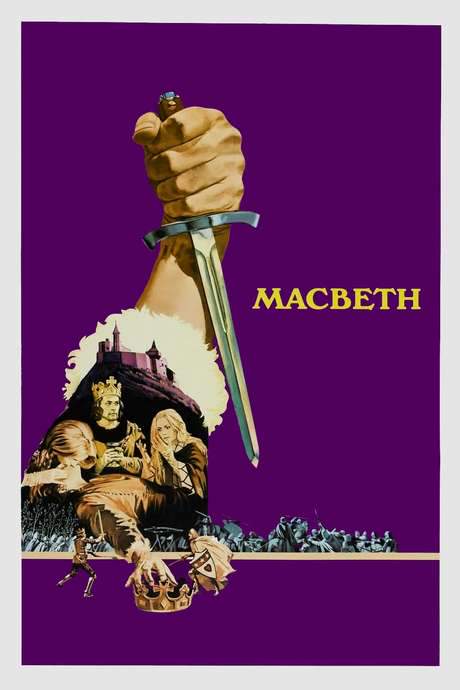
Macbeth 1971

Directed by

Roman Polanski
Made by

Caliban Films
Where to Watch Macbeth
See current US streaming, rental, and purchase options for Macbeth (1971) via JustWatch.






Macbeth Plot Summary
Read the complete plot summary and ending explained for Macbeth (1971). From turning points to emotional moments, uncover what really happened and why it matters.
In the Middle Ages, a bold Norwegian and Irish invasion of Scotland, aided by the treacherous Thane of Cawdor, is silenced by two noble soldiers who share a crave for power. Macbeth, the Thane of Glamis, and Banquo find themselves at the heart of a prophecy when they encounter the enigmatic Three Witches, who foretell a dramatic rise in Macbeth’s fortunes and a future for Banquo that is “lesser and greater.” At the site of this fateful encounter, Macbeth and Banquo are left to grapple with what the future might hold, and the news of Cawdor’s execution arrives just as Macbeth is named the new Thane of Cawdor by King Duncan. The revelation overwhelms him with both awe and fear, setting in motion a dangerous chain of decisions.
Macbeth, newly minted as Thane of Cawdor, sends a letter to his wife, and Francesca Annis lights up his resolve with a mix of encouragement and ruthless ambition. Lady Macbeth, sensing her husband’s gentler nature, resolves to push him toward action, even if it means she must steel herself to cruelty. Meanwhile, Duncan elevates his own bloodline’s status, naming Malcolm, his eldest son, as Prince of Cumberland, a move that sits uneasily with Macbeth and stirs unrest within the court. The night unfolds with a sense of duplicity as Lady Macbeth hosts the royal visit at Macbeth’s castle, weaving charm and menace in equal measure.
When the moment comes, Macbeth enters Duncan’s chamber after his wife has secretly drugged the guards. A sudden act of violence changes the kingdom: Macbeth kills Duncan, frames the guards for the crime, and then eliminates them to ensure the deed is not questioned. News of the murder ripples through the realm, and suspicion drives Malcolm and Donalbain to flee, hoping to save their skins while casting suspicion on others. In the corridors of power, the Thane of Ross contemplates Macbeth’s ascent, even as Macduff heads north to Fife, sensing the danger that now hangs over Scotland.
From there, Macbeth’s fear fans a darker fire. He orders the murderers to strike at Banquo and his son Fleance, hoping to thwart any challenge to his throne. Banquo falls, but Fleance escapes, leaving Macbeth to settle a personal score with treachery and terror. Macbeth tries to quell the haunting presence of Banquo by arranging a grotesque banquet where the ghost of Banquo reappears, unbalancing the king and fueling his resolve to seek out the witches again. The witches respond with further prophecies and manipulations, casting a spell of invincibility around Macbeth and weaving visions that seal his fate with lines like the prophecy that he cannot be defeated “till Birnam Wood comes to Dunsinane.”
As Scotland’s nobles desert the throne, Macduff travels to England to join Malcolm in amassing forces. Terence Bayler portrays Macduff as a steadfast voice of loyalty who ultimately becomes a key instrument in confronting Macbeth. Back home, Lady Macduff, played by Diane Fletcher, and her household fall victim to Macbeth’s ruthless widenings of his rule, spurring Ross to pivot from ally to wary observer. The formidable English king aligns with Malcolm, gathering an army led by Siward, Alf Joint, to reclaim Scotland’s throne. The plan hinges on stealth and cunning: Birnam Wood must march as a living ruse, and the invading force advances on Dunsinane with branches in hand to cloak their numbers.
In the climactic clash, Macduff confronts Macbeth in a fierce duel, the truth of Macduff’s birth—delivered by Caesarean section—undermining the king’s stated invincibility. The duel ends with Macbeth slain and beheaded, and Malcolm’s title restored to the throne of Scotland. As the realm breathes a sigh of relief, Ross proclaims Malcolm king, while Donalbain’s fate remains entwined with the lingering influence of the witches, whose prophecies continue to cast a shadow over the land.
This sweeping tragedy unfolds with a blend of grit and poetry, driven by the intense personal ambitions of Macbeth and the ruthless devotion of Lady Macbeth, tempered by loyalty, betrayal, and the inexorable pull of fate. The interplay between prophecy and choice threads through every decision, turning a noble ascent into a perilous fall and leaving a kingdom to rebuild under a new king. The film’s stark mood, vivid character dynamics, and stark visuals invite viewers to ponder the cost of ambition and the price of heedless power.
Macbeth Timeline
Follow the complete movie timeline of Macbeth (1971) with every major event in chronological order. Great for understanding complex plots and story progression.
Invasion repelled by Macbeth and Banquo
A Norwegian and Irish invasion aided by a traitorous Thane of Cawdor is repelled by Macbeth and Banquo. The victory raises Macbeth's standing among the Scottish nobles and begins to push his ambitions toward the throne. The immediate threat to Duncan's rule starts to shift as power consolidates around Macbeth.
Duncan names Macbeth Thane of Cawdor
Duncan sentences the traitor Cawdor to death and awards Macbeth the title Thane of Cawdor. The decision elevates Macbeth's status at court, even though he and Banquo do not yet hear the news. The prophecy's lure grows stronger as opportunities to act present themselves.
Macbeth and Banquo meet the Three Witches
On the road after the battle, Macbeth and Banquo encounter Three Witches who hail Macbeth as Thane of Cawdor and future king, and declare Banquo will be 'lesser' and 'greater'. The encounter stirs ambition and fear, planting the seeds for the upcoming choices. The prophecy sets the course for the drama to unfold.
Nobles inform Macbeth of his new title
Back at the camp, nobles inform Macbeth that he has been named Thane of Cawdor, filling him with awe and fear about the prospect of seizing Duncan's throne. Banquo watches the developments with cautious curiosity as the prophecy takes on a personal dimension.
Macbeth writes to Lady Macbeth
Macbeth writes a letter to Lady Macbeth detailing the witches' prophecy and his new title. Lady Macbeth responds with delight but also fears that her husband lacks ruthlessness, and she resolves to push him toward action.
Duncan names Malcolm Prince of Cumberland
Duncan proclaims Malcolm as heir and Prince of Cumberland, making him the next king in line. Macbeth is unsettled by this obstacle and Banquo remains wary of the prophecy's implications. The monarch's decision intensifies the tension surrounding Macbeth's future plans.
Royal visit at Macbeth's castle
That night, the royal party stays at Macbeth's castle and is greeted by Lady Macbeth with practiced warmth. Her hospitality masks a ruthless plan to secure the throne as she manipulates those around them.
Duncan murdered by Macbeth
Urged by Lady Macbeth, Macbeth enters Duncan's chamber after drugging the guards. Duncan awakens briefly and unknowingly names Macbeth, who then stabs him, killing the king. Macbeth frames the guards for the murder and then murders them when Duncan's corpse is discovered.
Malcolm and Donalbain flee; Macbeth's kingship anticipated
Fearing a conspiracy, Malcolm and Donalbain flee to England and Ireland to preserve themselves. The Thane of Ross realizes that Macbeth's future as king is now a reality, even if it unsettles the realm.
Coronation and risks at Scone; Macduff heads to Fife
A courtier hails Macbeth as king at Scone, and Macduff heads back to his home in Fife, wary of Macbeth's power. The consolidation of power continues as factions form across Scotland.
Banquo’s murder plot and execution
To secure his throne, Macbeth orders Banquo and his son Fleance killed, hiring two murderers and using Ross as the Third Murderer. The attempt succeeds against Banquo but Fleance escapes, leaving Macbeth in increasing fear of the prophecy’s threat.
Banquo’s ghost and the witches’ deception
At a royal banquet, Banquo's ghost haunts Macbeth, triggering fear and a crisis of control. He seeks out the witches again, who perform a ritual that convinces him of invincibility and reinforces the prophecy that he cannot be defeated until Birnam Wood comes to Dunsinane.
Ross and the fall of Lady Macduff
Ross travels to Fife to coordinate resistance against Macbeth, but leaves the doors of the castle ajar for Macbeth's killers. In Fife, Lady Macduff and her children are slain by the murderers, illustrating the brutal reach of Macbeth's rule.
Invasion by English forces and Birnam Wood
English forces, led by Malcolm and Siward, invade Scotland and march on Dunsinane, using branches from Birnam Wood to camouflage their numbers. The united front poses the final challenge to Macbeth's grip on the throne.
Macbeth defeated and Malcolm crowned
In a final duel, Macduff reveals he was delivered by Caesarean section and defeats Macbeth, who is beheaded. Malcolm is proclaimed King of Scotland, and order begins to return to the realm as the witches’ influence lingers over the throne.
Macbeth Characters
Explore all characters from Macbeth (1971). Get detailed profiles with their roles, arcs, and key relationships explained.
Macbeth (Jon Finch)
A once-valiant noble whose ascent to the throne is propelled by prophetic hopes and ruthless choices. His downward slide is marked by increasing paranoia, guilt, and a readiness to commit further murders to secure power. See his transformation from a trusted thane to a tyrant who fears any threat to his rule.
Lady Macbeth (Francesca Annis)
Architect of Macbeth’s initial ascent, she shrewdly manipulates him and channels his ambitions into action. Her outward composure masks a consuming guilt that corrodes her strength and resolve. She embodies ruthless ambition and calculates every risk to seize the crown.
Banquo (Martin Shaw)
A noble and steadfast ally whose legitimate concerns about the witches’ prophecies contrast with Macbeth’s growing ruthlessness. His murder marks a turning point in the plot, and his memory haunts Macbeth as a symbol of honest resistance. Loyal yet wary, he embodies honor under threat.
Macduff (Terence Bayler)
A principled noble who opposes Macbeth’s tyranny and becomes a vehicle for the realm’s restoration. He fights for Scotland’s rightful leadership and seeks vengeance after the slaughter of his family. His resolve underscores duty over personal vengeance.
Duncan (Nicholas Selby)
The rightful king whose murder precipitates the tragedy. His gracious rule is cut short by a calculated act of regicide, triggering a cascade of betrayal and war. His removal exposes the instability at the heart of the realm.
Malcolm (Stephan Chase)
The heir to the throne who flees to England after Duncan’s murder and gathers forces to reclaim the kingdom. He embodies resilience and strategic leadership, eventually restoring order. His caution contrasts with Macbeth’s impulsive violence.
Donalbain (Paul Shelley)
Duncan’s younger son who seeks safety after the murder and witnesses the unraveling of the royal line. His fate remains tied to the larger political struggle driven by fear and revenge. He plays a quiet, cautious role in the immediate aftermath.
Lady Macduff (Diane Fletcher)
A contrast to her husband’s loyalties, she embodies the domestic tragedy of Macbeth’s ruthlessness. Her murder with her family underscores the indiscriminate reach of tyranny. Her scene highlights the human cost of political ambition.
First Witch (Maisie MacFarquhar)
One of the trio that sets the tragedy in motion with prophetic verse. They manipulate Macbeth by planting the seeds of ambition and fear. Their cryptic dialogue frames the moral chaos that follows.
Second Witch (Elsie Taylor)
A member of the triad whose chants and foretold destinies push Macbeth toward violent action. Their presence makes the court a theater of deception and dread. They symbolize fate’s unpredictable grip on power.
Third Witch (Noelle Rimmington)
The final voice in the trio that frames Macbeth’s fate. Their warnings and riddles drive him deeper into a path of murder. They symbolize the inescapable pull of fate in a world hungry for power.
Fleance (Keith Chegwin)
Banquo’s son who survives the assassination attempt, embodying the lingering prophecy of the line’s survival. His escape preserves an heir to potentially confront Macbeth. He represents the possibility of resistance through lineage.
Porter (Sydney Bromley)
A comic yet grim observer who frames the sense of doom with a tavern door and a sense of sin. The porter scene punctures the solemnity while maintaining the eerie mood. His presence marks the everyday intrusion of murder into normal life.
Dancer (Christine Paul-Podlasky)
A background performer whose presence signals the ceremonial nature of the court. They help convey the atmosphere of pageantry and ritual in the royal setting. Their role emphasizes the contrast between surface opulence and underlying violence.
Macduff's Son (Mark Dightam)
A child caught in the crossfire of political violence, whose fate underscores the indiscriminate human cost of regicide. His brief but poignant appearance amplifies the tragedy of Macbeth’s usurpation. He embodies innocence lost to ambition.
Macbeth Settings
Learn where and when Macbeth (1971) takes place. Explore the film’s settings, era, and how they shape the narrative.
Time period
11th century
The tale is rooted in the early medieval period, a time of dynastic struggles and fragile crowns. Scotland faces external threat from Norse and Irish forces while internal conspiracies threaten the line of succession. Rituals, prophecies, and assassination drive a brutal political game that defines the era.
Location
Scotland, Birnam Wood, Dunsinane, Fife
Set across a medieval Scottish landscape, the story unfolds in royal courts, battlegrounds, and shadowy moors. Castles and frontier towns frame a realm where loyalty falters and power shifts with brutal immediacy. The action moves from Macbeth's castle to the fields near Birnam Wood and the throne-room at Dunsinane, with Fife as a key staging point for reinforcements and intrigue.
Macbeth Themes
Discover the main themes in Macbeth (1971). Analyze the deeper meanings, emotional layers, and social commentary behind the film.
🔥
Ambition
Ambition drives Macbeth from a loyal noble to a king tormented by paranoia. The witches’ prophecies ignite a desire for power that corrupts judgment and justifies murder. Lady Macbeth fuels this drive, turning personal ambition into a shared political project. The pursuit of the throne destabilizes the realm and ultimate fate hangs on every risky decision.
🔮
Supernatural
Witches prophesy Macbeth’s rise and Banquo’s legacy, shaping the characters’ actions more than any mortal plan. The ritual scenes use occult imagery to blur the line between fate and free will. The supernatural promises and tricks seed madness and disorientation in Macbeth, making him chase certainty where there is none. The realm’s trust is prey to prophecies that seem to guide events more than human choices.
💭
Guilt & Paranoia
Guilt gnaws at Macbeth and Lady Macbeth after each murder, turning their private desires into public catastrophe. Banquo’s ghost and the paranoid banquet reveal the psychological toll of regicide. Fear spirals into further violence as allies turn to foes under the weight of bloodshed. The couple’s mental unraveling accelerates the collapse of order.
🎭
Appearance vs Reality
Draped in diplomacy, the court conceals brutal ambition and treachery. Characters wear masks of loyalty while concealing murderous intent. Lady Macbeth's politeness disguises her ruthless scheming, and Macbeth's noble facade belies a growing tyranny. The illusions of invincibility promised by prophecies are pierced by the brutal truth of murder.
🪄
Fate vs Free Will
The witches’ prophecies suggest destiny, yet characters repeatedly choose harmful actions that steer the plot. The interplay between fate and choice drives the tragedy, as Macbeth and Lady Macbeth try to outmaneuver their supposed fate. Each decision to kill or to suspect further cements a self-fulfilling prophecy. The outcome hinges on human agency as much as any supernatural design.
⚔️
War & Invasion
The narrative is framed by a kingdom under siege from external and internal forces. Invasion by foreign forces and the ensuing civil conflict set the stakes for every murder and alliance. The battle sequences culminate in Macbeth’s fall at the hands of Macduff. The war serves as a backdrop to the personal power struggles that drive the tragedy.

Coming soon on iOS and Android
The Plot Explained Mobile App
From blockbusters to hidden gems — dive into movie stories anytime, anywhere. Save your favorites, discover plots faster, and never miss a twist again.
Sign up to be the first to know when we launch. Your email stays private — always.
Explore the mobile appMacbeth Spoiler-Free Summary
Discover the spoiler-free summary of Macbeth (1971). Get a concise overview without any spoilers.
In the mist‑shrouded highlands of 11th‑century Scotland, a realm of fierce clans and looming castles forms the backdrop for a story where destiny hangs on whispered riddles. Three enigmatic witches appear on a desolate heath, their cryptic verses planting the seed of a future that promises greatness and peril alike. Their prophecy reverberates through the corridors of power, turning the wind‑swept moors into a stage for ambition to stir.
At the centre of this turbulent world stands Macbeth, a celebrated war‑lord whose valor has earned him the respect of his peers and the ear of the sovereign. Yet the promise of the witches awakens a restless yearning within him, a yearning that finds both encouragement and a stark, unyielding push from his determined partner, Lady Macbeth. Their relationship crackles with a blend of loyalty and relentless drive, each urging the other toward horizons that glimmer with potential yet shadowed by doubt. Alongside them, Banquo walks a parallel path, his own fate hinted at by the same otherworldly voices, while King Duncan presides over a court where titles are bestowed and the balance of power constantly shifts.
The film wraps these characters in a brooding, atmospheric aesthetic—stone walls drenched in rain, firelight flickering against ancient tapestries, and the ever‑present howl of the Scottish winds. A palette of muted grays and deep earth tones underscores the tension between honor and longing, while the lingering presence of the witches infuses the air with an unsettling sense of inevitability. As ambition tightens its grip, the audience is drawn into a world where every decision feels weighed against the echo of prophecy, leaving the future as uncertain as the fog that rolls over the Highlands.
Movies with Similar Twists and Themes
Uncover films that echo the narrative beats, emotional arcs, or dramatic twists of the one you're exploring. These recommendations are handpicked based on story depth, thematic resonance, and spoiler-worthy moments — perfect for fans who crave more of the same intrigue.
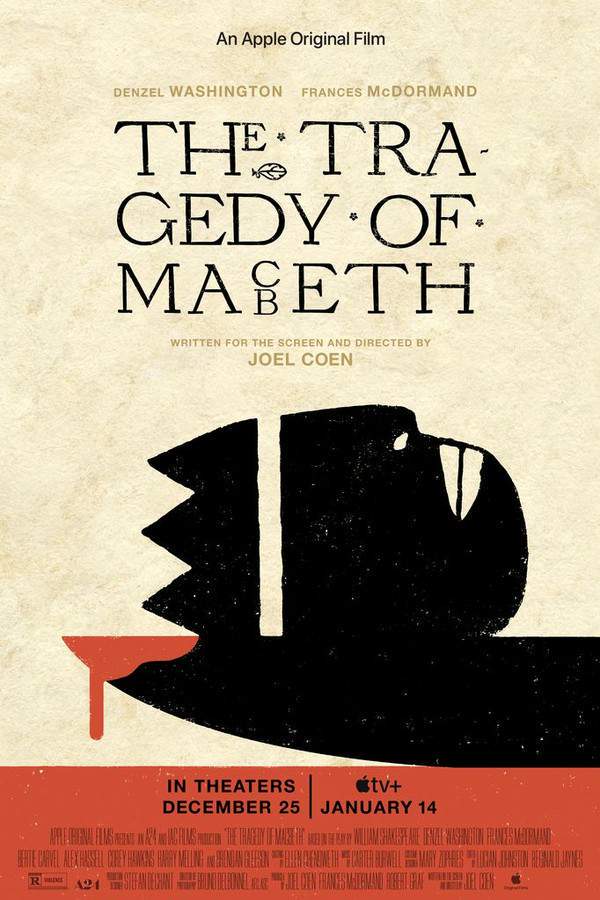
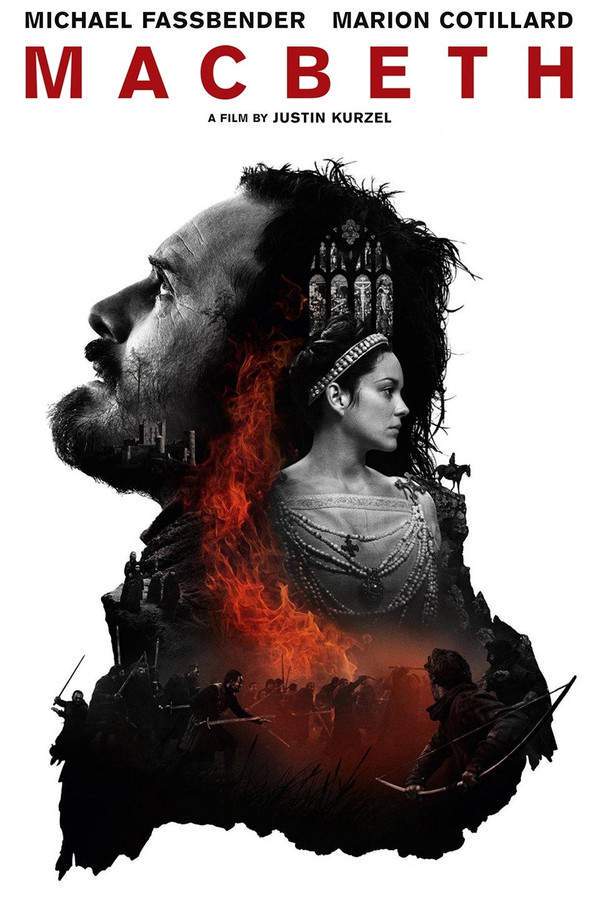
Featured on this page

What's After the Movie?
Not sure whether to stay after the credits? Find out!
Check out our other apps:

SAT Sphere
Build confidence for the Digital SAT.

Mori Atlas
Discover wild places worth protecting.

Luntero
Search smarter for a home in Amsterdam.

Plot Explained
Unravel movie endings and hidden clues.

Pokechamp
Dive into Pokémon data and battle logic.

Driving Theory
Get ready for your European theory test.

Movie Dust
Plan your next cinema trip with ease.

Musemap
Find art and culture as you travel.

Selkobase
Compare credentials before committing.

Local Manual
Turn an unfamiliar country into practical next steps.

Lernavi
Compare school systems before your next move.

GymRoam
Find a workout stop wherever your plans take you.
Explore Our Movie Platform
New Movie Releases (2026)
Famous Movie Actors
Top Film Production Studios
Movie Plot Summaries & Endings
Major Movie Awards & Winners
Best Concert Films & Music Documentaries
Movie Collections and Curated Lists
© 2026 What's After the Movie. All rights reserved.
Privacy Policy