
The Traffic Policeman 1960

Directed by
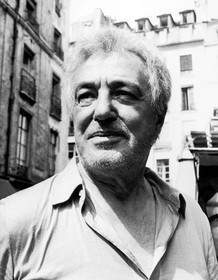
Vittorio De Sica
Made by

Royal Film
The Traffic Policeman Plot Summary
Read the complete plot summary and ending explained for The Traffic Policeman (1960). From turning points to emotional moments, uncover what really happened and why it matters.
Otello Celletti, Alberto Sordi, is a war veteran from a small Latium town who has been unemployed since the end of the conflict. He lives with his father, his wife, Marisa Merlini as Amalia Celletti, and their son, relying on his brother-in-law’s support. When a menial job opens in the town’s markets, Otello rejects it in disdain. Yet after a stubborn stand before the town’s Mayor Vittorio De Sica and by leaning on his veteran status, he finally secures a position with the local traffic police. Although his performance is flawed, he still wields his authority to settle petty scores against those who teased him during his unemployment, turning irritation into a form of quiet vigilante justice.
One day, Otello assists a famous actress, Sylva Koscina, on the roadside. He enjoys a courteous chat, invites her for coffee, and chooses not to fine her for missing her driving license and car documents. That night, during a guest appearance on the television program Il Musichiere in front of 18 million viewers, Sylva publicly greets Otello, but the host Mario Riva nudges her to reveal that Otello had let her go when a fine or arrest might have been due. The moment shakes Otello’s standing and invites political fallout.
Under mounting pressure, the Mayor scolds Otello for tarnishing the police force’s image and threatens to fire him. Later, Otello catches the Mayor himself speeding on a dangerous curve, and, driven by a sense of tested integrity, he chases him to a private meeting with his mistress. He issues a speeding ticket that inadvertently exposes the Mayor’s extramarital affair, and the Mayor responds by suspending Otello and appealing the ticket.
Seeking leverage, Otello turns to the local monarchists who name him their candidate for the upcoming mayoral race, opposing the current Mayor. In a tense private meeting with the Mayor’s party, Otello hints at bringing years of mismanagement to light. In retaliation, the Mayor reveals compromising information about Otello and his family: Otello’s sister, once thought to be a masseuse in Milan, is described as a prostitute; Otello himself is not legally married to Amalia, as her legal husband from before the divorce still lives; and Otello’s father, revered as a war hero, had a criminal past that could alienate monarchists by undercutting the myth of unquestioned loyalty to the crown.
At the subsequent appeal hearing, Otello relents and exonerates the Mayor, claiming the fine arose from a faulty odometer and withdrawing his candidacy. After being reappointed to the traffic police, Otello again yields the road to the Mayor as he speeds along the same curve, only for the Mayor to crash and be hospitalized, delivering a form of poetic justice that echoes the town’s capricious sense of power and punishment.
The Traffic Policeman Timeline
Follow the complete movie timeline of The Traffic Policeman (1960) with every major event in chronological order. Great for understanding complex plots and story progression.
Otello refuses a menial job and seeks status as a veteran
Otello, a war veteran, is unemployed and living with his family in a small Latium town. He stubbornly refuses a menial job at the market, insisting on a role that recognizes his service. By leveraging his veteran status, he pressures the Mayor to hire him as a local traffic policeman. He begins to dream of dignity and steadiness, albeit with some arrogance.
Becomes traffic policeman and abuses authority
Otello secures the role with the town's traffic police; he performs poorly in duties but uses his position to mete out petty punishments to those who teased him during unemployment. His badge becomes a tool for quick, vindictive justice rather than public service. The line between authority and grievance blurs as he relishes small power.
Roadside aid to Sylva Koscina
During a routine patrol, Otello helps famous actress Sylva Koscina with car trouble and chats amiably. He invites her for coffee and chooses not to fine her for missing documents, blurring professional boundaries with a celebrity encounter.
Sylva’s TV appearance and the public revelation
That night, Sylva appears on the televised program Il Musichiere and publicly greets Otello. At the host's insistence, she reveals how Otello let her go when he should have fined or arrested her, exposing a weakness in his public image. The moment tightens the political stakes around his role.
Mayor’s reprimand and threat
Under political pressure, the Mayor berates Otello for tarnishing the police force’s image and threatens to fire him. Otello’s pride is bruised as he realizes his actions have real consequences beyond the badge.
Otello catches the Mayor speeding
Otello spots the Mayor speeding on a dangerous curve and pursues him. He issues a speeding ticket, which inadvertently exposes the Mayor’s extramarital affair. This act marks Otello as a political threat and a danger to corrupt power.
Suspension and appeal
Enraged by the ticket and public exposure, the Mayor suspends Otello and arranges an appeal of the fine. The move signals a shift into formal political maneuvering to sidelined Otello.
Otello joins monarchists as candidate
Seeking to counter the Mayor’s influence, Otello aligns with local monarchists who nominate him as their candidate for the upcoming mayoral election. The alliance moves Otello from street-level conflict into strategic political play.
Private meeting and revelations
In a private meeting with the Mayor’s party members, Otello threatens to expose years of mismanagement by the administration. The Mayor responds by presenting compromising information about Otello’s family and past, including his sister’s alleged work and his unresolved marriage. The revelation intensifies the stakes of the upcoming appeal.
Appeal hearing and Otello’s capitulation
At the next day’s appeal, Otello relents and exonerates the Mayor, asserting the fine was due to a faulty odometer reading. He withdraws his candidacy, yielding to political pressure and ending his bid for office for the time being.
Reinstatement and a test of justice
Some time after he is reinstated as a traffic policeman, Otello is shown making way for the Mayor as he speeds once again along the same curve. This scene tests whether justice can be restored through subtle acts rather than open confrontation.
Poetic justice: the Mayor’s crash
The Mayor accelerates on the curve and crashes his car, ending up hospitalized. The event serves as poetic justice for Otello and a stark culmination of the power struggle between them.
The Traffic Policeman Characters
Explore all characters from The Traffic Policeman (1960). Get detailed profiles with their roles, arcs, and key relationships explained.
Otello Celletti (Alberto Sordi)
A war veteran who becomes a traffic policeman after years of unemployment. He is proud, insecure about his status, and prone to abusing his authority for petty revenge. His incompetence at times masks a sharper instinct for leverage, which the political climate quickly exploits. The story tracks his rise, exposure, and eventual manipulation within a corrupt system.
Amalia Celletti (Marisa Merlini)
Otello’s wife, living with his family under constrained circumstances. She embodies the civilian consequences of political games and personal secrets. Her presence grounds Otello’s personal life amid the town’s public shenanigans. She remains a steady, if peripheral, witness to the unfolding drama.
Il sindaco (Vittorio De Sica)
The town mayor whose political career hinges on public image and maneuvering. He uses threats and political leverage to control Otello and maintain his grip on power, while also facing personal scandals he attempts to suppress. His intelligence is matched by a willingness to manipulate information to preserve his position.
Sylva Koscina (Herself)
A famous actress who encounters Otello on the road and becomes a focal point of the public’s imagination. Her presence and later TV moment amplify the drama around Otello’s authority and the town’s view of celebrity influence. She embodies the collision between stardom and everyday power.
Segretaria del sindaco (Rossana Canghiari)
The mayor’s secretary, a desk-bound observer of the political machine. Her role highlights the administrative side of town governance and the flow of information that determines political advantage. She represents the quiet, procedural layer of the local government machinery.
Il tenente dei vigili (Riccardo Garrone)
The lieutenant of the traffic police, a subordinate figure who participates in Otello’s policing world. He helps illustrate the chain of command and the institutional environment Otello navigates. His presence underscores the systemic nature of the town’s authority.
Il comandante dei vigili (Gianni Solaro)
The head of the traffic police, a figure who represents the formal authority Otello must contend with. His role emphasizes the hierarchical pressure and institutional oversight that shape Otello’s actions. He embodies the procedural aspect of law enforcement in the town.
The Traffic Policeman Settings
Learn where and when The Traffic Policeman (1960) takes place. Explore the film’s settings, era, and how they shape the narrative.
Time period
1950s
Set in the early postwar era of Italy, the film shows a country rebuilding and navigating new social norms. Mass media begins to loom large, as illustrated by a nationwide TV appearance that alters public perception. The period is defined by political maneuvering within local government and a shifting moral landscape.
Location
Latium, Italy
The story unfolds in a small Latium town, a tight-knit provincial community centered around its market and town hall. The setting provides a microcosm of postwar Italian life, with local politics shaping daily routines and reputations. The town’s markets, streets, and municipal offices form the backdrop for Otello’s rise and fall as traffic police.
The Traffic Policeman Themes
Discover the main themes in The Traffic Policeman (1960). Analyze the deeper meanings, emotional layers, and social commentary behind the film.
🏛️
Power & Corruption
Otello’s ascent through the traffic police ranks exposes how authority can be misused for petty revenge rather than public service. The Mayor counteracts dissent with coercive tactics, aiming to protect his image and grip on power. The film satirizes bureaucratic hierarchies where personal vindictiveness intrudes on governance. It ultimately questions whether power justifies the means used to retain it.
📺
Public Image
A celebrity encounter and a prime-time TV moment show how appearances can shape political luck more than actual performance. Otello’s mercy toward a famous actress becomes a public spectacle that tests his credibility. The Musichiere appearance demonstrates the power of media to influence public opinion and political fortunes. The story uses broadcast moments to reveal how reputation is manufactured.
⚖️
Hypocrisy
Compromising information about Otello’s private life is weaponized to derail his political prospects. The Mayor’s willingness to expose personal secrets highlights a double standard between public virtue and private vice. The film contrasts supposed moral authority with realpolitik, showing how ethical lines are blurred in the pursuit of power. The ending offers a form of poetic justice that critiques this hypocrisy.

Coming soon on iOS and Android
The Plot Explained Mobile App
From blockbusters to hidden gems — dive into movie stories anytime, anywhere. Save your favorites, discover plots faster, and never miss a twist again.
Sign up to be the first to know when we launch. Your email stays private — always.
Explore the mobile appThe Traffic Policeman Spoiler-Free Summary
Discover the spoiler-free summary of The Traffic Policeman (1960). Get a concise overview without any spoilers.
In a sun‑baked corner of Italy, a town that hums with market stalls and the endless clatter of automobiles, Otello Celletti drifts between the memories of war and the harsh reality of post‑conflict unemployment. Living with his aging father, his steadfast wife Amalia, and their young son, he leans on the modest support of relatives while the town’s rhythms pulse around him, offering little in the way of steady work.
When a modest opening appears within the local traffic police, Otello seizes it more out of pride than necessity, turning his veteran status into a badge of authority. The job lands him amid the chaotic flow of city traffic, where every intersection becomes a micro‑theater of impatience, bureaucracy, and everyday heroics. The film paints this world with a warm, slightly satirical brush: bustling streets, honking horns, and the quiet absurdities of municipal rule‑making blend into a backdrop that is both vivid and humorously overloaded.
Otello’s personality—stubborn, earnest, and prone to a dry sense of justice—shapes his interactions with the town’s eclectic cast. He navigates the expectations of a mayor who embodies official propriety, the good‑natured teasing of neighbors, and the subtle power dynamics that surface whenever a uniform is involved. His newfound position becomes a lens through which he both observes and subtly influences the petty disputes that pepper daily life.
The tone balances gentle comedy with a keen social observation, letting the audience feel the weight of a man trying to restore a sense of purpose while the city around him spins a little faster each day. As traffic lights flash and the streets pulse, Otello’s quiet struggle to reconcile his past with his present invites both laughter and reflection, setting the stage for a story that is as much about personal dignity as it is about the traffic jams that define modern life.
Movies with Similar Twists and Themes
Uncover films that echo the narrative beats, emotional arcs, or dramatic twists of the one you're exploring. These recommendations are handpicked based on story depth, thematic resonance, and spoiler-worthy moments — perfect for fans who crave more of the same intrigue.


Featured on this page

What's After the Movie?
Not sure whether to stay after the credits? Find out!
Check out our other apps:

SAT Sphere
Build confidence for the Digital SAT.

Mori Atlas
Discover wild places worth protecting.

Luntero
Search smarter for a home in Amsterdam.

Plot Explained
Unravel movie endings and hidden clues.

Pokechamp
Dive into Pokémon data and battle logic.

Driving Theory
Get ready for your European theory test.

Movie Dust
Plan your next cinema trip with ease.

Musemap
Find art and culture as you travel.

Selkobase
Compare credentials before committing.

Local Manual
Turn an unfamiliar country into practical next steps.

Lernavi
Compare school systems before your next move.

GymRoam
Find a workout stop wherever your plans take you.
Explore Our Movie Platform
New Movie Releases (2026)
Famous Movie Actors
Top Film Production Studios
Movie Plot Summaries & Endings
Major Movie Awards & Winners
Best Concert Films & Music Documentaries
Movie Collections and Curated Lists
© 2026 What's After the Movie. All rights reserved.
Privacy Policy