
The Third Part of the Night 1971

Directed by
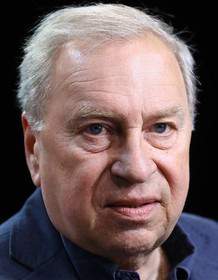
Jerzy Stuhr
Made by

Zespół Filmowy "Wektor"
The Third Part of the Night Plot Summary
Read the complete plot summary and ending explained for The Third Part of the Night (1971). From turning points to emotional moments, uncover what really happened and why it matters.
During the Nazi occupation of Poland, a young man Michał bears witness to a brutal slaughter at his family villa—the murder of his wife, his child, and his mother. He and his father Michał’s Father manage to hide in a nearby forest and watch as the tragically intimate violence unfolds. This shock marks the beginning of a grim, brutal journey through a city under siege, where daily life is reorganized by fear, hunger, and the ever-present threat of brutality.
Seeking purpose amid the ruination, Michał decides to join the resistance. His plans are interrupted before they can truly begin when the Gestapo kills his go-between and chases him through the town. In the confusion he stumbles into the apartment of a pregnant woman and helps her give birth. The newborn’s mother seems to him a doppelganger of his murdered wife, a haunting echo that blurs the line between memory and reality. As he grapples with this eerie resonance, he pauses to talk with a group of nuns on a street. Among them is Sister Klara, who listens with quiet resolve as he asks about meaning in a world where cruelty seems omnipresent. A nun’s simple reply—grounded in the stark realities of hunger and cold—offers a stark contrast to Michał’s longing for deeper significance. Through these encounters, the atmosphere shifts from personal grief to a broader, almost metaphysical questioning of existence within the occupation.
In the city’s shadows, existence itself begins to feel like a nightmare. Michał wanders the streets and encounters an old acquaintance, Marian, who asks him to secure more rations. Marian’s reply—referring to Michał’s behavior as that of a “wild wind”—is echoed by Michał’s own insistence that he has been blessed with a family and a purpose worth fighting for. The talk veers from practical needs to larger questions about miracles and fate: Marian warns Michał that he is drifting into ungrounded hope, while Michał insists that survival must be pursued with a moral aim, even in a land where law and life have collapsed. The pair’s exchange underscores a central tension of the film: the struggle to retain humanity when every day’s reality seems to erode it. Michał and Marian–whose dialogue captures a sense of reckoning in the face of annihilation–illustrate how ordinary conversations become charged with existential weight in this fractured city.
Michał finds work in a typhus center’s lice-feeding labs, a grim but practical way to earn rations. He is accepted as a guinea pig and receives injections and an illegal vaccine that he claims is for his wife and child, a small but stubborn assertion of hope in a system that methodically strips away life. There, a nurse explains that this line of work is best for him, and that the patient who came before him died so he could take his place. The experience deepens Michał’s sense of the moral compromises people are forced to accept to endure. He also encounters a nun again in a moment of quiet sincerity, who reminds him of how older generations die from deprivation, yet the conversation leaves him with no easy answers about meaning. The woman with the baby that he helped protect recurs in his thoughts, and he delivers vaccines and food to her in the fragile hope of supporting someone through the siege.
The story intensifies as a mysterious masked man enters Michał’s life. The stranger, known as Mr. Rosencranc, visits Michał at night, giving him a book and speaking of prophecies and a fate that might connect him with the son he has lost. The masked man explains he wears the mask to avoid facing his own face, and he hints at travel to Switzerland while blessing Michał’s search for a second chance. The encounter ends with a violent interruption: men from the SD or Gestapo arrest an old lady and drag the masked man away, while Michał witnesses the seizure of innocence in the shadows of a graveyard. The events push him deeper into the murky, dreamlike continuum where memory and present danger blend.
Back at home, a surreal pattern emerges. Michał speaks with his father again, who reveals that he has never heard of “that man” before, suggesting a fragmentary, perhaps unreliable memory of events. A brutal street roundup follows, and the image of people being torn from their lives into trucks intensifies the sense that the world has become unrecognizable. Michał’s concern shifts to the fate of the woman and child he has already come to protect; he rushes to deliver food and rations, while the boy from the earlier visions returns in the darkness, reminding him that the old certainties no longer exist. In the laboratory, Michał’s attention turns to the tiny organisms that fed on his own blood, a grim symbol of how the body and life become battlegrounds in this war-torn landscape.
Resistance meetings bring him closer to those who still cling to a sense of duty, but the emotional toll grows heavier. He shares meals and attempts to sustain a fragile ecosystem of care with the woman he once helped bring into the world, a bond that becomes entangled with visions of his wife. The boy from the shadows appears again, this time to tell him starkly that “there is no you and me anymore,” a heartbreaking line that marks the dissolution of a shared personal fantasy in the face of militarized cruelty. A free man the two had seen on a previous night is later shot, and a different tragedy unfurls on the walls of a hospital—the life Michał has kept in motion now intersects with the grotesque, shifting realities of those around him.
The film’s most jarring sequences come as Michał observes the consequences of his actions and the war’s total collapse of moral order. He confronts the feeling that the past—especially the memory of his wife—could be retrieved only through others who resemble her, and he encounters a recurring image of death that refuses to be neatly explained. In a moment of exhausted, almost dreamlike clarity, he finds the woman he hoped to protect lying with him in a bed, only to realize that the woman is not his wife, but someone else entirely. The line between memory and reproduction blurs again, as the two women coexist in a shared space while the world outside seems to fall apart. “I have been finding you again,” he says to the vision of his wife, who replies that she can be found only in other people who are not themselves.
The closing image is harrowing and apocalyptic. Michał returns to the villa where it all began, finding the bodies of his family laid out as if in ritual. A biblical verse is recited by a woman applying makeup, and outside the window, the four horsemen of the apocalypse stand as a stark final emblem of the coexistence of faith, violence, and fate in a world that has lost its ordinary order. The film ends on a note of unsettling reverie, a meditation on the limits of human endurance and the price of trying to hold onto meaning when history erupts into nightmare.
“a cry must burst out of this country’s soul”
“wild wind”
[The cast listed above provides a spectrum of faces who appear throughout Michał’s nightmarish journey, each thread contributing to a larger meditation on memory, cruelty, and the search for meaning in the space between survival and humanity.]
The Third Part of the Night Timeline
Follow the complete movie timeline of The Third Part of the Night (1971) with every major event in chronological order. Great for understanding complex plots and story progression.
Massacre and Escape
In the early days of the occupation, Nazi soldiers slaughter Michał's wife, his child, and his mother at their villa. Michał and his father manage to survive by fleeing into a nearby forest, from which they watch the killings unfold.
Resolve to join the resistance
After the massacre, Michał resolves to join the resistance, seeking purpose amid the occupation. Before he can make his first contact, the Gestapo executes his go-between and chases him through the town.
Birth in hiding
Michał hides in the apartment of a pregnant woman and helps her give birth. The newborn's mother seems a haunting doppelgänger of his murdered wife, fueling his sense of haunted repetition.
Nuns and questions of meaning
On the street, Michał speaks with a group of nuns about existence and the cruel reality of occupation. The nuns offer a stark, practical view of mortality, forcing him to confront what ‘meaning’ still means in this world.
Cruelty and rations
Michał wanders the occupied city and witnesses a German officer beat a man at the market, demonstrating the regime's cruelty. Marian kneels at the body and laments the loss of meaning, then agrees to push for Michał's additional rations.
Lice labs and vaccination
Michał takes a job in the typhus center's lice-feeding labs and is approved as a guinea pig for vaccines. He receives his first injection and an illegal vaccine, telling himself it is for his wife and child, knowing the previous patient died.
Deliveries and a mother’s warning
Back at the apartment where the woman with her baby lives, he delivers vaccines and food. A nun advises him not to hoard for himself, and Michał debates whether the woman resembles his wife.
The mysterious visitor and prophecy
Later, a mysterious masked man visits Michał in bed and speaks of prewar deals and a prophecy that Michał must find the woman he loved again. He reveals he is Mr. Rosencranc, wears a mask to hide his face, and leaves him a book marked with visionary pages.
Graveyard visit and arrest
The masked man walks through a graveyard, removes his mask, and shows documents to an old lady who is then dragged away by SD or Gestapo agents. The man is shot, and Michał witnesses the brutal roundup from a window.
The father and the old world fading
Michał speaks with his father, who claims he has never heard of that man and insists the world has vanished, urging Michał to adapt to the new laws of decay. Michał insists he can redeem what he did, including the fate of their children.
Philosophical hospital memories
Back at the hospital lab, Michał sees his wife again in the form of a nurse, then confronts a dying patient. He and other patients debate philosophers like Nietzsche, Spengler, Balzac and Proust as memories of professors fade away.
The boy and the night mission
The toy horse reappears in a dark corner, and a boy tells Michał that there is no ‘you and me’ anymore. On a nocturnal mission for a friend, Michał witnesses a man being shot and begins to sense the war's blurring line between dream and reality.
Ending: revelation and apocalypse
In a brutal sequence, Michał is drawn into a hospital nightmare of mistaken identity, collapses through a corridor of Gestapo cells, and stumbles back to his villa to find his family dead. A woman recites a verse about death as the four horsemen of the apocalypse stand outside the window.
The Third Part of the Night Characters
Explore all characters from The Third Part of the Night (1971). Get detailed profiles with their roles, arcs, and key relationships explained.
Michał (Leszek Teleszyński)
The film’s central figure, Michał endures the brutality of occupation and seeks meaning amid trauma. He joins the resistance, works at the lice-feeding lab, and experiences visions that blur memory and reality. His journey oscillates between vulnerability, cruelty he endures, and moments of resilience and love.
Marta (Małgorzata Braunek)
Michał’s wife, a presence that haunts his memory and appears as a doppelgänger at key moments. Her image grounds his longing and tests his sense of reality as he navigates loss and the war’s horrors. She embodies love lost and the persistence of memory.
Marian (Michał Grudziński)
An acquaintance from the resistance who both challenges and aids Michał. His remarks about rationing and survival reveal the harsh practical logic of war, while his interactions push Michał to confront the meaning of his actions and loyalties.
Michał's Father (Jerzy Goliński)
An older generation figure who speaks of a world changed beyond recognition. His warnings and prayers reflect a fading old order, and his fate underscores themes of memory, faith, and loss as the family’s world decays.
Nurse (Andrzej Lajborek)
A hospital nurse who interacts with Michał in the lab and hospital settings. Her presence fuels the tension between memory and illusion, underscoring the hospital’s role as a site of care and danger. She becomes part of the unsettling atmosphere where appearances mislead.
The Third Part of the Night Settings
Learn where and when The Third Part of the Night (1971) takes place. Explore the film’s settings, era, and how they shape the narrative.
Time period
World War II (1939-1945)
The action takes place in the early 1940s amid the German occupation of Poland. Civilians endure rationing, roundups, and violence carried out by the Gestapo and Wehrmacht. The period provides the backdrop for moral crises, resistance, and the dehumanization of ordinary life under totalitarian rule.
Location
Poland
Set in occupied Poland during World War II, the story unfolds across a town, its surrounding forest, a villa, and a hospital laboratory. The setting juxtaposes intimate home interiors with brutal public spaces under Nazi control. Fear, scarcity, and surveillance shape daily life as the protagonist navigates danger and loss.
The Third Part of the Night Themes
Discover the main themes in The Third Part of the Night (1971). Analyze the deeper meanings, emotional layers, and social commentary behind the film.
🕯️
Existence
The film probes what remains of personal meaning under brutal oppression. Michał’s reality repeatedly dissolves into visions of his wife and other figures, suggesting memory as a fragile anchor. The narrative shows that truth and love may persist only through perception and choice amid cruelty. The tension between what is real and what is perceived drives the protagonist’s inner journey.
🕊️
Faith
Religious imagery and figures—nuns, prayers, and references to meaning—emerge as a counterpoint to pervasive violence. Characters seek solace in faith even as the world seems to lose its moral center. The film questions whether belief can endure when life is reduced to survival and uncertainty. Moments of spiritual reflection contrast with the material cruelty around them.
🧭
Resistance
Survival and moral choice push Michał toward resistance, even as danger mounts. The narrative explores how solidarity, rationing, and small acts of defiance shape a fragile ethics under occupation. The boundary between collaboration and rebellion blurs as people navigate scarcity and coercion. The characters’ actions reveal how courage can emerge in unexpected, imperfect forms.

Coming soon on iOS and Android
The Plot Explained Mobile App
From blockbusters to hidden gems — dive into movie stories anytime, anywhere. Save your favorites, discover plots faster, and never miss a twist again.
Sign up to be the first to know when we launch. Your email stays private — always.
Explore the mobile appThe Third Part of the Night Spoiler-Free Summary
Discover the spoiler-free summary of The Third Part of the Night (1971). Get a concise overview without any spoilers.
In the gray winter of an occupied Polish city, daily life is reduced to a fragile routine of hunger, fear and the ever‑present whisper of danger. Michał returns from a devastating personal loss, his world shattered by the sight of his family’s murder. The trauma pushes him into a reality that feels both familiar and alien, where ordinary streets twist into labyrinths of hidden trapdoors, doppelgängers linger in the shadows and the very fabric of time seems to splinter like broken glass. The city breathes a cold, oppressive atmosphere, yet beneath the concrete lies a fever‑dream landscape that blurs the line between memory and the present moment.
As a survivor navigating this nightmarish terrain, Michał is guided by a restless need for purpose. He drifts among strangers whose faces echo his own grief, finding brief anchors in fleeting conversations with nuns, weary laborers and a pregnant woman whose presence reverberates with uncanny familiarity. Each encounter is filtered through a lens of surreal distortion, turning mundane exchanges into moments that pulse with existential weight. The film’s visual language—sharp contrasts of dim candlelight against stark, winter‑bleached streets, sudden shifts that feel like wormholes opening within the city—mirrors the inner dislocation he experiences.
The tone is a haunting blend of stark wartime realism and metaphysical dread. The oppressive weight of occupation is constantly present, but it is interwoven with a dream‑like quality that makes the world feel both tangible and otherworldly. Shadows move like living entities, and the ordinary becomes a stage for the impossible, as if the city itself is a living organism feeding on its inhabitants’ fears. In this fractured reality, Michał walks a tightrope between survival and a search for meaning, his journey a meditation on how trauma reshapes perception and how the human spirit clings to fragments of hope amid overwhelming darkness.
Movies with Similar Twists and Themes
Uncover films that echo the narrative beats, emotional arcs, or dramatic twists of the one you're exploring. These recommendations are handpicked based on story depth, thematic resonance, and spoiler-worthy moments — perfect for fans who crave more of the same intrigue.


Featured on this page

What's After the Movie?
Not sure whether to stay after the credits? Find out!
Check out our other apps:

SAT Sphere
Build confidence for the Digital SAT.

Mori Atlas
Discover wild places worth protecting.

Luntero
Search smarter for a home in Amsterdam.

Plot Explained
Unravel movie endings and hidden clues.

Pokechamp
Dive into Pokémon data and battle logic.

Driving Theory
Get ready for your European theory test.

Movie Dust
Plan your next cinema trip with ease.

Musemap
Find art and culture as you travel.

Selkobase
Compare credentials before committing.

Local Manual
Turn an unfamiliar country into practical next steps.

Lernavi
Compare school systems before your next move.

GymRoam
Find a workout stop wherever your plans take you.
Explore Our Movie Platform
New Movie Releases (2026)
Famous Movie Actors
Top Film Production Studios
Movie Plot Summaries & Endings
Major Movie Awards & Winners
Best Concert Films & Music Documentaries
Movie Collections and Curated Lists
© 2026 What's After the Movie. All rights reserved.
Privacy Policy