
The Opium War 1997

Directed by

Xie Jin
Made by

Emei Film Studio
The Opium War Plot Summary
Read the complete plot summary and ending explained for The Opium War (1997). From turning points to emotional moments, uncover what really happened and why it matters.
Lin Zexu Bao Guo-an believes opium is a national scourge and that strong measures are necessary to eradicate it. The British Empire makes a great deal of money shipping it to China and selling it to Chinese drug addicts. When Lin Zexu arrives in Guangdong in 1838, he immediately bans its use and seizes large quantities from the British drug traffickers. News of this reaches Queen Victoria Debra Beaumont, who orders military action to enforce the “free trade” of opium. The British demand monetary compensation for the seized opium, five free trade ports in China, and the island of Hong Kong as their sovereign territory. The Chinese refuse all these demands.
The British declare war. To lower tensions, the imperial court fires Lin Zexu and replaces him with Qishan Ko Hsiang-Ting, who is more lax with opium smuggling. Qishan tries to reason with the British, offering them a large amount of money. The British counter with a demand for twice Qishan’s offer. Qishan then tries to stall an attack by treating the British to a lavish feast and the province’s best singers and dancers. These efforts fail to appease the British.
In the climax of the film, Guan Tianpei Hua Jiang leads his troops in defense of Humen Fort while the British Army launch a fierce fusillade of cannon fire from their warships. Unfortunately, the cannons in the Chinese fort are not large enough to reach the British warships; all the officers and soldiers defending the fort are killed in battle.
At the end of the film, Lin Zexu is sent to Xinjiang, the British and the Qing government sign the Treaty of Nanking, and Hong Kong becomes a British colony.
The Opium War Timeline
Follow the complete movie timeline of The Opium War (1997) with every major event in chronological order. Great for understanding complex plots and story progression.
Lin Zexu cracks down on opium
Lin Zexu arrives in Guangdong and launches a rigorous crackdown on opium. He bans its use and orders the seizure of large quantities from British traffickers. This bold move sharply raises tensions with Britain.
Britain moves to enforce trade
News of the crackdown reaches Britain, and Queen Victoria authorizes military action to enforce 'free trade' of opium. The move signals a willingness to use force to protect profits. Tensions rapidly escalate toward open conflict.
British demands for compensation and ports
The British demand monetary compensation for seized opium, five free trade ports in China, and the island of Hong Kong. The Qing court refuses these terms, rejecting the attempt to impose a coerced settlement. The stage is set for an extended confrontation.
Qing refusal to terms
The Chinese authorities reject the British demands, insisting that trade remains controlled and opium remains illegal. The impasse hardens as both sides prepare for the consequences. The refusal further destabilizes the region.
War declared
The British declare war in response to the deadlock and escalating tensions. Royal fleets move toward Chinese shores, signaling the beginning of hostilities. Chinese defenses brace for a protracted conflict.
Lin Zexu replaced by Qishan
The imperial court removes Lin Zexu and appoints Qishan, who adopts a more conciliatory stance toward opium smuggling. The leadership undergoes a strategic shift in hopes of averting full-scale war. The change hints at possible negotiations, though tensions remain high.
Qishan offers money; British demand more
Qishan tries to buy time by offering a large sum to the British. The British counter with a demand for twice that amount, showing their insistence on favorable terms. The financial pressure underscores the stalemate.
Lavish feasts to stall attack
Qishan undertakes a stall tactic by hosting a lavish feast and showcasing the province's singers and dancers. The spectacle is intended to soothe tensions, but it fails to appease the British. The war party remains fully mobilized and unimpressed.
Defenders at Humen Fort
Guan Tianpei leads Chinese troops in defense of Humen Fort as British warships unleash rapid cannon fire. The numerically superior fleet continually targets the fort, while the Chinese cannot reach the ships with their own artillery. The resistance is heroic but ultimately doomed.
Lin Zexu sent to Xinjiang
At the end of the conflict, Lin Zexu is sent into exile to Xinjiang, removed from the center of political decision-making. The opium war's leadership passes to others and the narrative shifts toward the treaty process. His departure marks a formal distancing from the military crisis.
Treaty of Nanking signed
The British and Qing government sign the Treaty of Nanking, ending major hostilities and reshaping relations. The agreement imposes unequal terms that benefit Britain and set a precedent for foreign influence in China. The treaty also opens ports for trade and diplomacy, though such details are beyond this summary.
Hong Kong becomes a British colony
Hong Kong is ceded to Britain, becoming a formal colony as part of the post-war settlement. The loss of territorial sovereignty marks a turning point in China's modern history. The city remains a symbol of imperial power and trade influence.
The Opium War Characters
Explore all characters from The Opium War (1997). Get detailed profiles with their roles, arcs, and key relationships explained.
Lin Zexu (Bao Guo-an)
A stern Qing Dynasty official who deems opium a national scourge and mobilizes a sweeping crackdown. He embodies principle and resolve, willing to confront overwhelming foreign pressure in pursuit of national integrity. His leadership sets the moral center of the story, even as political winds shift against him.
Guan Tianpei (Hua Jiang)
Commander who leads the defense at Humen Fort. He is depicted as brave and steadfast, rallying troops in the face of superior naval power. The defense ultimately succumbs to the superior firepower of the British fleet, underscoring the cost of strategic mismatch.
Yi Shan (Ko Hsiang-Ting)
A more flexible Qing official who replaces Lin Zexu and attempts to negotiate with the British. He negotiates through offers and lavish entertainments, highlighting the tension between hard-line policy and pragmatic diplomacy.
Captain White (Philip Jackson)
British naval captain involved in enforcing trade and projecting military force. His actions represent the coercive aspect of the opium conflict and illustrate how naval power translates into political leverage.
Captain Charles Elliot (Simon Williams)
Another British captain whose role emphasizes strategic decisions behind the seaborne pressure that drives the war. His presence underscores the coordinated nature of colonial military and diplomatic pressure.
Denton (Bob Peck)
A British figure involved in the negotiations and demands that fuel the conflict. His actions illustrate the imperial calculus of compensation and control in a time of escalating hostilities.
The Opium War Settings
Learn where and when The Opium War (1997) takes place. Explore the film’s settings, era, and how they shape the narrative.
Time period
1838–1842
The action begins with Lin Zexu's 1838 crackdown on opium in Guangdong. Tensions escalate as Britain pushes for free trade and territory. The conflict peaks with naval battles and the fall of Chinese defenses, leading to the 1842 Treaty of Nanking and the temporary shift of Hong Kong to British control.
Location
Guangdong, Humen Fort, Xinjiang, Hong Kong
The story unfolds in Guangdong province with key actions at the Humen Fort along the Pearl River. It follows the crackdown on opium in Canton and the broader clash between Qing China and the British Empire. The narrative extends to Lin Zexu's exile to Xinjiang and culminates in Hong Kong’s cession to Britain after the Treaty of Nanking.
The Opium War Themes
Discover the main themes in The Opium War (1997). Analyze the deeper meanings, emotional layers, and social commentary behind the film.
🛡️
Sovereignty
The film centers on defending national sovereignty against foreign trade pressures. Lin Zexu embodies a uncompromising stance to eradicate opium and protect China’s political autonomy. The clash tests loyalty, tradition, and the limits of colonial power within a changing imperial landscape.
⚖️
Morality vs Commerce
Opium as a moral crisis pits public health and national dignity against imperial profits. The narrative highlights difficult choices: seizing illicit goods, negotiating terms under duress, and facing punitive consequences. It questions whether moral imperatives can withstand aggressive mercantile interests.
🌊
War and Diplomacy
The conflict blends military action with diplomatic maneuvering. Despite attempts at negotiation, force is unleashed on both sides as fleets clash and forts fall. The resolution through the Treaty of Nanking reshapes power and shine a light on the costs of imperial rivalry.

Coming soon on iOS and Android
The Plot Explained Mobile App
From blockbusters to hidden gems — dive into movie stories anytime, anywhere. Save your favorites, discover plots faster, and never miss a twist again.
Sign up to be the first to know when we launch. Your email stays private — always.
Explore the mobile appThe Opium War Spoiler-Free Summary
Discover the spoiler-free summary of The Opium War (1997). Get a concise overview without any spoilers.
In the simmering twilight of the 1830s, a China on the brink of modernity confronts the relentless tide of a foreign empire. The film opens on the bustling ports of Guangdong, where the air is thick with the scent of tea, incense, and an invisible menace that has begun to seep into every corner of daily life. Against this backdrop of towering pagodas and the clatter of cannon‑laden ships on the horizon, the story explores a world caught between tradition and the inexorable push of global trade, rendered in a palette of muted blues and vermilion reds that echo both the melancholy and the fierce resolve of a nation under pressure.
At the heart of this collision stands Lin Zexu, a stern and deeply patriotic official whose conviction that a poisonous trade must be eradicated drives him to confront the very forces reshaping his country. His unwavering moral compass and stern demeanor contrast starkly with the restless ambition of Charles Elliot, a British naval diplomat whose sharp wit and opportunistic outlook embody the calculated confidence of an empire eager to expand its reach. Their divergent worldviews create a tense, almost lyrical interplay that drives the narrative forward, each dialogue a careful dance of principle versus profit.
The film’s tone is one of measured tension, blending the grandeur of historical spectacle with intimate moments of cultural clash. The camera lingers on crowded market stalls, the quiet resolve of scholars, and the disciplined rows of imperial soldiers, while the distant rumble of warships hints at an inevitable escalation. Through lush cinematography and a restrained yet evocative score, the audience is invited to feel the weight of looming change without yet witnessing its full impact. This atmospheric setup promises a story where duty, identity, and the cost of ambition intersect, leaving viewers poised on the edge of a pivotal moment in history.
Movies with Similar Twists and Themes
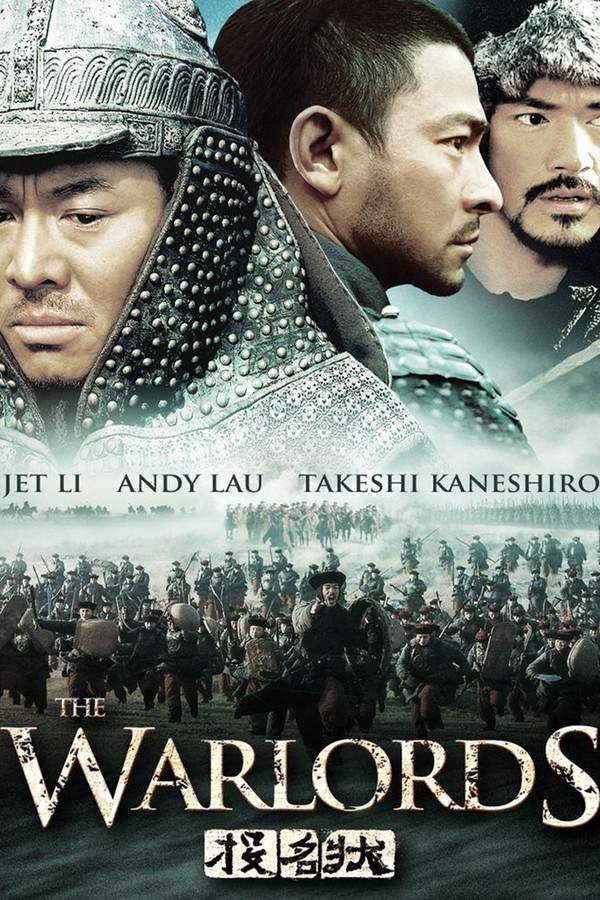
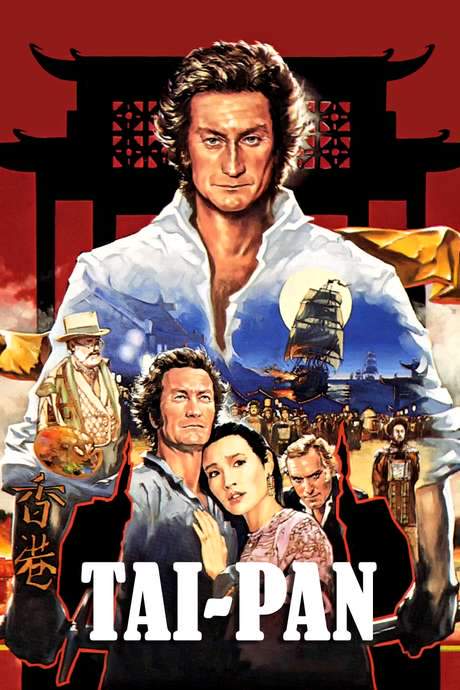
Uncover films that echo the narrative beats, emotional arcs, or dramatic twists of the one you're exploring. These recommendations are handpicked based on story depth, thematic resonance, and spoiler-worthy moments — perfect for fans who crave more of the same intrigue.


Featured on this page

What's After the Movie?
Not sure whether to stay after the credits? Find out!
Check out our other apps:

SAT Sphere
Build confidence for the Digital SAT.

Mori Atlas
Discover wild places worth protecting.

Luntero
Search smarter for a home in Amsterdam.

Plot Explained
Unravel movie endings and hidden clues.

Pokechamp
Dive into Pokémon data and battle logic.

Driving Theory
Get ready for your European theory test.

Movie Dust
Plan your next cinema trip with ease.

Musemap
Find art and culture as you travel.

Selkobase
Compare credentials before committing.

Local Manual
Turn an unfamiliar country into practical next steps.

Lernavi
Compare school systems before your next move.

GymRoam
Find a workout stop wherever your plans take you.
Explore Our Movie Platform
New Movie Releases (2026)
Famous Movie Actors
Top Film Production Studios
Movie Plot Summaries & Endings
Major Movie Awards & Winners
Best Concert Films & Music Documentaries
Movie Collections and Curated Lists
© 2026 What's After the Movie. All rights reserved.
Privacy Policy