
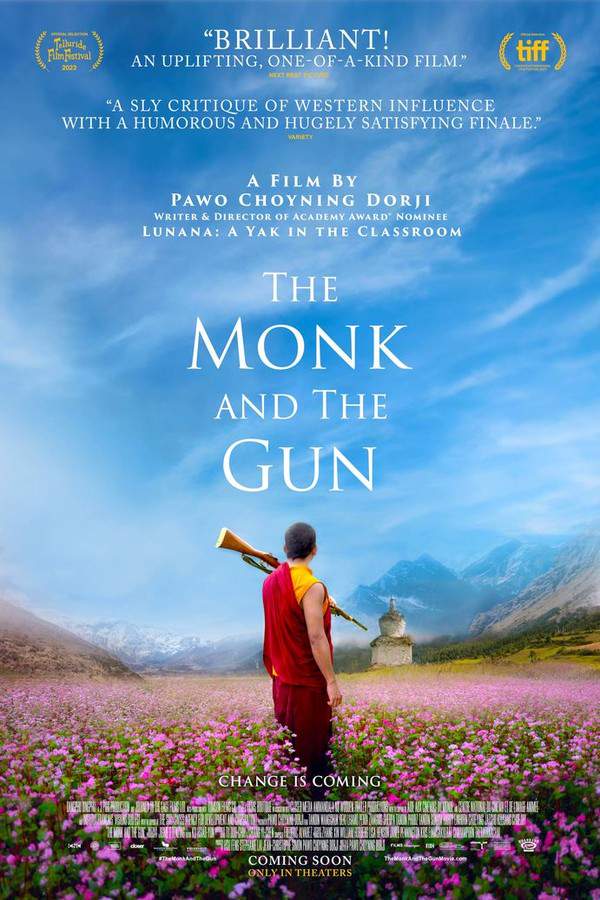
What Is The Monk and the Gun About?
The premise of The Monk and the Gun in 313 words, with nothing given away. The full story and the ending follow below.
In the spring of 2006, the mountains of Bhutan hum with a rare kind of anticipation. The kingdom is preparing for its first democratic election, and the remote town of Ura becomes a micro‑cosm for the larger shift: a mock vote is staged to teach citizens the new way of choosing leaders. Between prayer flags and the crisp mountain air, the everyday rhythm is threaded with both solemn tradition and the nervous excitement of change. The film balances gentle humor with a reverent atmosphere, letting the scenery itself feel like a living character that watches the community teeter between the old and the new.
At the heart of this delicate moment stands the lama, a sage whose quiet foresight hints at a looming upheaval. He selects his young apprentice, Tashi, for a task that seems at odds with monastic life: to retrieve two firearms before the next full moon, believing the weapons will somehow help restore balance. The pilgrimage of a monk in search of guns introduces a whimsical yet thoughtful contrast, inviting curiosity about the symbolic weight of such an odd mission. Into this mix arrives Ron Coleman, an American collector whose fascination with an antique rifle brings an outsider’s perspective to Ura’s quiet streets, while his guide Benji offers a bridge between foreign curiosity and local nuance. Meanwhile, the strained marriage of Tshomo and Choephel reflects the subtle rifts that political allegiances can stir in even the most intimate relationships.
The tone remains light‑heartedly inquisitive, allowing moments of levity—such as an unexpected traditional offering—to sit beside the undercurrent of impending change. As the villagers prepare for the upcoming ceremony and the full moon draws near, the audience is invited to wonder how the convergence of spirituality, politics, and an unlikely quest for guns will shape the community’s path forward, all while the mountains stand as steadfast witnesses to the unfolding story.
What Happens in The Monk and the Gun?
The complete story of The Monk and the Gun, from the first scene to the last, in 560 words (about 2 minutes). Spoilers throughout.
Spoilers ahead
In 2006, as Bhutan prepares to hold its first democratic election, the government organizes a mock election as a training exercise meant to familiarize the people with the democratic process. The story is set in the quaint town of Ura, where a wise old lama takes a young monk, Tashi, under his wing and instructs him on the importance of preparation for the upcoming political upheaval. The lama specifically sends Tashi on a task to procure firearms—a seemingly odd but significant assignment during this period of change.
Meanwhile, an American gun collector named Ron Coleman arrives in Bhutan with the goal of acquiring an antique rifle. He is accompanied by Benji, a local guide who helps him navigate the unfamiliar terrain. Their meeting with an elderly man in Ura, who owns the coveted rifle, leads to a deal where Ron intends to buy the antique firearm. The story takes an intriguing turn when, as part of the transaction, Ron needs to withdraw cash from a local bank, but Tashi unexpectedly shows up, and the young monk surprises everyone by gifting the gun to him instead of selling it.
This act sparks a series of pursuits and negotiations. Ron and Benji are determined to reclaim the gun and attempt to convince Tashi to sell it back to them. However, Tashi stays firm, valuing the weapon’s significance beyond mere possession. Eventually, Tashi agrees to exchange the gun for two AK-47s, which Ron arranges to have smuggled into Bhutan from India. Meanwhile, the local police, aware of Ron’s interest in guns, begin questioning him, adding tension to the unfolding events.
Another subplot involves the married couple, Tshomo and Choephel, whose relationship becomes strained over political allegiances. Choephel, loyal to a particular candidate, faces criticism from Tshomo and her mother, which causes friction and highlights the social divisions during this period of transition. Additionally, their daughter Yuphel experiences her own struggles when she is given a simple eraser by an election official, symbolizing her innocence and the child’s experience of democratic education amidst adult conflicts.
As the story develops, the lama begins a ceremony to commemorate the construction of a new stupa—a sacred Buddhist monument—using the antique gun as a symbolic element. It is revealed that the lama’s intention was to use the gun, which he regards as a symbol of evil, to bury in the foundation of the stupa, symbolizing the destruction of evil and the hopes for a peaceful future. The ceremony underscores the cultural and spiritual significance of the community’s journey through political change.
The police arrive at this ceremony, attempting to detain Ron, but Benji intervenes, claiming that Ron is donating the AK-47s for the ceremony’s use. Their story convinces the authorities to allow the event to proceed, and Tashi supports this narrative, emphasizing the importance of the ceremony in community healing and transformation.
In a humorous and symbolic gesture, the lama expresses his gratitude with a large phallus, which he gives to Tashi—a traditional offering symbolizing fertility and protection. The film thus presents a complex mixture of cultural traditions, political transitions, and personal convictions, all woven together in a story of a small town on the brink of profound change. The narrative captures the tension, humor, and hope embedded in Bhutan’s unique journey toward democracy and modernization, highlighting how old beliefs and new ideas often coexist in unexpected ways.
The Monk and the Gun Timeline: Every Key Event in Order
13 key events in the order they happen, from “Bhutan prepares for its first democratic election” to “Lama shows appreciation with a large phallus”.
- 1
Bhutan prepares for its first democratic election
In 2006, Bhutan is gearing up for its first democratic election, and the government organizes a mock election as a training exercise for the citizens. This event aims to familiarize the population with democratic processes and build civic awareness. The scene sets the stage for political and social changes in the country.
When:2006
- 2
Old lama instructs young monk Tashi
In the town of Ura, an old lama instructs the young monk Tashi to procure firearms in preparation for the upcoming upheaval. Tashi is tasked with acquiring weapons, which symbolizes the potential violence and resistance during the national changes. The lama’s guidance indicates a deeper connection to local beliefs and resistance movements.
Where:Ura
- 3
Ron Coleman arrives in Bhutan
American gun collector Ron Coleman arrives seeking to acquire an antique rifle. He is driven to Ura by a guide named Benji, indicating his explicit interest in rare firearms. His presence introduces foreign interference into the local setting and highlights the international demand for Bhutanese guns.
Where:Ura
- 4
Ron meets with elderly gun owner
Ron meets with an elderly man who owns the antique rifle and agrees to buy it. This purchase symbolizes the gathering of historical weapons, which may have cultural or spiritual significance. It also marks the beginning of Ron's deeper involvement with the weapons trade in the region.
Where:Ura
- 5
Tashi receives the gun as a gift
Tashi arrives at the bank to withdraw cash for the gun purchase, but the monk gives the gun to Tashi as a gift before completing the transaction. This act indicates a transfer of symbolic or spiritual power associated with the firearm, possibly linked to local beliefs or traditions.
Where:Ura
- 6
Ron and Benji pursue Tashi for the gun
Ron and Benji learn that Tashi has the gun and attempt to convince him to sell it to them. Tashi resists at first, but eventually agrees to trade the gun for two AK-47s smuggled from India. This exchange introduces illicit weapons into the local conflict.
Where:Ura
- 7
Police inquire about Ron's activities
The police get involved after learning about Ron's interest in guns. They seek to question him, highlighting increasing law enforcement concern over foreign and illegal weapon activities. This complicates Ron's plans and emphasizes the tension between local authorities and foreign interests.
Where:Ura
- 8
Married couple Tshomo and Choephel's conflict
Tshomo and Choephel, a married couple, come into conflict over Choephel’s support for a political candidate. This discord reflects the divided opinions during the election period and affects personal relationships, including the well-being of their daughter Yuphel.
- 9
Yuphel receives a school eraser
Yuphel, their daughter, receives an eraser from an official hosting the mock election. The eraser symbolizes the hope for a new beginning and the importance of education and democracy, despite the political tensions surrounding her family.
- 10
Lama begins construction of a stupa
The lama starts a ceremony to initiate the construction of a new stupa using the antique gun, which he seeks as a symbol of evil to be buried. This act is part of a spiritual ritual aimed at purification and spiritual cleansing.
Show the other 3 events of The Monk and the Gun Hide the last 3 events
- 11
Lama buries the gun in the stupa foundation
The lama buries the antique gun in the foundation of the new stupa, symbolizing the repurposing of an object associated with evil into a spiritual monument. This act signifies a spiritual rebellion against violence and evil.
- 12
Police arrive to detain Ron
The police arrive at the ceremony intending to detain Ron, suspecting him of illicit activities involving weapons. Benji intervenes by claiming Ron's donation of AK-47s to the ceremony, which Tashi supports, leading to a tense standoff.
- 13
Lama shows appreciation with a large phallus
As a token of gratitude, the lama gives Tashi a large phallus, symbolizing fertility or perhaps a blessing, after the ceremonial act of burying the gun. This gesture underscores local cultural and spiritual symbolism embedded in the ritual.
Who Are the Main Characters in The Monk and the Gun?
3 characters, among them Tashi, Ron Coleman and Benji: who each one is and the part they play in the story. 2 of them link to the actor’s page.
- T
Tashi
Tashi is a young monk instructed by an elder lama to acquire firearms as symbols of warding off evil. His character embodies innocence, tradition, and the conflict between spiritual ideals and worldly realities. Tashi’s actions reflect his innocence and the influence of cultural beliefs.
- 🌄 Innocent
- 🙏 Traditional
- 🧘♂️ Spiritual
- RC
Ron Coleman
Played by Harry Einhorn
Ron is an American gun collector seeking an antique rifle, representing external influences and materialism. His character drives the plot's tension through his pursuit of firearms and his eventual participation in cultural rituals. He symbolizes curiosity and the outsider's perspective.
- 🌍 Foreign
- 🛠️ Collector
- 🔍 Curious
- B
Benji
Played by Tandin Sonam
Benji is a guide who assists Ron in navigating Bhutanese society. He is pragmatic and resourceful, balancing his protective instincts with the demands of his client. His character highlights themes of loyalty and cultural respect.
- 🧭 Guide
- 🤝 Loyal
- 🌏 Cultural intermediary
Where and When Is The Monk and the Gun Set?
The Monk and the Gun is set in Ura and Bhutan (2006). Here is why the time and place matter to the story.
When
2006
The movie takes place in 2006, a significant year for Bhutan as it prepared for its first democratic elections. This period marked a transition from monarchy to democracy, characterized by political reforms and societal change. The film captures the tension and hope associated with this historic moment.
Where
Ura, Bhutan
Ura is a picturesque mountain village in Bhutan known for its pristine natural beauty and cultural heritage. It serves as a setting that reflects Bhutan's traditional lifestyle and deep-rooted spiritual practices. The town's tranquil landscape contrasts with the political and social upheaval depicted in the film.
- 🇧🇹 Mountain village
- 🏔️ Traditional
- 🌾 Rural community
What Are the Themes of The Monk and the Gun?
2 ideas the story keeps returning to, among them Democracy and Violence & Peace.
-
01
Democracy
The film explores the fragile process of democratization in Bhutan, highlighting the societal shifts and personal conflicts it provokes. It portrays the hopes for a new political order alongside the traditional values held by the community. The story underscores the importance of political change and collective participation.
-
02
Violence & Peace
The narrative centers around firearms, symbolizing both violence and peace. The ancient rifle's transformation into a spiritual symbol reflects a desire to transcend conflict and evil. The film emphasizes the complex relationship between violence, tradition, and the pursuit of harmony.
How Does The Monk and the Gun End?
The last act of The Monk and the Gun and what it means, in 192 words. The ending lands as happy. Big spoilers: read the plot summary first if you have not seen it.
The final act, in full
The film’s ending reveals that the Lama, despite his initial desire for guns, ultimately chooses a path of peace and change. When the guns are brought to the ceremony, the Lama explains that he has come to see the need for a transformation, not through violence but through symbolic actions. The rifle and other weapons are ceremonially buried in a stupa, a symbol of hope for a future free from bloodshed. This act signifies the community’s collective acceptance of non-violence as they embrace modernization and democracy gradually. The Lama’s gift of a phallus to Ronald, representing prosperity and enlightenment, underscores his hope that cultural values and spiritual growth will curb violence and suffering. The ending emphasizes that change is a slow process, built on understanding and peaceful transition rather than force. The Bhutanese people, led by their spiritual and cultural leaders, show that progress can happen without bloodshed—it’s a journey of patience, hope, and respect for tradition. Eventually, in 2008, Bhutan holds its first democratic election, symbolizing their peaceful acceptance of modernization. This resolution highlights that true progress lies in gradual acceptance, spiritual growth, and the collective will to move forward peacefully.
What Kind of Film Is The Monk and the Gun?
Hopeful in tone, with steady pacing and a moderate story, going by the plot summary.
- Tone
- Hopeful
- Pacing
- Steady
- Story
- Moderate
- Intensity
- Low
- Ending
- Happy
A gently humorous and hopeful film that observes a small town's peaceful transition into democracy, blending cultural traditions with modern politics through a series of quirky and symbolic events.
- humorous
- thoughtful
- hopeful
- quirky
- ceremonial
- cultural
- political transition
- cultural clash
- spiritual symbolism
- democracy
Quiz
How well do you remember The Monk and the Gun? Test yourself on the story.
