
The Key to Reserva 2007

Directed by
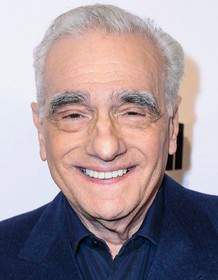
Martin Scorsese
Made by

Ovídeo TV S.A.
The Key to Reserva Plot Summary
Read the complete plot summary and ending explained for The Key to Reserva (2007). From turning points to emotional moments, uncover what really happened and why it matters.
The promotional film opens with a framing device, where Martin Scorsese (playing himself) recounts how he discovered three and a half pages of an unproduced Alfred Hitchcock script, The Key to Reserva. As part of this film preservation work, he plans to film the script as Hitchcock would have filmed it.
The film, which contains no dialogue, follows Roger Thornberry arriving at a box seat during an orchestra performance. He spots a key hidden with the box’s light bulb and moves to retrieve it. One of the performers notices him, Leonard, who signals to his accomplice Louis Bernard, the man holding Roger’s wife Grace Thornberry in the audience. [Leonard] then goes to stop Roger. The two fight, and Leonard falls from the box seat, seemingly to his death. Roger uses the key to open a locked case that contains a bottle of Freixenet with top secret files hidden inside.
The film abruptly stops, as Scorsese explains that a page is missing, so he simply filmed the concluding paragraph of the script which shows [Louis Bernard] arrested, as Roger and his wife reunite over a glass of Freixenet.
Scorsese then discusses possible future projects with the interviewer. The camera pans back to reveal Scorsese, Thelma Schoonmaker, and the interviewer in an office in a tower block, meanwhile crows flock around the building.
The Key to Reserva Timeline
Follow the complete movie timeline of The Key to Reserva (2007) with every major event in chronological order. Great for understanding complex plots and story progression.
Framing device: Scorsese discovers Hitchcock's pages
The film opens with Scorsese, playing himself, recounting how he found three and a half pages of an unproduced Hitchcock script called The Key to Reserva. He explains his plan to shoot the script as Hitchcock would have filmed it, preserving the film's aura. This framing sets up the meta-mabricated documentary approach of the project.
Concept: film the missing Hitchcock script as Hitchcock would
Scorsese describes the goal of the project: to recreate the missing script's mood, style, and pacing without dialogue. He intends to frame it as if Hitchcock had written it for the screen. The idea is to blend film preservation with imaginative reconstruction.
Roger Thornberry arrives at the box seat
Roger enters a box seat during an orchestra performance and surveys the stage with a purpose. The quiet auditorium frames his arrival as the audience remains unaware. The moment sets the stage for the key's discovery and the ensuing tension.
The key hidden with the light bulb
Roger notices a key concealed near the box's light bulb and retrieves it. The key becomes a MacGuffin that unlocks access to a secret stash. The discovery hints at a larger set of top secret files involved in the plot.
Leonard spots Roger and signals Louis Bernard
Leonard observes Roger from the box and signals to his accomplice Louis Bernard. The signal indicates a planned confrontation in which Bernard holds Roger's wife Grace hostage in the audience. The moment tightens the stakes and multiplies the tension in the scene.
Grace is held hostage by Louis Bernard
Louis Bernard is shown holding Grace hostage in the auditorium, creating a dire timer for Roger to act. The hostage situation escalates the drama and motivates Roger's next move. The audience's perspective becomes a critical pressure point in the unfolding events.
Confrontation in the box ends with Leonard's fall
Roger confronts Leonard in the box, and the struggle ends with Leonard falling from the box seat, presumably to his death. The dramatic fall serves as a turning point that frees Roger to pursue the key's purpose. The moment is rendered with a silent, visual intensity consistent with the film's no-dialogue approach.
Key unlocks locked case with Freixenet and files
Roger uses the discovered key to open a locked case hidden in the box area. Inside lies a bottle of Freixenet along with top secret files, turning the object from a prop into a pivotal plot device. The revelation connects the present danger to hidden information.
The film halts abruptly; page missing
The promotional film stops suddenly as Scorsese explains that a page is missing from Hitchcock’s script. In response, he shot only the concluding paragraph to provide closure. The abrupt stop heightens the meta-fictional feel of the project.
Concluding paragraph shows Bernard arrested; reunion over Freixenet
The filmed conclusion depicts Louis Bernard being arrested while Roger and Grace share a glass of Freixenet. This ending within the frame ties together the espionage-like elements and the domestic reunion. The image contrasts danger with a quiet moment of relief.
The silent film style is emphasized
The project emphasizes that the entire film within the frame contains no dialogue. Visual storytelling, facial expressions, and physical action drive the narrative. This stylistic choice mirrors classic silent-era suspense and Hitchcock's renowned mastery of tension.
Discussion of possible future projects
After the silent sequence, Scorsese engages with the interviewer to discuss possible future projects. The conversation frames the meta-film as a stepping stone toward new collaborations and cinematic explorations. The dialogue serves as a bridge between the past homage and future ambitions.
Final shot: office tower block and crows
The camera pans back to reveal Scorsese, Thelma Schoonmaker, and the interviewer in an office in a tower block while crows circle the building. The imagery grounds the film in a stark, urban setting and leaves an eerie, contemplative mood. The closing shot provides a visual metaphor for the film's layered storytelling.
The Key to Reserva Characters
Explore all characters from The Key to Reserva (2007). Get detailed profiles with their roles, arcs, and key relationships explained.
Roger Thornberry (Simon Baker)
A determined husband who takes bold risks to recover the hidden files, displaying quick thinking under pressure. He drives the action with a balance of courage and urgency, willing to confront danger to save his wife and uncover the truth behind the conspiracy.
Grace Thornberry (Kelli O'Hara)
Grace is the captive in the audience, whose presence motivates Roger and intensifies the suspense. She remains composed under threat, serving as a catalyst that reveals the stakes of the conflict and the couple's bond.
Louis Bernard (Michael Stuhlbarg)
A calculating figure who orchestrates the danger from behind the scenes, embodying the film's sense of danger and manipulation. His arrest at the end resolves the immediate threat while highlighting the moral ambiguity of preserving art.
Leonard (Christopher Denham)
An accomplice whose presence escalates the threat, contributing to the film’s tension and the sense that every action has a consequence. His fall from the box seat marks the collapse of the plan and the price of violence.
The Key to Reserva Settings
Learn where and when The Key to Reserva (2007) takes place. Explore the film’s settings, era, and how they shape the narrative.
Location
Concert hall orchestra box, Tower block office
Most of the action unfolds in a theater's orchestra box during a performance, where Roger Thornberry retrieves a key and Grace is held captive in the audience. The environment is tense and lit by the box’s light, underscoring the claustrophobic danger of the confrontation. The concluding scenes shift to a modern tower-block office, where Scorsese, Thelma Schoonmaker, and an interviewer reflect on filmmaking as crows circle the building.
The Key to Reserva Themes
Discover the main themes in The Key to Reserva (2007). Analyze the deeper meanings, emotional layers, and social commentary behind the film.
🎬
Meta cinema
The film is framed as a cinematic preservation project, blurring lines between script, screen, and real life. It explores how film history is curated, reconstructed, and reimagined by filmmakers who stage existing scenes as if Hitchcock himself might have shot them. The absence of dialogue heightens the sense of cinematic craft as a living act.
🧭
Narrative fragments
The story hinges on scattered pages and missing context, forcing characters and viewers to piece together motives from visuals and actions. This fragmentation mirrors how archives and restorations reconstruct lost films. The device emphasizes how story is built from fragments, rather than a complete script.
🌀
Illusion vs reality
As Scorsese frames a Hitchcock-like tale, the line between fiction and reality blurs. The 'unproduced' script becomes a mirror for our own perception of cinema. The crows circling the tower block reinforce the dreamlike, metafictional mood of the film.

Coming soon on iOS and Android
The Plot Explained Mobile App
From blockbusters to hidden gems — dive into movie stories anytime, anywhere. Save your favorites, discover plots faster, and never miss a twist again.
Sign up to be the first to know when we launch. Your email stays private — always.
Explore the mobile appThe Key to Reserva Spoiler-Free Summary
Discover the spoiler-free summary of The Key to Reserva (2007). Get a concise overview without any spoilers.
In a uniquely self‑reflexive opening, Martin Scorsese discovers a handful of forgotten pages penned by Alfred Hitchcock and decides to bring the phantom script to life exactly as the master would have imagined. The film frames this quest as a conversation with an interviewer, positioning the director both as archivist and storyteller. The tone is reverent yet adventurous, blending Hitchcock’s trademark visual suspense with Scorsese’s own passion for cinematic heritage, promising a silent, tension‑laden experience that lives entirely through sight and sound.
The story at the heart of the lost script unfolds within the plush confines of a grand concert hall, where an orchestra swells beneath glittering chandeliers. In a secluded box seat, a mysterious key catches the eye of Roger Thornberry, a gentleman whose curiosity draws him into a quiet drama that plays out against the music. Leonard, one of the performers, becomes an unexpected conduit between the audience and the hidden intrigue, while Louis Bernard lingers nearby, his presence suggesting a partnership that complicates the atmosphere. Grace Thornberry, Roger’s wife, watches from the crowd, adding a personal thread to the unfolding tension.
The film eschews dialogue, relying on Hitchcockian composition—tight framing, looming shadows, and a choreography of glances—to build suspense. Every movement feels deliberate, as if the audience is being invited to decode the significance of the key and the silent motives of those surrounding it. The interplay between the performers’ music and the visual storytelling creates a rhythm that pulses with anticipation, echoing the classic feel of a 1950s thriller while remaining unmistakably contemporary in its homage.
As the recreated piece reaches its climax, the narrative pauses abruptly, a reminder that a missing page still haunts the script. The final moments linger on the unfinished, leaving viewers with a lingering sense of mystery and an invitation to contemplate how far one might go to honor a legend’s unfinished vision. The meta‑layer, completed by Thelma Schoonmaker and the quiet presence of the interviewer, underscores the film’s meditation on preservation, imagination, and the delicate balance between past and present.
Movies with Similar Twists and Themes
Uncover films that echo the narrative beats, emotional arcs, or dramatic twists of the one you're exploring. These recommendations are handpicked based on story depth, thematic resonance, and spoiler-worthy moments — perfect for fans who crave more of the same intrigue.


Featured on this page

What's After the Movie?
Not sure whether to stay after the credits? Find out!
Check out our other apps:

SAT Sphere
Build confidence for the Digital SAT.

Mori Atlas
Discover wild places worth protecting.

Luntero
Search smarter for a home in Amsterdam.

Plot Explained
Unravel movie endings and hidden clues.

Pokechamp
Dive into Pokémon data and battle logic.

Driving Theory
Get ready for your European theory test.

Movie Dust
Plan your next cinema trip with ease.

Musemap
Find art and culture as you travel.

Selkobase
Compare credentials before committing.

Local Manual
Turn an unfamiliar country into practical next steps.

Lernavi
Compare school systems before your next move.

GymRoam
Find a workout stop wherever your plans take you.
Explore Our Movie Platform
New Movie Releases (2026)
Famous Movie Actors
Top Film Production Studios
Movie Plot Summaries & Endings
Major Movie Awards & Winners
Best Concert Films & Music Documentaries
Movie Collections and Curated Lists
© 2026 What's After the Movie. All rights reserved.
Privacy Policy