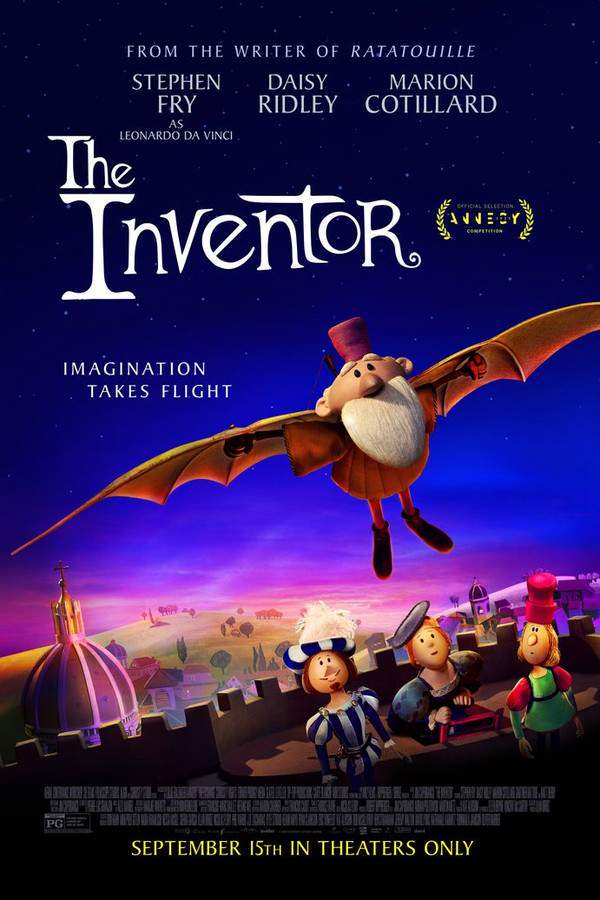
The Inventor 2023

Directed by

Pierre-Luc Granjon
Made by

Leo and King
Where to Watch The Inventor
See current US streaming, rental, and purchase options for The Inventor (2023) via JustWatch.

Amazon Prime Video
HD
Amazon Prime Video with Ads
HD
Fawesome
HD
Hoopla
SD
The CW
SD
Amazon Prime Video Free with Ads
HD
Fandango at Home Free
HD
Plex
HD
Plex Channel
HD
The Roku Channel
HD
Tubi TV
SD
Xumo Play
HD
YouTube Free
HD
Amazon Video
SD Fandango At Home
SD
Google Play Movies
SD
YouTube
SD Streaming availability powered by 
The Inventor Plot Summary
Read the complete plot summary and ending explained for The Inventor (2023). From turning points to emotional moments, uncover what really happened and why it matters.
In Rome, 1516, Leonardo da Vinci, Stephen Fry, curiously experiments with a mirror-based device that resembles a telescope, peering at the Moon to uncover clues about oceans, life, and the soul. The moment is watched by members of the Papal Court, and in a room where Zoroastro unveils a body for scientific probing, the Pope, Matt Berry, sternly orders Leonardo to halt further exploration of God’s works.
A soldier arrives with news of a Milanese defeat at Marignano and a shift in Leonardo’s role: he is named a military engineer for the moment. Yet his pragmatic mind pushes toward peace, and he persuades the Pope to consider an accord with Francis I, Gauthier Battoue. With that pivot, Leonardo travels to Amboise, where Francis invites him to the royal court and sets him on a path that blends spectacle with science.
On arrival, Leonardo and his assistant Cecco are sent to the ambitious Remorantin castle project, where he first encounters Marguerite, Daisy Ridley. Removing himself from Rome’s orbit, Leonardo continues his quest to understand the soul, and Marguerite becomes a collaborative partner in reshaping his ambitions. She helps steer him away from the castle’s traditional plans toward something bolder: an Ideal City that embodies harmony, proportion, and humanity’s potential.
As Francis plans a grand festival to impress leaders like Emperor Charles V and King Henry VIII, Leonardo faces a choice between grand architectural prestige and the deeper, quieter work of his own invention. He temporarily sets aside the sprawling Ideal City to craft practical devices and other showpieces that Francis can parade before rival courts, including an impressive equestrian statue of Francis himself.
Illness curtails Leonardo’s momentum, and when the Papal Court visits, he contemplates sharing his research on the soul. Cecco’s doubts echo in the room, yet Leonardo remains convinced of a profound discovery—the so-called “Secret to Life itself.” The tensions between faith, science, and power come to a head as he prepares a final, dazzling demonstration of the Solar System. In this sequence, the Sun is embodied by Francis in a bold performance that captures the era’s appetite for wonder and control.
The finale unfolds with a memorable musical moment—an interpretation of a song about a life well spent—while Leonardo’s journey culminates in a celestial ascent. He appears to drift toward the Milky Way, leaving viewers to ponder whether his departure marks a literal death or a dramatic crossing into a new realm of understanding.
The Inventor Timeline
Follow the complete movie timeline of The Inventor (2023) with every major event in chronological order. Great for understanding complex plots and story progression.
Moon study in Rome for life signs
In Rome, 1516, Leonardo uses a mirror-based telescope to examine the Moon's surface. He hopes to detect seas or signs of life and to push the boundaries of knowledge. This early inquiry foreshadows his lifelong obsession with life, the cosmos, and the soul.
Papal reveal and halt order
Members of the Papal Court accompany Leonardo into a room where Zoroastro reveals a human body for forensic probing. The moment sparks a debate about whether science should probe divine mysteries or overstep religious authority. The Pope orders Leonardo to cease further investigations into God's works.
Defeat at Marignano and quick rise as a military engineer
A messenger informs the Pope of the Milanese defeat at Marignano (Sept 1515), and Leonardo is briefly appointed as a military engineer. His service is cut short by the political push for peace with France. He argues for negotiating with Francis I, aligning his craft with the king's interests.
Peace with Francis I and invitation to the French court
Leonardo demonstrates inventions to Francis I, who is impressed by his genius. Francis invites him to the French royal court to continue his work. Leonardo accepts the invitation and prepares to travel.
Journey to Amboise and Remorantin assignment
Leonardo arrives in Amboise after accepting Francis's invitation. Francis assigns him and his assistant Cecco to visit Remorantin to inspect a castle under construction. There he meets Marguerite, a woman who becomes an early ally in his intellectual journey.
Death confrontation and soul search away from Rome
Away from the Papal influence, Leonardo presses on with his search for the soul and is confronted by Death. The encounter underscores the fragility of life and the stakes of his quest. Marguerite's companionship encourages him to persevere.
Marguerite aids the Ideal City project
Marguerite helps Leonardo sketch his Ideal City, replacing the castle project with a broader urban vision. The collaboration blends architecture with science and philosophy in a hopeful alternative to courtly displays. The idea grows as a symbol of human-centered progress.
Shift from Ideal City to courtly demonstrations
As Francis prepares festivities to welcome other monarchs, Leonardo is forced to halt the Ideal City and pivot to inventions that the court can showcase. He develops military devices and even a plan for an equestrian statue of Francis I to dazzle guests like Charles V and Henry VIII. The shift reveals his adaptability under royal expectations.
Illness and Papal Court visit
Leonardo falls ill and is visited by the Papal Court; despite his fragility, he decides to reveal his research on the soul. Cecco opposes sharing his theories publicly, arguing for caution. The illness becomes a turning point in whether science and spirituality should meet the public eye.
Claim of the Secret to Life itself
From his bed, Leonardo proclaims that he has discovered the 'Secret to Life itself'. The assertion intensifies the debate between science and faith at court. The moment amplifies the tension surrounding his work and his legacy.
Solar System show with Francis as the Sun
Leonardo stages a show on the Solar System, with Francis I playing the Sun, to illustrate the order of the cosmos and humanity's place within it. The performance fuses art, engineering, and religion into one sweeping spectacle. The ceremony culminates in a sense of awe and inquiry.
Song of life and ascent toward the Milky Way
A song, 'A Life Well Spent Is Long,' is interpreted as a philosophy of his work, and Leonardo seems to fly into what appears to be the Milky Way. The sequence suggests his death or a transcendent ascent beyond ordinary perception. Marguerite and Cecco watch with a mix of wonder and sorrow.
Ending: legacy beyond the earthly realm
The climactic Milky Way sequence leaves Leonardo's fate ambiguous, implying a legacy that transcends his lifetime. The fusion of science, art, and spirituality invites viewers to reflect on a life spent pursuing truth. The final tone honors a mind that sought to unite heaven and earth.
The Inventor Characters
Explore all characters from The Inventor (2023). Get detailed profiles with their roles, arcs, and key relationships explained.
Leonardo da Vinci (Stephen Fry)
A genius inventor driven by a relentless search for life, the soul, and the workings of the universe. He pushes scientific boundaries while navigating church authority and political pressure, balancing curiosity with caution.
Marguerite (Daisy Ridley)
A compassionate noblewoman who assists Leonardo, offering practical support and a human perspective on his radical ideas. Her involvement helps bridge science with the human experience.
Louise de Savoy (Marion Cotillard)
Patron and mother-figure within the French court, aligning with Leonardo’s visions and fostering exchange between science and monarchy.
Francis I of France (Gauthier Battoue)
The French king who invites Leonardo to his court and showcases his inventions, embodying courtly ambition and dynastic prestige.
Pope Leo X (Matt Berry)
Head of the Papal Court who seeks to direct Leonardo’s investigations, illustrating the clash between faith and science.
Pierre Nepveu (Natalie Palamides)
One of Leonardo’s collaborators in the intellectual exchanges and experimental work.
Antonio de Beatis (Natalie Palamides)
An associate whose involvement reflects the collaborative nature of Renaissance science at the French court.
The Physician, Cardinal of Aragon (Jim Capobianco)
A medical-clerical figure who challenges or guides Leonardo’s medical and existential explorations.
Page (Ben Stranahan)
A young court attache who witnesses demonstrations and daily life at the royal sites.
Il Boccador (Max Baumgarten)
A mysterious court figure who participates in the political theater surrounding Leonardo’s work.
King Charles of Spain (Max Baumgarten)
A powerful monarch showcased during festivals, symbolizing the era’s imperial ambitions and courtly spectacle.
Emperor Charles V
Holy Roman Emperor attending the era’s grand royal gathering, representing the broader political stakes of Renaissance power.
Gravedigger John (John Gilkey)
A minor figure who appears in mortality-themed scenes, providing a counterpoint to Leonardo’s life’s work.
Giuliano (John Gilkey)
A secondary role played by the same actor, contributing to the broader Renaissance tableau.
Gravedigger Jane (Jane Osborn)
Another mortality-themed figure that frames the drama of life and death around Leonardo’s pursuits.
King Henry VIII (Daniel Swan)
A prominent monarch at the festival of rulers, embodying dynastic power and its impact on science and culture.
The Inventor Settings
Learn where and when The Inventor (2023) takes place. Explore the film’s settings, era, and how they shape the narrative.
Time period
1516
Set in the early 16th century during the Renaissance, the period is defined by renewed interest in science, exploration, and humanist ideas. Political rivals navigate courtly life as Francis I hosts rulers like Emperor Charles V and King Henry VIII. Leonardo’s experiments unfold amid tensions between papal authority and secular patronage.
Location
Rome, Italy, Amboise, France, Remorantin
The story begins in Rome, the seat of the Papal Court, where Leonardo faces religious authority and restrictions on his inquiries. He then travels to the French royal court at Amboise, invited by Francis I. The action moves to Remorantin, a castle under construction where Leonardo collaborates with Marguerite on an ambitious city design. These settings reflect a Renaissance crossroads of power, faith, and invention.
The Inventor Themes
Discover the main themes in The Inventor (2023). Analyze the deeper meanings, emotional layers, and social commentary behind the film.
🔬
Science
Leonardo’s use of new devices, a telescope, and explorations of the Moon embody the era’s scientific curiosity. The film frames empirical inquiry as a quest for life, the universe, and the soul, often clashing with religious dogma. Marguerite’s involvement shows how curiosity can cross social boundaries and influence invention.
👑
Power & Patronage
The Papal Court and the French royal court drive the narrative, where patrons determine which inventions are pursued and showcased. Leonardo’s work becomes a tool for courtly prestige, diplomacy, and political theater at festivals and demonstrations. The tension between religious authority and secular ambition fuels much of the plot.
💫
Soul & Mortality
The search for the soul lies at the core of Leonardo’s experiments and his dialogues with Death. He declares a 'Secret to Life' and stages a cosmic Solar System show, probing existence beyond the earthly realm. The ending suggests mortality and transcendence as science, art, and destiny intertwine.

Coming soon on iOS and Android
The Plot Explained Mobile App
From blockbusters to hidden gems — dive into movie stories anytime, anywhere. Save your favorites, discover plots faster, and never miss a twist again.
Sign up to be the first to know when we launch. Your email stays private — always.
Explore the mobile appThe Inventor Spoiler-Free Summary
Discover the spoiler-free summary of The Inventor (2023). Get a concise overview without any spoilers.
In a restless Renaissance, a restless genius seeks the hidden patterns of life itself. Leonardo da Vinci abandons the familiar streets of Italy, driven by a yearning to peer beyond the visible and to understand the very soul of existence. His journey carries him across the Alps to the glittering courts of France, where art, politics, and invention intertwine in a world that both celebrates spectacle and demands utility.
At the French royal palace, the brilliant polymath finds a new arena for his boundless curiosity. The court of Francis I offers both patronage and pressure, inviting Leonardo to turn his visionary sketches into tangible marvels. Amid the gilded halls he meets Marguerite, a sharp‑witted collaborator whose own perspective nudges his ambitions toward grander, more harmonious designs. Together they contemplate an “Ideal City” that might embody the balance of proportion, humanity, and nature—a living canvas for Leonardo’s restless imagination.
The film’s tone is a luminous blend of wonder and contemplation, bathing the viewer in the rich textures of early‑sixteenth‑century Europe while echoing timeless questions about knowledge and belief. Sun‑lit workshops, hushed chambers of dissection, and soaring sketches of flight all pulse with a curiosity that feels both historic and immediate. Leonardo’s internal dialogue—between artistic reverie, scientific rigor, and philosophical awe—creates a delicate dance with the surrounding power structures, hinting at both the promise and the peril of unbridled invention.
Through careful, atmospheric storytelling, the movie invites us to linger in the space where genius meets the unknown, where every new device or sketch is a stepping stone toward a deeper, perhaps unanswerable, mystery. It is a portrait of a man whose relentless quest for the “secret to life” transforms not only his own destiny, but also the very world he strives to understand.
Movies with Similar Twists and Themes
Uncover films that echo the narrative beats, emotional arcs, or dramatic twists of the one you're exploring. These recommendations are handpicked based on story depth, thematic resonance, and spoiler-worthy moments — perfect for fans who crave more of the same intrigue.
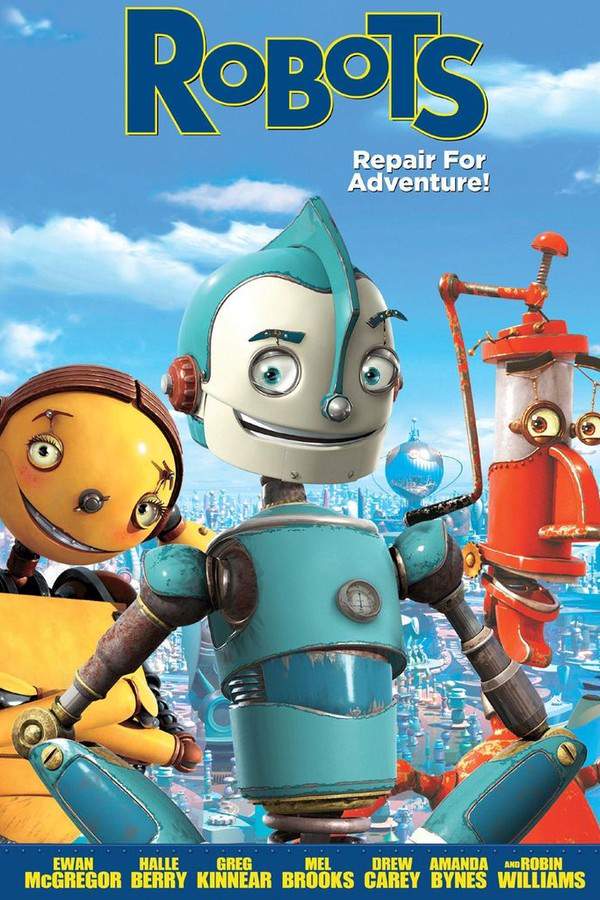
Featured on this page

What's After the Movie?
Not sure whether to stay after the credits? Find out!
Check out our other apps:

SAT Sphere
Build confidence for the Digital SAT.

Mori Atlas
Discover wild places worth protecting.

Luntero
Search smarter for a home in Amsterdam.

Plot Explained
Unravel movie endings and hidden clues.

Pokechamp
Dive into Pokémon data and battle logic.

Driving Theory
Get ready for your European theory test.

Movie Dust
Plan your next cinema trip with ease.

Musemap
Find art and culture as you travel.

Selkobase
Compare credentials before committing.

Local Manual
Turn an unfamiliar country into practical next steps.

Lernavi
Compare school systems before your next move.

GymRoam
Find a workout stop wherever your plans take you.
Explore Our Movie Platform
New Movie Releases (2026)
Famous Movie Actors
Top Film Production Studios
Movie Plot Summaries & Endings
Major Movie Awards & Winners
Best Concert Films & Music Documentaries
Movie Collections and Curated Lists
© 2026 What's After the Movie. All rights reserved.
Privacy Policy