What Is The Imitation Game About?
The premise of The Imitation Game in 298 words, with nothing given away. The full story follows below.
In post‑war Britain, a quiet suburb of Manchester becomes the unlikely stage for a probing police interview that hints at a hidden legacy. Alan Turing, a brilliant yet socially awkward mathematician, finds his orderly world unsettled when officers suspect that his measured detachment conceals something far more consequential. The film opens with this tension, setting a tone that blends the stark formality of 1950s England with an undercurrent of unresolved genius.
The narrative then drifts back to the secretive corridors of Bletchley Park, where the war’s most urgent puzzle lies waiting. Within this cloistered enclave, a rag‑tag group of scholars, engineers, and cryptographers wrestle with the relentless churn of encoded messages, their lives bound by a shared purpose that feels both exhilarating and isolating. The atmosphere is one of restrained urgency, lit by the glow of early computing machines and the quiet camaraderie of minds that speak more fluently in symbols than in small talk.
Central to this world is the evolving partnership between Alan Turing and Joan Clarke, a sharp‑witted code‑breaker whose intellect challenges and complements his own. Their dynamic, framed by mutual respect and subtle affection, provides a human anchor amid the abstract race against unseen enemies. Around them, the team’s diverse personalities clash and collaborate, creating a rhythm that is at once methodical and unpredictable, underscoring the film’s meditation on brilliance and belonging.
Even as the war’s shadows recede, the lingering echoes of secrecy follow the characters into peacetime, hinting at the personal costs of a life lived in the margins of official history. The story balances the austere elegance of period drama with a quietly rebellious spirit, inviting viewers to contemplate the paradox of a mind that could change the world while being forced to hide the very self that made that change possible.
What Happens in The Imitation Game?
The complete story of The Imitation Game, from the first scene to the last, in 616 words (about 3 minutes). Spoilers throughout. Names in the text link to 2 cast member pages.
Spoilers ahead
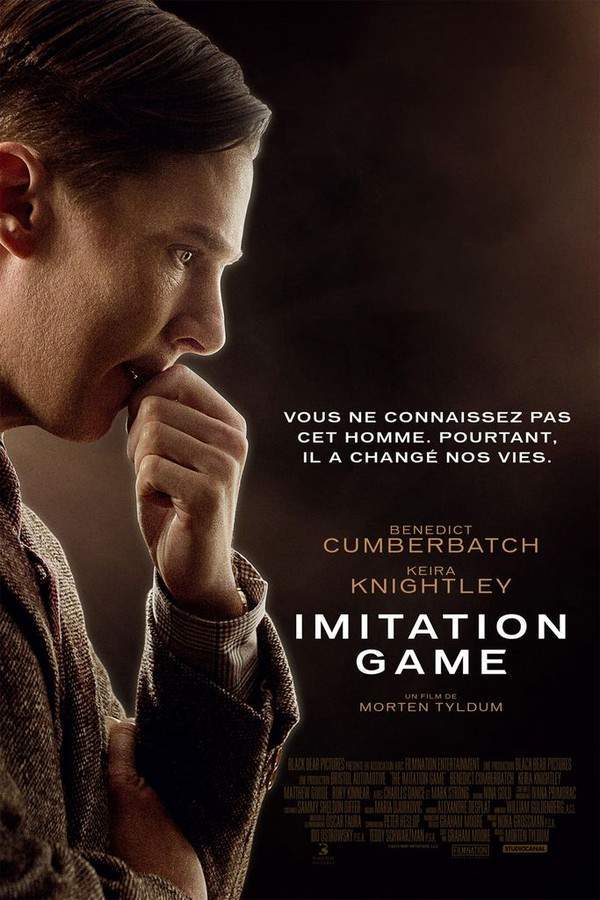
Based on a remarkable true story, we hear the voice of Alan Turing, who boldly asserts, > “Are you paying attention? Good. If you’re not listening carefully, you will miss things. Important things.”
The narrative unfolds in 1951, amidst the backdrop of Manchester, England. Following a burglary at his home, Alan Turing, now a professor at Cambridge, is interrogated by the police. His dismissive attitude raises suspicions among the officers, suggesting that he may be harboring secrets.
The film flashes back to September 1939, when war is declared and 800,000 children are evacuated from their homes. A 27-year-old Alan Turing, played by Benedict Cumberbatch, boards a train and observes a child engrossed in crossword puzzles. Upon arriving at Bletchley Park, protected by Royal Naval officers, he meets Commander Denniston. Alan’s cold demeanor during the job interview leaves the Commander perplexed as Alan admits he’s neither interested in politics nor speaks German. However, when he mentions “Enigma,” the name of the top-secret program, curiosity piques.
Alan, now part of the Enigma team, joins forces with fellow code-breakers, including Peter Hilton, John Cairncross, Hugh Alexander, and others. They obtain an Enigma machine but struggle to decode messages due to encryption changes every midnight. Hugh, the chess champion, forecasts the staggering 159 million million million possibilities they must navigate. Alan’s reluctance to conform to teamwork leads to tensions, but the urgency imposed by the war compels them to collaborate.
Returning to 1951, detective Robert Nock uncovers that Alan’s records are classified. His investigation leads him down a rabbit hole of secrecy. In another timeline, Alan expresses frustration to Commander Denniston about the lack of funding for his vital machine, insisting that only a machine can best another machine.
The narrative revisits Alan’s childhood memories, highlighting his struggles with OCD and bullying. Young Alan forms a bond with Christopher Morcom, who inspires him with a book on codes and cryptography. In an effort to recruit new team members, Alan decides to place a complex crossword puzzle in newspapers, and among the applicants is the brilliant Joan Clarke, played by Keira Knightley. Joan impresses the group by solving a challenging puzzle, securing her place as a key contributor.
As the war escalates, Alan’s worries deepen, especially regarding Joan’s role. Striking a deal with Commander Menzies, he gets more funding to enhance his machine, affectionately named “Christopher.” Joan promptly joins the Bletchley Park team, reinforcing their fight against the Nazis.
In 1941, as the team finally operates the first digital computer, they encounter setbacks when critical codes remain unbroken. Tensions rise as Alan grapples with personal issues regarding his sexuality, which threatens to derail his professional efforts. The danger of being exposed looms large, leading to emotional confrontation with Joan.
Ultimately, Alan faces a harrowing choice as they finally crack the Enigma code, realizing the devastating implications of their success on innocent lives. An external call to action confronts them with the reality of decisions that dictate who lives and who dies. Meanwhile, relational complexities between Alan and Joan unfold, revealing the nature of their bond amidst adversity.
By 1951, as the story culminates, Alan stands trial for his homosexuality, leading to a cruel governmental decision to subject him to hormonal therapy. The narrative closes with a poignant reunion between Alan and Joan, reflecting on their past partnerships and the monumental impact of their work during the war.
Alan’s tragic end in 1954 serves as a somber reminder of the societal injustices faced by individuals like him, who saved countless lives yet were persecuted for their identities. A posthumous pardon by Queen Elizabeth II in 2013 reminds us of the enduring legacy of his innovative genius, which shaped modern computing and preserved history.
The Imitation Game Timeline: Every Key Event in Order
14 key events in the order they happen, from “Burglary in Manchester” to “Posthumous Pardon”. 4 events name a place, across 2 locations.
- 1
Burglary in Manchester
In 1951, Alan Turing experiences a burglary at his home, setting off a series of events that lead to his interrogation by the police. His dismissive demeanor raises suspicions among the officers, hinting that he may be hiding crucial information.
When:1951 Where:Manchester, England
- 2
War Declaration
The narrative flashes back to September 1939, when Britain declares war, prompting the evacuation of 800,000 children from their homes. This marks the beginning of discussions about the urgency of the situation and its implications for national security.
When:September 1939
- 3
Arrival at Bletchley Park
Alan Turing arrives at Bletchley Park to join the top-secret code-breaking team. His cold demeanor during the job interview surprises Commander Denniston, particularly when Alan exhibits a remarkable knowledge of the Enigma program without much interest in politics.
Where:Bletchley Park
- 4
Introducing the Enigma Team
As part of the Enigma team, Alan collaborates with fellow code-breakers, including Peter Hilton and Hugh Alexander. They receive an Enigma machine but face the challenge of decoding messages encrypted with millions of possibilities.
Where:Bletchley Park
- 5
Challenges of Teamwork
Tensions arise within the Enigma team due to Alan's reluctance to work closely with others. However, the dire circumstances brought about by the war urge the team to cooperate and innovate to break the codes efficiently.
- 6
Alan's Frustration
During 1951, Detective Robert Nock investigates Alan's past and discovers classified records. Meanwhile, Alan expresses frustration to Commander Denniston about insufficient funding for his machine, arguing that it is essential for success in their operations.
When:1951 Where:Bletchley Park
- 7
Childhood Memories
The narrative highlights Alan's childhood struggles with bullying and OCD, showcasing his bond with Christopher Morcom. This friendship inspires him with a love for codes and cryptography, shaping his future endeavors.
- 8
Recruiting Joan Clarke
Alan decides to place a complex crossword puzzle in newspapers to attract talented recruits. Joan Clarke answers the call and impresses the group by skillfully solving the puzzle, securing her position as an essential team member.
- 9
Facing Personal Issues
As the team begins to operate the first digital computer in 1941, Alan grapples with personal issues regarding his sexuality. The mounting pressure leads to emotional confrontations with Joan, complicating their professional relationship.
When:1941
- 10
Cracking the Enigma Code
Eventually, Alan and his team crack the Enigma code, a moment filled with elation yet heavy with the realization of the moral implications of their success. They understand the sobering truth that their actions will dictate lives and deaths amidst wartime decisions.
Show the other 4 events of The Imitation Game Hide the last 4 events
- 11
Trial and Sentencing
By 1951, Alan faces trial for his homosexuality, which leads to a cruel governmental ruling subjecting him to hormonal therapy. This represents a significant turning point in his life, highlighting the injustices faced by those who made advancements in society.
When:1951
- 12
Reunion with Joan
In the closing chapters of the story, Alan has a poignant reunion with Joan, reflecting on their past collaboration and the monumental influence of their contributions during the war. This moment encapsulates the complexities of their relationship.
- 13
Alan's Tragic End
Alan Turing's life tragically ends in 1954, marking a somber conclusion to his story. Despite saving countless lives during the war, he faced persecution for his identity, illustrating a poignant societal injustice.
When:1954
- 14
Posthumous Pardon
In 2013, a posthumous pardon is granted to Alan Turing by Queen Elizabeth II. This gesture acknowledges his contributions to computing and history while serving as a reminder of the societal changes that have occurred since his time.
When:2013
Who Are the Main Characters in The Imitation Game?
2 characters, among them Alan Turing (Benedict Cumberbatch) and Joan Clarke (Keira Knightley): who each one is and the part they play in the story. Every profile links to the actor’s page.
-

Alan Turing (Benedict Cumberbatch)
Played by Benedict Cumberbatch
Alan Turing is a brilliant mathematician and logician, whose pioneering work in codebreaking has a pivotal impact on World War II. He is portrayed as socially awkward and unyielding, often at odds with his colleagues, yet his genius and determination to decode Enigma reveal his passionate commitment to his work and his struggles with personal identity.
- 🧠 Genius
- 💔 Tragic Hero
-

Joan Clarke (Keira Knightley)
Played by Keira Knightley
Joan Clarke is a talented cryptanalyst who proves herself to be an invaluable member of Turing's team. Her intelligence and resourcefulness shine through, as she navigates the challenges of being a woman in a predominantly male field during the war. She develops a deep bond with Turing, embodying both support and conflict in their professional and personal lives.
- 👩💻 Strong Woman
- ❤️ Supportive
Where and When Is The Imitation Game Set?
The Imitation Game is set in Manchester, England and Bletchley Park (1939-1951). Here is why the time and place matter to the story.
When
1939-1951
The film spans from the declaration of war in September 1939 through the post-war period in 1951. This era was marked by the upheaval of World War II, which led to widespread evacuations, technological advancements in computing, and significant societal changes, particularly regarding issues of identity and sexuality.
Where
Manchester, England, Bletchley Park
Manchester, a vibrant city in the north of England, is known for its rich industrial heritage and contributions to music and culture. Bletchley Park, a pivotal site during World War II, served as the British codebreaking center where cryptographers worked tirelessly to decode enemy communications, particularly the Enigma machine.
- 🏙️ City
- 🏰 Historical Site
What Are the Themes of The Imitation Game?
3 ideas the story keeps returning to, among them Identity, Innovation and War.
-
01
Identity
The theme of identity is central to the film, focusing on Alan Turing's struggles with his sexuality in a society that was harshly prejudiced. Through his genius as a codebreaker, the film highlights the disconnect between his public and private life, ultimately questioning what it means to truly know oneself in the face of societal rejection.
-
02
Innovation
Innovation plays a critical role in the narrative as Alan Turing and his team work on developing the first digital computer to break the Enigma codes. This drive for technological advancement is not only a matter of national security but also reflects the personal stakes involved for Turing and his team, showcasing the power of creativity and intellect in crisis.
-
03
War
War serves as both a backdrop and a catalyst for the events in the film. The urgent need to decode enemy messages during World War II drives the collaboration at Bletchley Park, illustrating how life's greatest challenges can bring out remarkable resilience and teamwork, even amidst personal and ethical dilemmas.
What Kind of Film Is The Imitation Game?
Tense in tone, with steady pacing and a complex story, going by the plot summary.
- Tone
- Tense
- Pacing
- Steady
- Story
- Complex
- Intensity
- High
- Ending
- Sad
A tense and melancholic historical thriller that follows a brilliant, isolated mind racing against time to save lives, while hiding his own identity from the same society he is protecting.
- tense
- melancholic
- urgent
- claustrophobic
- somber
- tragic
- genius under pressure
- wartime intelligence
- cryptography and computing
- social injustice
Content notes: homophobia and persecution, chemical castration, suicide, bullying.
Quiz
How well do you remember The Imitation Game? Test yourself on the story.
Where to Watch The Imitation Game
Stream it on Kanopy and Lionsgate+, or rent or buy it from Amazon Video and Apple TV Store. US availability and prices from JustWatch.
 Kanopy
  Lionsgate+ Amazon Channel
  Tubi TV





Streaming availability in the US, powered by