What Is The Greatest Showman About?
The premise of The Greatest Showman in 266 words, with nothing given away. The full story and the ending follow below.
In the bustling heart of 19th‑century America, a restless dreamer named P. T. Barnum is convinced that the ordinary world can be reshaped by wonder. Fueled by ambition and a relentless appetite for spectacle, he envisions a grand arena where imagination outweighs convention. The film’s tone gleams with the optimism of a fledgling nation, its music and color palette echoing the era’s optimism while hinting at the restless yearning behind every bright marquee.
Barnum’s personal compass points toward both family and fame. His partnership with the steadfast Charity offers a tender counterbalance to his larger‑than‑life pursuits, grounding his soaring aspirations with quiet devotion. Together they nurture two bright daughters, whose presence reminds him of the delicate threads that tie success to love. Yet the promise of a brighter future beckons him toward a stage far larger than any he has known.
Around his grand vision gathers a troupe of extraordinary talents—an acrobat who defies gravity, a bearded lady whose confidence shines brighter than any spotlight, and a tight‑rope walker whose grace teeters between daring and delicate. Their differences become the heartbeat of Barnum’s show, turning society’s curiosities into a living, breathing celebration of uniqueness. The ensemble’s camaraderie suggests a world where acceptance is the most spectacular act of all.
The film swirls with lively choreography, soaring melodies, and a vibrant visual feast that captures the restless energy of a man determined to rewrite the rules of entertainment. As Barnum reaches for the stars, the audience is left to wonder how far ambition can soar before it must return to the simple truths that first inspired it.
What Happens in The Greatest Showman?
The complete story of The Greatest Showman, from the first scene to the last, in 582 words (about 3 minutes). Spoilers throughout. Names in the text link to 9 cast member pages.
Spoilers ahead
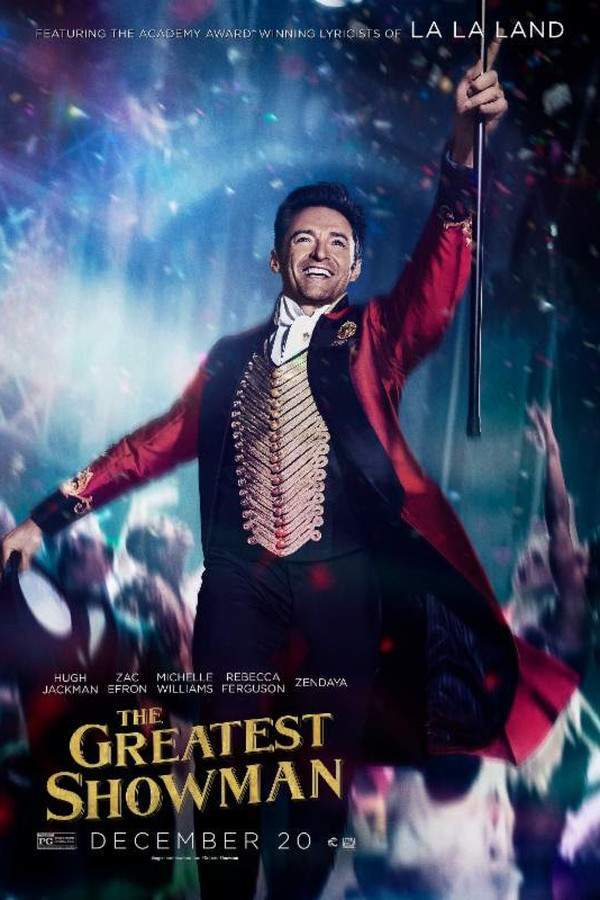
P. T. Barnum, portrayed by Hugh Jackman, captivates audiences with his circus production in “The Greatest Show”. The performance transitions to a flashback of Barnum’s childhood, showing his close relationship with his father, Philo, played by Will Swenson. Together, they catered to the Hallett family’s needs, which introduced young Barnum to their daughter, Charity, played by Michelle Williams. Despite Benjamin’s warning to stay away from her, Barnum’s love for Charity flourishes, leading them to maintain correspondence even when Charity leaves for finishing school.
As their love grows, they ultimately marry and start a family in New York City, where they raise two daughters, Caroline, played by Austyn Johnson, and Helen, played by Cameron Seely. However, Barnum becomes consumed by a desire for more than their modest life, feeling that he has let Charity down by not providing a more extravagant existence.
After a series of unfortunate events including losing his job at a shipping company, Barnum takes a daring step by securing a $10,000 loan from a bank, cleverly using his former employer’s lost ships as collateral. This money goes toward the establishment of Barnum’s American Museum, which features wax models but struggles initially until Barnum decides to showcase live performers.
He recruits a diverse group of “freaks”, such as the bearded lady, Lettie Lutz (Keala Settle), and other unique talents that draw large crowds. However, their unconventional nature attracts criticism from elite society, led by the harsh reviews from critic James Gordon Bennett, played by Paul Sparks. Despite this, Barnum is determined and rebrands his venture as “Barnum’s Circus”, standing up to societal norms and defending the rights of his performers.
With newfound success, Barnum buys the mansion he and Charity played in as children and tries to elevate his family’s status, which backfires. His daughter Caroline faces mockery in ballet class, and Barnum’s aspirations keep him from truly connecting with his family. In an attempt to gain respectability, he partners with playwright Phillip Carlyle, played by Zac Efron, who is secretly enamored with trapeze artist Anne Wheeler, played by Zendaya.
As Barnum makes a pivotal decision to bring in the renowned singer, Jenny Lind, played by Rebecca Ferguson, he finds himself entangled in both success and personal turmoil. Barnum quickly realizes that he is distancing himself from his original troupe and family, culminating in a rift at a critical performance where the troupe is relegated to the gallery.
As public disapproval of Barnum’s circus escalates, Charity grows increasingly isolated due to her husband’s focus on fame. Carlyle’s relationship with Anne hits a snag when social pressures mount, leading to emotional struggles for both characters. During an important tour with Lind, romantic tensions brew, and when Barnum rejects her advances, it leads to a fallout that threatens his career and personal life.
In a climactic moment, misfortune befalls Barnum as his circus is set ablaze in a conflict, leaving him devastated. What follows is a heartfelt acknowledgment of what truly matters: his family and his troupe. With newfound clarity and support from Carlyle and Wheeler, Barnum creatively rebuilds the circus, ultimately understanding that the greatest show is not just about spectacle, but about love, acceptance, and community.
He re-launches the circus as an open-air tent near the docks, a vibrant testament to resilience and a profound reconnection with his roots, allowing him the chance to focus on those he loves most. The story culminates in a triumphant celebration of diversity and belonging, encapsulated in the uplifting reprise of “The Greatest Show”.
The Greatest Showman Timeline: Every Key Event in Order
15 key events in the order they happen, from “Barnum's Childhood” to “The Greatest Show”.
- 1
Barnum's Childhood
In a flashback, young P.T. Barnum enjoys a close relationship with his father, Philo. Together, they serve the needs of the esteemed Hallett family, where Barnum first encounters the daughter, Charity.
- 2
Forbidden Love
Despite being warned by Benjamin to stay away from her, Barnum develops a strong affection for Charity. Their budding romance leads them to exchange letters even after Charity leaves for finishing school.
- 3
Marriage and Family
Barnum and Charity marry and establish their home in New York City, where they welcome two daughters, Caroline and Helen. This period marks the beginning of their humble family life.
Where:New York City
- 4
Ambition Brews
As Barnum becomes more dissatisfied with their modest lifestyle, he feels compelled to provide a more luxurious life for Charity and his daughters. This desire for ambition ignites a drive for change.
- 5
Career Setback
After losing his job at the shipping company, Barnum faces a significant turning point. He bravely secures a $10,000 loan from a bank to revive his fortunes, utilizing his former employer's lost ships as collateral.
- 6
Establishing the Museum
With the loan, Barnum opens Barnum's American Museum, initially showcasing wax models. However, the museum faces challenges and he later decides to introduce live performers to draw in audiences.
- 7
Recruiting Unique Talent
To attract larger crowds, Barnum recruits an array of unique performers, including the bearded lady, Lettie Lutz, and others branded as 'freaks'. Their unconventional acts generate both fascination and backlash.
- 8
Facing Criticism
As the circus gains popularity, it also attracts harsh criticism from the elite, particularly from influential critic James Gordon Bennett. Barnum stands firm in defending his performers against societal prejudice.
- 9
Aspirations and Setbacks
In his quest for acceptance, Barnum buys a mansion, aiming to elevate his family's status. However, this decision backfires, negatively impacting Caroline’s experiences and isolating him from his family.
- 10
Partnership with Carlyle
Barnum partners with playwright Phillip Carlyle, who is smitten with trapeze artist Anne Wheeler. Their partnership brings new opportunities yet complicates both characters' emotional lives.
Show the other 5 events of The Greatest Showman Hide the last 5 events
- 11
Introducing Jenny Lind
Barnum decides to bring in the renowned singer Jenny Lind to boost the circus's reputation. However, this soon leads to personal turmoil and a growing distance from his original troupe and family.
- 12
Deteriorating Relationships
As Barnum’s celebrity rises, public disapproval grows, straining his relationship with Charity and adding pressure to Carlyle and Wheeler. Emotional conflicts arise during their tours, especially with Lind.
- 13
Circus in Flames
In a devastating turn of events, Barnum's circus is set ablaze during a conflict. This catastrophe forces Barnum to confront the stark reality of his ambitions and the true importance of family.
- 14
Rebuilding with Clarity
After the fire, Barnum gains clarity about what truly matters in life—his family and his troupe. With renewed support from Carlyle and Wheeler, he embarks on a journey to rebuild the circus.
- 15
The Greatest Show
Barnum re-launches the circus as an open-air tent, symbolizing resilience and a strong reconnection to his roots. This venture celebrates love, acceptance, and community, culminating in a grand performance of 'The Greatest Show'.
Who Are the Main Characters in The Greatest Showman?
5 characters, among them P.T. Barnum (Hugh Jackman), Charity Barnum (Michelle Williams) and Anne Wheeler (Zendaya): who each one is and the part they play in the story. Every profile links to the actor’s page.
-

P.T. Barnum (Hugh Jackman)
Played by Hugh Jackman
P.T. Barnum is a dreamer and showman, driven by an insatiable ambition to redefine entertainment. While he initially prioritizes fame and fortune, his character evolves as he confronts the consequences of his choices. Barnum's journey reflects his struggle to balance aspirations with the love for his family and performers.
- 🎩 Showman
- 💼 Ambitious
-

Charity Barnum (Michelle Williams)
Played by Michelle Williams
Charity Barnum embodies warmth and support, representing the emotional anchor in Barnum's life. As Barnum's early love and partner, she often feels neglected as he pursues his ambitions. Her character highlights themes of unconditional love and the sacrifices made for family.
- ❤️ Supportive
- 👩👧👦 Family
-

Anne Wheeler (Zendaya)
Played by Zendaya
Anne Wheeler is a strong and independent trapeze artist who seeks love and acceptance beyond societal prejudices. Her relationship with Phillip Carlyle showcases the intersection of ambition and romance. Anne's character reflects the struggles faced by those marginalized in pursuit of their dreams.
- 🎪 Performer
- 🌟 Strong-willed
-
Phillip Carlyle (Zac Efron)
Played by Zac Efron
Phillip Carlyle is a playwright drawn to the excitement of Barnum's circus. He grapples with his privileged background and the pressures of society, seeking to carve out his own identity. His romantic endeavors with Anne Wheeler reveal the challenges of love amidst societal expectations.
- 📝 Playwright
- ❤️ Romantic
-

Jenny Lind (Rebecca Ferguson)
Played by Rebecca Ferguson
Jenny Lind is a renowned singer who captures Barnum's attention and symbolizes the allure of fame. Her character embodies the tension between ambition and personal relationships, ultimately leading to pivotal moments in the narrative. Lind's presence challenges Barnum's loyalties and values.
- 🎤 Singer
- 🌠 Charismatic
Where and When Is The Greatest Showman Set?
The Greatest Showman is set in New York City, Barnum's American Museum and various locations. Here is why the place matters to the story.
When
The film is set in the mid-to-late 19th century, a time marked by innovation and the rise of entertainment spectacles. This period witnessed the emergence of circuses and theaters that captivated audiences, alongside societal norms that often judged unconventional lifestyles. It was an era where the fight for acceptance and identity was becoming increasingly relevant.
Where
New York City, Barnum's American Museum, various locations
New York City serves as the backdrop for P.T. Barnum's journey from a humble upbringing to the heights of fame. Barnum's American Museum, known for showcasing unique performances, plays a pivotal role in his rise to success. The bustling city, emblematic of dreams and aspirations, contrasts with the challenges he faces as he seeks acceptance and grandeur.
- 🏙️ City
- 🎪 Circus
What Are the Themes of The Greatest Showman?
3 ideas the story keeps returning to, among them Love, Acceptance and Resilience.
-
01
Love
Love is a central theme in the movie, driving the motivations of key characters such as P.T. Barnum and Charity. Their relationship symbolizes enduring affection amid personal ambitions and societal obstacles. Ultimately, the love for family, friends, and performers leads Barnum to prioritize connection over fame.
-
02
Acceptance
The theme of acceptance resonates throughout the story, as Barnum showcases those often marginalized by society. The diverse 'freaks' become symbols of strength and individuality, challenging societal norms. The narrative emphasizes the importance of embracing differences and building a sense of community.
-
03
Resilience
Resilience is portrayed through Barnum's unwavering determination to overcome setbacks, including financial struggles and public disapproval. Following disastrous events, he learns to rebuild his life and career. The film underscores the power of perseverance and the capacity to rise from adversity, culminating in a triumphant return to his roots.
How Does The Greatest Showman End?
The last act of The Greatest Showman and what it means, in 244 words. The ending lands as happy. Big spoilers: read the plot summary first if you have not seen it.
The final act, in full
The film concludes with P.T. Barnum facing the consequences of his relentless pursuit of success. After the circus is set ablaze by angry protesters, Barnum’s world is turned upside down—his circus and museum are destroyed, and he is left in ruins. Despite the devastation, Barnum’s character undergoes a transformation; instead of chasing fame at any cost, he chooses to rebuild the circus as a traveling show, returning to his original dream of creating a place where everyone—regardless of their appearance—could belong. This act of rebuilding symbolizes his growth, emphasizing family, acceptance, and the true meaning of success. As the circus rises again, Barnum passes the leadership to Phillip Carlyle, a young protégée, signifying his shift in priorities from ambition to family and community. He then steps back to focus on his loved ones, finding fulfillment in honest connections rather than superficial fame.
The story also touches on the romantic and racial themes through the relationship between Barnum and Jenny Lind, and Phillip and Anne. While the film suggests that Barnum’s obsession leads to heartbreak and failure, the real history shows that the tour was profitable and less dramatic, with Lind ending it on good terms. The ending’s depiction of reconciliation and unity—highlighted by the powerful anthem “This Is Me”—underscores the film’s core message: everyone, no matter their differences, deserves acceptance and respect. In the end, Barnum’s journey is about understanding what truly matters—family, friendship, and embracing one’s uniqueness—making the ending both hopeful and inspiring.
What Kind of Film Is The Greatest Showman?
Hopeful in tone, with fast pacing and a straightforward story, going by the plot summary.
- Tone
- Hopeful
- Pacing
- Fast
- Story
- Straightforward
- Intensity
- Medium
- Ending
- Happy
An energetic and uplifting musical spectacle celebrating ambition and acceptance, which balances moments of social prejudice and personal failure with triumphant, heartfelt joy.
- uplifting
- energetic
- inspiring
- melancholic
- triumphant
- romantic
- ambition
- acceptance
- show business
- found family
Content notes: discrimination, financial ruin, fire.
Quiz
How well do you remember The Greatest Showman? Test yourself on the story.