What Is The Emperor's New Clothes About?
The premise of The Emperor's New Clothes in 271 words, with nothing given away. The full story follows below.
In the waning light of the 19th‑century world, a daring scheme threatens to blur the line between legend and ordinary life. Napoleon finds himself exiled on the remote island of St. Helena, his empire reduced to memory and whispered hope. Meanwhile, a modest Parisian known as Eugene Lenormand lives a modest existence far from power. When a clandestine plan offers each a chance to walk in the other’s shoes, the two men are thrust into a delicate charade that promises both redemption and chaos.
The film paints a vivid contrast between the stark, wind‑howled cliffs of the island and the bustling, cobblestone streets of a restless Paris. On one side, the austere exile camp is suffused with an almost reverential melancholy, where every gesture carries the weight of a fallen empire. On the other, the capital pulses with vibrant cafés, fashionable salons, and an undercurrent of yearning for a return to grandeur. This juxtaposition creates a tone that balances wry humor with poignant introspection, inviting the audience to wonder how identity is shaped by circumstance and perception.
At its heart, the story follows the uneasy partnership between a former emperor, still haunted by the echo of marching troops, and a commoner whose sudden brush with royalty forces him to confront desires he never imagined. Their swapped roles illuminate the absurdities of status, the fragility of belief, and the ways in which fame can become both a cage and a catalyst. As they navigate their reversed worlds, the film teases a delicate dance of deception, companionship, and the timeless question: who are we when the eyes of the world are turned away?
What Happens in The Emperor's New Clothes?
The complete story of The Emperor's New Clothes, from the first scene to the last, in 368 words (about 2 minutes). Spoilers throughout.
Spoilers ahead
Napoleon finds himself in exile on the remote island of St. Helena after the defeat at the Battle of Waterloo. Intent on reclaiming his power, his loyal followers devise an audacious plan to smuggle in a look-alike to take his place. The plan is for the imposter to masquerade as Napoleon, allowing the real Emperor to secretly escape to Paris where he can announce his return. The intent is that once the imposter declares himself, the genuine Napoleon can emerge to the cheers of the French, who are eager for their leader’s resurgence.
However, the situation becomes complicated when the imposter, reveling in the lavish lifestyle and privileges of being an emperor, becomes increasingly enamored with his newfound identity. He stubbornly refuses to disclose the truth, even when a fellow general—who is also in exile—attempts to expose him. Instead, the imposter discredits the general, claiming he has succumbed to madness due to the isolation of St. Helena.
Back in France, the real Napoleon faces a dilemma; his citizens are unaware of his true situation, believing him to be a prisoner of war. Surprisingly, most Parisians have never seen Napoleon in person, and his appearance now reflects the passage of time—he appears older and more disheveled. To add to the absurdity, it turns out that a multitude of individuals in a Paris insane asylum have taken it upon themselves to dress as Napoleon, all claiming to be the true Emperor.
As the narrative unfolds, Napoleon finds himself trapped by circumstance. Tragedy strikes when the imposter dies on St. Helena, leading to the announcement of Napoleon’s death to the world. With this, the last chance for the real Napoleon to reclaim his identity and his place in history fades away. Nonetheless, during his time in exile, he has formed a meaningful relationship with the widow of one of his soldiers from the Grand Army. Although she views his claims of being Napoleon as mere delusions of grandeur, she lovingly assures him he can still be “her Napoleon.”
This film boldly explores profound questions of identity and self-perception, suggesting that our understanding of who we are is, at least in part, shaped by the perceptions and beliefs of those around us.
The Emperor's New Clothes Timeline: Every Key Event in Order
12 key events in the order they happen, from “Napoleon's Exile” to “Final Reflection”. 9 events name a place, across 2 locations.
- 1
Napoleon's Exile
The movie begins with Napoleon Bonaparte exiled on the remote island of St. Helena after his defeat at the Battle of Waterloo. He is cut off from his empire and lives in isolation, reflecting on his past and the changes in his life.
Where:St. Helena
- 2
The Impostor's Arrival
Napoleon's followers devise a daring plan to smuggle a look-alike into St. Helena. This impersonator is brought in to take Napoleon's place and create a false narrative that the Emperor is still alive and poised for a return to power.
Where:St. Helena
- 3
The Plan Unfolds
The plan involves the impostor masquerading as Napoleon while the real Emperor secretly makes his way back to Paris. The followers believe that once the real Napoleon returns, he can reclaim his throne and the people's loyalty.
Where:St. Helena
- 4
Living as an Emperor
As time passes, the impostor becomes increasingly comfortable in his role as Napoleon. Enjoying the privileges and lifestyle that come with being Emperor, he becomes reluctant to reveal his true identity.
Where:St. Helena
- 5
The General's Concerns
One of Napoleon's generals in exile expresses doubts about the impostor's identity and tries to confront him about it. However, the impostor cleverly turns the tables, claiming that the general has lost his mind due to isolation.
Where:St. Helena
- 6
The Real Napoleon's Dilemma
Meanwhile, the real Napoleon contemplates his return to Paris, knowing that the public believes he is still in exile on St. Helena. He faces a significant challenge, having changed in appearance and unable to just announce himself in the streets.
Where:Paris
- 7
Identity Crisis Among Citizens
In Paris, many individuals, including those in an asylum, claim to be Napoleon as they wander the streets in costumes. This phenomenon reflects the distorted identity associated with his figure and highlights the confusion surrounding his true presence.
Where:Paris
- 8
An Unexpected Death
Tragedy strikes when the impostor unexpectedly dies on St. Helena. The news of Napoleon's death spreads, shattering the hopes of the real Napoleon's return and leaving him in a desperate situation.
Where:St. Helena
- 9
The Announcement
The announcement of Napoleon's death grips both the world and the real Napoleon himself. It marks a turning point, as now he cannot even claim the identity he has fought to regain, further solidifying his isolation.
- 10
A New Relationship
While in exile, the real Napoleon forms a heartfelt bond with the widow of one of his soldiers. She provides him companionship and affection, accepting him for who he is despite her skepticism about his claims of identity.
Where:St. Helena
- 11
Illusion of Grandeur
The widow, although doubting his claims, affectionately tells him he can continue to be 'her Napoleon.' This reflects the film's central theme of identity, as it raises questions about the nature of self and how it is defined by relationships with others.
- 12
Final Reflection
As the film progresses, the narrative delves into philosophical questions regarding identity and perception. It questions how someone can embody a role so fully that the lines between reality and illusion blur.
Who Are the Main Characters in The Emperor's New Clothes?
2 characters, among them Napoleon Bonaparte and Imposter Napoleon: who each one is and the part they play in the story. 1 of them link to the actor’s page.
-

Napoleon Bonaparte
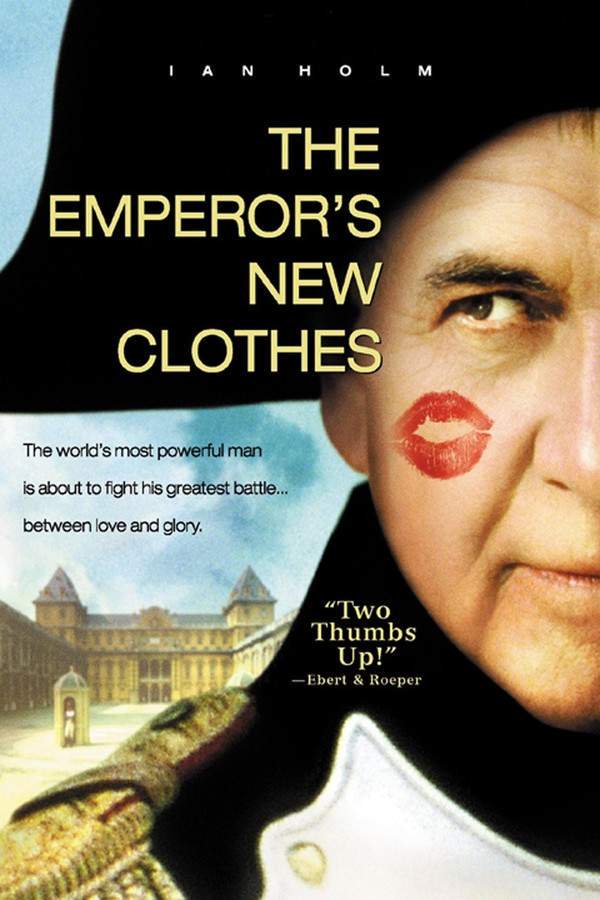
Played by Ian Holm
Napoleon Bonaparte is a complex character caught between his historical legacy and his current state as an exile. He grapples with the realities of aging and the perception of his power, showcasing both vulnerability and tenacity. His struggle to reclaim his identity and authority reflects a profound inner conflict.
- 👑 Leader
- 🏰 Historical Figure
- 🤴 Exiled
- IN
Imposter Napoleon
The imposter embodies conflicting traits of ambition and deceit. Initially serving as a pawn in a grand scheme, he gradually revels in the privileges of his false identity. His character raises questions about the comfort found in illusion and the moral implications of living a lie.
- 🎭 Deception
- 🌍 Manipulation
Where and When Is The Emperor's New Clothes Set?
The Emperor's New Clothes is set in St. Helena and Paris (Early 19th Century). Here is why the time and place matter to the story.
When
Early 19th Century
The movie is set in the early 19th century, a tumultuous time characterized by the Napoleonic Wars and significant political upheaval in Europe. After Napoleon's defeat at Waterloo in 1815, he is exiled and his influence is questioned. This era is marked by shifting loyalties and the rise of nationalism across the continent, reflecting the complexities of leadership and identity.
Where
St. Helena, Paris
St. Helena is a remote island in the South Atlantic Ocean, known for being the place of Napoleon Bonaparte's exile after the Battle of Waterloo. The island's isolation plays a crucial role in the narrative, as it houses the imposter and the real Napoleon. Paris, the capital of France, is central to the story, as the citizens await the return of their great leader, unaware of the turmoil and deception surrounding his true identity.
- 🏝️ Island
- 🇫🇷 City
What Are the Themes of The Emperor's New Clothes?
2 ideas the story keeps returning to, among them Identity and Isolation.
-
01
Identity
The theme of identity is central to the film, exploring how perception shapes reality. The imposter's reluctance to reveal his true self highlights the ways in which power and status can redefine an individual's sense of self. Additionally, the film poses thought-provoking questions about how society's validation is necessary for one's identity.
-
02
Isolation
Isolation is vividly portrayed through Napoleon's exile on St. Helena, emphasizing the mental and emotional struggles of being cut off from one's power and followers. The physical separation from the world leads both the real and imposter Napoleon into a state of existential crisis. This theme underscores the dangers of solitude and the longing for connection.
What Kind of Film Is The Emperor's New Clothes?
Melancholic in tone, with steady pacing and a moderate story, going by the plot summary.
- Tone
- Melancholic
- Pacing
- Steady
- Story
- Moderate
- Intensity
- Medium
- Ending
- Bittersweet
A melancholic and ironic historical fable that explores identity through a clever role reversal, resulting in a reflective and ultimately bittersweet mood as grand ambitions are dissolved by personal connections.
- melancholic
- absurd
- reflective
- ironic
- lost opportunity
- identity crisis
- identity and self
- historical fiction
- imposter syndrome
- exile
Content notes: impersonation, death of a character.
Quiz
How well do you remember The Emperor's New Clothes? Test yourself on the story.