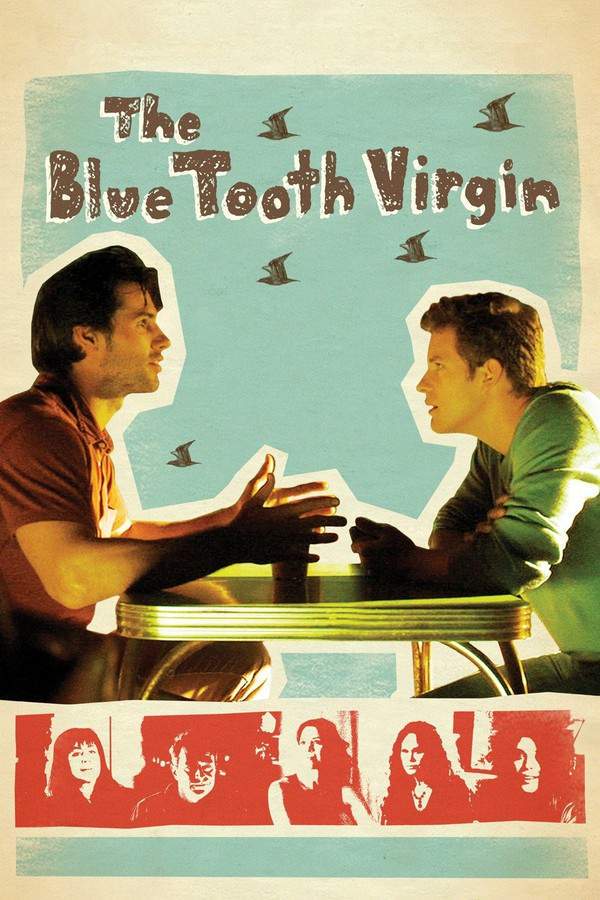
The Blue Tooth Virgin 2009

Directed by

Russell Brown
Made by

Regent Releasing
Where to Watch The Blue Tooth Virgin
See current US streaming, rental, and purchase options for The Blue Tooth Virgin (2009) via JustWatch.

Fawesome
HD
Hoopla
SD
Cineverse
HD
Plex
HD
Plex Channel
HD
Apple TV Store
HD Streaming availability powered by 
The Blue Tooth Virgin Plot Summary
Read the complete plot summary and ending explained for The Blue Tooth Virgin (2009). From turning points to emotional moments, uncover what really happened and why it matters.
The film unfolds across seven scenes, each primarily focusing on an engaging dialogue between two characters. In the opening scene, screenwriter Sam, portrayed by Austin Peck, meets his friend, the magazine writer and editor David, played by Bryce Johnson, at a quaint coffee shop. With a history of having written and produced a critically acclaimed yet short-lived television series, Sam now grapples with his inability to get any new projects off the ground. Eagerly, he requests David to read his new screenplay, a thriller titled The Blue Tooth Virgin, and to share his thoughts on it.
In the second scene, we find David at home where he is visited by his friend Louis, played by Tom Gilroy. Their conversation revolves around David’s internal conflict regarding whether or not he should disclose his true feelings about Sam’s screenplay, which he finds virtually terrible and difficult to comprehend.
Moving to the third scene, David and Sam engage in a dialogue while golfing. Despite his attempts to sidestep direct criticism, David struggles as Sam persistently presses for feedback. When Sam discovers that David considers the screenplay confusing, his anger surfaces, ultimately leading David to storm off in frustration.
The fourth scene plays out in Sam’s home where his wife Rebecca, played by Lauren Stamile, inquires about his screenplay. Rebecca resonates with David’s critiques and expresses her concerns about Sam’s defensiveness towards sincere feedback and his deep-seated need for external validation. This dialogue escalates into a heated argument as Rebecca challenges the very foundation of their marriage.
Next, in the fifth scene, David finds himself in the office of his therapist, played by Roma Maffia. Here, they delve into the screenplay that David is attempting to write—his inaugural effort—as they explore his motivations for wanting to become a screenwriter and the barriers he faces, including writer’s block. They also reconsider Sam’s response to David’s earlier criticisms and weigh the importance of their friendship moving forward.
In the sixth scene, Sam visits a script consultant named Zena, portrayed by Karen Black, at her residence. Through a unique form of drama therapy, she guides him in reflecting on his motivations for writing. Her insights lead her to suggest that Sam’s screenplay falls short because he may not yet be prepared to tackle the story he wishes to tell.
Finally, in the last scene, David and Sam reconnect at the same coffee house, having not spoken for some time. They exchange sincere apologies, with Sam revealing his decision to abandon writing, confessing that he doesn’t derive joy from it. Conversely, David shares the news of his recent success in selling his screenplay, which is set to enter production by a studio. Overwhelmed by jealousy and bitterness regarding David’s accomplishments, Sam’s contemplative moment is interrupted by a fan, played by Amber Benson, who recognizes him and expresses her gratitude for the positive impact his television series had on her life. This brief yet meaningful interaction rekindles Sam’s original passion for writing—recognizing that his goal was always to resonate with and influence others through his work.
The Blue Tooth Virgin Timeline
Follow the complete movie timeline of The Blue Tooth Virgin (2009) with every major event in chronological order. Great for understanding complex plots and story progression.
Sam Meets David
Screenwriter Sam meets his friend David, a magazine writer and editor, in a coffee shop. Sam is eager to discuss his new screenplay titled 'The Blue Tooth Virgin' and hopes to gain valuable feedback from David, who he trusts deeply.
David's Dilemma
At home, David is visited by his friend Louis, and they engage in a conversation about Sam's screenplay. David grapples with the moral dilemma of whether to be honest with Sam after finding the screenplay to be nearly incomprehensible.
Golfing Discussion
David and Sam take to the golf course to discuss the screenplay further. Despite David's attempts to offer gentle critiques, Sam becomes upset when he learns David finds his work confusing, leading to an emotional confrontation and David walking out.
Conflict at Home
Back at Sam's home, his wife Rebecca asks about the screenplay. She sides with David's critiques, leading to a fierce argument that reveals deeper issues regarding their marriage and Sam's struggles for validation in both his personal and professional life.
Therapy Session
David visits his therapist to discuss not only his personal challenges but also his own screenplay, which is his first attempt. They delve into David’s creative struggles and the implications of his friendship with Sam in the context of his criticisms.
Meeting with Zena
Sam meets with script consultant Zena, who uses drama therapy to help him explore his motivations for writing. Through their discussion, Zena suggests that Sam may not be ready to write effectively, highlighting deeper personal issues that affect his creativity.
Reconnection
After a period of silence, David and Sam reunite in the coffee shop. They take the time to apologize to each other, allowing for a moment of vulnerability and reflection on their relationship and individual struggles.
Sam's Decision
During their reunion, Sam confides in David that he is considering giving up writing altogether, admitting he no longer enjoys it. This revelation signals a significant turning point in Sam's self-perception and creative journey.
David's Success
David shares the exciting news with Sam that he has sold his own screenplay, which is now in the pipeline for production by a studio. Despite this triumph, the revelation stirs feelings of jealousy and bitterness within Sam.
A Fan's Recognition
As their interaction progresses, a fan approaches Sam, expressing how meaningful his television show was to her and the positive impact it had on her life. This encounter serves as a poignant reminder to Sam of the original passion and purpose behind his writing.
Reflection on Purpose
Moved by the fan's heartfelt words, Sam reflects on his intentions for writing art and the deeper significance of storytelling. This moment allows him to reconnect with his original desire to create work that influences and resonates with others.
Resolution
The film concludes with both Sam and David acknowledging their cinematic journeys and the changes they have undergone. As they part ways, there's a sense of hope that both characters will find clarity in their respective paths moving forward.
The Blue Tooth Virgin Characters
Explore all characters from The Blue Tooth Virgin (2009). Get detailed profiles with their roles, arcs, and key relationships explained.
Sam (Austin Peck)
Sam is a passionate yet insecure screenwriter struggling to find his voice after the failure of his previous show. His desperation for validation clouds his judgment, leading to tension in both his friendships and marriage. Throughout the film, he embarks on a journey of self-discovery, ultimately confronting his true motivations for writing.
David (Bryce Johnson)
David is a magazine writer who grapples with the difficult decision of how to provide honest feedback to his friend Sam. His character embodies the internal conflict between honesty and loyalty, as he navigates his own burgeoning career as a screenwriter. Through therapy, David seeks to understand his passion and the value of his words.
Rebecca (Lauren Stamile)
Rebecca is Sam's wife, who provides a critical perspective on Sam's work and their relationship. She plays a significant role in challenging Sam to confront his insecurities and the reasons behind his artistic pursuits. Her candidness sparks pivotal conversations about the foundation of their marriage.
Zena (Karen Black)
Zena is a script consultant who employs drama therapy to guide Sam in understanding his motivations for writing. Her supportive yet challenging approach encourages Sam to reflect honestly about his artistic intentions. Zena serves as a mentor-like figure who prompts transformative insights.
The Blue Tooth Virgin Settings
Learn where and when The Blue Tooth Virgin (2009) takes place. Explore the film’s settings, era, and how they shape the narrative.
Time period
The film presents contemporary themes relevant to modern creatives in a rapidly changing industry. The characters grapple with current struggles such as writer's block and the quest for validation, exploring issues that resonate with today's screenwriters. The dialogue-driven format underscores the timeless nature of personal relationships and artistic frustration.
Location
Coffee Shop, David's Home, Sam's Home, Therapist Office, Zena's Home
The film features various locations including a bustling coffee shop where Sam and David discuss the screenplay, and David's home where he wrestles with his feelings about their friendship. Sam's home serves as a battleground for his and Rebecca's arguments about creativity and marriage, while the therapist's office represents a space of introspection. Zena's home plays a pivotal role as a sanctuary for Sam to explore his motivations.
The Blue Tooth Virgin Themes
Discover the main themes in The Blue Tooth Virgin (2009). Analyze the deeper meanings, emotional layers, and social commentary behind the film.
🎭
Creativity
The theme of creativity permeates the film as Sam and David grapple with the challenges of writing and the pressures of success. Sam's struggles reflect the emotional toll of seeking validation through artistic expression, while David's emerging success contrasts with his own insecurities. Ultimately, the film prompts reflection on the true motivation behind creating art and the impact it can have on others.
🤝
Friendship
Friendship is central to the film as it explores the dynamics between Sam and David, highlighting the tensions that arise from honesty and criticism. The evolving relationship showcases the complexity of support and competition among friends in creative fields. Their eventual reconciliation emphasizes the importance of understanding and forgiveness in sustaining meaningful connections.
😔
Validation
The pursuit of validation is a recurring theme as Sam seeks approval for his work while David navigates his own aspirations. Sam's defensiveness about feedback illustrates the vulnerability that comes with creativity, and his eventual realization underscores the necessity of introspection over external affirmation. This theme resonates as a reminder that artistic endeavors should ultimately serve a higher purpose beyond personal gain.

Coming soon on iOS and Android
The Plot Explained Mobile App
From blockbusters to hidden gems — dive into movie stories anytime, anywhere. Save your favorites, discover plots faster, and never miss a twist again.
Sign up to be the first to know when we launch. Your email stays private — always.
Explore the mobile appThe Blue Tooth Virgin Spoiler-Free Summary
Discover the spoiler-free summary of The Blue Tooth Virgin (2009). Get a concise overview without any spoilers.
In the quiet hum of a downtown coffee shop, a once‑celebrated television writer now wrestling with silence meets his old friend, a charismatic magazine editor. The film opens on their uneasy collaboration as the screenwriter clings to a new thriller, while the editor, accustomed to shaping stories for a broad audience, feels compelled to offer an unvarnished opinion. Their conversation drifts between nostalgia for past successes and the looming dread of creative irrelevance, setting a tone that is simultaneously intimate and tense, laced with dry humor and lingering melancholy.
Sam, the beleaguered writer, is a man defined by the gap between his past acclaim and his present inertia. He yearns for validation and fears the emptiness that follows each rejected draft, while David balances the role of confidant and honest critic, torn between loyalty and the discomfort of delivering harsh truths. Their dynamic is the film’s emotional core, a study in how friendship can be strained by the very act of creation. Surrounding them are a handful of supporting voices—a pragmatic spouse who senses the danger of defensiveness, a well‑meaning therapist who probes the roots of artistic ambition, and an unconventional script consultant whose methods blur the line between therapy and storytelling. Each character reflects a different facet of the creative process, from self‑doubt to the craving for impact.
The setting is less a bustling metropolis than a series of personal spaces—cozy cafés, a quiet golf course, a cluttered home office—where dialogue takes precedence over action. The mood is contemplative, inviting the audience to linger on the uncomfortable pauses and the unspoken questions that hover around every exchange. By the film’s end, the audience is left pondering the fragile balance between artistic integrity and the desire for external affirmation, wondering whether the characters will ever reconcile the ache of unfinished stories with the simple, stubborn hope of being heard.
Featured on this page

What's After the Movie?
Not sure whether to stay after the credits? Find out!
Check out our other apps:

SAT Sphere
Build confidence for the Digital SAT.

Mori Atlas
Discover wild places worth protecting.

Luntero
Search smarter for a home in Amsterdam.

Plot Explained
Unravel movie endings and hidden clues.

Pokechamp
Dive into Pokémon data and battle logic.

Driving Theory
Get ready for your European theory test.

Movie Dust
Plan your next cinema trip with ease.

Musemap
Find art and culture as you travel.

Selkobase
Compare credentials before committing.

Local Manual
Turn an unfamiliar country into practical next steps.

Lernavi
Compare school systems before your next move.

GymRoam
Find a workout stop wherever your plans take you.
Explore Our Movie Platform
New Movie Releases (2026)
Famous Movie Actors
Top Film Production Studios
Movie Plot Summaries & Endings
Major Movie Awards & Winners
Best Concert Films & Music Documentaries
Movie Collections and Curated Lists
© 2026 What's After the Movie. All rights reserved.
Privacy Policy