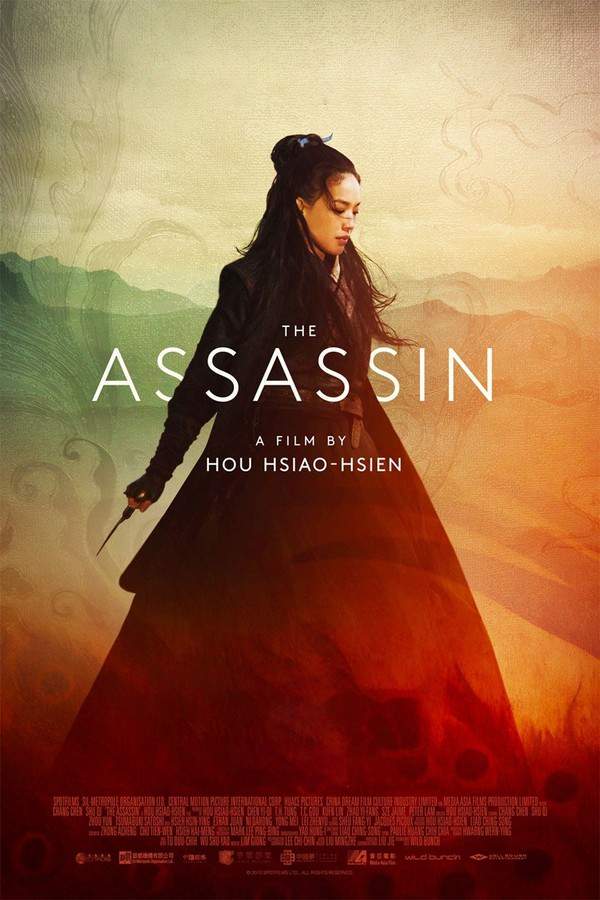
The Assassin 2015


Directed by
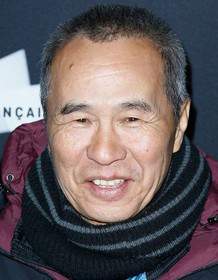
Hsiao-hsien Hou
Made by

Well Go USA Entertainment
Where to Watch The Assassin
See current US streaming, rental, and purchase options for The Assassin (2015) via JustWatch.

Amazon Prime Video
HD
Amazon Prime Video with Ads
HD
Cineverse Amazon Channel
HD
Fandor Amazon Channel
HD
Hi-YAH
HD
Hi-YAH Amazon Channel
HD
Midnight Pulp
HD
Midnight Pulp Amazon Channel
HD
MUBI
HD
MUBI Amazon Channel
HD
Philo
HD
Pinoy Box Office Amazon Channel
SD
Fawesome
HD
Kanopy
HD
AsianCrush
HD
Cineverse
HD
The Roku Channel
HD
Tubi TV
SD
YouTube Free
HD
Amazon Video
SD
Apple TV Store
HD
Fandango At Home
SD
Google Play Movies
SD
YouTube
SD Streaming availability powered by 
The Assassin Plot Summary
Read the complete plot summary and ending explained for The Assassin (2015). From turning points to emotional moments, uncover what really happened and why it matters.
The Assassin unfolds as a quiet, morally intricate tale set in the late Tang era, where a fearless female killer moves through a world of political intrigue and fragile loyalties. The story follows Nie Yinniang, a skilled assassin raised by a devoted nun, Jiaxin, who trained her from the age of ten to root out corruption by striking at those who abuse power. Yinniang’s formidable abilities are matched by a merciful heart, a combination that unsettles her mentor when mercy interrupts a kill and forces a reckoning with her own code.
The tension escalates when Jiaxin assigns Yinniang a perilous mission: travel to the distant northern circuit of Weibo and kill its military governor, Tian Ji’an, who also happens to be her childhood betrothed. This arrangement is not only a test of Yinniang’s discipline but a stark examination of how personal history and political strategy collide. The motive behind the task is plain in its cold practicality—the governor’s removal could shift the balance of power in a region that has long lived on the edge of imperial control. Yet every step toward Weibo pulls Yinniang deeper into questions about fate, loyalty, and the price of obedience.
Jiacheng, a princess who remembers the past with a clarity born of political necessity, recounts the tangled origins of Yinniang’s betrothal. The marriage was engineered to stabilize Weibo, with Jiacheng’s sister and the nun Jiaxin orchestrating the arrangement. Tian Ji’an is introduced as a son-in-law figure who would become a husband in name and a political instrument in reality. The backstory reveals a web of alliances and broken promises: the betrothal was renewed and then canceled for the sake of broader strategic concerns, leaving Yinniang and Tian Ji’an linked by history but divided by circumstance. Yinniang’s sense of duty is tested again as she confronts the reality that killing a man who once shared her childhood could ripple through his children and the very fabric of Weibo’s stability.
On the journey, Yinniang faces a cascade of complications. An ambush targets her uncle, Tian Xing, whose outspoken views threaten the delicate balance Tian Ji’an seeks to maintain. Yinniang swoops in to rescue Tian Xing and his companions, guiding them to safety as factions close in. The group, scarred by recent violence, seeks sanctuary in a village where a young mirror-polisher crosses their path, a figure whose presence hints at the fragile glimmers of ordinary life amid the harshness of their world. Throughout the trek, Yinniang shoulders the heavy weight of her mission, protecting Tian Ji’an rather than delivering the kill in a moment that would devastate his family—and possibly destabilize Weibo itself.
In a pivotal turn, Yinniang comes to a difficult conclusion: killing Tian Ji’an while his sons are still young would unleash chaos that could unravel the delicate order of Weibo. Her restraint, forged in the crucible of duty and mercy, earns Jiaxin’s harsh verdict—she is dismissed not for her prowess, but for her emotional constraints. Yet the film reserves a nuanced fate for Yinniang: instead of pursuing vengeance, she spares the old nun’s life and chooses to become a guardian to the mirror-polisher and the wary survivors she meets along the road. This decision reframes her identity from only an executioner to a protector who carries forward a quieter, steadier form of justice.
Set against sweeping landscapes and the austere, disciplined grace of its martial scenes, the narrative invites readers to linger on the gaps between action and intention. The world Yinniang navigates is defined not by loud confrontations but by the subtleties of character and the consequences of even well-meaning choices. The film asks whether true honor lies in unflinching efficiency or in the courage to pause, to question, and to let mercy shape the path forward. In the end, Yinniang’s journey becomes less about a single target and more about the enduring struggle to balance personal loyalty with the demands of a larger order—and about finding a way to live with the scars that such a struggle inevitably leaves behind.
The Assassin Timeline
Follow the complete movie timeline of The Assassin (2015) with every major event in chronological order. Great for understanding complex plots and story progression.
Training and Mercy Test
Nie Yinniang is raised and trained by the nun Jiaxin from age ten in a secluded monastery. She becomes a formidable assassin, yet she occasionally shows mercy during missions, which Jiaxin views as a weakness. This merciful streak becomes the trigger for a harsher test of her resolve.
The Mercy-Driven Assignment
Jiaxin imposes a ruthless assignment: Yinniang must travel to Weibo and kill Tian Ji'an, her cousin and the military governor. The order forces Yinniang to suppress personal attachments and execute a political target. The mission marks a turning point in her path as an assassin who must act without mercy.
Backstory of the Betrothal
Princess Jiacheng explains that Yinniang's betrothal to Tian Ji'an was a political move to secure Weibo's stability. The arrangement was later canceled in favor of a different marriage, and Yinniang was sent to live with Jiaxin. The backstory clarifies the conflict between blood ties and political duty that haunts Yinniang.
Arrival in Weibo and Start of the Mission
Yinniang arrives in Weibo to begin her mission, moving toward Tian Ji'an's territory. She wrestles with the knowledge that she must kill a man who is also a husband to policy and father to children. The mission's onset foregrounds the film's central moral questions.
Moral Dilemma Before Tian Ji'an's Children
During a tense moment, Yinniang contemplates killing Tian Ji'an in front of his children. She cannot reconcile mercy with duty, and she hesitates rather than striking. The scene crystallizes her inner conflict and foreshadows the choices that will define her path.
Tian Xing's Demotion and the Political Tension
In a state meeting, Tian Xing voices views that anger Tian Ji'an, who demotes him and sends him away to Linqing under Nie Feng's protection. The political atmosphere grows unstable as factions maneuver for advantage. This power play tightens the circle around Yinniang's mission.
Ambush and Rescue
The convoy is ambushed on the road, but Yinniang arrives in time to rescue the wounded survivors. She helps guide them toward safety and a new destination. The incident deepens her bond with the survivors and introduces the unpredictability of the mission.
Village and the Mirror-Polisher
In a village they meet a young mirror-polisher who becomes part of the journey. Yinniang takes on a guardian role for the newcomer while continuing to protect Tian Ji'an. The encounter adds a lyrical counterpoint to the martial action.
Choosing Protection Over Assassination
During the journey, Yinniang continues to protect Tian Ji'an rather than kill him as planned. She argues that killing him while his sons are young would plunge Weibo into chaos. The decision reframes her loyalty and questions the value of political order.
Jiaxin's Judgment
Jiaxin rebukes Yinniang for emotional failures while praising her exceptional martial prowess. The confrontation reveals Jiaxin's uncompromising view of duty and leaves Yinniang at a crossroad. The clash underscores the rift between technique and feeling.
Spare the Old Nun
Yinniang spares the life of the old nun, choosing mercy in a decisive moment. This act affirms her break from Jiaxin's rigid path and signals a new moral compass. After sparing the nun, Yinniang joins the traveling mirror-polisher as his guardian.
A New Path as Guardian
With her mentor spared and a new ally in the mirror-polisher, Yinniang abandons the strict assassin path. She becomes the guardian on the road, guiding the pair through the Tang frontier. The ending hints at a future defined by restraint rather than killing.
The Assassin Characters
Explore all characters from The Assassin (2015). Get detailed profiles with their roles, arcs, and key relationships explained.
Nie Yinniang
An exceptional assassin raised by the nun Jiaxin from the age of ten. She possesses formidable martial skill but struggles with mercy, especially when ordered to kill Tian Ji'an. Her inner conflict drives the story, culminating in sparing her target and ultimately choosing guardianship over vengeance.
Jiaxin
A stern nun who trains Nie Yinniang and tests her resolve by assigning increasingly difficult missions. She approves Yinniang's skills but dismisses her for emotional failures, underscoring a rigid code of discipline. Jiaxin's authority frames the moral boundaries of the tale.
Tian Ji'an
The military governor of Weibo, a figure whose rule is central to the political tensions of the region. He is the target of Yinniang's assignment and a symbol of the harsh calculus of power in the frontier. His actions and family dynamics fuel the plot and demonstrate the costs of governance.
Princess Jiacheng
Jiaxin's sister who recounts the backstory of the betrothal that tied Yinniang to Tian Ji'an. Her account reveals how political marriages were used to quell unrest and bind factions. She embodies the social mechanisms that sustain the frontier's fragile balance.
Tian Xing
Yinniang's uncle whose views are considered offensive in political meetings. His demotion and exile illustrate the ruthless realpolitik of Weibo and the dangers of ideological dissent within the ruling circle.
Nie Feng
Yinniang's father and ally in the journey who, along with the surviving entourage, is helped by Yinniang's skills. His role underscores family loyalty amid the perilous frontier politics.
Mirror-polisher
A young traveling craftsman whom Yinniang protects as her companion and eventual guardian after sparing the old nun. His presence offers a humanizing counterpoint to the violence and a symbol of mentorship and care on the road.
The Assassin Settings
Learn where and when The Assassin (2015) takes place. Explore the film’s settings, era, and how they shape the narrative.
Time period
785–805 AD (Zhenyuan era, Tang Dynasty)
Set during the Zhenyuan period, the film places its events in a time of imperial struggle and regional power. It follows the era after the An Lushan rebellion, when central authority was weakened and frontier governors held real authority. The historical backdrop emphasizes martial rule, political alliances, and the costs of governance in a divided kingdom.
Location
Weibo Circuit, Northern China
The action unfolds in the Weibo Circuit, a northern Chinese region nominally part of the Tang Empire but effectively governed by a powerful military governor. It sits at the empire's frontier, where loyalties are fluid and political maneuvers determine survival. This borderland setting shapes encounters, rivalries, and the constant threat of violence.
The Assassin Themes
Discover the main themes in The Assassin (2015). Analyze the deeper meanings, emotional layers, and social commentary behind the film.
🗡️
Duty vs Mercy
Nie Yinniang is trained to act with ruthless precision, yet she hesitates to kill when mercy seems warranted. Her mercy leads to punishment and internal conflict, highlighting the tension between state violence and personal conscience. The story uses this dilemma to probe whether merciful acts can coexist with a duty-bound role. Ultimately, mercy reshapes her path and tests the system she serves.
🏯
Power & Loyalty
The Weibo circuit operates as a theater of political power where alliances are forged and broken for stability. Betrothals, demotions, and assassination orders reveal how rulers manage legitimacy through force and ritual. The narrative shows how loyalty is tested when personal risk clashes with political responsibility. The result is a world where leadership decisions ripple across families and towns.
👪
Family & Duty
A child-arranged betrothal links generations and tightens the knot between personal desire and public duties. Yinniang's mission is compounded by family ties—her expected betrothal, her guardian-mentor, and the governor's offspring. The film questions whether obligations to relatives justify—or condemn—specific acts. It portrays the delicate balance between protecting kin and serving the realm.

Coming soon on iOS and Android
The Plot Explained Mobile App
From blockbusters to hidden gems — dive into movie stories anytime, anywhere. Save your favorites, discover plots faster, and never miss a twist again.
Sign up to be the first to know when we launch. Your email stays private — always.
Explore the mobile appThe Assassin Ending Explained
Unravel the ending of The Assassin (2015) with our detailed explanation. Understand the final scenes, character fates, and unresolved questions.
At the conclusion of “The Assassin’s Creed,” Cal Lynch has infiltrated the Abstergo Foundation’s facility and fought fiercely alongside others who share his heritage and beliefs. During the chaos, they manage to retrieve the Apple of Eden, a powerful ancient artifact that the modern-day Templar Alan Rikkin seeks to control humanity’s free will. As Cal and his allies make their escape, the Guardians of the Assassin order confront them, resulting in a brutal and bloody battle. Only Cal, Shao Jun, and Moussa survive to reach the vault where the Apple was kept. In the climax, Cal confronts Rikkin at a Templar sanctuary where the Apple is to be handed over. Despite his feelings about the situation, Sofia, Rikkin’s daughter who has grown disillusioned with her father’s ambitions, chooses not to intervene. In a tense moment, Cal kills Rikkin to prevent him from exploiting the Apple, and the Assassins successfully recover the artifact.
The ending emphasizes Cal’s evolution from a prisoner to a committed Assassin, united with his new allies Lin and Moussa, who stay by his side as they continue the fight. A more pessimistic alternate ending, which was rejected after test screenings, showed the trio overwhelmed during their escape, with Lin and Moussa killed by guards, leaving Cal as the sole survivor. This darker version would have ended on a much more tragic note, but the filmmakers decided on a slightly hopeful conclusion, with Cal, Lin, and Moussa surviving together, ready to carry on the fight for freedom. The story underscores themes of rebellion, the fight against tyranny, and the importance of choice and free will, ultimately leaving the door open for future stories in the franchise.
The Assassin Spoiler-Free Summary
Discover the spoiler-free summary of The Assassin (2015). Get a concise overview without any spoilers.
In the waning years of the Tang dynasty, a restless China stretches from bustling river towns to remote northern circuits, each a patchwork of ambition, loyalty, and quiet corruption. The world of The Assassin is one of measured breath and hidden violence, where power is asserted as much through whispered edicts as through the flash of a blade. The atmosphere is deliberately restrained, letting the stark beauty of the landscape and the disciplined rhythm of martial life speak louder than any overt spectacle.
Nie Yinniang emerges from this milieu as both prodigy and paradox. Born the daughter of a respected general, she was taken under the wing of the devoted nun Jiaxin at a tender age, who moulded her into a lethal instrument aimed at cleansing the realm of its most entrenched officials. Her reputation as a legendary assassin is matched by an undercurrent of compassion that unsettles even her mentor, hinting at a code that balances ruthlessness with mercy.
When the nun summons Yinniang back to the northern frontier, the mission she receives carries an intimate, almost cruel twist: her target is the man she was once promised to marry, the military governor Tian Ji’an. The assignment forces her to weigh the weight of her sacred oath against the lingering echoes of a shared past, setting the stage for a tension that is as much internal as it is political. The story promises a delicate dance between duty and desire, where every choice reverberates through the fragile fabric of loyalty and authority.
Visually, the film unfolds with sweeping vistas and austere, meticulously choreographed combat, all underscored by a tone of quiet contemplation. The narrative invites the viewer to linger on the spaces between action and intention, to sense the pull of honor, and to wonder whether true righteousness lies in unflinching execution or in the courage to pause, reflect, and perhaps choose a different path.
Movies with Similar Twists and Themes
Uncover films that echo the narrative beats, emotional arcs, or dramatic twists of the one you're exploring. These recommendations are handpicked based on story depth, thematic resonance, and spoiler-worthy moments — perfect for fans who crave more of the same intrigue.



Featured on this page

What's After the Movie?
Not sure whether to stay after the credits? Find out!
Check out our other apps:

SAT Sphere
Build confidence for the Digital SAT.

Mori Atlas
Discover wild places worth protecting.

Luntero
Search smarter for a home in Amsterdam.

Plot Explained
Unravel movie endings and hidden clues.

Pokechamp
Dive into Pokémon data and battle logic.

Driving Theory
Get ready for your European theory test.

Movie Dust
Plan your next cinema trip with ease.

Musemap
Find art and culture as you travel.

Selkobase
Compare credentials before committing.

Local Manual
Turn an unfamiliar country into practical next steps.

Lernavi
Compare school systems before your next move.

GymRoam
Find a workout stop wherever your plans take you.
Explore Our Movie Platform
New Movie Releases (2026)
Famous Movie Actors
Top Film Production Studios
Movie Plot Summaries & Endings
Major Movie Awards & Winners
Best Concert Films & Music Documentaries
Movie Collections and Curated Lists
© 2026 What's After the Movie. All rights reserved.
Privacy Policy