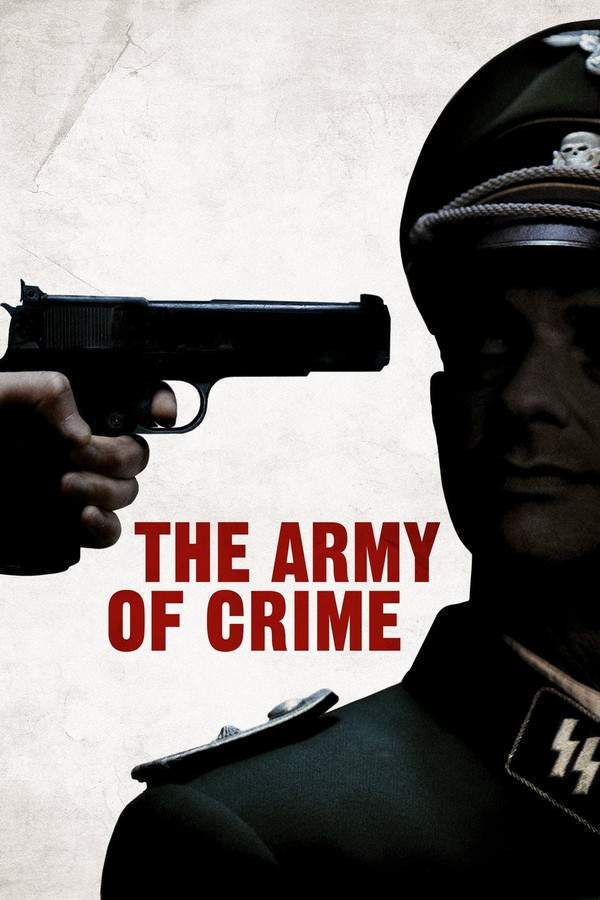
The Army of Crime 2010

Directed by

Robert Guédiguian
Made by

Lorber Films
Where to Watch The Army of Crime
See current US streaming, rental, and purchase options for The Army of Crime (2010) via JustWatch.






The Army of Crime Plot Summary
Read the complete plot summary and ending explained for The Army of Crime (2010). From turning points to emotional moments, uncover what really happened and why it matters.
In the heart of Paris during the harrowing time of the German occupation, various resistance movements began to take shape, including efforts made by migrants. A mismatched assembly of fighters emerged, engaging in poorly coordinated attacks against the occupying forces. Among them was Missak Manouchian, an Armenian exile whose principles initially held him back from taking a life, as he grappled with the ethical implications of such actions. Nonetheless, the grim realities of his situation compelled him to confront his reservations. Under his guidance, the group of 23 fighters became organized, evolving into what would famously be known as the Manouchian Group. This band was part of a broader network of around 100 resistance members who orchestrated a majority of the armed resistance actions within Paris throughout 1943.
The film vividly chronicles the journey of this resolute group, detailing their formation, the eventual arrests, and their grim trial by a German military court, which culminated in the execution of its members in 1944.
In a bid to diminish public sympathies towards these resistance fighters and to tarnish their image, the Vichy government resorted to distributing and displaying countless posters, nicknamed L’Affiche rouge for their striking red background. These posters featured the images of ten notable members of the group, alongside personal information intended to label the migrants as mere terrorists and criminals. However, the sentiment among the public was remarkably different; many responded by inscribing the phrase Morts pour La France (Died for France) across these posters, a phrase typically reserved to honor fallen soldiers. Individuals also left flowers as a poignant tribute, reflecting the deep respect and recognition for the sacrifices made by these brave fighters.
The Army of Crime Timeline
Follow the complete movie timeline of The Army of Crime (2010) with every major event in chronological order. Great for understanding complex plots and story progression.
German Occupation Begins
The German occupation of Paris marked a dark period in history, leading to widespread fear and suppression among the local population. The occupiers enforced strict regulations, which fueled the desire for resistance among the oppressed citizens and migrants.
Formation of Resistance Groups
As the oppressive regime tightened its grip, various resistance movements began to take shape within the city. These groups were composed of local Parisians and migrants, all united by a common goal of opposing the occupation and freeing their homeland.
Rise of the Manouchian Group
Among the resistance fighters was Missak Manouchian, an Armenian exile, who played a crucial role in organizing his fellow fighters. Initially hesitant to take lives, he slowly came to terms with the brutal reality of their struggle against the occupying forces.
First Coordinated Attacks
Under Manouchian's leadership, the group of 23 fighters launched their first coordinated attacks against German forces. These actions ignited hope among Parisians and showcased the courage and determination of the organized resistance.
Expansion of Resistance Efforts
The Manouchian Group grew to be part of a broader network of around 100 resistance members, significantly impacting the armed conflict within Paris. The coordinated efforts resulted in increased tension with the occupying forces, leading to a fierce crackdown.
Arrests of Resistance Members
The German authorities began to capture members of the Manouchian Group one by one, gathering intelligence on their operations. The fear of exposure loomed large over the fighters, but the resolve to continue fighting for their freedom did not waver.
Trial by German Military Court
The remaining members of the Manouchian Group faced a grim trial by a German military court. The court sought to use the trial as an example of the consequences of resistance, while the bravery of the fighters captured the attention of the public.
Execution of the Manouchian Group
In 1944, after a swift and brutal judgment, the members of the Manouchian Group were executed. Their sacrifice became a symbol of defiance against tyranny and inspired many to continue the fight for liberation within France.
Vichy Government's Propaganda
In an attempt to turn public opinion against the resistance, the Vichy government launched a propaganda campaign featuring the infamous posters known as L'Affiche rouge. These posters aimed to paint the resistance fighters, particularly migrants, as terrorists.
Public Response to Propaganda
Contrary to the government's intentions, the public responded with admiration for the resistance fighters. Many citizens inscribed the phrase *Morts pour La France* across the posters, honoring the young men who sacrificed their lives for the country.
Tributes to the Fallen
In the days following the executions, the streets of Paris transformed as individuals left flowers and tokens of respect at the display sites of L'Affiche rouge. These acts reflected the deep love and respect Parisians held for the resistance fighters and their unwavering dedication to liberty.
Legacy of the Manouchian Group
The sacrificed members of the Manouchian Group became revered symbols of resistance in France. Their legacy inspired continued opposition against oppression in post-war France, leading to a renewed sense of national pride and unity.
The Army of Crime Characters
Explore all characters from The Army of Crime (2010). Get detailed profiles with their roles, arcs, and key relationships explained.
Missak Manouchian
Missak Manouchian is an Armenian exile and the leader of a group of resistance fighters during the German occupation of Paris. Initially reluctant to take a life, his strong moral code is put to the test as he navigates the complexities of war. His evolution from a hesitant fighter to a determined leader underscores the theme of personal sacrifice for the greater good.
The Army of Crime Settings
Learn where and when The Army of Crime (2010) takes place. Explore the film’s settings, era, and how they shape the narrative.
Time period
1943-1944
This time period was marked by the German occupation of France during World War II, a time of hardship and resistance. The year 1943 saw the emergence of organized resistance groups as citizens banded together to fight against oppression. With the war reaching its climax, the resistance efforts intensified, leading to significant ramifications in 1944.
Location
Paris
Paris, the capital of France, is known for its rich history and vibrant culture. During the German occupation in World War II, it became a focal point for resistance movements, where various groups rallied against the oppressors. The city's streets were full of tension and courage as the fight for freedom unfolded.
The Army of Crime Themes
Discover the main themes in The Army of Crime (2010). Analyze the deeper meanings, emotional layers, and social commentary behind the film.
✊
Resistance
The theme of resistance is central to the narrative, showcasing the bravery of individuals who stood against tyranny. It highlights the moral dilemmas faced by those fighting for freedom and the sacrifices made in the name of justice. The film portrays how ordinary people can come together to challenge an overwhelming force.
🕊️
Sacrifice
Sacrifice permeates the storyline, reflecting the lives lost in the pursuit of liberty. The characters grapple with their principles as they navigate the harsh realities of war. Ultimately, their willingness to lay down their lives for a cause greater than themselves speaks to the resilience of the human spirit.

Coming soon on iOS and Android
The Plot Explained Mobile App
From blockbusters to hidden gems — dive into movie stories anytime, anywhere. Save your favorites, discover plots faster, and never miss a twist again.
Sign up to be the first to know when we launch. Your email stays private — always.
Explore the mobile appThe Army of Crime Spoiler-Free Summary
Discover the spoiler-free summary of The Army of Crime (2010). Get a concise overview without any spoilers.
In occupied Paris, the very streets pulse with a muted urgency, cloaked in the gray light of war and the constant presence of German patrols. The city’s cafés, alleys, and rooftops become a hidden stage where ordinary citizens whisper about an unseen struggle, and the rhythm of daily life is underscored by a quiet, collective resistance. The atmosphere is dense with suspense, yet it also glimmers with moments of unexpected solidarity, as people learn to read hidden signals and trust the shadows.
At the heart of this clandestine world stands Missak Manouchian, an Armenian exile whose quiet resolve masks an inner turmoil about taking a life. His moral hesitations are tempered by the harsh reality of occupation, nudging him toward a path he once thought impossible. Beside him, Mélinée, his steadfast wife, offers both emotional anchor and strategic insight, forming a partnership that balances compassion with daring. Together they begin to assemble a loose coalition of migrants, workers, and idealists, each drawn by a shared yearning for liberty.
The emerging group is a mosaic of backgrounds and skills, bound together by a common purpose that transcends language and origin. Their meetings are held in dimly lit basements and concealed apartments, where whispered plans are exchanged over the hum of the city above. The tone of their collaboration is a mix of tense determination and flickering hope, each member aware that their actions could ignite a larger spark of defiance or invite a devastating response. The camaraderie that develops feels both fragile and fierce, a testament to the human spirit’s capacity to fight oppression.
As rumors of their activities begin to ripple through the occupied streets, the atmosphere grows heavier with anticipation. The ever‑watchful eyes of the occupiers and the collaborating Vichy regime loom, turning every whispered conversation into a potential catalyst for change. In this charged setting, the audience is left to wonder how far the resolve of these ordinary people will carry them, and what price the city’s quiet heroes might ultimately pay for their daring stand.
Featured on this page

What's After the Movie?
Not sure whether to stay after the credits? Find out!
Check out our other apps:

SAT Sphere
Build confidence for the Digital SAT.

Mori Atlas
Discover wild places worth protecting.

Luntero
Search smarter for a home in Amsterdam.

Plot Explained
Unravel movie endings and hidden clues.

Pokechamp
Dive into Pokémon data and battle logic.

Driving Theory
Get ready for your European theory test.

Movie Dust
Plan your next cinema trip with ease.

Musemap
Find art and culture as you travel.

Selkobase
Compare credentials before committing.

Local Manual
Turn an unfamiliar country into practical next steps.

Lernavi
Compare school systems before your next move.

GymRoam
Find a workout stop wherever your plans take you.
Explore Our Movie Platform
New Movie Releases (2026)
Famous Movie Actors
Top Film Production Studios
Movie Plot Summaries & Endings
Major Movie Awards & Winners
Best Concert Films & Music Documentaries
Movie Collections and Curated Lists
© 2026 What's After the Movie. All rights reserved.
Privacy Policy